Mold Allergy Test Kit: What Homeowners Need to Know
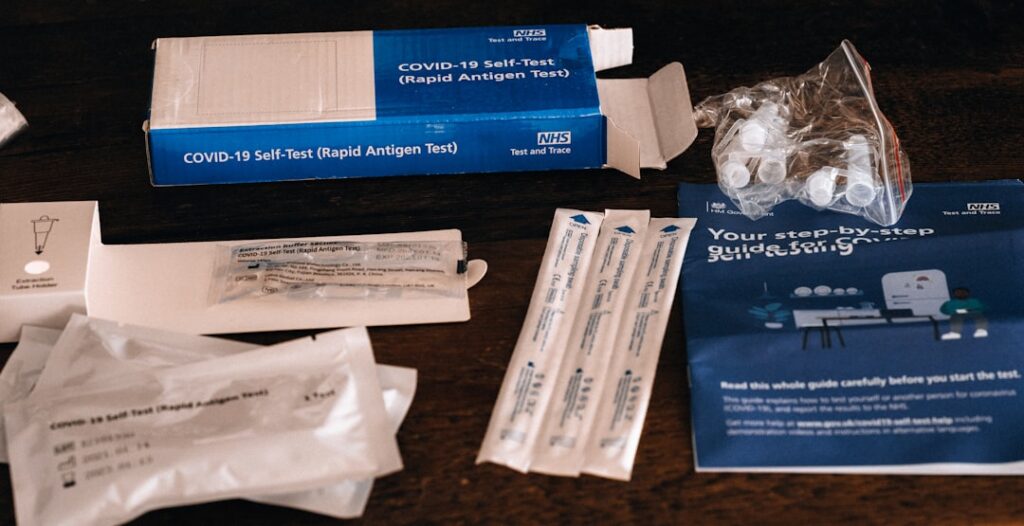
Searching for a mold allergy test kit usually means two very different questions have gotten tangled together. One is medical: is my body reacting to mold spores? The other is environmental: is there mold growing in my house? These require completely different tools, and confusing them leads homeowners to spend money on the wrong test. This guide summarizes EPA, CDC, and allergy-medicine guidance current as of 2026 to clarify what each kit measures; consult your physician for diagnosis and treatment and a certified professional for home testing and remediation decisions.
Is this mold, asbestos, or water damage? Get a free instant screen
Upload a clear photo of the suspect area. You'll get an instant AI screening opinion and what to do next. This is screening guidance, not a professional determination.
Screening guidance only. AI can be wrong. Confirm asbestos, mold type, or lead with lab testing or a licensed professional before acting.
What does a mold allergy test kit actually measure?
A mold allergy test kit measures your immune system’s response to mold, not the presence of mold in your home. At-home allergy kits typically collect a small finger-prick blood sample that a lab analyzes for IgE antibodies to common allergens, including several mold species. A high IgE reading suggests your body is sensitized to that allergen.
This is fundamentally a health test. It tells you whether you are allergic to mold, which is useful information if you have unexplained respiratory or allergy symptoms. It says nothing about whether your bedroom, basement, or bathroom currently has a mold problem. To answer that, you need an environmental test instead.
Allergy testing versus home mold testing
Understanding the split keeps you from buying the wrong kit.
Mold allergy testing (medical)
Done through a blood draw or, more accurately, a skin-prick test administered by an allergist. It identifies sensitization. The CDC and allergy specialists note that blood IgE tests can produce false positives and negatives, which is why clinicians interpret results alongside your symptom history rather than in isolation.
Home mold testing (environmental)
Done with air-sampling cassettes, surface swabs, or tape lifts that go to an accredited lab. These detect spores and growth in the building. The EPA points out that sampling is often unnecessary, because visible mold or a musty smell already tells you that cleanup is needed regardless of species or count.
The mold inspection and testing hub covers the environmental side in depth, and the article on whether a blood test for mold exposure exists digs into the medical claims around mold and the body.
How accurate are at-home mold allergy kits?
At-home IgE blood kits use the same general technology as clinical lab tests, but accuracy depends on the lab and on interpretation. A positive result means sensitization, not necessarily clinical allergy; many people show antibodies to molds without ever having symptoms. A negative result does not fully rule out a reaction either.
Allergists generally consider a supervised skin-prick test the more informative first step, because results are read in real time and combined with your history. For homeowners, the practical takeaway is that an at-home kit can be a starting point, but a physician should interpret the result before you act on it.
Environmental kits: what home mold tests actually do
On the environmental side, several at-home mold test products exist, and understanding their mechanics prevents disappointment. The most common are settle-plate kits, where a petri dish of growth medium is left open in a room, and air-pump cassette kits, which draw a measured volume of air across a collection medium for lab analysis. Surface swab and tape-lift kits sample visible growth directly.
The EPA cautions that mold sampling has real limitations for homeowners. Settle plates in particular can be misleading, since spores are everywhere in normal indoor air and a plate will almost always grow something, with no clear standard for what counts as a problem. Air sampling that compares indoor to outdoor spore counts is more meaningful but requires careful technique and lab interpretation. The agency’s broader point is that visible mold or a musty smell already tells you to clean up, so the most useful role for an environmental kit is documentation or confirming a suspected hidden source, not deciding whether mold exists at all.
What symptoms point to a mold allergy?
According to the CDC and NIH, mold exposure can cause allergy-type symptoms in sensitized people. Common signs include:
- Sneezing, runny or stuffy nose, and post-nasal drip
- Itchy, watery, or red eyes
- Coughing and wheezing
- Worsening asthma symptoms
- Skin irritation in some individuals
These overlap with pollen and dust allergies, which is one reason testing helps narrow the cause. Symptoms that improve when you leave the house and return at home are a clue that something indoors, possibly mold, is involved. The piece on black mold symptoms on skin covers the dermatological side that some people notice.
Should you test your house or your body first?
The smarter order usually depends on what you can observe. If you can see or smell mold, skip the environmental kit and focus on cleanup and moisture control, because the EPA says visible growth already justifies removal. If you have persistent symptoms but no visible mold, a medical evaluation, possibly including allergy testing, helps identify the trigger.
Spending on a home environmental kit makes most sense when you suspect hidden growth, want to document a problem for a landlord or insurer, or need a post-remediation clearance check. For everyday symptom questions, the body, not the building, is what you want to test, and an allergist is the right resource.
How mold allergy differs from mold irritation and infection
Mold can affect health in more than one way, and conflating these leads to confusion about what a test means. True allergy is an immune-system response in sensitized people, the IgE-driven reaction that allergy kits and skin tests measure. Irritation is different: high spore or MVOC levels can bother the eyes, nose, and throat of almost anyone, allergic or not, simply because the airborne load is high. A negative allergy test does not rule out irritation in a heavily contaminated space.
Infection is a separate, less common pathway. Certain molds can cause infections, but these primarily affect people with weakened immune systems, and they are diagnosed and treated medically, not by an allergy kit. Understanding these three distinct mechanisms clarifies what a mold allergy test can and cannot tell you. It addresses sensitization and allergy, not the general irritation a damp home can cause or the infection risk faced by immunocompromised individuals. For those concerns, a physician’s evaluation and good moisture control matter more than any single test result.
How to reduce mold exposure at home
Regardless of test results, lowering indoor mold helps anyone who is sensitized. The EPA recommends keeping relative humidity between 30 and 50 percent, fixing leaks promptly, ventilating bathrooms and kitchens, and cleaning small areas of growth with detergent and water before drying thoroughly. A dehumidifier in a damp Front Range basement, where summer monsoon humidity can spike, often makes the biggest difference. The relationship between mold and humidity explains why moisture control beats any single cleanup.
What the different medical tests actually involve
If you do pursue medical testing, knowing the options helps you choose wisely.
Skin-prick testing
Performed in an allergist’s office, this test introduces tiny amounts of mold allergens into the skin and reads the reaction within about 15 to 20 minutes. Because results are immediate and interpreted on the spot alongside your history, many allergists consider it the most informative first step for suspected environmental allergies.
Specific IgE blood testing
This is the technology behind most at-home kits and many clinical panels. A blood sample is analyzed for antibodies to particular molds. It is convenient and does not require stopping antihistamines, but it can produce false positives and negatives and needs clinical interpretation. A standalone number from a home kit is a starting point, not a diagnosis.
What testing cannot tell you
No allergy test identifies where mold is in your home or how much exposure you are getting. It measures sensitization, the immune system’s primed response, which is a different question from current exposure. That gap is exactly why pairing medical results with an honest look at the home matters.
How sensitization differs from active allergy
One of the most confusing points for homeowners is that a positive allergy test does not always mean you have symptoms. Sensitization means your immune system has produced antibodies to an allergen; clinical allergy means you actually react when exposed. Many people show measurable IgE to common molds yet experience no problems, which is why clinicians weigh test results against your real-world symptom pattern rather than treating a positive result as proof.
The practical upshot is to resist over-reacting to a single number. A home IgE kit showing sensitization to a mold genus tells you to pay attention, not that mold is necessarily causing your symptoms. An allergist connects the dots between what your body shows and what your environment contains, and that combined picture is far more reliable than either piece alone.
Choosing and using an at-home kit wisely
If you decide an at-home kit fits your situation, a few practices improve its value. Pick a kit processed by an accredited laboratory and read what it actually tests, since “mold kit” can mean either a body test or a home-air test. Follow the sample-collection instructions precisely, because contamination or an insufficient sample skews results. Most importantly, plan to review the results with a clinician for a medical kit, or with a qualified assessor for an environmental kit, before spending money on remediation or treatment.
Treat the kit as a screening tool. It can flag a direction to investigate, but it does not replace either a physician’s evaluation of your health or a professional’s evaluation of your home. Used that way, it is a reasonable first step rather than a final answer.
What a positive or negative result should prompt
Knowing how to act on a result keeps a test from becoming a dead end. A positive medical result, showing sensitization to mold, suggests it is worth reducing mold exposure at home and discussing treatment options, such as antihistamines or allergen avoidance, with a physician or allergist. It does not mean every symptom is caused by mold, since sensitization and active allergy differ, so the physician weighs it against your symptom history.
A negative medical result does not fully clear mold either, because tests can miss reactions and because irritation from a damp environment affects people regardless of allergy status. If symptoms persist despite a negative test, the home environment still deserves attention. On the environmental side, a positive home test confirming elevated indoor spores points toward finding and fixing the moisture source, while the EPA’s stance means visible growth already justifies cleanup without testing at all. The unifying principle is that test results guide next steps rather than settling the matter: medical results steer treatment and avoidance, environmental results steer remediation, and neither replaces fixing the moisture that drives indoor mold in the first place.
When to see a professional
See an allergist or physician if symptoms are persistent, severe, or affecting sleep and daily life; they can confirm a mold allergy and recommend treatment. For the home side, bring in a certified mold assessor when growth exceeds roughly ten square feet, involves HVAC systems, or cannot be located. An at-home kit, whether medical or environmental, is a screening step, not a substitute for professional evaluation. In Colorado, verify that any remediation contractor carries appropriate training and insurance before hiring.
References
- Basic Facts About Mold and Dampness — Centers for Disease Control and Prevention
- Mold and Health — U.S. Environmental Protection Agency
- Mold Health Information — National Institute of Environmental Health Sciences
If you suspect hidden mold is behind your symptoms and want your home assessed, a vetted Front Range professional can help. Connect with a qualified local inspector through our contact page.