Ligno Moisture Meter: What Homeowners Need to Know
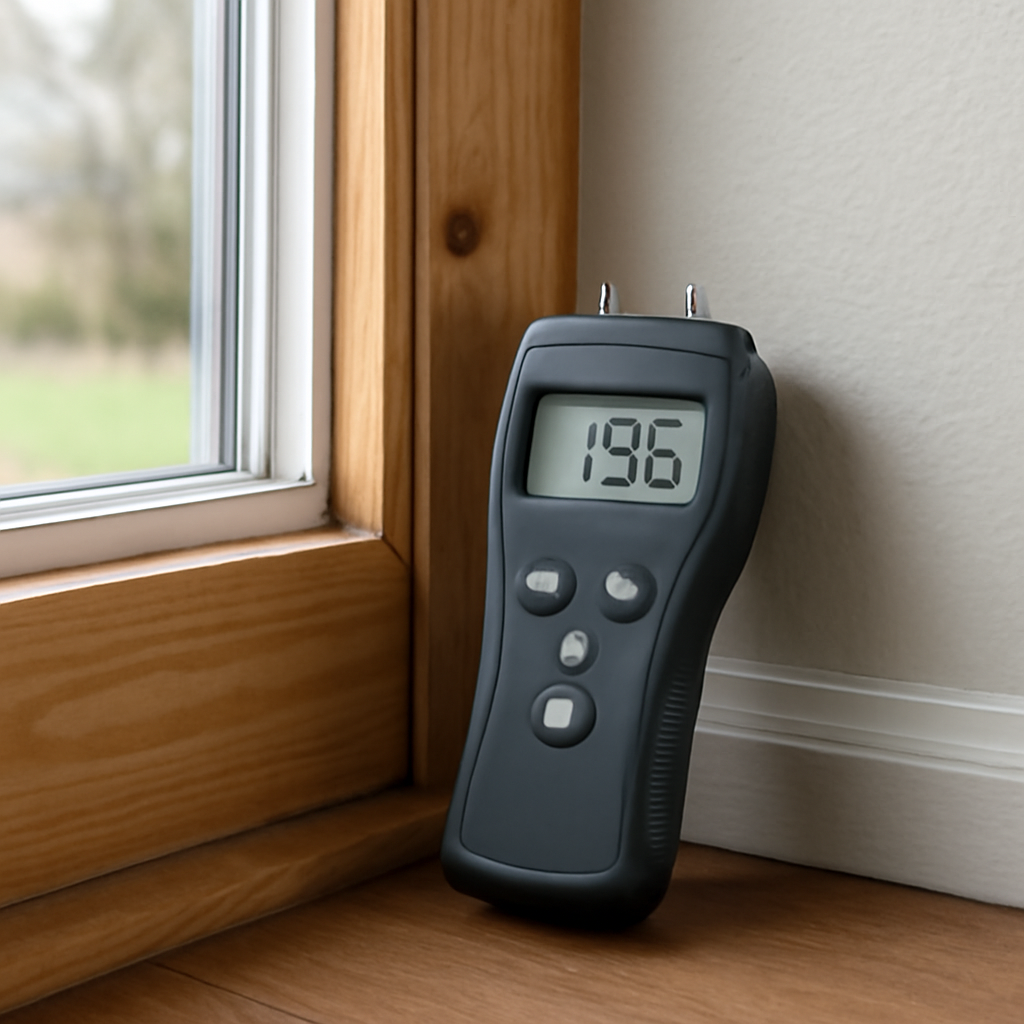
Lignomat is one of the established moisture-meter brands serving the U.S. woodworking and inspection markets. Founded in Germany and operating its U.S. branch from Portland, Oregon, the company has built a reputation for both pin-type and pinless meters that compete with Wagner Meters and Delmhorst in the working professional segment. This guide walks through the Lignomat product lineup, the brand’s historical positioning, and how the meters compare against the dominant U.S. competitors in woodworking and home-inspection workflows.
Part of our Moisture Meters & Water Damage Detection guide — start there for the full picture →
The Lignomat Brand and U.S. Operations
Lignomat’s parent operation traces to German engineering roots, with calibration and reference-standard traditions imported into the U.S. market. The Portland-based U.S. operation handles distribution, service, and calibration certification for the North American market. The brand has been active in U.S. woodworking and lumber-yard markets since the 1990s, building distribution through specialty woodworking retailers and direct sales rather than the broader big-box channel.
The brand’s positioning emphasizes calibration accuracy, comprehensive species correction tables, and professional-grade build quality. Lignomat meters often appear in working cabinet shops, flooring-installation businesses, and home-inspection firms where defensible readings matter more than rock-bottom pricing. For the broader walkthrough on moisture meters and adjacent diagnostic tools, the home inspection tools hub covers the buyer-decision framework across brands and technologies.
The mini-Ligno Series
The mini-Ligno line is Lignomat’s compact pin-type moisture meter family. The mini-Ligno E sits at the entry point with a standard pin configuration and built-in correction for common species. The mini-Ligno E/D adds dual-depth pin capability — short pins for surface readings and longer pins for deeper measurements without changing meters. The mini-Ligno S/D includes Bluetooth connectivity and data logging for inspectors who document readings electronically.
Pricing across the mini-Ligno line runs roughly $100-300 depending on features. The line competes most directly with the Delmhorst J-2000 series in the pin-type pro segment and offers comparable accuracy with somewhat different feature priorities (Delmhorst leans toward simpler ruggedness; Lignomat leans toward more granular species correction).
The Ligno-Scanner Series
Ligno-Scanner is Lignomat’s pinless meter line — the dielectric/capacitive answer to Wagner’s Orion line. The Ligno-Scanner D is the standard configuration with single-depth measurement. The Ligno-Scanner SD adds dual-depth capability (typically 1/4 inch and 3/4 inch reading depths), letting users compare surface and slightly-deeper moisture without changing instruments. The Ligno-Scanner S/DC includes data logging.
The Ligno-Scanner line competes directly with Wagner Orion 940 and similar pinless meters in the woodworking market. Lignomat’s calibration documentation is particularly strong here — units ship with traceable references that satisfy professional-use requirements for inspectors and certified shops.
The Ligno-DuoTec Combination Meters
Lignomat’s distinctive product category is the Ligno-DuoTec line — combination meters that include both pin-type and pinless capabilities in a single instrument. The Ligno-DuoTec BW is the standard combo with both technologies, Bluetooth connectivity, and comprehensive species correction. The Ligno-DuoTec S/DC adds advanced data logging and report generation.
For working inspectors and woodworkers who need both technologies regularly, the combo approach saves the cost of owning two separate meters. Wagner and Delmhorst both sell separate pin and pinless meters but neither offers Lignomat’s level of integration between the two technologies in a single device. This is the strongest specific differentiation Lignomat offers versus the dominant U.S. competitors.
Historical Positioning vs Wagner and Delmhorst
Wagner Meters built its U.S. market position primarily through pinless technology, with the Orion 940 becoming the de facto standard in woodworking. Delmhorst built its position through pin-type meters, with the J-2000 series and BD-2100 dominating professional pin-meter sales. Lignomat carved a middle position by offering competitive products in both categories plus distinctive combination meters.
The brand-loyalty patterns are real. Established cabinet shops that adopted Wagner pinless meters in the 1990s tend to stay with Wagner; home-inspection firms that started with Delmhorst pin meters tend to stay with Delmhorst. Lignomat captures buyers who specifically want both technologies, who prefer the brand’s calibration approach, or who shop at specialty woodworking retailers where Lignomat has stronger distribution than the alternatives.
Pricing is generally competitive across all three brands at similar capability tiers. Differences come from feature priorities rather than dramatic price differentials. Buyers comparing all three should weight specific feature needs (dual-depth pinless, integrated pin+pinless, comprehensive species library) more than brand prestige.
Pin-Type Lignomat Use Cases
Working inspectors use pin-type Lignomat meters for the same workflows that work with any pin meter: framing moisture verification during pre-drywall inspections, post-water-event structural drying tracking, pre-purchase basement and crawl-space surveys. The mini-Ligno E/D’s dual-depth capability adds value when inspectors need to distinguish surface moisture from core moisture in thicker structural members without changing meters mid-inspection.
Cabinet shops and flooring installers use pin meters for rough-lumber acceptance testing and for spot-confirmation when pinless readings raise concerns. The Lignomat pin meters work fine in these contexts and offer the brand’s calibration documentation advantage for inspectors generating defensible reports.
Pinless Lignomat Use Cases
The Ligno-Scanner line serves the same use cases as Wagner Orion 940: pre-milling lumber surveys, glue-up moisture verification, finished-furniture acceptance testing, and any scenario where pin marks on visible wood would be unacceptable. The dual-depth Ligno-Scanner SD’s ability to compare 1/4-inch and 3/4-inch readings adds diagnostic value when investigating moisture migration patterns in thicker stock — a capability that single-depth pinless meters don’t deliver.
For sibling reading on the woodworking-specific moisture-meter context, the wood moisture meter for woodworking overview covers the broader woodworking workflow across brands.
Lumber Yard and Sawmill Use
Lumber yards and sawmills selling drying lumber to woodworkers and builders use moisture meters for inventory management and customer-facing acceptance verification. Lignomat’s mini-Ligno line is common in this environment because the dual-depth pin capability lets yard staff verify both surface and core moisture quickly on rough stock. Customers buying air-dried hardwood for furniture work appreciate the documented MC reading before paying for boards that may still need months of additional drying.
The professional-grade calibration documentation also gives lumber yards defensible records of MC at sale time, which protects against subsequent customer claims that boards arrived too wet for their intended use. For commercial lumber operations, this documentation value alone often justifies stepping up from entry-level meters to Lignomat or equivalent professional tools.
Combination Meter Workflow Advantages
The Ligno-DuoTec category delivers workflow value that neither Wagner nor Delmhorst matches directly. A working inspector arriving at a residential moisture-investigation job can use the same instrument for a fast pinless survey of a finished basement wall and then switch to pin-type for spot-confirmation in suspect areas — all without changing tools or carrying duplicate meters.
The same advantage applies in cabinet-shop workflows. Pre-milling pinless survey of rough lumber, pin-type confirmation of suspect boards, glue-up panel pinless verification, finished-piece pinless acceptance testing — one instrument handles all four steps. The simplification reduces calibration overhead (one meter to maintain instead of two) and reduces the chance of using the wrong meter for a specific scenario.
Flooring Installation Context
Hardwood flooring installation is a major Lignomat use case beyond cabinet shops. Installers verify subfloor moisture (when concrete subfloors are present, they reference Wagner’s Rapid RH for ASTM-compliant testing, but for wood subfloor systems, Lignomat pin meters serve the verification role), confirm flooring board MC at delivery, and document acceptance MC before installation begins. The National Wood Flooring Association (NWFA) installation standards specify acceptance MC ranges that flooring installers must verify and document.
Lignomat’s calibration documentation supports the warranty-protection workflow that quality flooring installers maintain — documented MC readings at acceptance and at installation protect both the installer and the homeowner from later disputes about whether moisture-related failures resulted from improper installation or from post-installation conditions.
Species Correction and Calibration
Lignomat’s species correction libraries are comprehensive across the product line. The mini-Ligno series ships with built-in correction for over 200 species through firmware. The Ligno-Scanner series uses specific gravity adjustment with species lookup for common woods. The Ligno-DuoTec combination meters include both correction approaches in a single instrument.
Calibration documentation ships with every Lignomat unit. Working professionals who generate defensible reports for insurance, construction-defect, or warranty work appreciate the traceable references. Hobbyist woodworkers don’t strictly need the documentation rigor but benefit from the calibration consistency.
Where Lignomat Doesn’t Fit
For homeowner one-off use cases — checking a single basement wall after a leak, verifying that recently-installed flooring is at acceptable moisture — Lignomat meters are overspecified. Entry-level pin meters at $25-75 deliver adequate accuracy for casual homeowner use without the calibration documentation overhead.
For commercial flooring installation requiring ASTM F2170 in-situ relative humidity testing of concrete subfloors, Lignomat doesn’t compete directly with Wagner’s Rapid RH line in that specific subfloor-testing niche. Lignomat focuses on wood-moisture measurement; concrete-subfloor RH testing is a separate market where Wagner dominates.
InterNACHI and Inspector Context
InterNACHI’s training resources cover moisture-meter use in residential inspection across brands. For working inspectors evaluating which brand to standardize on, Lignomat offers competitive capability with distinctive combination-meter options that Wagner and Delmhorst don’t match. The brand’s calibration documentation supports inspectors generating reports that may face challenge in insurance or litigation contexts.
Brand selection is ultimately a workflow-preference decision. Inspectors who own and use Wagner or Delmhorst happily have little reason to switch to Lignomat. Inspectors building out a fresh moisture-meter kit may find Lignomat’s combination-meter approach more appealing than buying separate pin and pinless meters from other manufacturers.
Price Tiers and Tool Recommendations
For hobbyist woodworkers who want Lignomat-brand pin capability, the mini-Ligno E around $100-150 is the entry point. For professional shops needing both pin and pinless, the Ligno-DuoTec BW around $400-500 delivers the combination-meter workflow advantage. For home inspectors who want comprehensive moisture-meter capability in a single instrument, the Ligno-DuoTec BW is again the natural choice.
The pricing competes favorably against equivalent feature-set tools from other manufacturers when buyers account for the combination-meter advantage (one Lignomat DuoTec versus two single-mode meters from Wagner+Delmhorst). For single-technology buyers (pinless-only or pin-only), Wagner and Delmhorst respectively remain competitive choices.
One additional consideration: warranty support and service network. Lignomat’s U.S. operations from Portland handle warranty service and calibration through a smaller distribution network than the dominant brands. For working professionals who depend on rapid service turnaround, Wagner’s broader U.S. service network is sometimes preferred even when Lignomat’s spec sheet is competitive. For shops in regions with strong Lignomat distribution (Pacific Northwest, parts of the Midwest), this concern is minor. For shops in regions with sparse Lignomat presence, factor service turnaround into the buying decision.
Front Range woodworking and inspection shops have reasonable Lignomat access through specialty distributors and direct online ordering. The brand isn’t typically carried at big-box retail in Colorado, which means hands-on evaluation before purchase usually requires either a trade-show visit or borrowed equipment from an existing user.
More Questions About Ligno Moisture Meters
What moisture content should wood be before flooring installation?
Solid hardwood flooring is usually installed at about 6 to 9 percent moisture content in most US interiors, and dry climates like Colorado often run closer to 6 to 8 percent. The more important rule is the difference between the flooring and the subfloor: a common guideline is no more than 2 percent for strip flooring and about 4 percent for wide planks. Manufacturer instructions override general ranges. A Ligno-style pin meter with species correction gives the most dependable readings for this comparison.
Can a Ligno moisture meter be used on drywall and concrete?
Ligno moisture meters are designed primarily for wood, and readings on drywall or concrete are relative rather than true moisture content. Pin meters on a wood scale will show higher numbers on wet drywall, which helps compare wet and dry areas, but the figure is not a calibrated percentage. Pinless scanners work for comparison scans on walls. Concrete slabs need dedicated tests, such as in-situ relative humidity probes or calcium chloride tests, before flooring goes down. For leak and mold checks, the comparison method is usually enough.
How deep do pinless Ligno meters read into wood?
Pinless Ligno scanners typically read about 3/4 inch into wood, and some models offer a shallower setting around 1/4 inch for thin veneers and flooring. The reading averages moisture across that depth, so a wet core or a wet surface can skew the result. Pinless meters also need flat, smooth contact and a setting for wood density or species. For thick lumber where the core matters, insulated pin electrodes driven to a set depth give a more precise profile.
How long does a Ligno moisture meter battery last?
A Ligno moisture meter battery commonly lasts many months to a year of occasional use, since most models run on a single 9-volt battery and draw power only during readings. Heavy daily use in a shop or on job sites shortens that. A low battery can cause unstable or inaccurate readings, so most meters show a low-battery warning. Removing the battery during long storage prevents leakage damage to the contacts, which is one of the more common causes of meter failure.
References
- InterNACHI Inspector Library and Training Resources — International Association of Certified Home Inspectors
- A Brief Guide to Mold, Moisture and Your Home — U.S. Environmental Protection Agency
- ASHI Standards of Practice — American Society of Home Inspectors
- ASHRAE Standards and Guidelines — American Society of Heating, Refrigerating and Air-Conditioning Engineers
Frequently asked questions
What is a Ligno moisture meter?
Ligno (Lignomat) moisture meters are a product family from the German-engineered Lignomat brand operating in the U.S. from Portland, Oregon. The lineup includes mini-Ligno pin-type meters, Ligno-Scanner pinless meters, and Ligno-DuoTec combination meters that include both technologies in a single instrument.
How does Lignomat compare to Wagner and Delmhorst?
Wagner dominates pinless meters in U.S. woodworking; Delmhorst dominates pin-type meters in inspection. Lignomat competes with both and uniquely offers Ligno-DuoTec combination meters that integrate pin and pinless capability in one device. Pricing is competitive at similar capability tiers.
Should homeowners buy Lignomat moisture meters?
For one-off homeowner use cases, Lignomat meters are overspecified — entry-level $25-75 pin meters from any brand deliver adequate accuracy. Lignomat's value shows up for working inspectors and professional shops where calibration documentation and combination-meter workflow advantage justify the investment.
What's special about Ligno-DuoTec combination meters?
They combine pin-type and pinless capabilities in a single instrument — the only major brand offering this integration. Working inspectors can use pinless for fast surveys and pin-type for spot confirmation without changing meters mid-inspection, simplifying calibration overhead and reducing the chance of using the wrong meter for a given scenario.
Do moisture meters need species correction for accurate readings?
Pin moisture meters need species correction for accurate readings because different woods conduct electricity differently at the same moisture content. Without correction, readings on dense species can be off by several percent. Many Ligno meters include built-in species groups or a printed correction chart.
What moisture content is right for firewood?
Firewood burns best at about 20 percent moisture content or lower. A pin meter reading taken on a freshly split face, not the weathered outside of the log, gives the most accurate result. Wood above 25 percent smokes heavily and builds creosote in chimneys.
Can a moisture meter detect hidden water leaks?
A moisture meter can help find hidden water leaks by showing elevated readings in wood trim, subfloors, and drywall near the source. Pinless scanning across a wall maps the wet area without damage. The meter shows where moisture is, but finding the leak source may still need a plumber or inspector.
Moisture meters for home inspection
Pin meters read deep but leave marks; pinless meters scan surfaces non-destructively. Many inspectors carry both.
| Product | Why | Buy |
|---|---|---|
 Klein Tools ET140 Pinless | Non-destructive scanning; affordable. | Amazon — $49.22 |
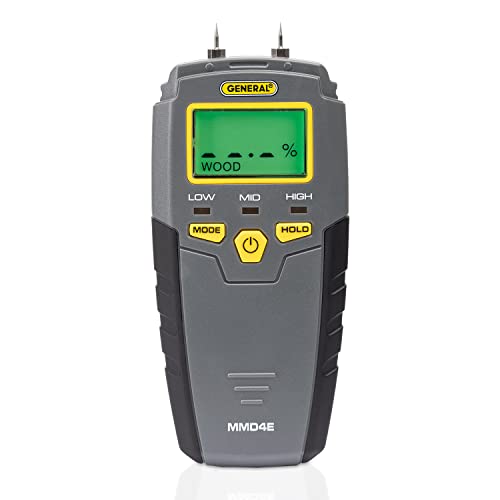 General Tools MMD4E | Best-selling pin meter for drywall/wood. | Amazon — $39.98 |
 Lignomat Mini-Ligno | Trusted by woodworkers; species-calibrated. | Amazon — $83.20 |