Laminate vs Vinyl Flooring: Water, Wear, Cost and Verdict
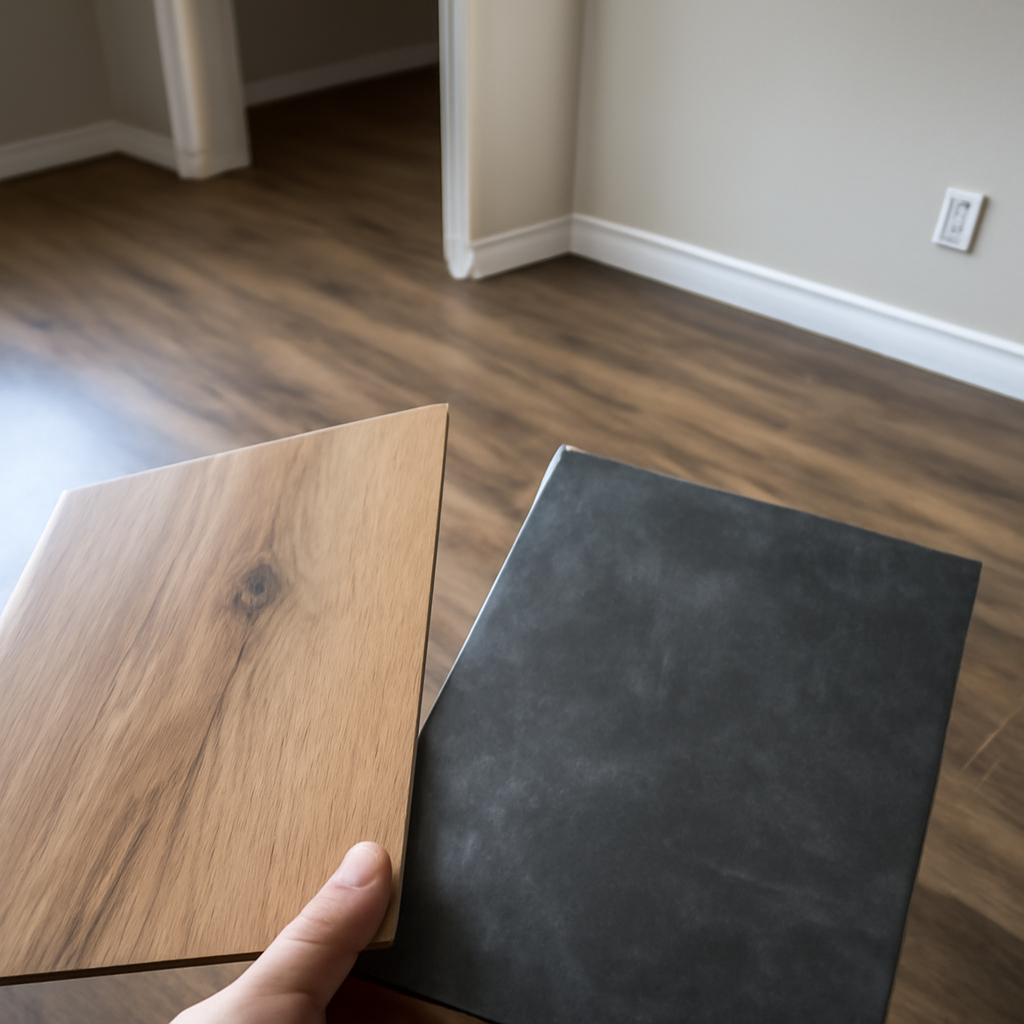
The short verdict on laminate vs vinyl flooring: pick vinyl (luxury vinyl plank or tile) for anywhere water is likely, such as kitchens, bathrooms, laundry rooms and basements, and pick laminate for living areas and bedrooms where you want a harder, more convincing wood-look surface that resists scratches and dents, often at a slightly lower price. Both are floating floors that click together over an underlayment, both cost far less than hardwood, and both can look excellent or wear out early depending on the product tier and the installation. The biggest differences are what happens when water sits on the floor, how the surface handles heavy furniture and claws, and how each one feels and sounds underfoot. This guide compares them on water resistance, durability ratings, typical costs, comfort, indoor air, Front Range conditions such as very dry winters and strong sun, and how a home inspector looks at each one in a house you are buying. Costs and lifespans below are typical national ranges, not quotes.
Part of our Structure & Exterior guide — start there for the full picture →
Laminate vs Vinyl Flooring at a Glance
The table compares mainstream click-together laminate with rigid-core luxury vinyl plank, the two products most shoppers are actually choosing between.
| Factor | Laminate | Luxury vinyl plank (rigid core) |
|---|---|---|
| Core material | High-density fiberboard (wood fiber and resin) | Stone-plastic composite (SPC) or wood-plastic composite (WPC); PVC-based |
| Typical installed cost (national range, 2026) | Roughly $3–$8 per square foot including mid-range material and labor | Roughly $4–$10 per square foot including mid-range material and labor |
| Water | Water-resistant at best; the core can swell if water sits or gets into seams | The plank itself is waterproof; water can still get under it to the subfloor |
| Surface durability | Hard melamine wear layer; strong scratch resistance, rated by AC class | Clear vinyl wear layer measured in mils; softer, more dent- and scratch-prone |
| Typical lifespan | Often 15–25 years in normal use | Often 15–25 years; thicker wear layers last longer |
| Feel and sound | Hard, can sound hollow without good underlayment | Slightly softer and quieter; feels less like wood |
| Install | Floating; needs expansion gaps and a flat, dry subfloor | Floating or glue-down; tolerates slightly more subfloor variation |
| Best for | Bedrooms, living rooms, offices, homes with large dogs | Kitchens, baths, laundry rooms, basements, rentals |
Our standalone guides to laminate flooring and LVP flooring cover each product in more depth, including construction and installation basics.
How Each Floor Is Built
Laminate
Laminate is a layered product. A dense fiberboard core gives it stiffness and click-lock edges. On top sits a printed decor layer, usually a high-resolution photograph of wood or stone, protected by a clear, very hard wear layer made with melamine resin. A backing layer on the bottom balances the plank so it stays flat. Many products now have embossed textures registered to the wood grain image, which is why good laminate can be hard to tell from real wood at a glance.
That fiberboard core is the source of both laminate’s strengths and its main weakness. It is rigid and resists denting, but it is still wood fiber, and wood fiber absorbs water and swells.
Vinyl plank and tile
Luxury vinyl plank and tile also use a printed image layer under a clear wear layer, but the body is plastic. Rigid-core versions use a stone-plastic composite (dense and stable) or a wood-plastic composite (foamed, slightly softer and warmer underfoot). Flexible, glue-down vinyl planks are thinner and follow the subfloor more closely. Sheet vinyl, the older roll goods, is a different product category and is mentioned below mainly because of what older versions may contain.
Water Resistance and Moisture
This is the single biggest reason homeowners choose one over the other.
Rigid-core vinyl planks do not absorb water, so a spilled glass, wet dog paws or a few hours of standing water from a leaking dishwasher usually will not hurt the planks themselves. Many laminate products are now marketed as water-resistant, with sealed edges and coatings that buy time on surface spills. Once water gets into the seams and reaches the fiberboard core, though, laminate edges can swell and “peak,” and that damage does not reverse when the floor dries.
Neither floor protects what is underneath. Water from a toilet supply line, a failed water heater or a washing machine can run under a floating floor and soak the subfloor or underlayment, where it can stay hidden. EPA’s guide to mold and moisture advises that wet or damp materials dried within 24 to 48 hours after a leak or spill usually will not grow mold, and that moisture control is the key to mold control. A floating floor over a wet subfloor slows that drying, so after any significant leak, the planks near the source often need to come up so the area can dry. Our guide to subfloor repair explains what to do if damage has already set in.
Practical placement rules, which are generalizations rather than manufacturer instructions:
- Full bathrooms, laundry rooms and mudrooms: vinyl is the safer choice.
- Kitchens: vinyl is more forgiving; quality water-resistant laminate can work if spills are wiped promptly and the dishwasher and sink connections are sound.
- Bedrooms and living areas: either works; laminate’s harder surface is often an advantage.
- Basements: vinyl, almost always. See below.
Wear Layers, Scratches and Dents
Durability is rated differently for each material, which makes side-by-side shopping confusing.
Laminate is commonly sold with an abrasion class (AC) rating from a European test standard, ranging from AC1 for light residential use up to AC5 for heavy commercial use. AC3 is a common baseline for busy homes, and AC4 is widely chosen for homes with pets or heavy traffic. Laminate’s melamine surface is very hard, so it resists scratches from grit, chair legs and dog nails better than most vinyl.
Vinyl is rated by wear layer thickness in mils (thousandths of an inch). Budget products may have a thin wear layer around 6 to 8 mil, mid-range residential products often fall around 12 to 20 mil, and 20 mil and above is typical for heavy-use and light commercial products. A thicker wear layer resists wear-through, but vinyl is softer than laminate, so it can scuff and dent under sharp, heavy point loads like appliance feet or dropped cast iron.
Two habits protect both floors: felt pads under furniture legs, and walk-off mats at entries to trap the grit that acts like sandpaper. Neither material can be sanded and refinished like hardwood; damaged planks are replaced individually, so buy and store a box of extras.
Typical Costs and What Drives Them
Laminate and vinyl overlap heavily in price. Entry-level products of both types are inexpensive, and premium lines of both can approach engineered wood. As a typical national range, many homeowners pay roughly $3 to $8 per square foot installed for mid-range laminate and roughly $4 to $10 per square foot installed for mid-range rigid-core vinyl. Treat those as planning figures only.
What moves the final number:
- Product tier. Thicker planks, thicker wear layers, higher AC ratings and better visual realism cost more.
- Subfloor preparation. Leveling compound, replacing damaged plywood and fixing squeaks often cost more than the price difference between the two floor types.
- Removal of the old floor. Carpet removal is quick. Tile removal is slow. Older vinyl or adhesive may need asbestos testing before removal.
- Layout and transitions. Stairs, many doorways, angled walls and transitions to tile or carpet add labor and trim.
- Underlayment and moisture barrier. Some planks have attached pads; others need separate underlayment, and slabs usually need a vapor barrier.
- Moving furniture and appliances. Some installers include it, some charge separately.
Get two or three written quotes that list the exact product, square footage with a waste allowance, subfloor prep, removal, underlayment, trim and transitions.
Comfort, Sound and Indoor Air
Laminate feels firm and, with a good underlayment, sounds close to wood. Without one, it can produce a hollow clicking sound under hard shoes. Vinyl, especially wood-plastic composite cores, is a little softer and quieter, which some people prefer in kitchens where they stand a lot. Both feel cooler underfoot than carpet; neither feels as warm as wood in winter.
New floors, adhesives and underlayments can release chemicals into indoor air for a period after installation. EPA notes that building materials, furnishings, glues and adhesives are among the many sources of volatile organic compounds and recommends increasing ventilation when using products that emit them. Laminate’s fiberboard core is a composite wood product, and EPA’s formaldehyde emission standards for composite wood products require those products sold in the United States to be labeled as TSCA Title VI compliant. Looking for that label on laminate, choosing products with third-party low-emission certification, and airing out rooms for several days after installation are reasonable steps for either floor.
Front Range Factors: Dry Air, Sun and Basements
Very dry winters and expansion gaps
Laminate’s wood-fiber core expands and contracts with humidity, and Front Range winter air indoors can get very dry when the furnace runs. That makes acclimation and expansion gaps important. Manufacturers specify how long boxes should sit in the room before installation and how wide the gap must be at walls, doorways and fixed objects, hidden under baseboard or quarter-round. Floors installed too tight can buckle when humidity rises in summer; floors installed in humid conditions can open small gaps at seams in January. Rigid-core vinyl is far more stable with humidity, but it still needs the specified gaps because it expands with temperature.
Strong sun and temperature swings
High-altitude sun through big south- and west-facing windows heats floors quickly. Vinyl expands more with heat than laminate, and some vinyl products limit installation in areas of intense direct sun or in unconditioned spaces such as sunrooms or cabins that sit unheated in winter. Check the manufacturer’s temperature limits, and use window coverings to reduce both fading and heat buildup on either floor.
Basements and concrete slabs
Many Front Range homes have finished or finishable basements, and slabs can deliver moisture from below even without visible leaks. Vinyl is the usual recommendation for below-grade floors because a damp slab or a minor seepage event will not destroy it. Laminate below grade is riskier and usually requires a vapor barrier and a slab that passes moisture testing. Our basement flooring guide covers slab moisture testing and other options. A moisture meter helps check wood subfloors before installation; see our moisture meter picks if you want to test before a project.
Cleaning, Repairs and Resale
Day-to-day care is similar and simple: sweep or vacuum with a hard-floor setting, then damp-mop with a cleaner the manufacturer approves. The differences show up at the margins.
Laminate dislikes water more than dirt. Wet mops, steam mops and puddled cleaner can work into seams and swell the core over time, so a barely damp microfiber mop is the usual advice. Wax, oil soaps and polishes leave residue on both floors and can void warranties.
Vinyl tolerates wetter cleaning, but some rubber-backed mats and rugs can stain vinyl surfaces, and harsh solvents can dull the wear layer. Check the care guide before buying mats for a vinyl kitchen.
Repairs work the same way for both click-together floors: a damaged plank can be unclicked and replaced from the nearest wall, or cut out and replaced in place by an experienced installer. That only works well if you saved matching planks from the original installation, since product lines and dye lots change quickly. Glue-down vinyl is harder to repair cleanly.
For resale, buyers in most price ranges accept either floor, and a fresh, consistent wood-look floor through the main level generally shows better than a patchwork of materials. In higher-end homes, buyers may expect hardwood or engineered wood in main living areas, in which case neither laminate nor vinyl adds as much value. If that describes your market, price an engineered wood floor for the main level before deciding, and keep laminate or vinyl for bedrooms, basements and wet rooms.
Installation Pitfalls That Ruin Either Floor
Most floating-floor failures trace back to installation, not the product:
- An uneven subfloor. Click joints flex over dips and humps and eventually break or separate. Manufacturers specify a maximum variation over a set distance.
- Pinning the floor. Installing kitchen islands, cabinets or heavy built-ins on top of a floating floor prevents movement and can cause buckling elsewhere.
- Missing expansion gaps at walls, door jambs, pipes and transitions.
- Wrong or doubled underlayment. Adding a pad under a plank that already has one can over-soften the joints and void the warranty.
- Skipping the vapor barrier on concrete where the manufacturer requires one.
- Covering old flooring that may contain asbestos without knowing it. EPA advises not to sand, scrape or level asbestos flooring or its backing and notes that when asbestos flooring needs replacing, installing new floor covering over it is preferable where possible. Our guide to asbestos flooring explains when to test older vinyl tile and sheet flooring before a renovation.
Which Should You Choose?
- Wet rooms, basements, rentals, or a household with frequent spills: rigid-core vinyl.
- Living areas and bedrooms where you want the most realistic wood look and best scratch resistance: laminate with an AC3 or AC4 rating.
- Large dogs: laminate’s hard surface handles claws better; vinyl handles accidents better. Many owners use laminate in living areas and vinyl in the kitchen and entry.
- Standing for long periods, or noise concerns in a condo: vinyl with an attached pad, after checking HOA sound requirements.
- Sun-drenched rooms or seasonal cabins: check temperature limits carefully; laminate is often more stable in heat, vinyl more stable in humidity swings.
- Tight budget: compare mid-range products of both rather than the cheapest of either; thin wear layers and soft cores wear out early.
How a Home Inspector Evaluates Each Floor
The ASHI Standard of Practice includes walls, ceilings and floors among the interior components an inspector inspects. In practice, inspectors usually identify the floor type and report visible conditions rather than grading the product.
On laminate, inspectors look for swollen or peaked seams, especially near dishwashers, refrigerators with ice makers, sinks, toilets and exterior doors, as these are classic signs of past water exposure. On vinyl, they look for separating or lifting seams, dents and wear-through in traffic lanes, and planks that move or click underfoot. On both, they note soft or springy areas that may indicate subfloor damage, buckling from missing expansion gaps or pinned floors, and staining at edges. Many inspectors use a moisture meter or thermal camera around plumbing fixtures to look for hidden moisture, with the caveat that readings through a floating floor are limited.
Because an inspection is visual and non-invasive, it cannot lift planks to look at the subfloor. If the report flags moisture, soft spots or swelling, the next step is usually a flooring contractor or plumber to find the source before any floor is replaced. Our structure and exterior hub collects related guides on floors, subfloors and moisture.
References
- A Brief Guide to Mold, Moisture and Your Home — U.S. Environmental Protection Agency
- Volatile Organic Compounds’ Impact on Indoor Air Quality — U.S. Environmental Protection Agency
- Formaldehyde Emission Standards for Composite Wood Products — U.S. Environmental Protection Agency
- Protect Your Family from Exposures to Asbestos — U.S. Environmental Protection Agency
- ASHI Standard of Practice for Home Inspection — American Society of Home Inspectors
Frequently asked questions
Is laminate or vinyl better for kitchens?
Vinyl is usually the safer choice because the planks do not absorb water. Quality water-resistant laminate can work in a kitchen if spills are wiped quickly, but standing water that reaches the seams can swell the fiberboard core.
Which is more durable, laminate or vinyl plank?
Laminate generally resists scratches better because of its hard melamine wear layer. Vinyl resists water better and can last a long time with a thick wear layer, but it is softer and more prone to dents from heavy point loads.
Can laminate flooring go in a basement?
It can in some cases, but it is riskier than vinyl because a damp slab or minor seepage can swell the core. Most manufacturers require a vapor barrier and a slab that passes moisture testing, so vinyl is the more common below-grade choice.
Do laminate or vinyl floors release chemicals?
New flooring, underlayment and adhesives can release volatile organic compounds for a time after installation. EPA recommends ventilation, and laminate's composite wood core should carry a TSCA Title VI compliance label under EPA's formaldehyde standards.
Why does laminate need an expansion gap?
Laminate's wood-fiber core expands and contracts with humidity. On the Front Range, indoor air swings from very dry in winter to more humid in summer, so the gap specified by the manufacturer prevents buckling and separation.
Buying a Front Range home with swollen seams, soft spots or a recently replaced floor? Reach out through our contact page to connect with a local inspector before you close.