Vinyl Siding: Lifespan, Hail Damage, Repairs and Moisture
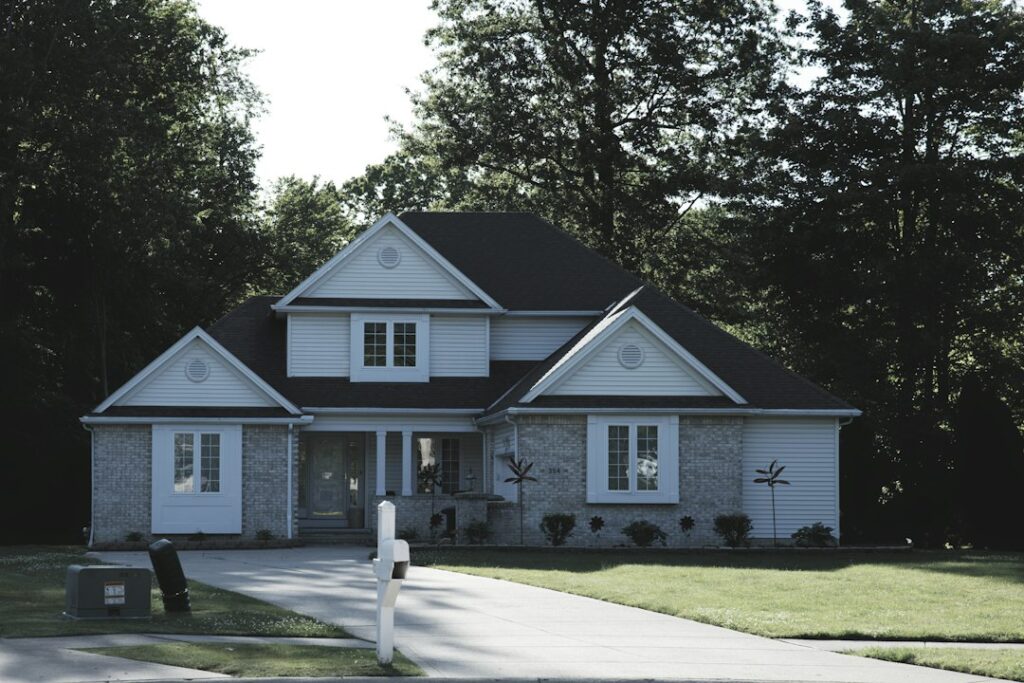
Vinyl siding covers a large share of American homes, including many tract neighborhoods built along the Colorado Front Range from the 1980s onward. It is popular because it is relatively inexpensive, never needs paint and installs quickly. Those same traits create blind spots. Vinyl is a loose, hung cladding rather than a sealed skin, so its real performance depends on what sits behind it: the weather-resistive barrier, the flashing at windows and roof lines, and the sheathing and framing. Front Range weather adds its own stress, with hail, intense high-altitude sun and big temperature swings. This guide covers how long vinyl tends to last, how hail and cold make it brittle, why loose nailing matters, how heat from grills and reflective windows can warp it, what can hide underneath, and how to think about repair versus replacement.
Part of our Structure & Exterior guide — start there for the full picture →
What Is Vinyl Siding and How Long Does It Last?
Vinyl siding is made from polyvinyl chloride (PVC) extruded into long panels that imitate lap boards, Dutch lap, shakes, scallops or vertical board and batten. Panels interlock at the bottom edge, hang from a nailing hem at the top, and slide into accessory pieces such as J-channel, outside corner posts and starter strips. Color is mixed through the material rather than painted on, which is why vinyl does not peel.
Lifespan estimates for vinyl siding vary widely. Manufacturers often market products with long or lifetime limited warranties, and industry sources commonly describe a service life somewhere in the range of 20 to 40 years or more. Real-world life depends heavily on:
- Panel thickness. Thicker premium panels tend to resist impact and wind better than thin builder-grade products.
- Sun exposure. South and west walls at Colorado elevations take far more ultraviolet exposure than shaded north walls.
- Hail history. One severe storm can end the useful life of an otherwise sound wall.
- Installation quality. Tight nailing, poor flashing and missing clearances shorten life and invite hidden damage.
- Color. Dark colors absorb more heat and may be more prone to distortion unless the product is formulated for it.
A home inspector will not usually assign a remaining life to vinyl. The ASHI Standard of Practice lists wall coverings, flashing and trim among the exterior items an inspector shall inspect, but its general exclusions say the inspector is not required to determine the remaining life expectancy of systems and components. What an inspection can do is document present condition and point out installation details that tend to cause trouble.
Hail Damage and Cold-Weather Brittleness
Hail is the biggest single threat to vinyl siding on the Front Range. PVC becomes stiffer and more brittle as temperatures drop, so the same hailstone that would dent a panel on a warm afternoon can crack or puncture it during a cold spring storm. Wind-driven hail tends to concentrate damage on the side of the house facing the storm, which is often the north or west wall.
Common signs of hail-damaged vinyl include:
- Round or star-shaped holes, frequently near the bottom lip of a panel where it is unsupported
- Hairline cracks radiating from impact points
- Chips missing from the butt edge of panels
- Spatter marks where hail knocked dirt and oxidation off the surface, which help show the storm direction
- Matching damage on window wraps, gutters, downspouts, AC fins and the roof
Because hail rarely hits only one material, it is worth checking the roof whenever siding shows impact damage. Our guide to hail damage on roofs explains how adjusters and inspectors look for bruised shingles, damaged vents and dented metal. Siding claims are usually filed alongside roof claims, and photographs taken soon after the storm help.
Cold also affects routine handling. Installers and repair crews generally avoid cutting or snapping vinyl in very cold weather because it is more likely to crack. If a contractor plans winter repairs, ask how panels will be handled and stored to limit breakage.
UV Fading and Chalking
Ultraviolet exposure slowly breaks down the surface of vinyl. Older panels often show fading on sunny walls, a chalky film that rubs off on a hand, or a mismatch between a bright replacement panel and the weathered wall around it. Fading is largely cosmetic, but heavily weathered vinyl can also become more brittle, which raises its vulnerability to hail and impact. High-altitude sun in Denver, Colorado Springs and the foothills speeds this process compared with lower, cloudier regions.
Why Vinyl Must Be Nailed Loosely
Vinyl expands and contracts noticeably with temperature. A long panel can change length by a meaningful fraction of an inch between a cold winter night and a hot summer afternoon. Manufacturers design for this movement with slotted nailing hems and gaps at J-channels and corners. The installation instructions for most products call for fasteners to be centered in the slots and left slightly loose, so the panel can slide side to side, rather than driven tight against the wall.
When siding is nailed tight, the panel cannot move. Typical results include:
- Buckling and oil-canning. Wavy panels that bulge outward on hot days.
- Panels pulling out of channels. Ends that shrink back in cold weather and expose gaps at J-channel or corner posts.
- Cracking at fasteners. Stress concentrated at a pinned nail can split the hem over time.
- Unlocked courses. Wind can lift panels that are distorted or not fully locked, and loose panels can blow off in Front Range chinook and downslope wind events.
A simple field check is to try sliding a panel gently side to side. Properly installed vinyl usually has some free movement. Panels that feel locked solid along an entire wall may have been face-nailed or over-driven. Face nails, driven straight through the exposed face rather than the nailing hem, are a sign of a shortcut repair.
Flashing, J-Channel and Window Details
Vinyl siding sheds most rain, but it is not watertight. Water gets behind it at laps, channels, corners and penetrations, and the system relies on the layers underneath to drain that water back out. The most vulnerable spots are openings.
At windows and doors, vinyl typically dies into J-channel that wraps the opening. The J-channel hides cut ends, but it does not replace proper flashing. The window itself should be flashed into the weather-resistive barrier, with a sill pan or flexible sill flashing, side flashing lapped correctly and a head flashing or drip cap that sheds water out over the siding. Our guide to exterior window trim covers what those details should look like and how trim rot usually starts.
Other common water entry points include:
- Roof-to-wall intersections. Where a lower roof meets a sidewall, step flashing should run under the siding, and a kick-out flashing should direct water away from the wall at the bottom edge. Missing kick-outs are a frequent cause of rot below. See our guide to roof flashing for how these pieces fit together.
- Penetrations. Hose bibs, dryer vents, electrical boxes and light fixtures should use mounting blocks designed for vinyl, not sealant stuffed into a rough-cut hole.
- Deck ledgers. Decks attached through siding need flashing above the ledger so water does not run behind the cladding and into the band joist.
- Top of J-channel over windows. J-channel above an opening is often notched or fitted with a drip so water does not collect and run behind the side channels.
What Is Behind Vinyl Siding
Because vinyl is a drained cladding, the most important layer on a vinyl-sided wall is often the one nobody sees. A weather-resistive barrier (WRB) such as house wrap or building paper should sit behind the siding, lapped shingle-style so water runs down and out. Our guide to house wrap explains how the barrier works and why laps, tape and window integration matter. Some vinyl products also come with or are installed over foam insulation backer, which adds a little thermal resistance and stiffens panels but does not change the need for a proper drainage plane.
Hidden Moisture and Rot
The downside of a cladding that hides everything is that leaks can run for years before anyone notices. By the time stains show up indoors, sheathing, rim joists or window framing may be soft. Clues worth investigating include:
- Swelling or soft spots in interior window returns, baseboards or drywall below windows
- Musty odors in rooms along one exterior wall
- Peeling paint or rot on trim boards that abut the siding
- Stains or dark streaks on the foundation wall below a particular window or roof intersection
- Soft or spongy areas when pressing on the siding near the bottom of a wall
When moisture has reached the framing, damaged wood typically needs to be cut out and replaced rather than covered. Our wood rot repair guide covers how contractors assess and repair it. The EPA notes that the key to mold control is moisture control, and that wet materials dried within 24 to 48 hours generally will not grow mold. Wall cavities soaked by a slow siding leak rarely get that chance, which is why the water source has to be found and fixed, not just the visible symptom.
Old Asbestos Siding Under Vinyl
In older Front Range neighborhoods, vinyl was sometimes installed directly over earlier cladding, including cement-based shingles that may contain asbestos. Covering old siding in place can be a reasonable choice because it avoids disturbing the material, but it complicates future work. Removing the vinyl, drilling for new fixtures or tearing off both layers during re-siding can damage the material underneath. The EPA advises that you generally cannot tell whether a material contains asbestos by looking at it and that material in good condition that will not be disturbed should be left alone. Our guide on whether asbestos siding is dangerous explains testing and handling options before any project begins.
Heat Damage: Grills, Fire Pits and Reflected Sunlight
Vinyl softens at temperatures that are not much higher than what a hot wall can experience in direct sun, so concentrated heat sources can warp or melt it.
- Grills and fire pits. Barbecues parked against a wall are a common cause of sagging, melted panels. The NFPA advises placing grills well away from the home, deck railings and out from under eaves and overhanging branches.
- Reflected sunlight. Some low-emissivity windows on a neighboring house, or on your own house at an inside corner, can focus reflected sunlight onto siding and cause localized distortion. The damage often appears as a wavy patch that matches a window’s shape and position.
- Dryer vents and exhausts. Hot exhaust directed against siding can discolor it over time.
Melted panels are usually replaceable individually, but the cause has to be addressed or the new panel will warp too. Window screens or exterior film on the reflecting window are among the approaches homeowners use for reflection damage, and they are best discussed with the window manufacturer.
How Vinyl Behaves in a Fire
Vinyl is a plastic, and in a wildfire or a nearby structure fire it can soften, melt and fall away, exposing whatever is behind it. That is one reason building scientists focus on the whole wall assembly in wildland-urban interface areas, not just the visible cladding. The NFPA describes the area within 5 feet of a home as the immediate zone, recommends that it be kept non-combustible, and advises moving flammable material such as mulch, plants, leaves, needles and firewood away from exterior walls. For homes in Jefferson, Boulder, Douglas or El Paso county foothill areas, our guide to fire-resistant house materials compares cladding options and how they are rated.
Vinyl Siding vs Fiber Cement
Fiber cement is the most common alternative buyers compare against vinyl. The trade-offs, in general terms:
- Cost. Vinyl is usually less expensive to buy and install. Fiber cement is heavier, needs more labor and needs paint, so installed costs are typically higher.
- Impact resistance. Fiber cement generally resists hail better than standard vinyl, though it can still chip or crack in severe storms.
- Fire. Fiber cement is non-combustible, while vinyl melts.
- Maintenance. Vinyl needs washing but not paint. Fiber cement needs periodic repainting and caulk maintenance.
- Moisture. Both depend on proper WRB and flashing. Fiber cement also needs required clearances to roofs and grade and sealed cut edges.
Our Hardie board siding guide covers fiber cement in detail. If you are drawn to a vertical look, vinyl is also available in a board and batten siding profile, alongside wood, engineered wood and fiber cement versions.
What an Inspector Looks for on Vinyl Siding
During a typical home inspection, vinyl siding is evaluated visually from the ground. Common items noted include:
- Cracked, holed or missing panels, and whether the pattern suggests hail
- Buckled or wavy courses that suggest tight nailing
- Panels pulled out of J-channel or corner posts
- Missing kick-out flashing at roof-to-wall intersections
- Siding in contact with roofing or soil, or too close to grade where splashback and snow sit against it
- Poorly sealed penetrations and missing mounting blocks
- Melted or distorted areas near grills or reflective windows
- Interior clues such as stains below windows that point to hidden leaks
Inspectors are not expected to remove siding to see the WRB or sheathing. If clues suggest hidden water damage, the next step is usually a moisture survey, selective removal of a few panels by a siding contractor, or both. For an overview of how an inspection fits into a purchase, see our home inspector hiring guide, and for related exterior topics, the structure and exterior hub.
Repair or Replace? Vinyl Siding Costs
Many vinyl problems can be fixed panel by panel. A cracked or melted panel can often be unlocked with a zip tool, cut out and replaced without disturbing much of the wall. The hardest part is usually color matching, since a new panel will be brighter than weathered siding nearby. Our siding repair guide walks through when spot repairs make sense.
Replacement makes more sense when:
- Hail damage is widespread across multiple elevations
- Panels are brittle, chalky and cracking during routine handling
- The product is discontinued and a reasonable match is not available
- Hidden water damage requires stripping large areas anyway
- The original installation lacks a WRB or proper window flashing
Costs vary by region, product grade, wall height and how much trim and repair is involved. As a rough 2026 range, single-panel repairs are often a few hundred dollars for a service call, while full re-siding with vinyl commonly runs several dollars per square foot of wall installed, or roughly the low-to-mid five figures for a typical single-family house. Removing old siding, replacing damaged sheathing and upgrading flashing add to the total. Our siding replacement cost guide breaks down what drives estimates. These are general ranges, not quotes, and insurance may cover storm damage depending on the policy.
References
- ASHI Standard of Practice for Home Inspections — American Society of Home Inspectors
- Preparing Homes for Wildfire — National Fire Protection Association
- Grilling Safety — National Fire Protection Association
- A Brief Guide to Mold, Moisture and Your Home — U.S. Environmental Protection Agency
- Protect Your Family from Exposures to Asbestos — U.S. Environmental Protection Agency
Frequently asked questions
How long does vinyl siding last in Colorado?
Estimates commonly range from about 20 to 40 years or more, but Front Range conditions can shorten that. Intense high-altitude sun, hail and wide temperature swings all age vinyl faster, and one severe hailstorm can damage an entire elevation.
Why is my vinyl siding wavy?
Wavy or buckled panels usually mean the siding cannot expand freely, often because it was nailed too tightly or panels were cut too long for the channels. Heat from grills or reflected sunlight from windows can also distort panels.
Does hail crack vinyl siding more in cold weather?
Yes. Vinyl becomes stiffer and more brittle as temperatures fall, so hail in a cold spring storm is more likely to crack or puncture panels than the same hail on a warm day.
Can you replace just one vinyl siding panel?
Usually. A damaged panel can often be unlocked, removed and replaced individually. Matching color on older, faded siding is the main challenge, so some homeowners borrow a panel from a hidden wall for the visible spot.
Should vinyl siding have house wrap behind it?
Yes. Vinyl is not watertight, so a weather-resistive barrier lapped correctly behind it, along with proper window and roof-to-wall flashing, is what keeps water that gets past the siding out of the sheathing and framing.
Seeing cracked panels after a storm or stains under a window on a home you are buying? Reach out through our contact page and we can connect you with a Front Range inspector who knows what to look for on vinyl-sided homes.