Instant Mold Test Kit: What It Can and Can’t Tell You
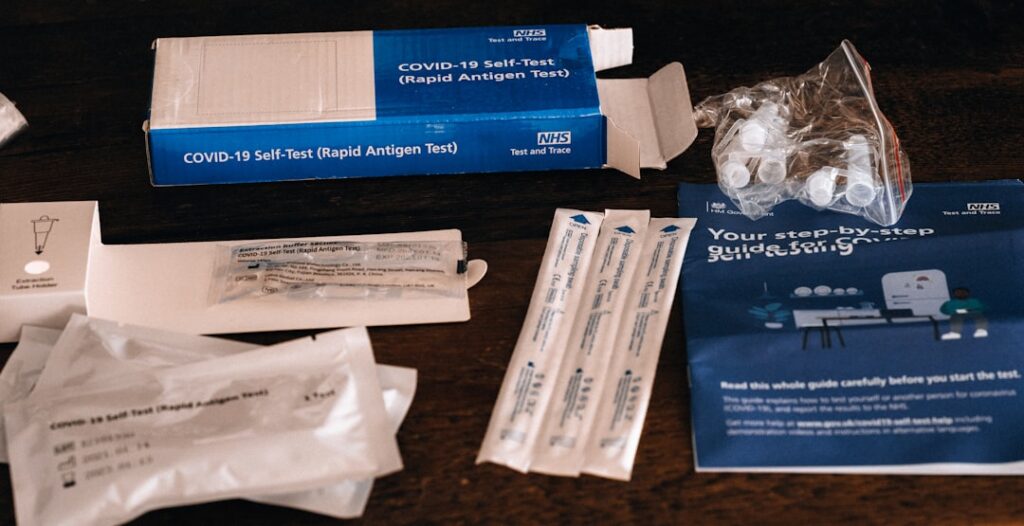
Hardware stores and online listings sell “instant” mold test kits for a few dollars, promising to tell homeowners within days whether their house has a mold problem. The appeal is obvious — a cheap, fast answer to a worrying question. The reality is more complicated: most consumer kits confirm only that mold spores exist in your home, which is true of every home, and they rarely answer the questions homeowners actually care about. Understanding what an instant mold test kit measures, and what it cannot, prevents both false alarms and false reassurance. This guide summarizes EPA and CDC guidance current as of 2026 and is educational only — consult a certified professional for testing decisions and your physician for any symptoms.
Is this mold, asbestos, or water damage? Get a free instant screen
Upload a clear photo of the suspect area. You'll get an instant AI screening opinion and what to do next. This is screening guidance, not a professional determination.
Screening guidance only. AI can be wrong. Confirm asbestos, mold type, or lead with lab testing or a licensed professional before acting.
What is an instant mold test kit and how does it work?
Most consumer mold kits use one of two methods. The common “settle plate” kit is a petri dish filled with growth medium; you leave it open in a room for a set time, let airborne spores land and grow, then read the colonies that develop over several days. Despite the “instant” label, these require an incubation period, so the result is days away, not minutes. A second type is a surface swab or tape lift that you mail to a lab for identification, with results returning in a week or two.
The settle-plate kits are the ones most people picture. After incubation, fuzzy spots appear on the medium, and the kit instructions suggest this means you “have mold.” The trouble is that spores are present in essentially all indoor air, so a plate left out almost anywhere will grow something. A positive result is close to guaranteed and tells you little on its own. The deeper limitations of the petri-dish approach are spelled out in the guide on what a black mold petri dish test really shows.
What an instant kit actually tells you — and what it doesn’t
An instant kit can tell you that viable mold spores are in the air or on a surface. With a lab-analyzed version, it can sometimes identify the genus of what grew. That is roughly the limit of useful information.
What it cannot reliably tell you is far longer. It does not measure how much mold is present in a meaningful, quantified way, because a settle plate captures whatever happens to drift down during the exposure window, not a calibrated air volume. It cannot distinguish normal indoor spore levels from a genuine problem, because it lacks an outdoor baseline for comparison. It cannot locate hidden growth, identify the moisture source, or tell you whether the mold is causing health symptoms. And it cannot indicate hazard from color or appearance — the CDC notes color does not reliably indicate species or danger. The EPA’s position is blunt: sampling is generally unnecessary when mold is visible, and there are no federal standards defining a “safe” indoor mold level against which a kit result could be judged.
When is mold testing actually worth it?
Testing of any kind earns its cost only in specific situations, and a cheap settle-plate kit rarely meets them. If you can see or smell mold, the EPA advises spending on removal and fixing the moisture rather than on confirming what you already know.
Professional testing — not an instant kit — can add value when there is a persistent musty odor but no visible source, when documentation is needed for a real estate transaction or a tenant dispute, when an occupant has unexplained respiratory symptoms and a physician wants environmental information, or for post-remediation clearance to verify a cleanup worked. In those cases, a trained assessor takes calibrated air samples with a matched outdoor baseline and interprets them in the context of a visual and moisture inspection. That comparative, contextual analysis is what makes results meaningful — and it is precisely what a standalone settle plate cannot provide. The decision framework lives in the mold inspection and testing hub, and the regional licensing angle appears in the guide on mold testing in Westchester, NY.
How to read a kit result without overreacting
If you have already run a settle-plate kit and watched something grow, resist the urge to treat it as a verdict. Growth on the plate is expected, not alarming, because indoor air always contains spores. A handful of colonies after several days is normal background, not evidence of an infestation.
What would warrant follow-up is heavy, fast growth far beyond what an identical control plate run in clean outdoor air produces — though most kits do not include a proper outdoor comparison, which is the core problem. Without a calibrated air-volume measurement and a matched outdoor baseline, the result has no reference point. Treat a positive kit as a reason to look for moisture and visible growth, not as a diagnosis. If you see mold, clean it and fix the dampness. If you smell mold but see none, that hidden-source situation is where a professional assessment, not another kit, is the sensible next step.
Why settle-plate kits mislead so easily
The settle-plate kit’s flaws are worth understanding in detail, because they explain why a “positive” result causes needless alarm. A settle plate relies on gravity: spores in the air drift down and land on the exposed medium over the exposure period. But spore settling depends on particle size, air currents, and how long the plate sits out, none of which the kit controls or measures. A heavier-spore environment and a lighter one can produce similar plates, and a draft from a vent can skew the result entirely.
Crucially, the method captures no calibrated volume of air, so it cannot tell you a concentration. Professional air sampling pulls a measured volume through a cassette in a fixed time, producing spores per cubic meter that can be compared to an outdoor reading. A settle plate produces “some colonies grew,” which is true in virtually every indoor and outdoor environment on earth. The medium in the dish also favors whatever species grow fastest on that particular nutrient, so the colonies that appear may not reflect what is actually dominant in the air. Add the days of incubation, the lack of an outdoor control in most kits, and instructions that frame any growth as a problem, and the result is a tool almost designed to generate false positives. None of this means mold is not worth taking seriously — it means the settle plate is the wrong instrument for answering the questions homeowners have.
Lab-analyzed kits versus a professional assessment
A step up from the settle plate is the mail-in kit, where you collect an air or surface sample and send it to a laboratory for analysis. These are better — a real lab identifies spore types and can provide quantified counts — but they still leave a gap that matters. The lab analyzes only the sample you sent, with no visual context, no moisture inspection, and often no properly matched outdoor baseline taken at the same time and conditions.
A professional assessment supplies exactly those missing pieces. A trained assessor inspects the home, locates moisture with a meter and thermal camera, decides where and how to sample based on what they observe, takes a matched outdoor baseline, and interprets the lab results in the context of the whole picture. The number on a report means little without that context; the same count can be unremarkable in one home and significant in another depending on the outdoor air, the moisture findings, and the species involved. So the honest ranking is: a settle plate answers almost nothing useful, a lab-analyzed mail-in kit answers more but without context, and a professional assessment answers the questions homeowners actually have — where, how much relative to outdoors, why, and what to do. For most situations, if testing is warranted at all, the assessment is the spend that produces actionable information rather than an unanchored number.
Better money than an instant kit
For most homeowners worried about mold, the dollars spent on a settle-plate kit are better directed elsewhere. If mold is visible, put the money toward proper cleanup and the moisture repair behind it. If the concern is a smell with no source, a professional moisture assessment — using meters and thermal imaging to find hidden dampness — answers the real question a kit cannot.
And the most cost-effective spend of all is prevention. Keep indoor relative humidity below 60 percent and verify with an inexpensive hygrometer, run exhaust fans, fix leaks within 24 to 48 hours, and ventilate or dehumidify damp basements and crawlspaces. Front Range homes start dry, but finished basements, poorly vented bathrooms, and summer evaporative-cooler humidity create the damp pockets where mold grows. A hygrometer and a working bathroom fan prevent more mold problems than any test kit will ever detect. The kits are not scams, but they answer a question — “is there mold?” — whose answer is almost always yes, while leaving the questions that matter unanswered.
Are instant mold kits ever useful?
Dismissing the kits entirely would be unfair, so it is worth pinning down the narrow cases where one has some value. A lab-analyzed mail-in kit — not a settle plate — can be marginally useful for satisfying simple curiosity about what genus is growing on a specific visible patch, or as a very rough, low-stakes screening step a homeowner runs before deciding whether to pay for a professional assessment. If the result comes back dramatically positive, it might prompt the call to a professional sooner.
Even then, the caveats outweigh the benefits for most situations. The kit cannot tell you whether levels are problematic without an outdoor baseline and moisture context, cannot locate hidden growth, and cannot guide remediation. A settle-plate kit’s near-guaranteed positive provides essentially no information beyond “spores exist,” which is universally true. So the honest answer is that the kits are not scams and occasionally serve as a cheap conversation-starter, but they almost never answer the question a worried homeowner actually has. Anyone whose decision depends on the result — a home sale, a health concern, a remediation choice — is better served by a professional assessment, and anyone who can already see or smell the mold is better served by cleaning it. The kit’s useful niche is small enough that most homeowners are right to skip it.
What to do when you suspect a mold problem
If worry about mold is what drove the interest in a kit, a more productive sequence exists. First, use your senses: look in the damp, low-ventilation areas — under sinks, in the basement and crawlspace, around windows, behind appliances — and note any musty smell and where it is strongest. Visible mold means skip testing and move to cleanup; the EPA’s guidance is clear that confirming visible mold by sampling wastes money.
If you smell mold but cannot find it, that hidden-source situation is where a professional moisture assessment — meter and thermal camera to find dampness inside walls — answers the real question a kit cannot. If a household member has unexplained respiratory symptoms, involve a physician, who can advise whether environmental information would help. And in every case, redirect the energy toward moisture control: an inexpensive hygrometer to keep humidity below 60 percent, working exhaust fans, prompt leak repairs, and drying wet materials within 24 to 48 hours. That sequence — observe, clean what is visible, professionally assess what is hidden, and control the moisture — addresses the actual concern far better than incubating a petri dish that was always going to grow something. The kit answers “is there mold,” a question whose answer is nearly always yes; the productive path answers “where, how much, and what do I do,” which is what a worried homeowner truly needs.
References
- Should I Sample for Mold? — U.S. Environmental Protection Agency
- About Mold and Your Home — Centers for Disease Control and Prevention
- A Brief Guide to Mold, Moisture and Your Home — U.S. Environmental Protection Agency
If a musty smell or visible mold has you weighing a test in your Front Range home, get in touch through our contact page to talk through whether testing actually helps with a qualified inspector.
DIY mold test kits
A test kit can confirm whether a suspect patch is mold and (with lab analysis) what type — though visible mold over ~10 sq ft generally warrants a professional.
| Product | Why | Buy |
|---|---|---|
 DIY Mold Test (lab included) DIY Mold Test (lab included) | Surface + air-sampling options. | Amazon — $22.00 |
 Healthful Home 5-Minute Mold Test Healthful Home 5-Minute Mold Test | Rapid screening strips. | Amazon — $34.97 |
| Mold Test Plates (DIY petri dishes) | Settle-plate style sampling you culture at home. | Amazon |