Is There an Instant Asbestos Test Kit? The Honest Answer
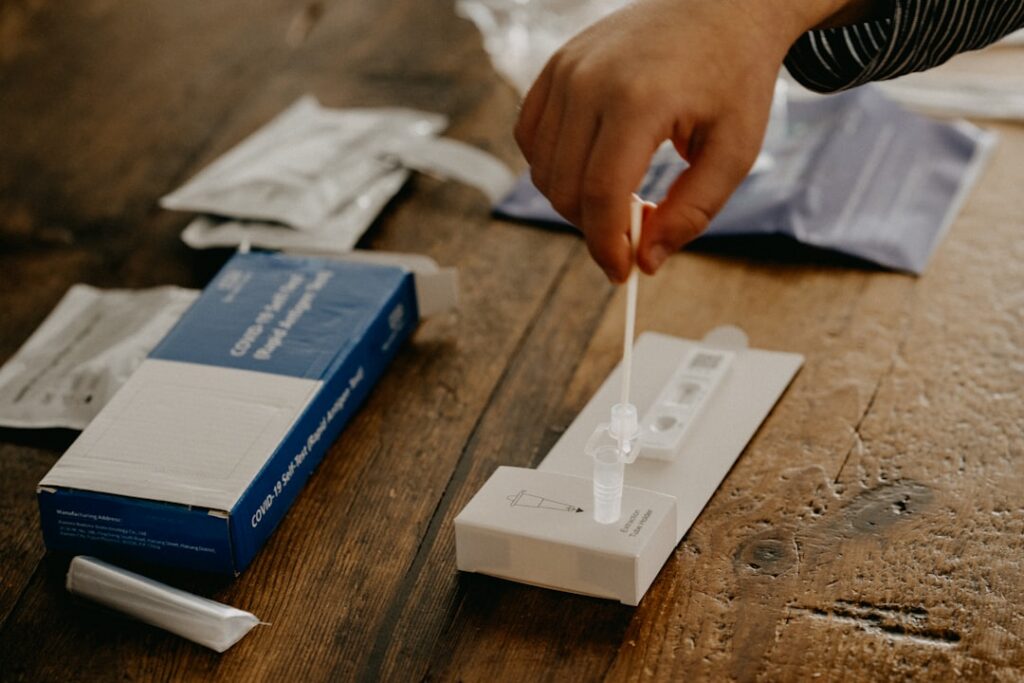
Homeowners who suspect asbestos in old flooring, popcorn ceilings, or pipe wrap often want a fast yes-or-no answer, which leads to the search for an instant asbestos test kit. The honest answer is that no truly instant, reliable home test exists. Unlike lead, which has same-day chemical swabs, asbestos can only be confirmed by examining fibers under a microscope in a laboratory. This guide summarizes EPA and OSHA guidance current as of 2026 and is informational only — it is not a substitute for a licensed asbestos professional, and anyone with health concerns should consult their physician. What does exist are mail-in lab kits and professional sampling, and understanding the difference protects both your wallet and your lungs.
Is this mold, asbestos, or water damage? Get a free instant screen
Upload a clear photo of the suspect area. You'll get an instant AI screening opinion and what to do next. This is screening guidance, not a professional determination.
Screening guidance only. AI can be wrong. Confirm asbestos, mold type, or lead with lab testing or a licensed professional before acting.
Is there an instant asbestos test kit?
No. There is no scientifically valid instant or at-home color-change test for asbestos. Asbestos is identified by its mineral fiber structure, which requires polarized light microscopy (PLM) or transmission electron microscopy (TEM) performed by a trained analyst in an accredited laboratory. Any product marketed as giving an immediate result without sending a sample to a lab cannot reliably confirm or rule out asbestos. Treat “instant asbestos test” claims with skepticism.
What is sold as a home asbestos test kit is really a sample-collection kit. You collect a small piece of the suspect material, seal it, and mail it to a lab, which returns results in days, not minutes. That is the closest legitimate option to a DIY test, and it is genuinely useful — just not instant. The wider picture of how asbestos shows up in older homes is covered in our guide to asbestos and lead in pre-1978 housing.
Why can’t asbestos be tested instantly like lead?
Lead is a metal that reacts chemically with reagents in a swab, producing a color change a homeowner can read in seconds. Asbestos is not a single chemical; it is a family of naturally occurring silicate minerals distinguished by the shape and optical properties of their fibers. No chemical reaction reveals it. An analyst must physically observe the fibers under magnification and identify their characteristics, which is why lab analysis is unavoidable.
This is also why DIY identification by sight is unreliable. Many materials look like they might contain asbestos — old vinyl tile, joint compound, textured ceilings, cement siding, pipe insulation — but appearance alone cannot confirm it. Two visually identical ceilings can differ entirely in content. The microscope is the only arbiter, and that means a lab, which means a turnaround measured in days.
How do mail-in asbestos test kits work?
A mail-in kit provides instructions, sample bags or containers, and a prepaid lab submission. The homeowner collects a small sample of the suspect material, packages it to prevent fiber release, and mails it to an accredited laboratory. The lab analyzes it by PLM (and TEM for some materials, such as those with very fine fibers) and reports the percentage and type of asbestos, if any. Costs commonly run $30 to $60 per sample including analysis, with results in several business days, sometimes faster for an expedited fee.
The catch is the sampling step. Collecting a sample disturbs the material, which can release fibers — the exact hazard you are trying to evaluate. If the material is friable (crumbles easily) or you are not confident you can collect it safely, professional sampling is the wiser choice. Our guide on how to check for asbestos walks through the decision between DIY sampling and hiring a professional.
How to collect a sample safely if you choose to
If you decide to sample yourself, follow lead-and-asbestos-safe basics. Turn off HVAC to prevent fiber spread, mist the material lightly with water to suppress dust, wear an appropriately rated respirator (an N95 is not sufficient for asbestos; a half-face respirator with P100 cartridges is the minimum many professionals use) and disposable gloves, and collect only a small piece into a sealable bag. Wet-wipe the area afterward, double-bag the waste, and dispose of it per local rules. Never dry-scrape, sand, or break the material more than necessary. When in doubt, do not disturb it — intact, undisturbed asbestos-containing material is generally not a hazard until it is damaged.
When should you hire a professional instead?
Hire a licensed asbestos inspector when the suspect material is friable, when it is in a high-traffic or child-occupied area, when you plan a renovation that will disturb it, or when you simply are not equipped to sample safely. Professionals collect samples under controlled conditions, often take multiple samples for accuracy, and interpret results in the context of the whole home. A professional survey is especially important before demolition or major remodeling, where disturbing hidden asbestos can contaminate an entire house. Our guide to asbestos surveys explains what a full professional assessment includes.
Cost is the trade-off. A professional inspection with lab analysis typically runs a few hundred dollars, more than a single mail-in kit, but it buys controlled sampling, multiple samples, and expert interpretation. For a single intact tile you can safely sample, a mail-in kit may suffice. For pipe insulation crumbling in a basement, the professional route is safer and often required by local regulation before removal.
What do the results mean and what comes next?
Lab results report whether asbestos is present, its type (chrysotile is most common in homes), and the percentage. In the United States, materials with more than one percent asbestos are regulated as asbestos-containing. A positive result does not always mean immediate removal. If the material is intact and undisturbed — sealed floor tile under newer flooring, for instance — managing it in place is often safer and cheaper than removal, which itself disturbs fibers.
When removal is warranted, it should be performed by a licensed abatement contractor using containment, negative air pressure, and proper disposal. DIY removal of asbestos is discouraged and, in many jurisdictions, restricted. The result of your test simply tells you which path applies: leave intact material alone and monitor it, or hire an abatement professional for material that is damaged or in the way of planned work.
Which home materials most often contain asbestos?
Knowing where asbestos commonly hides helps you decide what is worth testing in a pre-1980s home. Before its use was sharply curtailed, asbestos was added to dozens of building products for fire resistance and strength. The usual suspects include vinyl floor tiles (especially 9-inch tiles) and the black mastic beneath them, sheet flooring backing, popcorn and other textured ceilings, joint compound and taping on drywall seams, pipe and boiler insulation, cement siding and roofing, vermiculite attic insulation, and some plaster and acoustic products.
Not every old textured ceiling or floor tile contains asbestos, which is exactly why visual guessing fails. Two homes from the same year can differ depending on which products the builder used. The practical approach is to identify suspect materials by type and age, then test only what you intend to disturb. Intact materials you will not touch — tile under newer flooring, insulation behind a finished wall — can often be left alone and managed in place. Our guide to how to check for asbestos maps these materials in more detail.
Friable versus non-friable matters
The hazard depends heavily on whether a material is friable. Friable materials — pipe insulation, some ceiling textures, deteriorating products — crumble under hand pressure and release fibers easily, making them both more dangerous and more hazardous to sample. Non-friable materials — intact vinyl tile, cement siding — bind the asbestos in a matrix and release fibers mainly when cut, sanded, or broken. This distinction shapes both how risky a material is and whether DIY sampling is advisable. Friable material is a job for a professional; even sampling it can spread fibers.
How accurate are lab results, and what about expedited testing?
Accredited labs using polarized light microscopy are highly reliable for most home materials, and labs accredited under recognized proficiency programs are held to strict quality standards. For materials with very fine fibers, or where PLM is inconclusive, transmission electron microscopy provides a more sensitive confirmation. Reputable mail-in services use accredited labs, so the limiting factor in accuracy is usually the sample itself — a representative piece collected without contamination — rather than the analysis.
Turnaround is the trade most people care about. Standard mail-in analysis returns results in several business days; many labs offer expedited 24- or 48-hour processing for an additional fee, which is the closest you will get to fast without sacrificing reliability. That expedited window is still nothing like “instant,” but it is fast enough for most renovation planning. If you genuinely need an answer the same day — before a contractor opens a wall, for instance — a local accredited lab that accepts walk-in samples is the realistic option, not a home kit promising instant color changes.
The bottom line on instant tests
An instant asbestos test kit that gives a reliable answer in minutes does not exist, and any product claiming otherwise should be avoided. The legitimate fast option is a mail-in lab kit, which returns trustworthy results in days for $30 to $60 per sample, provided you can sample safely. When the material is friable, extensive, or tied to a renovation, skip the kit and hire a licensed professional. The few days of waiting for real lab analysis are a small price for an answer your lungs can rely on.
References
- Protect your family from asbestos exposure — U.S. Environmental Protection Agency
- Asbestos standards and exposure — Occupational Safety and Health Administration
- Asbestos worker safety information — Centers for Disease Control and Prevention
Front Range homeowners who suspect asbestos before a remodel or purchase can get in touch through our contact page to connect with a licensed local inspector who can sample and interpret results safely.
Asbestos test kits
Asbestos can only be confirmed by a lab. A mail-in kit gets you a sealed sample container and accredited analysis — never sand or disturb suspect material first.
| Product | Why | Buy |
|---|---|---|
 Asbestos Test Kit (mail-in lab) Asbestos Test Kit (mail-in lab) | Includes PPE + sealed mailer. | Amazon — $34.99 |
| Pro-Lab Asbestos Test Kit | Widely available; lab fee separate. | Amazon — $34.99 |