How to Get Rid of Dry Mold: A Plain-Language Guide
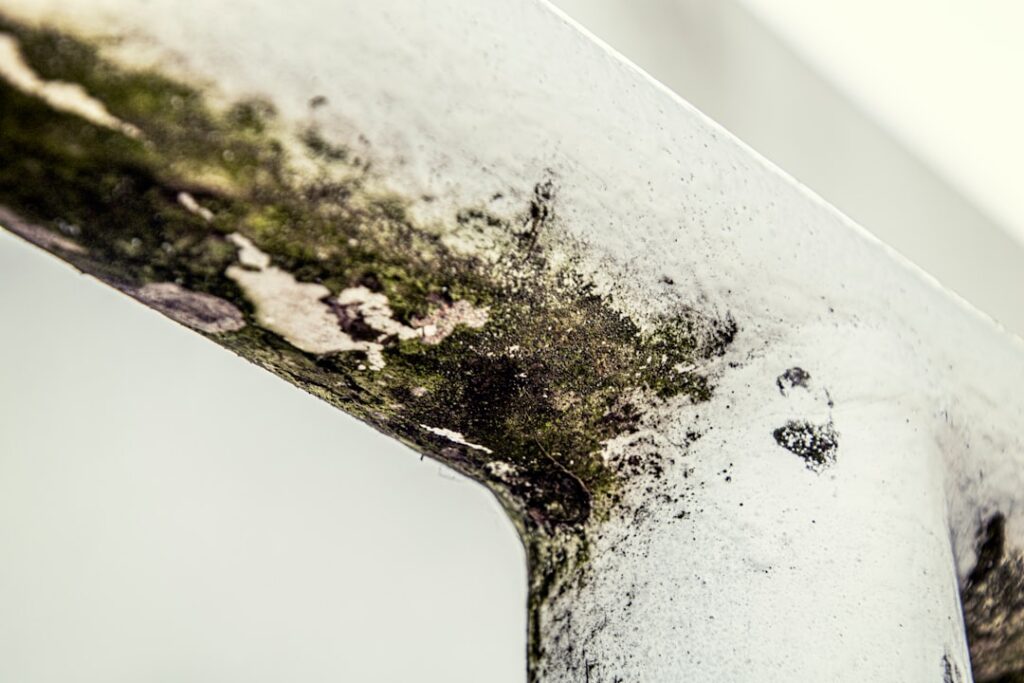
Dry mold sits in an odd middle ground for homeowners. The colony is no longer actively wet, the visible growth looks crusty and gray-black rather than slimy and dark, and the surface seems stable enough to wipe down with a household cleaner. None of that means the mold is dead. Dried Stachybotrys, Aspergillus, and Penicillium colonies remain allergenic, the spores are still viable, and any moisture event in the future can reactivate the colony in days. The cleanup approach is similar to active mold but PPE matters more — disturbing dry growth aerosolizes spores faster than disturbing damp growth. This guide summarizes EPA and CDC guidance current as of 2026 — consult a certified mold inspector for testing decisions and your physician for symptom evaluation.
Part of our Mold Removal & Remediation guide — start there for the full picture →
Is this mold, asbestos, or water damage? Get a free instant screen
Upload a clear photo of the suspect area. You'll get an instant AI screening opinion and what to do next. This is screening guidance, not a professional determination.
Screening guidance only. AI can be wrong. Confirm asbestos, mold type, or lead with lab testing or a licensed professional before acting.
What “Dry Mold” Actually Means
Dry mold is a colony that grew during a past moisture event and is now in dormant phase because the moisture source resolved itself — a leak that was repaired without follow-up cleanup, a flood that was dried but not remediated, or a seasonal humidity event that has passed. The visible growth looks different from active mold. Black mold that was slimy and shiny when wet becomes flat, crusty, and sometimes powdery when dry. Aspergillus that was fuzzy turns dusty. Pink Serratia or Cladosporium that was vivid fades to muted gray-green.
Color and texture change, but biological activity does not end. The mycelium network in the substrate remains. Spores are still attached, still viable, and still reactive to humidity. A dry colony reintroduced to moisture — even ambient humidity over 60 percent for a few weeks — comes back to active growth without homeowner intervention. That is why dry mold needs cleanup rather than acceptance.
Why Dry Mold Cleanup Has Different Risks
The single biggest difference from active-mold cleanup is dust dispersion. Wet spores are heavier and settle quickly. Dry spores aerosolize at the slightest disturbance — a fingertip on the surface, a vacuum nozzle near the area, even airflow from an HVAC supply register. The cloud of spores produced by a dry-mold disturbance can read 10 to 100 times higher in airborne counts than a comparable wet-mold disturbance.
That changes the protective equipment requirement. An N95 respirator is the minimum; an N100 or half-face elastomeric with P100 cartridges is the more honest choice for any dry-mold cleanup that involves brushing, sanding, or vacuuming. Sealed eye protection becomes essential, not optional. Disposable coveralls are appropriate for anything beyond a small wipe-down because spores adhere to clothing fibers and travel into the rest of the house.
The Dry-Mold Cleanup Sequence
The basic sequence starts with what a wet-mold cleanup adds at the end: misting. Lightly mist the affected area with water from a spray bottle before any contact. The goal is not to soak the substrate but to add enough moisture to keep spores from lofting during disturbance. Wait two to three minutes for the mist to settle into the surface.
Step One: Suit Up Before You Approach
Put on the respirator outside the affected room. Put on coveralls and shoe covers in the doorway. Tape gloves to coveralls at the wrist to prevent gaps. The moment of suit-up should happen before any disturbance, not after — a homeowner who walks across the room to set up containment without a respirator is already inhaling spores by the time the cleanup starts.
Step Two: Containment Before Any Disturbance
Close the door. Stuff a towel under the gap. Tape plastic sheeting over HVAC supply and return registers. If the work zone is larger than a small bathroom, set up a portable HEPA air scrubber on the floor running into a sealed outlet — even a consumer-grade unit captures a meaningful fraction of airborne spores.
Step Three: Mist, Then HEPA Vacuum
After the surface is lightly misted, the first cleaning pass is a HEPA vacuum with a brush attachment held just off the surface — not in contact, not pressing in. The vacuum captures loose spores that settle from the mist application. A shop vacuum without true HEPA filtration is worse than no vacuum because it ejects spores from the exhaust port back into the room.
Step Four: Damp Wipe with Antimicrobial
The second pass is a damp wipe with an EPA-registered antimicrobial. A microfiber cloth folded and rotated through fresh sections every couple of square feet. Hydrogen peroxide at 3 percent works on most non-porous surfaces; bleach diluted at one cup per gallon works on tile and grout but not on porous materials.
Step Five: Substrate Decision
If staining or visible growth remains after the wipe-down, the substrate is compromised. Porous materials — drywall, ceiling tile, fiberboard, carpet pad — come out rather than getting another cleaning pass. Non-porous surfaces with persistent staining usually mean the staining has driven into the seal or sealer rather than sitting on the surface; light sanding and re-sealing handles those cases.
Visual Clues That a Patch Is Truly Dry
Before applying dry-mold protocol, confirm the colony is actually in dormant phase rather than just looking dry on the surface. The most reliable visual cue is the absence of liquid sheen — wet colonies catch light, dry colonies absorb it. Touch test with a gloved finger: a dry colony feels powdery or crusty, a wet colony feels rubbery or slimy. A pinless moisture meter on the substrate next to the patch gives the objective answer. Dry-baseline readings on drywall (under 1 percent on the relative scale) and on solid wood (under 15 percent moisture content) confirm dormancy. Anything higher means the colony is still receiving moisture and dry-mold protocol does not apply.
Color is a less reliable indicator than texture. A Stachybotrys colony that has been dry for years can still appear deep black because the pigmentation does not fade quickly. Aspergillus colors fade more visibly. Either way, the substrate moisture reading is the answer that drives the cleanup protocol.
Why Spores Stay Viable in Dry Colonies
Mold spores have evolved to survive drought. Many common indoor mold species produce spores with thick, melanized walls that resist desiccation, ultraviolet light, and temperature extremes. A spore that has been dry for a decade in a wall cavity can germinate within 24 to 48 hours of being reintroduced to moisture. The CDC notes that dormant spores are the principal reactivation route for “new” mold growth in homes that previously had a remediated event.
That is why source-moisture verification matters as much for dry mold as for active mold. A homeowner who cleans the visible dry colony but does not verify the original moisture source has stayed corrected will likely see the colony return. Many spring snowmelt events on the Front Range reactivate dry colonies in basement framing that have been quiet since the prior year’s spring runoff. Reviewing the mold inspection and testing hub covers how an inspector confirms a moisture source is truly resolved.
When Dry Mold Means Hidden Active Mold
A dry visible patch sometimes signals that the active colony is hiding elsewhere. A wall with visible dry mold on the bathroom side may have active wet mold on the cavity side because moisture is still entering from another direction. A ceiling with a dry stain may have an active roof-leak colony in the attic above.
The diagnostic is moisture mapping. A pinless moisture meter run across the surrounding surfaces will identify whether the substrate is genuinely dry throughout or whether wet pockets remain. Any reading above the baseline indicates active moisture somewhere in the cavity, and the cleanup approach changes from dry-mold protocol to active-mold remediation. The water-damage mold timeline guide covers how to read the moisture map.
Disposal and Cleanup of the Cleanup Tools
Materials used in dry-mold cleanup are higher risk for spore transfer than materials used in wet-mold cleanup. Bagged debris should be double-bagged at the doorway and taken directly outside, not stored in the home. Coveralls, gloves, and shoe covers come off in the doorway with the contaminated side rolled inward so spores stay contained. The respirator stays on through the cleanup-of-the-cleanup phase, not removed until the worker is outside the affected room.
The HEPA vacuum used during the job needs its filter changed in an outdoor location, not over a wastebasket inside. Disposable filters go directly into the outdoor trash. Reusable filters get bagged and either disposed of or HEPA-cleaned by a service before reuse on another job. A vacuum that has been used on a mold job and then put back into general household cleaning duty becomes a continuous distribution point for residual spores throughout the home for months afterward.
Cleaning supplies that touched the colony — sponges, brushes, scrub pads, microfiber cloths — go into the debris bag rather than back to the supply closet. The cost of replacing tools after a dry-mold cleanup is a small fraction of the cost of cross-contaminating the rest of the home through reused tools that look clean but carry residual spores in their fibers.
Reactivation Risk and Long-Term Monitoring
Dry mold that has been cleaned still carries reactivation risk for the substrate it grew on. Wood framing that hosted a dry colony will support new growth faster than virgin lumber under the same future moisture event because the cell-wall food source has already been opened up. Drywall that had a dry colony, even after surface cleaning, retains spore embedment in the paper face.
That means follow-up monitoring matters. A homeowner who cleaned a dry-mold patch should mark the calendar for a 30-day, 90-day, and 6-month visual check. A musty smell returning, fresh staining at the same elevation, or visible growth restarting all indicate the moisture source has returned or was never fully resolved. Catching reactivation at the spot-recheck stage is far cheaper than catching it when the colony has expanded across half a wall.
Why DIY Dry-Mold Cleanup Has a Harder DIY Ceiling
The 10-square-foot EPA threshold for DIY mold work was written with wet mold in mind. For dry mold, the practical homeowner ceiling is lower because the dust-dispersion risk is higher. A homeowner cleaning 8 square feet of dry mold without an air scrubber will distribute more spores into the rest of the house than a professional cleaning 30 square feet of wet mold with full containment.
The honest threshold for DIY dry-mold work is 3 to 5 square feet on a non-porous surface, with proper PPE, sealed containment, and a HEPA vacuum that the homeowner actually owns rather than a shop vacuum. Anything larger usually goes faster, cleaner, and cheaper through a professional.
When to Call a Professional
Professional involvement is the right answer when the dry mold covers more than a few square feet, when the substrate is porous, when HVAC components are nearby, when prior cleanups have failed, or when household members have respiratory sensitivities. Professionals bring negative-pressure containment, HEPA air scrubbing during the cleanup itself, and the right PPE for the dust dispersion risk that dry mold uniquely creates.
For homeowners on the Front Range who are uncertain whether the patch they see is dry-and-stable or dry-but-hiding-active-colony, a separate inspection with moisture mapping is the most useful single step. It costs a small fraction of a remediation and produces a moisture map that the contractor uses as a bid baseline.
More Questions About Dry Mold
How can you tell if mold is dry or active?
Dry mold usually looks powdery or flaky, sits on a surface that measures dry with a moisture meter, and has a faint or no musty odor. Active mold often looks fuzzy, slimy, or spreading, and grows on damp material with a noticeable musty smell.
The most useful check is a moisture meter reading of the material compared with an unaffected area nearby. Readings at normal levels suggest the mold is dormant. Elevated readings mean water is still present and the mold may still be growing.
Can dry mold make you sick?
Dry mold can trigger allergy symptoms and asthma just like active mold, because dried colonies still contain allergens. Dry, powdery growth also releases spores easily when disturbed, which can increase exposure during cleanup.
Wear an N95 respirator, gloves, and goggles when working near dry mold, and mist the surface lightly before cleaning to keep spores down. People with asthma, allergies, or weakened immune systems should avoid the cleanup. Persistent symptoms should be discussed with a doctor.
Does dry mold need professional removal?
Small areas of dry mold, under about 10 square feet on surfaces that can be cleaned or easily removed, are usually suitable for careful DIY cleanup. Larger areas, mold inside walls, attics, crawl spaces, or HVAC systems are better handled by a professional.
Dry mold is easier to disturb than wet mold, so containment and HEPA vacuuming matter more. Professionals use plastic sheeting and negative air machines to keep spores from spreading. When in doubt about size or location, an independent assessment helps.
What causes mold to dry out?
Mold dries out when its moisture source stops, such as when a leak is fixed, a flood recedes, seasonal humidity drops, or heating dries indoor air. Without water, mold growth halts and the colony goes dormant.
Dryness does not mean the problem is solved. Dormant colonies can restart when moisture returns, and the residue remains allergenic. Finding out why the area was wet in the first place, and confirming the fix, tells whether the dry mold might come back.
References
- EPA Mold Cleanup in Your Home — U.S. Environmental Protection Agency
- CDC Cleanup and Remediation — Centers for Disease Control and Prevention
- Mold Health Topic — National Institute of Environmental Health Sciences
- OSHA Mold Standards — Occupational Safety and Health Administration
Frequently asked questions
Is dry mold dead mold?
No. Spores in a dry colony remain viable for years and reactivate within 24 to 48 hours of moisture exposure. Dry mold is dormant, not dead, and still produces allergens that affect sensitized occupants.
Can I just paint over dry mold?
Painting over dry mold seals the colony beneath a thin barrier that fails as soon as the substrate gets moisture again. The colony reactivates, lifts the paint, and the staining returns. Remove the visible growth and address the moisture source before any paint goes on.
Why is dry mold worse for spore dispersion?
Dry spores aerosolize more easily than wet spores because they are lighter and the water film that holds them in place is gone. Disturbing a dry colony with a vacuum or a wipe can produce 10 to 100 times the airborne spore count of an equivalent wet disturbance.
What size dry mold patch should a homeowner not clean themselves?
For dry mold, the practical DIY ceiling is 3 to 5 square feet on non-porous surfaces with proper PPE and a real HEPA vacuum. Larger patches or porous substrates need professional containment because dust dispersion risk scales fast.
Does dry mold smell?
Dry mold often has a weaker smell than active mold, because musty odors come mainly from growing colonies. A faint, stale odor may remain. A strong musty smell near dry-looking mold suggests active growth nearby or hidden behind surfaces.
Can you vacuum dry mold?
Dry mold can be vacuumed with a HEPA-filtered vacuum, which traps spores. A regular household vacuum can blow spores back into the air and contaminate the machine. Lightly mist the surface first to reduce airborne spores, then damp wipe afterward.
Is dry mold the same as dry rot?
No. Dry mold is any mold colony that has become dormant. Dry rot is a wood-decay fungus that breaks down timber and causes structural damage. Both start with moisture, but dry rot weakens wood and needs carpentry repair.
If you have found a dry mold patch on the Front Range and want a professional opinion on whether it is stable or hiding an active source, reach a vetted local inspector through our contact page.
Mold removal & cleanup picks
For a small, contained patch (under ~10 sq ft) these EPA-friendly removers handle surface mold. Larger or recurring growth warrants a professional assessment first.
| Product | Why | Buy |
|---|---|---|
 RMR-86 Instant Mold Stain Remover | Fast-acting on stains; ventilate and wear PPE. | Amazon — $29.99 |
 Concrobium Mold Control | No-bleach formula that also helps prevent regrowth. | Amazon — $11.26 |
 Mold Armor Mold & Mildew Remover | Widely stocked bathroom/surface remover. | Amazon — $22.98 |