Can You Get Rid of Mold: The Honest Decision Framework
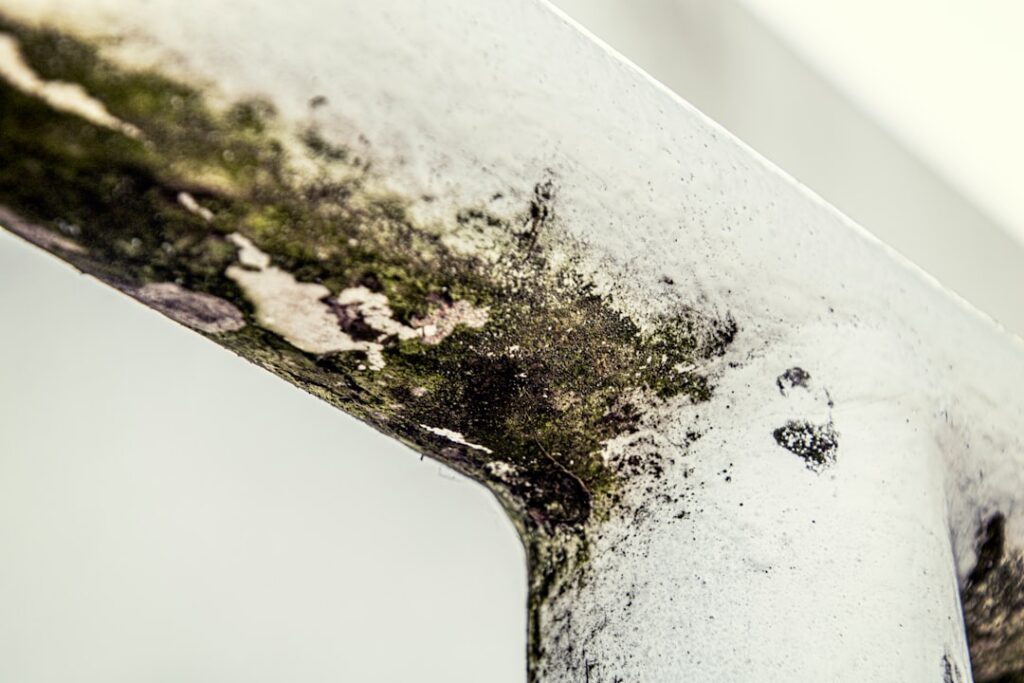
The short answer is yes, you can get rid of mold — but the longer answer carries caveats that matter. Moisture source control is mandatory before any cleanup work begins. Size and substrate dictate whether DIY effort is adequate or professional remediation is warranted. Recurrence in the same location after a prior cleanup indicates an underlying moisture intrusion that needs a credentialed eye, not a second round of bleach. This guide walks through the decision framework homeowners can use to evaluate their specific situation rather than treating “can you get rid of mold” as a universal yes or no. This guide summarizes EPA and CDC guidance current as of 2026 — consult a certified mold inspector for testing decisions and your physician for symptom evaluation.
Is this mold, asbestos, or water damage? Get a free instant screen
Upload a clear photo of the suspect area. You'll get an instant AI screening opinion and what to do next. This is screening guidance, not a professional determination.
Screening guidance only. AI can be wrong. Confirm asbestos, mold type, or lead with lab testing or a licensed professional before acting.
The first rule: fix the moisture source first
No cleanup approach — DIY or professional — succeeds long-term if the moisture source remains active. Mold grew because something kept the substrate wet. Until the moisture source is identified and corrected, any cleanup is a holding action that will be undone within weeks or months. The EPA’s published guidance leads with moisture source control because the rest of the cleanup is essentially worthless without it.
Moisture sources fall into a small number of categories: plumbing leaks (active or recently repaired), roof leaks, condensation from inadequate insulation or ventilation, slab seepage, exterior drainage failures, and chronic high humidity in the conditioned space. Identifying which category applies is the homeowner’s first task. A visible plumbing leak is obvious. A roof leak may require tracing the dampness pattern back to the entry point. Condensation typically appears on the cold side of a wall during the heating season. Without identifying the source, the cleanup question cannot be answered.
The decision tree: DIY versus professional
Once the moisture source is identified and either corrected or scheduled for repair, three factors decide whether DIY cleanup is appropriate: footprint size, substrate type, and recurrence history. The EPA’s homeowner guidance sets a working threshold of 10 square feet of visible mold as the dividing line between DIY-capable and professional-recommended. Below 10 square feet, on non-porous substrates, with no prior recurrence, a properly equipped homeowner can complete the cleanup. Above 10 square feet, on porous substrates, with HVAC involvement, or with prior recurrence in the same area, professional remediation is the right call.
Substrate matters because porous materials such as drywall, insulation, and carpet pad cannot be cleaned in place — they must be cut out and disposed of. The skill and equipment needed to do that cleanly, with containment that prevents spore spread to adjacent rooms, exceeds the typical DIY capability. Non-porous surfaces such as tile, glazed paint on solid substrate, and finished concrete can be cleaned in place with detergent and water, which is well within DIY range. The mold inspection and testing hub provides the broader context for how the size-and-substrate rule fits into mold response.
When recurrence signals a deeper problem
Mold that returns in the same location after a prior cleanup is the strongest indicator that the moisture source was not actually controlled. Surface symptoms come back because the underlying wetness never left. Recurrence is not a sign that the homeowner did the cleanup wrong; it is a sign that the diagnostic was incomplete and the moisture pathway needs professional investigation.
Hidden moisture intrusion is the typical culprit in recurrence cases. Examples include a slow plumbing leak inside a wall cavity, a flashing failure that only weeps during specific storm directions, condensation on uninsulated ductwork inside an unconditioned space, and slab seepage that becomes visible only during specific seasonal conditions. None of these are obvious to a homeowner without a moisture meter and an investigative cut. A second round of cleanup without diagnostic work simply resets the clock on the next recurrence.
DIY cleanup: what it looks like done right
A properly executed DIY mold cleanup for a small, non-porous, single-event problem follows four steps: HEPA vacuum the affected area, damp wipe with a detergent solution, apply an EPA-registered antimicrobial per label directions, and verify the substrate is dry using a moisture meter. The homeowner wears an N95 respirator at minimum, nitrile gloves, and safety glasses. Materials and tools cost roughly $100 to $300 for a one-time event.
The work is methodical rather than aggressive. Spraying everything with bleach is not the protocol. Bleach is not the recommended chemistry per EPA homeowner guidance, and aggressive cleaning before HEPA vacuuming spreads spores rather than removing them. The sequence matters as much as the products.
Professional cleanup: what the homeowner pays for
Professional mold remediation under IICRC S520 adds containment, negative-air management, structured demolition, antimicrobial application, and post-remediation verification. The cost reflects the equipment, the labor hours, the disposal fees, and the third-party verification. Front Range pricing in 2026 runs $1,500 to $3,500 for small isolated jobs and $5,000 to $15,000 for moderate jobs involving cavity contamination. Whole-house contamination or HVAC remediation push past $20,000.
The homeowner pays for the documentation as much as for the physical work. A professionally remediated home with a complete document package — assessment, scope, daily logs, photographs, verification report — sells more easily and survives buyer inspections more cleanly than a home with a DIY history. For real estate transactions, the documentation argument frequently overrides the cost argument. Pairing this overview with the practical sequence in safe home mold remediation helps homeowners see which scenarios justify the documentation premium.
What “killing mold” does not solve
A pervasive shortcut in mold conversations is the idea that killing the mold equals removing it. Dead mold remains allergenic; the proteins and beta-glucans that trigger respiratory responses are biologically active regardless of whether the spore can still grow. Applying bleach until the visible colony darkens and disappears does not address the residual allergen load on the surface, and it does nothing for the moisture source that produced the colony in the first place.
The correct framing is removal, not killing. The four-step DIY protocol (vacuum, wipe, treat, dry) removes the material from the surface rather than just neutralizing it. The professional S520 protocol does the same at a larger scale with containment. Either approach addresses what bleach alone cannot.
Health considerations that change the calculus
Household members with respiratory conditions, infants, immunocompromised individuals, and elderly residents face elevated risk during mold cleanup because demolition disturbs dust and aerosolizes spores. For these households, even a small cleanup that would otherwise fall within DIY range may warrant professional remediation, both for the containment that prevents spore spread and for the worker safety that takes the household member out of the disturbed environment entirely.
Symptoms that persist after a cleanup is complete are a reason to consult a physician rather than to redo the cleanup. Persistent symptoms in a remediated environment may indicate hidden contamination, may indicate that the cleanup did not fully address the colony, or may indicate that the symptoms have a different cause entirely.
The honest scope of “yes, you can”
Returning to the original question, the answer remains yes — you can get rid of mold, with the qualifications above. Small isolated colonies on non-porous surfaces respond to the DIY protocol. Larger jobs and porous substrates respond to professional remediation. Recurrent colonies respond to credentialed diagnostic work that finds the actual moisture pathway. The factor that determines success is matching the response to the actual problem rather than treating every mold finding as the same kind of cleanup.
Common locations and the right response for each
Different rooms generate different mold patterns and benefit from different responses. Bathroom mold around showers, behind toilets, and on caulking lines is typically surface-level on non-porous substrates and falls within DIY range when caught early. Improving the bathroom exhaust fan and reducing dwell time of post-shower humidity prevents recurrence. Kitchen mold under sinks and behind dishwashers is moisture-driven and requires both cleanup and plumbing investigation; small visible colonies are DIY-capable, larger ones below the cabinets often hide cavity contamination that warrants professional eyes.
Basement mold is the most common Front Range scenario and the most likely to cross the DIY threshold. Slab seepage, foundation drainage failures, and elevated indoor humidity combine to produce contamination on drywall, framing, stored items, and HVAC equipment. The combination of porous materials and structural moisture sources usually pushes basement work into professional range even when the visible footprint is modest. Attic mold tied to roof leaks or inadequate ventilation almost always indicates conditions a credentialed inspector should diagnose before cleanup begins.
Time pressure and the wrong choice
Homeowners under time pressure — moving in two weeks, listing the home next month, expecting a baby in three months — sometimes choose a faster cleanup approach that fits the calendar rather than the problem. The math rarely works in favor of the rushed approach. A DIY cleanup that misses hidden contamination produces a buyer-inspection finding that costs more in price reductions than the original professional remediation would have cost. A professional remediation rushed past verification produces a clearance failure that adds days to the schedule rather than removing them.
The honest version of the time argument is that mold response cannot be reliably compressed below the working timelines of the protocols. Professional remediation for a moderate scope takes one to two weeks. DIY for a small scope takes a weekend plus drying time. Plans for either approach should respect those timelines rather than promising contractors a tighter schedule the protocol cannot support.
Real estate transactions add a documentation layer
Sellers preparing a property for listing and buyers conducting due diligence both face the documentation question. Sellers benefit from professional remediation with a clean verification report because the documentation supports the asking price and survives buyer inspection. Buyers benefit from requesting documentation of any prior remediation, since DIY history without paperwork raises questions a thorough buyer inspection will surface anyway. Walking through the practical framework in how to rid house of mold reinforces the documentation logic for transaction-driven mold work.
Preventing the next mold event
Successful cleanup is half the work. The other half is preventing the next event in the same home. Prevention steps include keeping indoor relative humidity below 60 percent year-round, fixing leaks within 24 hours of discovery, drying carpets and upholstery completely after spills or wet cleaning, maintaining bathroom and kitchen exhaust fans at adequate airflow, and inspecting attic and basement seasonally for moisture intrusion signs. These steps are cheap individually and add up to a meaningful reduction in mold recurrence risk over years.
Homeowners who have lived through one mold event often add a whole-house dehumidifier, upgrade bathroom exhaust capacity, or commission a one-time prevention assessment to identify any remaining moisture pathways the cleanup did not directly address. These investments typically pay back within a few years through avoided repeat remediation.
When to call a professional
Call a credentialed mold professional when the contamination footprint exceeds 10 square feet, when porous structural materials are involved, when HVAC is contaminated, when mold returns in the same location after a prior cleanup, when household members have elevated health risks, or when a real estate transaction requires documentation. The decision rarely requires extensive analysis once any of these triggers is present.
References
- EPA Mold Cleanup in Your Home — U.S. Environmental Protection Agency
- CDC Mold Cleanup Guidance — Centers for Disease Control and Prevention
- InterNACHI Mold Inspection — International Association of Certified Home Inspectors
- NIEHS Mold Topic Page — National Institute of Environmental Health Sciences
Front Range homeowners weighing DIY against professional remediation can connect with a vetted local inspector through our contact page for a brief consultation before committing to either path.
Mold removal & cleanup picks
For a small, contained patch (under ~10 sq ft) these EPA-friendly removers handle surface mold. Larger or recurring growth warrants a professional assessment first.
| Product | Why | Buy |
|---|---|---|
 RMR-86 Instant Mold Stain Remover RMR-86 Instant Mold Stain Remover | Fast-acting on stains; ventilate and wear PPE. | Amazon — $18.38 |
 Concrobium Mold Control Concrobium Mold Control | No-bleach formula that also helps prevent regrowth. | Amazon — $13.48 |
 Mold Armor Mold & Mildew Remover Mold Armor Mold & Mildew Remover | Widely stocked bathroom/surface remover. | Amazon — $22.98 |