How to Check for Mold Toxicity: Plain-Language Guide
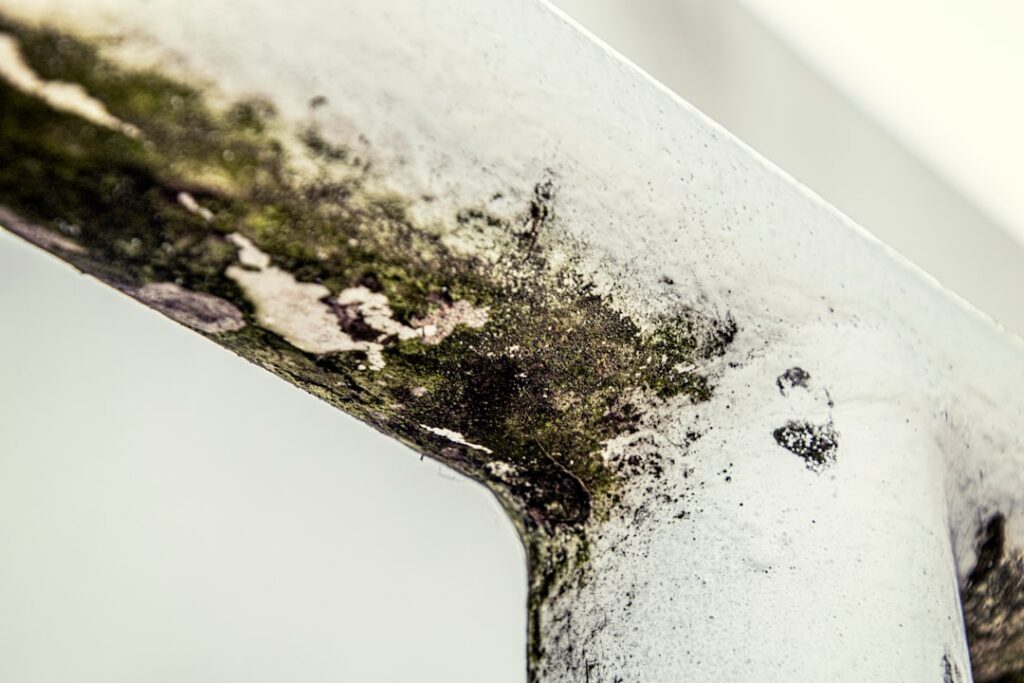
Homeowners searching how to check for mold toxicity are usually asking two different questions in one phrase. One question belongs to a physician — whether a person’s symptoms can be attributed to mold exposure. The other belongs to a building inspector — whether a home has mold growth and at what level. This guide summarizes EPA, CDC, and NIEHS guidance on residential mold for homeowners. It is not medical advice. If you are experiencing symptoms you believe may be related to mold exposure, consult a physician. The rest of this article focuses on how to check the home itself.
Part of our Black Mold & Your Health guide — start there for the full picture →
Is this mold, asbestos, or water damage? Get a free instant screen
Upload a clear photo of the suspect area. You'll get an instant AI screening opinion and what to do next. This is screening guidance, not a professional determination.
Screening guidance only. AI can be wrong. Confirm asbestos, mold type, or lead with lab testing or a licensed professional before acting.
Toxicity in the Body Is a Physician Question — Not a Home-Test Question
Only a licensed physician can evaluate whether symptoms are connected to mold exposure. The CDC notes that the term “mold toxicity” is sometimes used colloquially to describe a range of symptoms, but formal clinical diagnoses — allergic rhinitis, asthma, hypersensitivity pneumonitis, allergic bronchopulmonary aspergillosis — are made through history, physical exam, and targeted lab work ordered by a clinician. Home testing kits do not diagnose anything happening inside a body.
What a homeowner can do well, and what this guide focuses on, is determine whether the home contains a mold problem that warrants remediation. That information is useful for both the household and the physician evaluating an individual.
How to Check the Home — Visual Inspection
A walk-through inspection is the first and cheapest step. The EPA’s homeowner guidance recommends starting in the rooms most prone to moisture: bathrooms, kitchens, basements, crawl spaces, attics, laundry rooms, and any room that has had a past leak. Look at:
- Behind and under sinks, especially the drain trap and supply lines.
- The base of toilets and the wall behind the tank.
- The seal between bath/shower surrounds and adjacent drywall.
- Window sills, especially north-facing windows that condense in winter.
- The bottom of exterior walls in finished basements.
- The HVAC supply registers and the air-handler closet.
- The interior of laundry-room walls behind the washing machine.
Discoloration is not the only signal. Cupping floorboards, blistered paint, efflorescence (white mineral deposits) on basement walls, and warped baseboards are moisture-pathology signs that often appear before mold becomes visible.
How to Check the Home — Olfactory Cues
NIEHS notes that microbial volatile organic compounds (mVOCs) often produce a musty odor before colonies are large enough to see. Homeowners can use a structured smell test: walk through the home after it has been closed for several hours (when ventilation is minimal), and pay attention to rooms that smell different from the rest of the house. The HVAC return is a useful spot — if the return-air pathway is pulling air over a hidden colony, the supply registers can carry the odor through the home even though no visible patch exists.
How to Check the Home — Moisture Mapping
A small pinless moisture meter, available for under $100, lets homeowners scan walls and floors for elevated readings. Higher moisture content correlates with active or recent water intrusion, which is the precondition for mold growth. The home inspection tools buyer’s guide walks through moisture meter selection in detail. Readings consistently above 18 to 20 percent on wood substrates, or above the “wet” band on a relative scale, warrant deeper inspection.
A hygrometer takes the same principle and applies it to indoor air. EPA guidance for residential moisture control suggests keeping indoor relative humidity between 30 and 50 percent. Rooms holding consistently above 60 percent are at sustained risk.
Air Sampling — What It Does and Does Not Tell You
Air sampling captures airborne spores onto a slide or cassette for laboratory analysis. The result is a count, broken down by genus, expressed in spores per cubic meter. The EPA and CDC are explicit that no federal exposure limit exists for indoor mold spores. The standard interpretation method is comparative: an indoor sample is compared to an outdoor control sample taken the same day. If indoor counts of common indoor-amplified species (Stachybotrys, Chaetomium, certain Aspergillus and Penicillium species) significantly exceed outdoor, an indoor source is implied.
Air sampling does not tell you where the source is, only that one likely exists. Visual inspection still has to find the colony.
Bulk and Surface Sampling
Tape lifts, swabs, and bulk samples of suspect material send physical evidence to a lab for identification under microscope. These tests answer a different question than air sampling — they confirm what species is growing at a specific spot rather than what is circulating in the air. For homeowners who can see a suspect patch and want documentation before remediation, surface sampling is the cheaper and more conclusive option.
DIY Test Kits and Their Limitations
Settle-plate kits sold at hardware stores collect whatever falls from the air onto a culture medium over a set time. The EPA notes that these results have limited diagnostic value because they are uncalibrated, sensitive to ambient air movement, and biased toward fast-growing species that may not reflect the dominant population in the home. They can confirm that mold spores exist (which is true of essentially every home) but cannot meaningfully compare to outdoor controls or quantify exposure.
Homeowners who want defensible documentation — for a transaction, a landlord dispute, or a health investigation — should use a third-party Industrial Hygienist or a credentialed mold inspector who follows IICRC S520 protocols. The sibling article on symptoms of toxic black mold goes deeper on the health-side framing that pairs with this home-side checking process.
Putting the Checks in Sequence
Most homeowners do not need every method. A typical sequence runs:
- Walk-through visual inspection of moisture-prone rooms.
- Structured smell test with HVAC running and then off.
- Moisture meter and hygrometer mapping.
- If clues converge, surface or bulk sampling of suspect material.
- Air sampling only when no visible source is found but symptoms or odor persist.
- Professional inspection if any of the above is inconclusive or if a transaction or health concern is involved.
What Findings Mean for the Household
Confirmed indoor amplification of mold growth is a remediation trigger, not a health diagnosis. Following the EPA framework, the next step is to fix the moisture source, remove porous materials within at least a foot of visible damage, and clean hard, non-porous surfaces. The CDC reiterates that even dead spores can trigger allergic responses, so encapsulation alone is not a cleanup method.
Health follow-up belongs with a physician, who may order specific tests — total IgE, mold-specific IgE panels, pulmonary function tests, or imaging — based on the clinical picture. None of those tests are equivalent to checking the home, and no home test substitutes for them.
Cost Tradeoffs Across Testing Methods
Each method has a different cost profile, and the right combination depends on the home and the budget. Visual inspection costs nothing beyond the homeowner’s time. A pinless moisture meter is a one-time $50-$100 purchase that pays itself back across multiple uses. A hygrometer is $15-$30. Single-point surface sampling sent to an AIHA-accredited lab runs $30-$80 per sample plus shipping. Air sampling with an outdoor control runs $250-$600 per inspector visit when commissioned through a credentialed inspector. Full mold-inspection packages from third-party inspectors typically cost $400-$900 depending on home size and complexity.
For homeowners with budget constraints, the visual-and-meter-mapping combination identifies most actionable problems. Lab-based sampling is most useful when documentation matters — for a transaction, an insurance claim, or a landlord conversation — or when no visible source is found but symptoms or odor persist.
What a Credentialed Inspection Adds
A credentialed inspector brings several capabilities the homeowner’s own walk-through usually lacks: trained pattern recognition for moisture pathways, calibrated instruments (more accurate moisture meters, IR cameras, hygrometers logged across time), access points (small inspection holes, borescope work in wall cavities), and reporting templates that hold up in transactions or insurance contexts. The credential profile typically includes ACAC certifications or IICRC training, and InterNACHI and ASHI member directories often flag mold-specific certifications. The inspector also typically holds liability insurance that matters when findings drive significant remediation expenditure.
What Findings Mean for the Family Member at Risk
For households that include immunocompromised members, infants, or elderly residents with significant respiratory disease, the threshold for action drops. CDC guidance recommends that vulnerable occupants avoid direct contact with mold-contaminated areas, and that any remediation be performed by others while the sensitive household member is relocated. The home-side check sequence remains the same, but the urgency around findings is higher. Coordinating the family physician’s visits with the home assessment matters more in these cases than in low-risk households.
Practical Walk-Through Checklist for Most Homes
A homeowner conducting their own check can work through a structured sequence that catches most issues. Start in the basement or lowest level. Check the perimeter walls for staining, efflorescence, or warping. Look at the floor-to-wall junction and any finished surfaces below grade. Move to the laundry area — washing machine connections, dryer vent, water heater drip pan. Check the kitchen — under the sink, behind the dishwasher, around the refrigerator water line. Move through bathrooms — base of toilet, behind tank, under sink, edges of bath/shower surrounds, ceiling above shower. Inspect windows — sills, frames, glass for condensation patterns. Visit the attic — look at the ridge, around plumbing vents, near bath-fan terminations, at any visible roof penetrations. Finally inspect the HVAC closet and the immediate area around it.
Document with photographs as you go. This documentation supports both the home-side action plan and a physician’s exposure-history evaluation if symptoms are present.
How Often to Repeat the Check
Once-per-year inspection covers most homes during stable conditions. Inspections triggered by specific events — heavy rain followed by rapid temperature drops, a roof leak event, a known plumbing repair, a basement flood, or any HVAC service that involved condensate-line work — should follow within days of the event. Homes with chronic moisture issues (older finished basements, crawl spaces with damp earthen floors) benefit from inspections at the start and end of each summer monsoon season in the Front Range.
When Lab Sampling Becomes Worth the Cost
Lab sampling is not always necessary. Visible mold growth with an obvious moisture source rarely needs sampling before remediation — the action plan is clear regardless of species identification. Sampling is most valuable when documentation matters (real-estate transaction, insurance claim, landlord dispute), when no visible source is found but symptoms or odor persist, when remediation has been completed and the homeowner wants clearance verification, or when an unusual species is suspected because of specific health concerns. For routine cleanup decisions, sampling often delays action without changing the response.
When to Call a Credentialed Professional
Bring in a third party when visible mold exceeds roughly 10 square feet, when HVAC contamination is suspected, when occupants are immunocompromised, when the source of moisture is not obvious after walk-through and meter mapping, or when documentation will be used in a real-estate transaction. InterNACHI and ASHI maintain national directories of credentialed home inspectors who can scope the situation before remediation pricing is requested.
More Questions About Mold Toxicity
Does all black mold produce toxins?
No, not all black mold produces toxins, and mold that does produce mycotoxins does not do so at all times; output depends on the species, the material it grows on, and conditions such as moisture and temperature.
Stachybotrys chartarum is the species most often called toxic black mold, but many common black or dark-green molds are other genera. Color alone cannot identify a species or its toxin production. Agency guidance treats all indoor mold growth the same way: find the moisture source, fix it, and clean or remove affected material regardless of type.
Are urine mycotoxin tests reliable?
Urine mycotoxin tests are sold by some specialty labs, but many physicians and medical organizations consider them unvalidated for diagnosing mold-related illness.
Mycotoxins can enter the body through food as well as air, so a positive result does not show where exposure came from, and reference ranges are not well established. Anyone concerned about mold-related health effects should start with a primary care doctor or an allergist, who can evaluate symptoms and use accepted tests such as allergy testing where appropriate.
Does killing mold get rid of mycotoxins?
No, killing mold does not reliably remove mycotoxins or allergens, because dead mold fragments and spores can still irritate people and some toxins remain stable on surfaces.
That is why agency guidance focuses on physically removing mold rather than just killing it. Hard surfaces are scrubbed with detergent and water and dried, porous materials like drywall and carpet with growth are discarded, and the area is HEPA-vacuumed. Spraying a biocide and leaving the residue in place can leave a household still exposed to allergenic material.
Which doctor should you see about mold exposure?
A primary care doctor is the usual first step for symptoms you believe relate to mold exposure, and they may refer you to an allergist, pulmonologist, or occupational and environmental medicine specialist.
Bring notes on when symptoms occur, whether they ease away from home, and any inspection findings about the house. An allergist can test for mold allergy, and a lung specialist can evaluate asthma or other breathing problems. A home mold report helps with context, but diagnosis and treatment decisions belong with a licensed physician.
References
- EPA: Mold and Health — U.S. Environmental Protection Agency
- CDC: Basic Facts about Mold and Dampness — Centers for Disease Control and Prevention
- NIEHS Mold Topic Page — National Institute of Environmental Health Sciences
- InterNACHI Mold Inspection Reference — International Association of Certified Home Inspectors
Frequently asked questions
Can a home test tell me if I have mold toxicity in my body?
No. Home tests evaluate the home, not the body. Only a physician can diagnose mold-related illness through history, exam, and targeted lab work.
What is the cheapest first step to check a home for mold?
A structured visual and olfactory walk-through of moisture-prone rooms, paired with a sub-$100 moisture meter and a hygrometer. Most homes can be screened this way before any laboratory testing is needed.
Are hardware-store mold kits worth using?
Settle-plate kits have limited diagnostic value. They confirm spores exist (true of nearly every home) but cannot quantify exposure or compare meaningfully to outdoor controls. Surface sampling sent to an accredited lab is more useful when documentation matters.
When should I hire a mold inspector?
When visible mold exceeds about 10 square feet, when HVAC contamination is suspected, when occupants are immunocompromised, or when the moisture source is not obvious. Documentation for a transaction is another common trigger.
Can a mold lab test show if mold is toxic?
A lab can identify the genus or species of mold in a sample, which shows whether types known to produce mycotoxins are present. Standard spore or tape tests do not measure actual toxin levels. Specialized mycotoxin testing of dust exists, but results are hard to interpret and rarely change the cleanup plan.
Should you leave your home if you suspect toxic mold?
Most households do not need to leave a home with a small mold problem, but people with severe symptoms, asthma, or weakened immunity may be advised to stay elsewhere during cleanup. Large areas of growth, sewage contamination, or HVAC mold justify professional remediation. A doctor can advise on individual health risk.
What does toxic black mold look like?
Stachybotrys, often called toxic black mold, usually looks dark green to black and slimy when wet, becoming powdery as it dries, and it grows on materials that have stayed wet for a long time, such as drywall paper after a leak. Other molds can look identical, so only a lab can confirm the species.
Front Range homeowners looking for an independent inspector to scope a suspected moisture or mold problem before committing to remediation can get in touch here.