Where to Check for Mold: A Plain-Language Guide
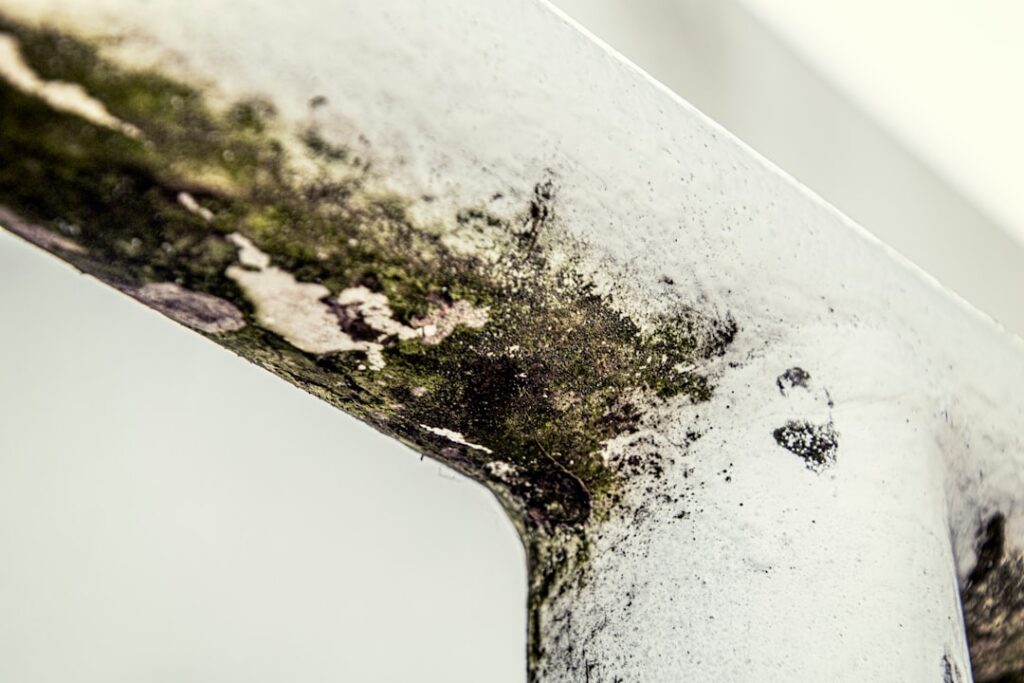
Knowing where to look is half the battle. The visible patch on a baseboard or ceiling is almost always downstream of a hidden wet zone, and the wet zones repeat across building types — single-family homes, apartments, condos, basements, garages, sheds, and commercial buildings all share the same handful of high-risk locations. This guide explains where to check for mold using a platform-independent framework rather than a room-by-room house tour, summarizing EPA and CDC guidance current as of 2026. Consult a certified mold inspector for confirmed indoor-air-quality concerns and your physician for any related symptoms.
Part of our Types of Mold guide — start there for the full picture →
Is this mold, asbestos, or water damage? Get a free instant screen
Upload a clear photo of the suspect area. You'll get an instant AI screening opinion and what to do next. This is screening guidance, not a professional determination.
Screening guidance only. AI can be wrong. Confirm asbestos, mold type, or lead with lab testing or a licensed professional before acting.
The principle: follow the water, not the rooms
Mold colonies grow where three conditions overlap: airborne spores (always present), an organic food source (drywall paper, wood, dust, fabric, paint binders), and sustained liquid water or surface humidity above roughly 80% relative humidity. The first two are essentially permanent in any occupied building. The third one is what varies, which is why every mold inspection is really a moisture inspection. Rather than memorize a list of rooms, learn the categories of moisture sources and check every place those sources can wet a porous surface.
This framing matters because mold in an office, a boat cabin, a self-storage unit, and a basement guest room all follow the same logic. The asset types differ; the wet zones do not. A homeowner who learns the wet-zone categories will check the right places in any building they ever own or rent. The same principle applies to rental inspections, pre-purchase due diligence, and post-incident damage assessments.
The six zones described below repeat in almost every residential structure. They also apply, with minor tweaks, to commercial buildings and recreational structures (boats, RVs, cabins) where water and humidity exist alongside porous interior finishes.
Zone 1: Plumbing-served fixtures and adjacent cavities
Every plumbing supply and drain connection is a potential slow-leak point. The highest-yield areas to check include under every sink (kitchen, bathroom, laundry, bar, basement), behind every toilet (wax-ring failures show as soft flooring at the base), behind every dishwasher and washing machine, around every bathtub and shower surround, at every refrigerator water-line connection, and around any in-wall plumbing access panel. Pull base cabinets forward and check the floor against the back wall, where slow leaks accumulate before showing up on visible cabinet faces.
Shower pans and shower-surround sealant are particularly common failure points. A pan that has cracked or a corner seal that has failed will wet the subfloor and adjacent stud bays for years before any visible damage appears in the room below. If a bathroom sits over finished living space, check the ceiling directly under the shower for any discoloration during routine maintenance.
Best At Home Mold Test Kit: our top 3 picks
| Product | Best for | Key features | Price | Buy |
|---|---|---|---|---|
| Varify 6-Pack | All-round DIY plate kit |
| $15.99as of Nov 4, 2026 4:10 am GMT+0000 | Buy now →Check current price |
| KAYENQO 12-Test | Testing many rooms |
| $28.99as of Nov 4, 2026 4:10 am GMT+0000 | Buy now →Check current price |
| Detekt Indoor Air Quality Kit | HVAC vents |
| $39.99as of Nov 4, 2026 4:10 am GMT+0000 | Buy now →Check current price |


Prices are Amazon’s listed prices as of the time shown and change often; check Amazon for today’s price. As an Amazon Associate we earn from qualifying purchases.
Zone 2: Roof penetrations and attic surfaces
Every roof penetration is a potential entry point: chimneys, plumbing vent stacks, bathroom-fan vents, range-hood terminations, skylights, dormers, valleys, ridge vents, and any flashing transition. From the attic, check the underside of roof sheathing for dark streaks down nail penetrations, water-staining on rafters or trusses, rust on metal hangers and plates, and matted or compressed insulation that suggests historical water flow.
Check the attic at least twice a year — once in late winter to spot ice-dam damage and once in late summer to spot any recent roof-leak activity. Front Range attics in hail-belt areas need attention after every major storm season; impact damage to shingle granules and flashing seals does not always trigger an obvious roof leak immediately, but it sets the stage for one a year or two later.
Zone 3: HVAC equipment and ductwork
Air handlers, condensate pans, drain lines, and ducts are the most-overlooked indoor moisture source. Check the area immediately under and around the air handler, the condensate pan and its overflow safety, the P-trap on the drain line, and the visible runs of supply duct in attics or crawlspaces. Uninsulated metal ducts running through humid spaces sweat in summer, wetting their exteriors and any nearby framing. Filter slots and return-air boots also leak humid air into wall cavities when poorly sealed.
In humid climates, the underside of an AC supply register can show black ring-staining around the louvers — that is condensation forming on the cold metal because room air is meeting it at high humidity. The fix is to address room humidity, not just to clean the register.
Zone 4: Basements, crawlspaces, and below-grade rooms
Anywhere a wall, floor, or ceiling sits against soil is a candidate for moisture intrusion. Check the bottom 24 inches of basement walls for staining, efflorescence (white mineral deposits), or any soft patches in drywall. Inspect cold-joint cracks in poured-concrete foundations, mortar joints in block walls, and the wall-to-floor cove joint where the slab meets the wall. In crawlspaces, look at the underside of the subfloor, the top of the vapor barrier (water pooling on a barrier means it is doing its job — but you still need to find where the water came from), and any sill-plate framing that contacts the foundation.
Behind finished basement walls is the highest-yield hidden zone in many homes. Stud bays against exterior foundations trap moisture from concrete vapor diffusion, capillary rise, and any below-grade water intrusion. The cavity-inspection walkthrough covers borescope holes and moisture-meter mapping for finished basements.
Zone 5: Cool surfaces in humid-air rooms
Mold grows wherever room humidity meets a surface cold enough to condense it. The classic locations are exterior-wall closets in older homes (poor insulation, cold drywall, humid stagnant air), behind furniture pushed tight against north walls, around single-pane window perimeters, on basement floor edges where slab meets carpet pad, and on bedroom ceilings under poorly insulated attic spaces. Any place where surface temperature drops below the dew point of room air will collect liquid water during cold weather.
Bathrooms are the highest-humidity rooms in most homes. Check ceiling corners (especially in the corner farthest from the exhaust fan), the grout lines in showers, the underside of tile baseboards behind toilets, and around any window inside a bathroom. Kitchens are second-place; check ceiling corners over sinks, behind range hoods that vent to the outside through ductwork, and around dishwasher cabinetry.
Zone 6: Storage and unconditioned spaces
Garages, sheds, detached studios, and unconditioned storage rooms have their own pattern. Wood-frame structures attached to a house can have shared-wall mold problems where conditioned-side humidity meets unconditioned-side cold surfaces. Stored cardboard boxes, leather goods, fabrics, and paper documents pick up surface mold long before structural framing does — so the contents of a garage or storage room are often the first warning sign that a humidity or leak problem exists.
Sheds with no vapor barrier between soil and floor framing routinely develop floor-system mold; check the underside of the floor decking through any access panel or by pulling up a corner of stored carpet or plywood. Detached studios and converted garages with added drywall but no improvements to vapor management often grow mold inside the new wall assemblies within two or three years.
Zone 7: Window and door assemblies
Windows and exterior doors are common but often overlooked zones. Failed glazing seals, deteriorated weatherstripping, sloped sill problems, and missing or damaged flashing under exterior trim let water into the wall assembly behind the window opening. Check the bottom corners of every window sash, the joint between the window frame and the wall trim, and the wall below windows during heavy rain. Wood window stools (the interior shelf at the bottom of the sash) often show early staining when water is tracking down from the glazing.
Door thresholds are similar. A failed sill pan under an exterior door wets the subfloor for years before visible signs reach the room finish. Carpet against the threshold often holds moisture against the wood subfloor and accelerates the problem.
Symptoms that point to specific zones
Several occupant complaints map reliably to specific zones. Persistent musty smell with no visible mold often indicates hidden cavity growth (Zone 1 or 4). Visible ceiling stains in upstairs rooms point to Zone 2. Black streaks on supply registers point to Zone 3. Damp basement air or efflorescence on walls points to Zone 4. Window-frame mold and closet-back mold point to Zone 5. Mold on stored boxes or fabric points to Zone 6 or a chronic humidity problem.
The broader mold-inspection framework at our mold cluster hub ties these zones into the inspection workflow that certified inspectors actually use.
What to bring on a self-inspection walk
A flashlight, a moisture meter, a digital hygrometer, an inspection mirror, and a phone camera are enough for most self-checks. Walk each zone systematically. Photograph any suspect area and date the file. Note the moisture-meter reading and the room humidity. If readings cluster in one zone, focus the next hour of work there. If readings stay low everywhere but a musty smell persists, the next step is air sampling or a professional cavity inspection.
An inexpensive pin-type moisture meter (under $50) reads moisture content in wood substrates directly; values above 18% indicate active wetting and risk of mold growth. A pinless moisture meter scans surfaces without driving pins into finish materials and is useful for painted drywall, vinyl flooring, and tile substrates. A combination of both gives the most reliable picture during a self-inspection.
Seasonal timing of zone checks
Mold-zone risk shifts through the year. Late winter is the highest-yield time to check attics for ice-dam damage and to look at upstairs ceilings near exterior walls. Spring rains will activate any roof or flashing weaknesses and any basement-drainage problems, so a walkthrough of basement wall bases and ceiling stains in early spring catches most surface-water issues. Summer’s high humidity and heavy AC cycling stress condensate systems and reveal ventilation deficits in bathrooms and kitchens. Autumn is the best time to verify exhaust-fan operation, replace HVAC filters, and clear gutters before winter storms.
A simple seasonal calendar pinned to a utility-room wall keeps these checks from slipping. Most missed mold cases trace to a zone the homeowner has not visited in over a year, not to a zone that was inspected and cleared.
When to bring in a professional
A homeowner self-check works well for visible mold under ten square feet, identifiable moisture sources, and households without active respiratory or immune-system symptoms. Hire a certified mold inspector when growth exceeds that threshold, when the source cannot be located, when occupants have ongoing symptoms, or when a real-estate transaction or insurance claim requires documented findings. Inspectors carry calibrated moisture meters, thermal-imaging cameras, and air- or surface-sampling equipment that resolve cases self-inspection cannot.
Inspectors also bring procedural rigor. A documented inspection follows a chain-of-custody methodology that an insurance carrier or buyer’s attorney will recognize, and the report itself often acts as the leverage for negotiating remediation or repair costs at closing.
References
- Why and Where Mold Grows — U.S. Environmental Protection Agency
- About Mold and Health — Centers for Disease Control and Prevention
- Mold Remediation in Schools and Commercial Buildings — U.S. Environmental Protection Agency
- Healthy Homes Manual — U.S. Department of Housing and Urban Development
Frequently asked questions
What are the most common places mold grows?
The repeating high-risk zones across all building types are plumbing-served fixtures, roof penetrations, HVAC condensate and ductwork, basements and crawlspaces, cool surfaces in humid rooms (especially bathrooms and exterior-wall closets), and unconditioned storage spaces.
Can mold grow in places I cannot see?
Yes. Hidden growth in stud bays, behind cabinets, above ceiling tiles, and under vinyl flooring is very common. A persistent musty smell with no visible source usually indicates hidden cavity growth and is reason to bring in a moisture-meter or borescope inspection.
How often should I check the high-risk zones?
Inspect attics and roof penetrations twice a year (late winter, late summer). Check under sinks and behind appliances quarterly. Walk basements after every heavy rain or snowmelt. Spot-check humidity readings in bathrooms and kitchens monthly during humid seasons.
Does mold always smell musty?
Most established mold colonies produce microbial volatile organic compounds (MVOCs) with a characteristic earthy, musty odor. Some species and early-stage growth are odorless. Absence of smell does not rule out mold, especially behind closed cavities.
If you have identified a high-risk zone in your home but want a professional confirmation before any remediation, get in touch through our contact page to connect with a vetted Front Range inspector for a moisture and mold assessment.