How Do You Know If You Have Radon in Your Home? Testing Only
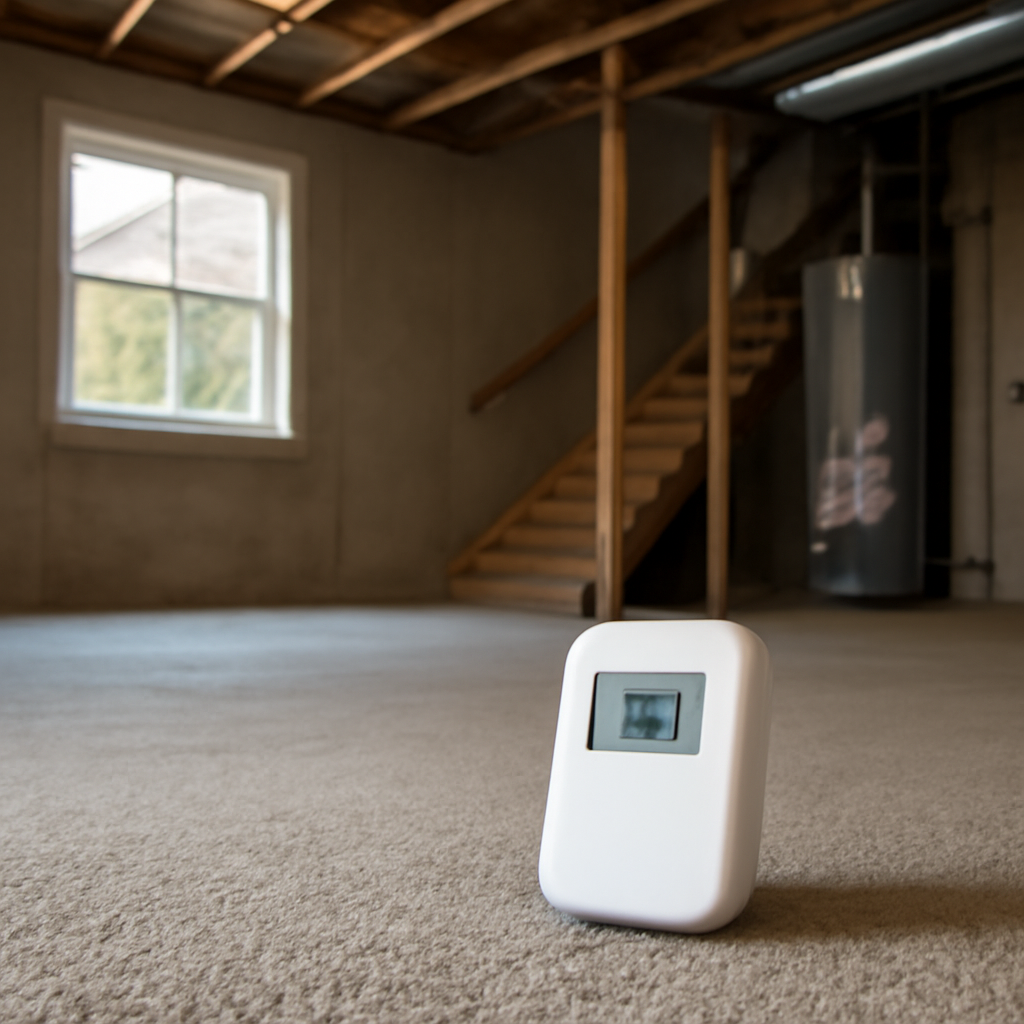
Radon is the second-leading cause of lung cancer in the United States and the leading cause among non-smokers, according to EPA data. Colorado sits in EPA Radon Zone 1 — the highest-risk classification — with average indoor radon concentrations roughly twice the national mean. Yet the question how do you know if you have radon in your home has only one defensible answer: you test for it. Radon gives off no visual cue, no smell, no taste, no detectable symptom on the day of exposure, and no warning sign in the building structure. This guide explains why every indirect indicator fails, what testing actually measures, and how Colorado homeowners should approach the question. The information here reflects EPA, CDC, and CDPHE guidance current as of 2026 and is informational only — consult a certified radon professional for your home’s specific situation.
Part of our Radon Levels guide — start there for the full picture →
The Only Way to Know Is to Test
Radon is a radioactive noble gas produced by the natural decay of uranium and radium in soil and rock. The gas is colorless, odorless, tasteless, and chemically inert. It cannot be detected by any of the five human senses, by smell-based air quality monitors, by indoor air quality apps on a smartphone, or by visual inspection of the home’s foundation, basement, or crawlspace.
Detection requires either a passive testing device (alpha-track or charcoal canister) or a continuous radon monitor (electronic). Both methods measure the alpha-particle emissions produced as radon decays into its short-lived daughter products. The measurement is reported in picocuries per liter (pCi/L) in the United States or becquerels per cubic meter (Bq/m³) internationally.
EPA’s action level — the threshold at which mitigation is recommended — is 4.0 pCi/L for residential exposure. Levels between 2.0 and 4.0 pCi/L are in a “consider mitigation” range. Below 2.0 pCi/L, no action is generally recommended. The Colorado radon testing guide walks through what those numbers mean for Front Range homeowners.
Why Indirect Indicators Don’t Work
Several beliefs circulate in homeowner forums and informal sources that suggest you can know about radon without testing. None hold up:
“My neighbors tested low so I’m probably fine.” Radon concentrations vary dramatically between neighboring homes — often by a factor of five or more — due to differences in foundation type, soil permeability beneath the slab, basement layout, ventilation patterns, and individual foundation cracks. A house with a 1.5 pCi/L reading can sit next door to one with 8.0 pCi/L.
“My house is new so radon isn’t a concern.” Radon-resistant new construction (RRNC) building codes have spread across Colorado Front Range jurisdictions since 2009, but not all jurisdictions require it, and even RRNC-built homes are not guaranteed to be below 4 pCi/L without testing. The codes reduce risk on average but don’t eliminate it.
“I don’t have a basement so I’m safe.” Slab-on-grade and crawlspace homes are not radon-immune. Radon enters through the soil-to-air pathway regardless of foundation type. Some Front Range slab homes test higher than nearby basement homes due to soil composition and ventilation.
“I would feel symptoms if radon were high.” Radon exposure causes lung cancer over decades of exposure. There are no short-term symptoms, no headaches, no fatigue, no specific marker. By the time symptoms of radon-induced lung cancer appear, the exposure has been ongoing for 10-20+ years.
“My basement smells musty so I’d notice radon.” Mustiness indicates moisture and possibly mold — entirely different concerns. Radon has no odor. The two issues can coexist or appear independently, and one cannot stand in for the other.
“I have a sump pit so radon would vent on its own.” Sump pits are actually a common radon entry point because they open directly to the soil. Sealing the sump cover is a basic radon-reduction step, not a passive vent for radon to escape.
The Three Testing Methods
Three approaches are recognized by the EPA Indoor Air Quality Program and the National Radon Proficiency Program (NRPP):
Short-term passive test (2-90 days). Charcoal canister or alpha-track detector placed in the lowest livable level of the home with closed-house conditions. Cost is typically $15-$30 for the test plus lab analysis, or roughly $25-$50 total. Results returned by mail in 5-10 business days after the lab receives the device.
Long-term passive test (90 days to one year). Alpha-track detector left in place for 90 days to one year. Captures seasonal variation and provides a better picture of annual average exposure. Cost is similar to short-term, $25-$50.
Continuous radon monitor (CRM). Electronic device that records real-time radon concentration in hourly intervals. Used by NRPP-certified professionals during real-estate transactions for 48-96 hour tests. Also available as consumer-grade devices (Airthings, RadonEye, EcoQube) that homeowners can buy for $150-$300 for ongoing monitoring.
The continuous monitor option has expanded the consumer market significantly since 2020. A home with a CRM running 24/7 produces a continuous record of exposure rather than a single snapshot. Many Front Range homeowners now combine an initial professional or DIY passive test with an ongoing CRM for long-term awareness.
When to Test
EPA recommends testing every home for radon, period. The frequency depends on circumstance:
At least once per home. Every home should be tested at least once. If the result is below 2.0 pCi/L, retesting every 5-10 years is reasonable.
Before purchase. A radon test is a standard inspection contingency for any home purchase in EPA Zone 1 states like Colorado. The test is performed during the inspection period using a continuous monitor or short-term passive test under closed-house conditions.
After major foundation work. Any work that breaches the slab, basement floor, or foundation can change radon entry patterns. Retest after the work is complete.
After moving in. If the previous owner did not test or you don’t trust the previous test, test in the first 6 months of occupancy.
After mitigation system installation. Post-mitigation testing is required to verify the system reduced radon below 4 pCi/L. NRPP standards recommend the post-mitigation test 24-48 hours after the system is operating.
The guide on whether to test your house for radon walks through the decision framework for Front Range homeowners.
What Results Actually Mean
A single radon test produces a number. Interpreting that number requires context:
Below 2.0 pCi/L: EPA recommends no action. Consider retesting every 5-10 years.
2.0 to 4.0 pCi/L: EPA recommends considering mitigation. The risk is elevated but not at the action threshold. Many homeowners in this range choose to mitigate proactively, especially if children or smokers live in the home.
4.0 pCi/L and above: EPA action level. Mitigation is recommended. Confirm with a second test (long-term or continuous monitor) before contracting for a system.
10 pCi/L and above: Elevated risk. Mitigate promptly. A second confirmation test may still be appropriate but should not delay action.
Colorado averages 6-9 pCi/L across many Front Range counties, well above the EPA action level. CDPHE recommends every Colorado home be tested at least once, with retesting every 2-5 years if initial results were elevated. The how to know if your house has radon companion guide covers the testing-only conclusion in slightly different framing.
The Health Risk in Plain Language
The reason testing matters is straightforward: radon exposure increases the long-term risk of lung cancer. The risk scales with concentration and duration of exposure, and the scientific basis for this is well established through both epidemiological studies of underground miners and case-control studies of residential exposure.
EPA estimates radon causes approximately 21,000 lung cancer deaths per year in the United States. For perspective, this is more than the combined annual deaths from drunk driving, falls in the home, drownings, and home fires. Among non-smokers, radon is the leading cause of lung cancer. Among smokers, radon multiplies the smoking-related cancer risk because the radioactive decay damage compounds with the carcinogenic effects of tobacco.
The risk at the EPA action level of 4 pCi/L over a lifetime of exposure is roughly equivalent to the lung cancer risk from smoking half a pack of cigarettes per day. At 8 pCi/L the risk doubles. At 20 pCi/L (not uncommon in Front Range basements), the risk approaches that of a pack-a-day smoker. These are not exact equivalences but useful frames of reference from EPA’s risk communication materials.
The mechanism is the alpha particles emitted by radon decay products lodged in lung tissue. Alpha particles travel only short distances but deliver intense radiation damage along their tracks. Lung epithelial cells exposed to these tracks accumulate DNA damage that, over years, can lead to malignant transformation. The latency from initial exposure to clinical lung cancer is typically 10-20+ years.
What Symptoms Are Not
One reason the testing-only message matters is that homeowners sometimes search for “radon symptoms” or “signs of radon poisoning” hoping to identify exposure without testing. There are no such symptoms. The CDC, EPA, and American Lung Association are consistent on this:
No headaches, fatigue, or general malaise from radon at residential concentrations. These symptoms have many possible causes but radon is not on the list. A homeowner experiencing them should consult their physician about other potential causes.
No respiratory symptoms in the short term. Radon does not cause cough, congestion, or shortness of breath at residential concentrations. Symptoms of radon-induced lung cancer (cough, hemoptysis, weight loss, dyspnea) appear only after the cancer has developed — typically 10-20+ years after sustained exposure.
No skin or eye irritation. Radon is chemically inert and does not cause irritation by any pathway.
No detectable household effects. Radon does not corrode metals, stain surfaces, damage electronics, kill plants, or affect pets in any visible way.
No detectable indoor air quality changes. Standard indoor air quality monitors (VOC sensors, particulate sensors, CO2 sensors) do not detect radon. Radon-specific sensors are a distinct device category.
The clean-air feeling of an indoor space tells you nothing about its radon concentration. A well-ventilated, freshly painted, sweet-smelling home can have 30 pCi/L of radon. A musty, dusty old basement can have 1 pCi/L. The two qualities are independent.
What to Do If You Discover Elevated Radon
If your test result comes back above 4 pCi/L, the protective response is structured rather than reactive:
Confirm with a second test. EPA recommends a confirmation test before contracting for mitigation. The confirmation can be another short-term test or a long-term test (90 days to one year). The decision to mitigate is based on the higher result.
Get bids from NRPP-certified mitigation contractors. Use the NRPP or NRSB online directory. Get 2-3 bids that include system design, post-installation testing, and warranty.
Install the mitigation system. Typical Front Range installation is 1 day for a standard sub-slab depressurization system. The fan runs continuously after installation.
Verify with post-installation testing. A radon test 24-48 hours after the system is operating confirms the system reduced indoor radon below 4 pCi/L. Most properly designed systems achieve 1-2 pCi/L post-mitigation.
Maintain and retest periodically. Check the pressure monitor monthly, retest indoor radon every 2 years to confirm continued performance. The Colorado mitigation cost guide covers the pricing breakdown.
References
- EPA radon testing and home exposure — U.S. Environmental Protection Agency
- CDC radon exposure and health risks — Centers for Disease Control and Prevention
- CDPHE Colorado radon program — Colorado Department of Public Health and Environment
- American Lung Association radon information — American Lung Association
Frequently asked questions
Can you smell radon?
No. Radon is colorless, odorless, and tasteless. It is a chemically inert noble gas with no detectable sensory signature. The only way to know if radon is present in a home is to test for it with a passive device or continuous radon monitor.
What is the EPA action level for radon?
EPA recommends mitigation when indoor radon concentration reaches or exceeds 4.0 pCi/L. Levels between 2.0 and 4.0 pCi/L are in a 'consider mitigation' range, and levels below 2.0 pCi/L generally do not require action.
How long does a radon test take?
Short-term passive tests run 2 to 7 days with results returned by lab analysis in 5-10 business days. Continuous radon monitors return real-time results immediately and are commonly used for 48-96 hour tests in real-estate transactions.
Is radon worse in basements?
Radon concentrations are typically highest in the lowest livable level of the home because that's where soil gas enters. Basements often test higher than upper floors, but slab-on-grade and crawlspace homes can also have elevated radon depending on soil and foundation conditions.
Front Range homeowners who want a certified radon test rather than a DIY kit can reach out through our contact page for a referral to an NRPP-certified Colorado measurement professional.
Test your home for radon
Radon is invisible and odorless, so a test is the only way to know your level. A short-term kit gives a first reading in days; a digital monitor tracks it over time.
| Product | Why | Buy |
|---|---|---|
 AirChek Charcoal Radon Test Kit AirChek Charcoal Radon Test Kit | Lab fee usually included; EPA short-term protocol. | Amazon — $21.95 |
 First Alert RD1 Radon Test Kit First Alert RD1 Radon Test Kit | Widely stocked; 48-hour charcoal test. | Amazon — $16.98 |
 Airthings Corentium Home Airthings Corentium Home | Digital monitor with a long-term average. | Amazon — $143.65 |