How Do I Know If My House Has Radon: Testing-Only Truth
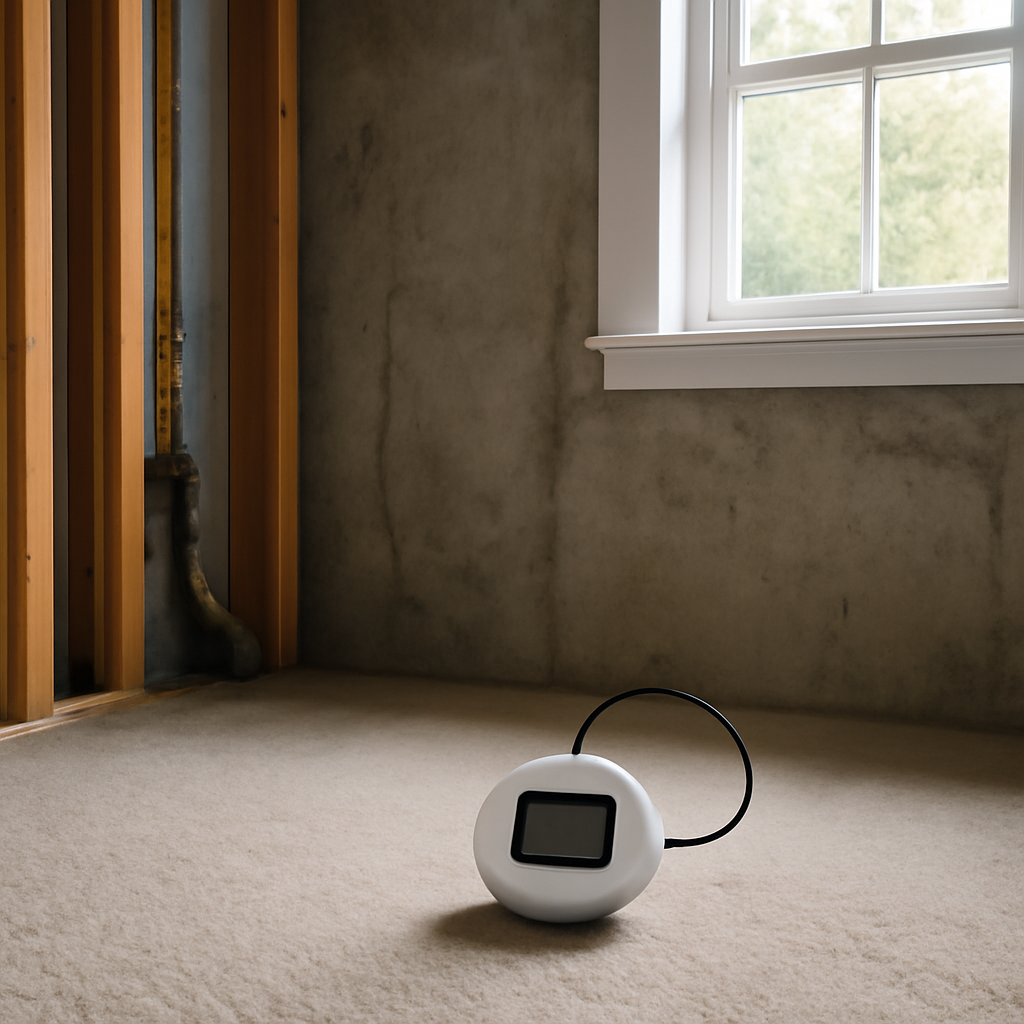
Asking “how do I know if my house has radon” is the right question — but the honest answer is uncomfortable: you cannot tell without testing. Radon is colorless, odorless, tasteless, and produces no immediate symptoms. There are no visible signs in basement walls, no foundation cracks that “indicate” radon, no plant or animal behaviors that respond to it. The only path from question to answer is a test kit or a professional measurement. This guide explains why indirect indicators fail, what testing actually reveals, and how to interpret results. The article reflects EPA, CDC, and CDPHE guidance current as of 2026; consult a NRPP-certified pro for transaction or post-mitigation testing.
Part of our Radon Levels guide — start there for the full picture →
Why you can’t detect radon without testing
Radon is a noble gas — chemically inert, non-reactive with biological tissues, and undetectable by the human senses. It does not produce odor, color, or taste. It does not cause itching, watery eyes, or sneezing the way some indoor air pollutants do. Its health effects (lung cancer) emerge only after years of cumulative exposure, with latency periods of 10-30+ years. By the time symptoms appear, exposure has long since occurred. CDC links cumulative radon exposure to about 21,000 U.S. lung cancer deaths annually, the second leading cause behind smoking.
Common misconceptions about indirect indicators
Several rumors persist about how to “tell” if a house has radon without testing. All are wrong.
Myth 1: foundation cracks indicate radon
Cracks are entry pathways for radon-laden soil gas, but their presence does not predict concentration. Many homes with visible foundation cracks have low radon; many homes with no visible cracks have high radon. Concentration depends on subsurface radium content, soil permeability, the building’s stack effect, and ventilation patterns — not just on the existence of cracks.
Myth 2: musty basements suggest radon
Musty smell indicates moisture and possibly mold. The two issues sometimes coexist (both relate to basement conditions) but musty smell is not a radon indicator. Many basements with no musty smell test very high; many musty basements test low.
Myth 3: certain neighborhoods are safe
Radon levels vary house-to-house even on the same street. Neighbors with identical floor plans can have very different concentrations because of small variations in soil-gas pathways and foundation condition. Knowing your neighbor’s result tells you almost nothing about your own.
Myth 4: new houses don’t have radon
Newer construction is often tighter (lower air-change rates), which can actually increase indoor radon concentrations because there is less natural ventilation. Code-required radon-resistant construction (passive sub-slab systems) helps but does not eliminate the need for testing.
Myth 5: slab-on-grade houses don’t have radon
Slab-on-grade homes can have substantial radon. Without a basement, the soil-gas pathway is even more direct. EPA recommends testing the lowest occupied living area regardless of foundation type.
What testing actually reveals
A radon test measures the airborne concentration in picocuries per liter (pCi/L) at the test location during the test period. Short-term tests (2-7 days) produce a single average value over that window. Long-term tests (90 days to 1 year) produce an annual-average representative value. Continuous monitors produce hourly logs showing how concentration varies with weather, occupancy, and HVAC behavior.
EPA action level and what it means
EPA recommends mitigation at 4 pCi/L or above. The threshold reflects a balance between cancer-risk reduction and feasibility — at 4 pCi/L lifetime exposure produces roughly 7 lung cancer deaths per 1,000 never-smokers, which EPA judges high enough to warrant action.
The WHO recommends mitigation at 2.7 pCi/L, reflecting newer epidemiology suggesting lower thresholds. CDPHE adopts the 4 pCi/L EPA threshold for Colorado.
Colorado Front Range context
If you live in Denver, Boulder, Jefferson, Adams, Arapahoe, Douglas, El Paso, or adjacent Front Range counties, your home is in EPA Zone 1 — predicted average indoor radon above 4 pCi/L. CDPHE data show roughly half of tested Front Range homes register above the action level. In practical terms: the probability that your specific Front Range home is elevated is approximately 50%, regardless of architectural style, age, or basement type. Testing is the only way to know. Our hub on radon testing in Colorado covers Zone 1 risk in depth.
What “symptoms” homeowners sometimes attribute to radon
Some people associate persistent headaches, fatigue, or respiratory irritation with home environmental factors and ask whether radon could be the cause. Radon does not produce these acute symptoms — its health effects are exclusively cancer-related and emerge over decades. Acute symptoms warrant evaluation for other causes: mold, carbon monoxide (which is genuinely an acute hazard and requires its own detector), VOCs from cleaning products or building materials, allergens, or unrelated medical conditions. Consult your physician for symptom evaluation.
The only path to knowing: test
Three testing approaches answer the question.
DIY short-term kit ($15-$50)
Buy a charcoal canister or electret kit from a hardware store or online retailer. Follow the protocol: 12-hour closed-house prep, place at lowest occupied level, maintain closed conditions for 2-7 days, ship to lab. Results return in 5-10 business days. Adequate for initial screening.
DIY long-term alpha-track ($25-$50)
Run for 90 days to 1 year for the most representative annual-average value. Less protocol-sensitive than short-term tests because long exposure averages out daily and seasonal variation.
Professional testing ($150-$400)
NRPP- or NRSB-certified pro uses a continuous radon monitor for 48+ hours with chain-of-custody documentation. Required for real-estate transactions, post-mitigation verification, and litigation contexts.
Consumer continuous radon monitors
For ongoing visibility, a consumer-grade continuous radon monitor ($150-$300 one-time purchase) provides hourly readings on a display. Models like Airthings Wave Plus, Corentium Home, and Ecosense RD200 are popular. Calibration drift over multi-year use is a concern; periodic co-located testing with a short-term kit helps confirm readings. These devices are excellent for post-mitigation self-monitoring but not generally accepted for transactional documentation.
What homes are more likely to have elevated radon
While individual concentration cannot be predicted without testing, certain conditions correlate with higher probability of elevation: location in EPA Zone 1 or Zone 2 (high or moderate predicted average), pre-2010 construction without passive radon-resistant features, slab cracks or unsealed sump pits, tighter weatherization (lower air-change rates), basement occupancy, and basement bedrooms. None of these are diagnostic — they only suggest where testing has higher prior probability of finding elevated concentration.
When to test
EPA and CDPHE recommend testing in all of these situations: never tested before, more than 2-5 years since last test, after finishing or significantly renovating a basement, after replacing the HVAC system, after replacing windows or weatherstripping (which tightens the envelope), before selling the home, after buying a home (even if the seller provided a test result), and after installing or modifying a radon mitigation system.
What testing during winter vs summer reveals
Radon concentration varies seasonally — generally higher in winter when houses are closed and the stack effect is stronger. A single winter test may overstate annual average; a single summer test may understate it. EPA recommends testing during heating season for initial screening or running a year-long alpha-track for annual average. Real-estate testing under controlled conditions is less seasonally biased because the closed-house protocol is enforced regardless of season.
What to do once you know
If your result is below 2 pCi/L, retest every 2-5 years or after major renovation. If 2-4 pCi/L, consider long-term confirmation and optional mitigation. If 4-10 pCi/L, confirm with a second test and mitigate. If above 10 pCi/L, mitigate promptly. Sub-slab depressurization typically costs $1,500-$3,500 and reduces concentration below 4 pCi/L (usually below 2 pCi/L) in nearly all cases. Our walkthrough of checking radon levels and interpreting pCi/L covers the full result-to-action pathway.
Bottom line on knowing if your house has radon
There is no shortcut to the answer. Visual inspection, smell, neighborhood reputation, foundation type, and occupant symptoms all fail to predict radon concentration in a specific home. Only testing works. For Front Range homeowners in EPA Zone 1, the baseline expectation is to test, take the result seriously, and retest after major changes. The cost of testing is small; the cost of not knowing is cumulative exposure that may eventually produce lung cancer decades later.
Why “absence of evidence” is not evidence of absence
Some homeowners reason that because they have lived in a home for years with no apparent health effects, the home must be safe. This reasoning fails for radon. Cancer latency periods of 10-30 years mean that today’s healthy occupants may develop lung cancer decades after exposure ends. Children growing up in elevated-radon homes carry the cumulative exposure for their entire adult lives. Smokers in elevated-radon homes experience multiplicative (not additive) increased risk. The absence of current symptoms does not predict future cancer outcomes. The only way to know current risk is to measure it.
How peer-reviewed epidemiology informs the risk
EPA’s 4 pCi/L action level is derived from pooled analyses of large residential and mining-cohort studies. The Darby et al. European pooled analysis (published in the BMJ) and the Krewski et al. North American pooled analysis (published in Epidemiology) both demonstrated linear no-threshold dose-response between residential radon exposure and lung cancer. The CDC and Surgeon General have cited this body of evidence as basis for public-health action. CDPHE’s recommendation follows the EPA threshold based on the same peer-reviewed foundation. There is no credible dissent in the published literature on the basic causal relationship between residential radon and lung cancer.
Costs and benefits of acting on test results
If you test and find low radon, the cost was $15-$50 and you have peace of mind. If you test and find elevated radon, the action cost is $1,500-$3,500 for sub-slab depressurization and the benefit is essentially complete risk reduction for the property occupants. CDPHE estimates that radon mitigation cost-effectiveness ranks among the strongest in environmental health interventions on a per-prevented-cancer basis. The return on investment is favorable across virtually any household financial situation.
How the housing market handles radon
Front Range real-estate practice treats radon testing as routine. Buyer’s agents include radon contingencies in nearly all contracts. Sellers expect inspection-period radon testing and routinely fund mitigation as a condition of sale. Disclosure forms request radon-test history. Homes with active mitigation systems and current low post-mitigation results are not stigmatized; on the contrary, they often command modest premiums because the buyer inherits documented protection. The market has normalized radon awareness in ways that simplify both buying and selling.
Long-term self-monitoring as a habit
For homeowners who have tested and want continuous visibility, consumer continuous radon monitors with display screens ($150-$300) are an excellent one-time investment. Place the monitor in the basement living area where occupants spend significant time. Check the weekly average periodically. Investigate any sustained upward trend with a fresh short-term test or professional assessment. The monitor doubles as ongoing verification after mitigation, providing early warning if system performance degrades. Treating radon awareness as an ongoing habit (rather than a one-time event) protects against future shifts in concentration driven by renovation, HVAC change, or system failure.
References
- EPA health risk of radon overview — U.S. Environmental Protection Agency
- CDC radon and lung cancer information — Centers for Disease Control and Prevention
- CDPHE radon program and Colorado Zone 1 data — Colorado Department of Public Health and Environment
- American Lung Association radon facts — American Lung Association
Frequently asked questions
Can I smell or taste radon?
No. Radon is colorless, odorless, and tasteless. It produces no immediate symptoms. Its health effects (lung cancer) emerge only after years of cumulative exposure. Testing is the only way to determine whether your home has elevated radon.
Do foundation cracks mean my house has radon?
Cracks are potential entry pathways, but their presence does not predict concentration. Many homes with visible cracks have low radon; many homes with no visible cracks have high radon. Concentration depends on subsurface radium content, soil permeability, and stack effect — not just on cracks.
My neighbor tested low — am I safe?
No. Radon concentration varies house-to-house even on the same street because of small variations in soil-gas pathways and foundation condition. Your neighbor's result tells you almost nothing about your own home.
What's the chance my Front Range Colorado home has elevated radon?
CDPHE data show roughly half of tested Front Range homes register above the EPA action level of 4 pCi/L. Most Front Range counties are EPA Zone 1 — predicted average indoor radon above 4 pCi/L. Testing is the only way to determine your specific home's concentration.
Front Range homeowners who want to know whether their house has radon — whether for transaction, mitigation, or peace of mind — can reach our team through the contact page for a referral to a NRPP-certified measurement professional.
Test your home for radon
Radon is invisible and odorless, so a test is the only way to know your level. A short-term kit gives a first reading in days; a digital monitor tracks it over time.
| Product | Why | Buy |
|---|---|---|
 AirChek Charcoal Radon Test Kit | Lab fee usually included; EPA short-term protocol. | Amazon — $21.95 |
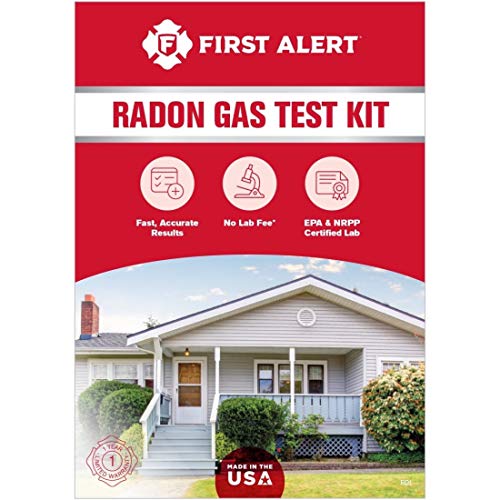 First Alert RD1 Radon Test Kit | Widely stocked; 48-hour charcoal test. | Amazon — $17.95 |
 Airthings Corentium Home | Digital monitor with a long-term average. | Amazon — $142.99 |