How to Know If You Have Radon: A Plain-Language Guide

The honest answer to how to know if you have radon is that testing is the only way. Radon is a colorless, odorless, tasteless radioactive gas, and no symptom, smell, visual sign, or other sensory cue indicates its presence. Homes with dangerous radon levels look and feel identical to homes without. EPA, CDC, and CDPHE all reach the same conclusion: testing every home is the only reliable detection method, and the recommendation applies to every dwelling type, every age of home, and every part of the country. For Front Range residents, the recommendation has added weight because all Colorado counties along the Front Range sit in EPA Radon Zone 1.
Part of our Radon Levels guide — start there for the full picture →
This guide summarizes EPA, CDC, and CDPHE guidance current as of 2026. Consult your physician for symptom-based concerns and a certified radon professional for testing decisions.
Why You Cannot Sense Radon
Radon is the heaviest naturally occurring noble gas, produced by the decay of uranium in soil and rock. It is chemically inert, which means it does not react with other substances to produce smells, colors, or visible changes. It has no taste. At the concentrations found in homes, it produces no immediate health symptoms that occupants notice. People living in homes with elevated radon levels do not feel dizzy, cough, develop rashes, or experience any short-term effect attributable to the gas.
The health risk is long-term lung cancer from cumulative exposure to radon decay products. EPA estimates radon causes approximately 21,000 lung cancer deaths per year in the United States, making it the second-leading cause of lung cancer after smoking. The risk develops over years to decades of exposure, not weeks or months. By the time symptoms appear, they are typically cancer symptoms requiring medical evaluation, not radon-specific signs.
This is why testing matters. A homeowner cannot wait for symptoms because no early warning system exists. The first sign of a radon problem in a home that has not been tested is often a cancer diagnosis years later. Testing closes the information gap.
Approaches That Do Not Work
Several intuitive approaches to detecting radon do not work. Understanding why helps explain why testing is non-negotiable.
Smell, Sight, Taste
None of these senses respond to radon. The gas is undetectable by any human sensory faculty. Homeowners who report sensing something “off” about their home are responding to other factors such as humidity, mold, or VOCs from materials.
Family Health History
Family members can spend years in a home with elevated radon and have no symptoms because the cancer risk is statistical and long-term. A family with no recent cancer diagnoses provides zero evidence about radon levels. A family with cancer history does not prove radon causation either, since other risk factors are far more common.
Neighborhood Reputation
Radon levels vary house by house even within the same neighborhood because of differences in foundation construction, ventilation, soil composition under each lot, and slab condition. A neighbor with low radon tells you almost nothing about your home. EPA explicitly recommends testing each home individually rather than relying on neighborhood patterns.
Home Age
Newer homes are not safer than older homes for radon. Modern construction techniques produce tighter building envelopes that can trap soil gas more effectively. New construction in Front Range counties is increasingly built with passive radon-resistant rough-in, but the rough-in does not guarantee low radon without testing and possibly activation of an active system.
Home Style
Slab-on-grade, basement, crawlspace, and split-level homes all can have elevated radon. No foundation type is exempt. Basements typically have higher radon because they are closer to the soil source, but ground-floor measurements in slab-on-grade homes also frequently exceed action levels.
The Only Reliable Method: Testing
Radon testing measures the radon gas concentration in indoor air. The result is reported in picocuries per liter (pCi/L). EPA’s action level is 4 pCi/L. Testing is reliable when conducted using EPA protocols and certified equipment or kits.
Two test categories serve homeowner needs. Passive tests use materials that absorb radon decay products over a fixed period and are analyzed by an accredited lab. Continuous monitors are electronic devices that record radon levels hour by hour. Both are reliable; both are accessible to homeowners. For the procedure step-by-step, our how to test radon levels walkthrough covers the homeowner protocol.
What a Radon Test Tells You
A test result reports the average radon concentration in the test location over the test period. Short-term tests average over 48 to 96 hours. Long-term tests average over three to twelve months. Continuous monitors report both the average and the hourly variation.
Results above 4 pCi/L indicate radon is present at levels warranting mitigation. Results between 2 and 4 pCi/L are in the consideration zone where mitigation may be appropriate. Results below 2 pCi/L are low, though periodic retesting every two years remains good practice because levels change over time.
A first test that returns a high result usually warrants a second test before committing to mitigation. The follow-up confirms the first reading was not anomalous and helps choose between mitigation options based on the magnitude of the problem.
When to Test
EPA recommends testing every home at least once. Beyond initial testing, several life events trigger retesting.
Initial Testing
Test every home that has never been tested. The cost is low and the information is essential. Front Range homes in particular warrant testing because Zone 1 designation makes elevated levels more likely than the national average.
Real Estate Transactions
Test as part of every home purchase. Buyers add radon testing to their inspection contingency in roughly half of Front Range transactions. The test runs in parallel with the home inspection and the result is available within the contingency window. A high result becomes a negotiation item, with the seller commonly paying for mitigation as a condition of closing.
After Major Renovation
Renovations that alter foundation conditions, add HVAC equipment, or change building envelope tightness can change radon levels. Retest after any major renovation to confirm levels remain acceptable.
Every Two Years
EPA recommends retesting every two years even in homes with established low baselines. Seasonal patterns, settling, and slab condition changes can cause levels to drift over time.
After Mitigation System Installation
Confirm post-installation performance with a short-term test and retest every two years thereafter to verify the system continues to perform.
Front Range Risk Profile
Colorado’s geology produces some of the highest indoor radon levels in the country. Granite bedrock underlying the Front Range generates substantial radon as the uranium in the rock decays. CDPHE estimates suggest approximately half of Colorado homes test above the 4 pCi/L action level. Denver, Boulder, Jefferson, El Paso, Larimer, Adams, Arapahoe, and Douglas counties all sit in EPA Radon Zone 1.
This risk profile means that a Front Range home that has never been tested has roughly a coin-flip probability of being above the action level. The cost of testing (fifteen to thirty dollars for a passive kit) is trivial compared with the cost of long-term exposure to elevated levels. Our Colorado radon testing pillar covers the full landscape.
The Statistical Case for Testing
EPA’s radon risk estimates derive from epidemiological studies of uranium miners and from residential studies in radon-affected regions. The relationship between radon exposure and lung cancer is well established and dose-responsive: higher exposure produces higher risk. The combined effect of radon exposure and smoking is multiplicative rather than additive; smokers in high-radon homes have substantially higher risk than smokers in low-radon homes or non-smokers in high-radon homes.
The statistical case for testing is straightforward: a single inexpensive test produces information that can prevent decades of cumulative exposure. The expected value of testing is positive for almost every home in the United States and overwhelmingly positive for Front Range homes.
What Happens After You Know
If the test result is below 2 pCi/L, no action is required. Retest every two years to confirm levels remain low. Document the result in your home file.
If the result is between 2 and 4 pCi/L, consider mitigation. The cost is moderate and the long-term exposure reduction is meaningful. Some homeowners mitigate at this level; others retest to confirm and monitor before committing.
If the result is above 4 pCi/L, mitigation is recommended. The standard approach is an active sub-slab depressurization system installed by a certified mitigator. Front Range installations typically run twelve hundred to twenty-five hundred dollars and reduce indoor radon to below 4 pCi/L, often below 2 pCi/L. Our radon vent system architecture guide covers what the installation involves.
The Misconception About Symptoms
A frequent confusion is whether headaches, fatigue, or other vague symptoms could indicate radon exposure. They cannot. Radon at residential levels produces no acute symptoms. Anyone experiencing concerning symptoms should consult their physician about possible causes and should not interpret symptoms as evidence of radon presence or absence. The same advice applies in reverse: feeling fine in a home does not mean radon levels are low.
Cost of Testing vs. Cost of Not Testing
A passive short-term test kit costs fifteen to thirty dollars including lab analysis. A continuous monitor for ongoing use costs one hundred fifty to three hundred dollars and lasts for years. A professional radon test during a home inspection runs one hundred fifty to two hundred dollars. The cost of not testing is potentially decades of exposure if levels are elevated, with substantially higher lung cancer risk for occupants. The expected value calculation favors testing in essentially every scenario.
References
- EPA radon information for homeowners — U.S. Environmental Protection Agency
- CDPHE radon program for Colorado — Colorado Department of Public Health and Environment
- CDC radon health information — Centers for Disease Control and Prevention
- American Lung Association radon resources — American Lung Association
Frequently asked questions
How can I tell if I have radon in my home?
Only by testing. Radon is colorless, odorless, and tasteless, with no sensory cues. No symptom indicates radon presence because health effects are long-term lung cancer risk rather than acute symptoms. Passive test kits cost fifteen to thirty dollars and produce reliable results when EPA protocols are followed.
Are there symptoms of radon exposure I should watch for?
No. Radon at residential levels produces no acute symptoms. The health risk is long-term lung cancer from cumulative exposure over years to decades. Anyone with concerning symptoms should consult their physician about possible causes rather than interpret symptoms as radon indicators.
Does my neighbor's radon test result apply to my home?
No. Radon levels vary house by house even within the same neighborhood because of differences in foundation construction, ventilation, soil under each lot, and slab condition. EPA recommends testing each home individually rather than relying on neighborhood patterns or assumptions.
Are Colorado homes more likely to have radon?
Yes. All Front Range counties sit in EPA Radon Zone 1, the highest-risk designation. CDPHE estimates approximately half of Colorado homes test above the 4 pCi/L action level. Testing is recommended every two years for all Colorado homes regardless of age, construction type, or neighborhood.
Front Range homeowners weighing radon testing as part of a pre-purchase inspection can reach out through our contact page for a vetted local inspector referral.
Test your home for radon
Radon is invisible and odorless, so a test is the only way to know your level. A short-term kit gives a first reading in days; a digital monitor tracks it over time.
| Product | Why | Buy |
|---|---|---|
 AirChek Charcoal Radon Test Kit | Lab fee usually included; EPA short-term protocol. | Amazon — $21.95 |
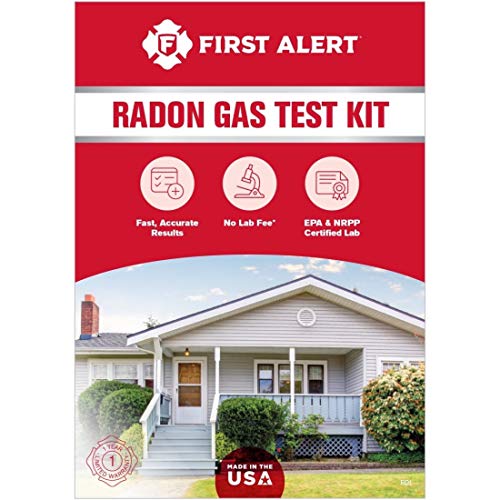 First Alert RD1 Radon Test Kit | Widely stocked; 48-hour charcoal test. | Amazon — $17.95 |
 Airthings Corentium Home | Digital monitor with a long-term average. | Amazon — $142.99 |