Should I Test My House for Radon: What Homeowners Need to Know
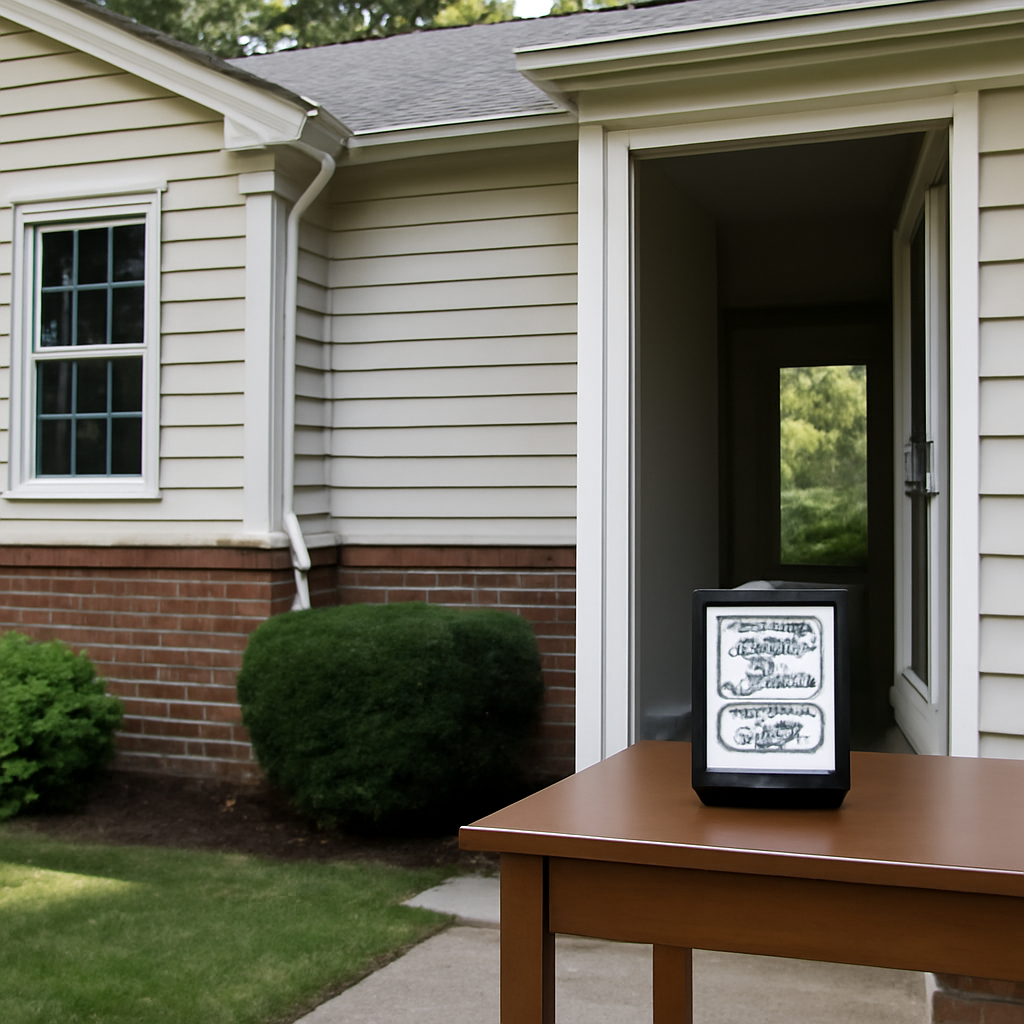
Should I test my house for radon? The short answer from EPA, CDC, the American Lung Association, and CDPHE is yes — every home below the third floor should be tested at least once. Radon is colorless and odorless, no symptoms are detectable in the short term, and the only way to know your home’s level is to test. The Front Range is especially high-risk because all Colorado counties are in EPA Radon Zone 1. This guide summarizes the case for testing using EPA “Citizen’s Guide” and CDPHE guidance current as of 2026 — consult your physician for any health-symptom concerns and an EPA-listed measurement professional for testing decisions tied to financial transactions.
The Direct Answer: Yes, Every Home
EPA’s “Citizen’s Guide to Radon” recommends testing every home below the third floor. This recommendation is universal — it doesn’t depend on construction era, foundation type, neighborhood, or prior test history. The reasoning is straightforward. Radon levels vary widely from home to home, even between adjacent properties. The gas is impossible to detect without measurement. The health risk is significant (radon is the second-leading cause of lung cancer after smoking per EPA data). Testing is cheap ($15 to $30 for a DIY kit, $150 to $200 for professional testing). The cost-benefit math is unambiguous.
Why You Can’t Tell Without Testing
Radon is colorless, odorless, and chemically inert. There is no smell, no visible cloud, no taste, and no immediate physical symptom. Long-term exposure can cause lung cancer — but the latency period is typically 15 to 25 years, so symptoms don’t reveal the exposure until well after the damage is done. No home characteristic reliably predicts levels: new homes can read high, old homes can read low, homes on slab read differently than homes with basements, and adjacent homes on the same lot type often differ by several pCi/L. The only reliable detection method is measurement.
The Colorado Front Range Risk Context
Colorado has some of the highest indoor radon levels in the United States. CDPHE data suggests roughly half of Colorado homes test above the 4.0 pCi/L EPA action level. The state’s geology — uranium-bearing granites, shales, and fractured bedrock — produces elevated soil-gas radon broadly. The EPA Map of Radon Zones classifies every Colorado county as Zone 1 (high predicted potential). The Front Range Urban Corridor running from Fort Collins through Pueblo includes essentially all of the state’s largest population centers, all in Zone 1. The probabilistic case for testing is much stronger here than the national average. See the Colorado radon testing pillar for more regional detail.
The Health Risk Quantified
EPA estimates 21,000 lung cancer deaths per year in the US are attributable to radon exposure. CDC, the Lung Association, and the WHO publish comparable estimates. For lifetime non-smokers, radon is estimated to cause 2,900 lung cancer deaths per year — making it the leading non-smoking cause of lung cancer in the US. For smokers, the combined risk of radon plus smoking is multiplicatively higher than either alone. The Lung Association notes that radon-related lung cancer is preventable with testing and mitigation, which makes the absence of testing in a high-risk area particularly consequential.
Risk vs Action Level
The EPA action level of 4.0 pCi/L is not a “safe” threshold. EPA’s own data shows continued health risk below this level — there is no zero-risk concentration of radon because it’s a Group 1 human carcinogen. The 4.0 pCi/L threshold is a policy decision balancing achievable mitigation outcomes against background environmental levels. The “consider action” range of 2.0 to 4.0 pCi/L is where some homeowners (especially non-smokers, families with children, pregnant household members) choose to mitigate voluntarily. Below 2.0 pCi/L, mitigation is rare but the residual risk isn’t zero.
Smokers Face Higher Combined Risk
The combined risk of radon and smoking is multiplicatively, not additively, higher than either alone. EPA risk tables show that a lifetime non-smoker exposed at 4.0 pCi/L has roughly seven additional lung cancers per 1,000 people lifetime. A smoker exposed at the same level has roughly 62 additional cancers per 1,000. The cessation message applies regardless of radon levels, but for households with current or former smokers, addressing radon is a high-leverage harm reduction action that’s independent of cessation efforts.
What If I Already Tested Once?
A prior test is a starting point, not a final answer. EPA recommends re-testing every two to five years because radon levels change over time. Structural changes, HVAC modifications, foundation crack development, and seasonal variability all affect concentrations. A home that read 2.5 pCi/L five years ago could read 4.5 pCi/L today. A home that read 6.0 pCi/L and had mitigation installed should be re-tested annually to confirm system performance. Re-testing is cheap and protects against drift.
What If My Home Has a Radon Mitigation System?
Mitigation systems work, but they require monitoring. Active soil depressurization systems use fans rated for 5 to 10 years of service life. Fan failure is sometimes silent — the system looks right from the exterior but airflow has dropped. Annual post-mitigation testing verifies continued performance. Simple manometers installed on the suction pipe provide visual verification of pressure differential. A mitigation system without periodic verification is no guarantee of low radon. The long-term radon testing guide covers annual-average verification.
Should I Test Before Buying a Home?
Yes. The inspection contingency period is the right window because mitigation costs can be negotiated as part of the purchase contract. Buyer-paid radon testing during inspection is standard practice in Colorado. Professional testing with a continuous monitor (rather than DIY kit) is preferred because of tamper-resistance during the seller-occupied period. A test result above 4.0 pCi/L typically results in either seller-paid mitigation before closing or a credit to the buyer to fund post-closing mitigation. Either outcome is fair; an untested home is a known unknown.
Should I Test Before Selling a Home?
Pre-listing testing is increasingly common because it gives sellers control over the disclosure narrative. A pre-listing test below 4.0 pCi/L can be disclosed positively. A pre-listing test above 4.0 pCi/L lets the seller mitigate proactively and market the home as “radon-mitigated, post-mitigation level below 2.0 pCi/L” — a stronger position than reacting to buyer testing during contingency. The cost of pre-listing testing is small relative to the negotiating leverage it provides.
What About Apartments and Condos?
Ground-floor and below-ground-level apartments warrant testing on the same logic as detached homes. Multi-family buildings often have shared HVAC and complex pressure relationships that make radon entry difficult to predict. Tenants in ground-floor apartments can test using DIY kits, with the landlord typically responsible for mitigation if results exceed action levels. Tenant-paid mitigation isn’t legally enforceable in most jurisdictions, but lease language increasingly addresses radon responsibility explicitly.
What About Schools and Workplaces?
The federal AHERA framework applies to schools and recommends radon testing. Many states require testing for schools and licensed daycare facilities. Workplace radon is regulated less consistently, though OSHA has noted radon as a workplace concern. Front Range school district testing programs are well-established; the District of Columbia and several states have moved toward broader workplace requirements. Homeowner testing is the most consequential action for residential exposure, but commercial and institutional testing matter for time spent outside the home.
What If I Decide Not to Test?
Not testing means accepting an unknown level of long-term lung cancer risk. For lifetime non-smokers, this risk is real but small at typical Colorado average levels (~3 to 6 pCi/L). For smokers and former smokers, the risk is more material. Some homeowners decide the cost of mitigation if a test came back high isn’t worth the cost of testing, but this is reasoning backward — the test informs whether mitigation is needed, it doesn’t commit to mitigation. Testing without committing to action is always defensible.
How to Get Started
Three paths exist. Cheapest: order a charcoal canister test kit from any major retailer ($15 to $30 including lab analysis) and follow the instructions. Standard: hire a NRPP- or NRSB-credentialed professional ($150 to $200 in Front Range markets) who deploys a continuous monitor. Combined with home inspection: bundle radon testing with a pre-purchase home inspection for $125 to $175 as an add-on, which is the most common path for buyers in Colorado.
Common Objections to Testing
Several common objections deserve direct response. “Testing will scare me into expensive mitigation” — testing without commitment to mitigation is always defensible; the result is information, not obligation. “My house feels fine” — radon doesn’t produce any physical sensation, so feeling fine provides zero information. “The previous owner said it was tested” — without documentation, those claims are unreliable; even with documentation, levels change over time. “We don’t spend much time in the basement” — radon migrates throughout the home, not only in the basement, and family activity patterns change over time.
Long-Term Risk Math
EPA risk tables quantify the lifetime risk of dying from lung cancer attributable to radon exposure. For a lifetime non-smoker exposed at 4.0 pCi/L, the risk is roughly 7 additional lung cancers per 1,000 people. At 10 pCi/L, the risk rises to roughly 18 per 1,000. At 20 pCi/L, roughly 36 per 1,000. These are population-average estimates; individual risk depends on smoking history, genetic factors, and other exposures. The 7 per 1,000 risk at 4.0 pCi/L is higher than the risk of dying in a car accident over an equivalent lifetime, which puts the numbers in context.
Why Skeptics Should Still Test
Some homeowners are skeptical of radon health risk claims, considering them overstated by environmental advocacy groups. Even from a skeptical posture, testing is defensible because the cost is low ($15 for a DIY kit) and the action is non-binding (testing doesn’t commit you to mitigation). A test below 4.0 pCi/L confirms the skeptical position. A test above 4.0 pCi/L provides a reason to reconsider. Testing is information collection; the response to the information is a separate decision.
Privacy and Disclosure Considerations
Test results become part of the property’s disclosure history. Sellers in Colorado must disclose known radon issues, including any history of testing and results. Some homeowners avoid testing specifically to avoid creating disclosure obligations. This reasoning has short-term logic but long-term cost. A buyer doing pre-purchase testing will find what you didn’t want to find, and the unmitigated result will affect negotiations regardless of seller disclosure. Proactive testing and mitigation produces a stronger disclosure position than studied ignorance.
When Mitigation Is Already Required
Some scenarios make mitigation mandatory regardless of prior testing. HUD and USDA-financed property purchases sometimes require radon testing and pre-closing mitigation if results exceed 4.0 pCi/L. Veterans Affairs (VA) financing for properties in EPA Zone 1 areas increasingly addresses radon. Local jurisdictions in Colorado have begun adopting radon-resistant new construction codes that effectively require passive mitigation systems on new builds. Knowing your test result before encountering these requirements lets you respond proactively.
References
- EPA Citizens Guide to Radon — U.S. Environmental Protection Agency
- American Lung Association Radon Health Information — American Lung Association
- CDPHE Colorado Radon Program and Statistics — Colorado Department of Public Health and Environment
- CDC Radon Health Information — Centers for Disease Control and Prevention
Front Range homeowners ready to test their home for radon can connect through our contact page with a Colorado-credentialed measurement professional.