House Plant Soil Moisture Meter: Readings and Limits
Overwatering is one of the most common ways indoor plants decline, and it is easy to do when the top of the soil looks dry while the root zone is still soaked. A house plant soil moisture meter is a simple probe that gives a rough reading of how wet the soil is at root depth, so watering can follow the plant’s actual needs instead of a calendar. These meters are inexpensive and useful, but they are less precise than their dials suggest. This guide explains how typical probe meters work, how to read the scale, what throws readings off, how overwatering connects to soil mold and fungus gnats, why indoor humidity matters for the rest of the house, and how a plant meter differs from the moisture meters used in building inspections.
Part of our Moisture Meters & Water Damage Detection guide — start there for the full picture →
How Cheap Probe Meters Work
Most inexpensive plant meters have a single or double metal probe attached to a small analog dial, and many run without a battery. The dial usually shows a scale from 1 (dry) to 10 (wet), often with colored bands. The simplicity is the appeal: push the probe in, wait a moment, read the needle.
What these meters measure is generally not water content directly. The common design is believed to work on an electrical principle. Two dissimilar metals in the probe, separated by an insulating band, behave somewhat like a weak battery when they sit in moist soil, and the meter responds to how easily current flows through the surrounding soil. Wet soil with dissolved minerals conducts better than dry soil, so the needle moves toward the wet end. In other words, the reading tracks electrical conductivity, which is related to moisture but also to other things in the soil.
A second category, sometimes sold as a capacitance or digital soil sensor, estimates moisture from how the soil affects an electric field rather than from current flow. These tend to be less sensitive to dissolved salts, though they are still affected by soil type and contact with the probe. For most houseplant owners, the basic analog meter is what is in the drawer, and the advice in this guide is written with that type in mind.
Because the reading depends on conductivity, two pots with the same amount of water can give different readings if one has more fertilizer salt, a different potting mix, or a looser fit around the probe. That does not make the meter useless. It means the meter works best as a relative tool: comparing the same plant over time, in the same pot and soil, rather than treating each number as an absolute measurement.
Our broader guides to the moisture meter for houseplants and the soil moisture meter cover selection and features in more detail.
Reading the Scale
Most analog plant meters use a 1 to 10 scale, sometimes labeled dry, moist and wet. The ranges below are a general starting point. Individual meters differ, and plant needs vary widely, so treat this as a guide to interpretation rather than a rule.
| Reading | What it usually means | Action |
|---|---|---|
| 1–3 (dry) | Root zone is dry or nearly dry | Water most foliage plants; drought-tolerant plants such as succulents may be at the right point to water |
| 4–7 (moist) | Soil holds moisture but is not saturated | Usually wait; many tropical foliage plants are comfortable in this range |
| 8–10 (wet) | Soil is saturated or recently watered | Do not water; check drainage if the reading stays high for days |
| Wet reading, dry-feeling soil | Possible salt buildup from fertilizer or hard water skewing conductivity | Confirm by feel or pot weight; consider flushing the soil |
| Dry reading, damp soil | Poor probe contact, air pocket, or very loose or peat-heavy mix | Re-test in another spot; firm the soil gently around the probe |
The most reliable pattern is to learn what readings a specific plant shows on the day it needs water, and then water when it returns to that number. For many common houseplants, that point arrives in the low-to-middle range at root depth. For cacti and succulents, it usually means waiting until the meter reads near the dry end. For ferns and other moisture-loving plants, it may be earlier.
How to take a good reading
- Insert the probe about two-thirds of the way between the stem and the pot edge, and push it to the depth where most roots are, not just the top inch.
- Hold it still for the time the instructions suggest, then read.
- Take readings in two or three spots in larger pots, since moisture is often uneven.
- Wipe the probe clean and dry after each use, and do not leave it sitting in the soil, which can corrode the tip and affect later readings.
- Avoid forcing the probe through roots or stones, which can bend it.
Limits: Salts, Fertilizer and Soil Type
Because inexpensive probes respond to conductivity, anything that changes how readily current moves through the soil can shift the reading. The most common culprits are:
Fertilizer and mineral salts
Fertilizers dissolve into ions, and hard tap water carries minerals. Over time, these can build up in the potting mix, especially in pots that are never flushed. Salty soil tends to conduct more readily, which may push the needle toward wet even when the mix is relatively dry. A white crust on the soil surface or the pot rim is a common visual sign. Watering thoroughly until water runs from the drainage holes, and letting it drain completely, can help flush excess salts.
Soil mix
Peat-heavy and bark-heavy mixes, orchid media, and gritty cactus mixes all behave differently. Coarse, airy media may give low readings because the probe touches less material. Dense mixes with more fine particles may give higher readings at the same water content. Calibrate your expectations to each pot rather than across pots.
Temperature and contact
Cold soil may read differently than warm soil, and poor contact between the probe and the soil can produce a falsely dry reading. Pushing the probe into an air gap along the pot wall is a frequent cause of misleading results.
Cross-checking
The simplest checks remain useful. Lift the pot: a light pot is usually dry, and a heavy one is still holding water. Push a finger into the soil to the second knuckle. Look at the plant itself, since drooping can mean either too little or too much water. Combining the meter with one of these checks catches most false readings.
For more on how readings vary with different probe designs, see our guide to the moisture meter for plants.
Overwatering, Soil Mold and Fungus Gnats
The main reason to use a meter is to avoid keeping soil constantly wet. Persistently soggy potting mix tends to create two visible problems indoors, along with root problems that are harder to see.
White fuzzy growth on the soil
A white, cottony or fuzzy layer on the surface of potting mix is commonly a harmless saprophytic fungus feeding on organic matter in the soil, though it is a sign the surface is staying damp. The EPA’s mold course explains that molds need moisture and food to grow indoors, that moisture is the most important factor, and that organic materials including plant material and soil can serve as food. The CDC notes that when mold spores land on places with excessive moisture, such as leaks in roofs, pipes or walls, plant pots, or flooded areas, they will grow.
Practical steps include scraping off the affected surface layer, letting the top of the mix dry more between waterings, improving air movement around the plant, and making sure the pot drains freely. If the growth returns quickly, it often points to watering too frequently. Our guide to fuzzy mold explains how to tell common white fungal growth apart from other fuzzy patches.
Fungus gnats
Fungus gnats are tiny dark flies that hover around houseplants. Their larvae are generally thought to live in the top layer of moist potting mix and feed on fungi and decaying organic matter. Letting the upper soil dry between waterings is a common first step to break the cycle, along with removing standing water from saucers. A meter helps by showing when the root zone still holds water even after the surface dries, which reduces the urge to water again too soon.
Root problems
Soil that stays saturated can starve roots of air, and roots in that condition may begin to decline. Symptoms such as yellowing lower leaves, wilting despite wet soil, or a sour smell from the pot can indicate a drainage or overwatering problem. A meter reading stuck at the wet end for many days is a useful early warning.
Plants, Indoor Humidity and Mold in the Home
A few houseplants rarely change a home’s humidity in a meaningful way, but many pots, frequent watering, standing water in saucers, and humidifiers used for tropical plants can add moisture to a room. That matters because moisture is the key to mold anywhere in the house, not just in a pot.
The EPA’s Brief Guide to Mold, Moisture and Your Home states that the key to mold control is moisture control. It recommends keeping indoor humidity below 60 percent, ideally between 30 and 50 percent, and notes that relative humidity can be measured with a small, inexpensive humidity meter. It also advises drying water-damaged areas and items within 24 to 48 hours to prevent mold growth, and treats condensation on windows, walls or pipes as a sign of high humidity. The CDC’s guidance is similar, recommending humidity levels as low as possible and no higher than 50 percent, with help from an air conditioner or dehumidifier.
For plant owners, that suggests a few habits:
- Empty saucers and cache pots after watering rather than leaving plants sitting in water.
- Place a hygrometer in rooms with many plants or a humidifier, and adjust if readings stay high. Our guide to the hygrometer explains how to use one.
- Watch windowsills, curtains and walls near plant groupings for condensation, staining or musty odors.
- Protect wood floors, rugs and upholstery from overflow and spills. Damp fabric can grow mold, as our guide to mold on fabric describes.
- Use clean water for misting and humidifiers, and clean humidifier reservoirs regularly.
Water alone does not cause mold, but it is the ingredient that is easiest to control. Our guide on whether water can mold explains how stagnant water in trays, vases and reservoirs can support growth.
Common Mistakes With Soil Moisture Meters
Most frustration with plant meters comes from a handful of habits that are easy to correct.
Reading only the surface
The top inch of potting mix dries first, especially near a sunny window or a heating vent. A probe pushed in only part way will often read dry while the root zone below is still wet, which leads to watering again too soon. Push the probe to root depth, and in tall pots, check near the bottom third as well.
Comparing numbers across different plants
A reading of 4 in a fine peat mix and a reading of 4 in a chunky aroid mix may not mean the same thing. Because the meter responds to conductivity and contact, each pot has its own personality. Track each plant separately instead of applying one number to the whole collection.
Leaving the probe in the pot
Some owners leave the meter in the soil permanently for convenience. Continuous contact with moist, mineral-rich soil can corrode the probe, and a corroded tip tends to give inconsistent readings. Insert it, read it, wipe it, and store it.
Ignoring drainage
No meter can fix a pot without drainage holes. Decorative containers without holes hold water at the bottom, where the probe may not reach, and that hidden reservoir can keep roots waterlogged. Use a nursery pot with drainage inside the decorative container, and empty any water that collects after watering.
Watering on a schedule anyway
The point of a meter is to replace guesswork. Watering every Saturday regardless of what the meter shows defeats its purpose, especially as light and temperature change through the year. Let the readings, the pot weight and the plant’s appearance decide.
Expecting precision
Inexpensive analog meters are rough indicators. They are good at telling very wet from very dry and at showing trends, but they are not laboratory instruments. Small differences between adjacent numbers on the dial are rarely meaningful, so focus on the range rather than the exact position of the needle.
Plant Meters vs Building Moisture Meters
Plant soil meters and the moisture meters used in home inspections share a name but serve very different purposes. Confusing them leads to poor results in both directions.
Different materials, different scales
A plant meter gives a relative wet-to-dry reading for loose potting mix. Building moisture meters are designed to estimate moisture content in materials such as wood, drywall and masonry. Pin-type building meters measure resistance between two pins driven into the material, and pinless meters use an electromagnetic field to scan beneath the surface without making holes. These meters typically display percent moisture content or a relative reference scale, often with settings for different materials.
Why a plant meter is not a leak detector
Pushing a plant probe against a wall, floor or ceiling will not give a meaningful reading. The probe is not designed to penetrate drywall or wood, and its scale is not calibrated for building materials. Anyone checking for a hidden leak, a damp basement wall, or moisture under flooring needs a building moisture meter, and in many cases a professional inspection. Our guide to moisture meters explains how inspectors use them, and our comparison of pinless vs pin moisture meters covers the trade-offs between the two building-meter types.
Why a building meter is not ideal for plants
A pin-type building meter can technically be pushed into soil, but its readings are designed for solid materials and may be hard to interpret in loose potting mix. Its short pins also reach only the top of the soil. A simple plant meter with a long probe is better suited to checking the root zone.
For a broader look at tools used to evaluate homes, see our home inspection tools section and the moisture meters hub.
Building a Simple Watering Routine
A meter is most helpful when it supports a consistent routine rather than replacing observation. A practical approach looks like this:
- Learn each plant’s baseline. For two or three weeks, check the meter every few days and note the reading on the day the plant clearly needs water, such as slight drooping or a light pot.
- Water thoroughly, then wait. When a plant reaches its baseline, water until it drains from the bottom, empty the saucer, and do not water again until the reading returns to that point.
- Adjust for the season. Plants generally use less water in winter, when light is lower and growth slows. Expect longer intervals between waterings and check the meter rather than keeping a summer schedule. In dry climates, indoor air can be quite dry in winter, which can speed up drying near the surface even while deeper soil stays moist.
- Watch for drift. If readings start trending wetter for the same apparent dryness, consider whether salts have built up and whether the pot needs flushing or repotting.
- Check the room, too. If many plants share a space, add a hygrometer and watch for condensation and musty odors, which are signs of moisture beyond the pots.
Caring for the meter
Store the meter dry and clean, avoid using it in standing water or very rocky media, and replace it if the probe corrodes or the needle no longer moves predictably. A quick check is to test it in a glass of water, which should read wet, and in dry potting mix, which should read dry. If it fails either test, it is time to replace it.
When the meter disagrees with the plant
Trust the plant and the pot weight over a single reading. If the meter says wet but the plant is wilting in a light pot, the meter may be reading salt rather than water. If the meter says dry but the soil smells sour and the leaves are yellowing, the probe may be in an air pocket, and the root zone may still be waterlogged.
References
- A Brief Guide to Mold, Moisture and Your Home — U.S. Environmental Protection Agency
- Mold: About — Centers for Disease Control and Prevention
- Mold Course Chapter 1 — U.S. Environmental Protection Agency
Frequently asked questions
Do house plant moisture meters actually measure water?
Not directly in most cases. Common inexpensive probe meters respond to electrical conductivity in the soil, which rises with moisture but also with dissolved salts, so readings are best used as a relative guide for the same plant over time.
What reading means a houseplant needs water?
Many meters use a 1 to 10 scale. Most foliage plants are typically watered when the root zone reads in the dry range, while succulents usually wait until it is near the driest end. Learning each plant's baseline is more reliable than a single number.
Why is there white fuzzy mold on my plant soil?
It is commonly a fungus feeding on organic matter in damp potting mix. Scraping off the top layer, letting the surface dry between waterings and improving airflow usually help.
Can a plant moisture meter find a leak in a wall?
No. Plant meters are designed for loose soil. Checking walls, floors or ceilings for moisture requires a pin or pinless building moisture meter, and often a professional inspection.
Can houseplants cause mold in a home?
Plants alone rarely do, but frequent watering, standing water in saucers and humidifiers can raise indoor moisture. EPA recommends keeping humidity below 60 percent, ideally 30 to 50 percent.
Noticing musty odors or condensation in a plant-filled room and wondering whether the walls are involved? Reach out to our team about a moisture check with building-grade meters.
Moisture meters for home inspection
Pin meters read deep but leave marks; pinless meters scan surfaces non-destructively. Many inspectors carry both.
| Product | Why | Buy |
|---|---|---|
 Klein Tools ET140 Pinless | Non-destructive scanning; affordable. | Amazon — $54.88 |
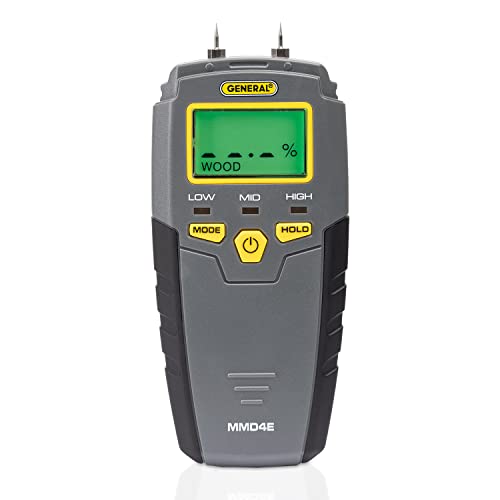 General Tools MMD4E | Best-selling pin meter for drywall/wood. | Amazon — $39.98 |
 Lignomat Mini-Ligno | Trusted by woodworkers; species-calibrated. | Amazon — $99.00 |