DJI With Thermal Camera: Full Lineup Decision Guide
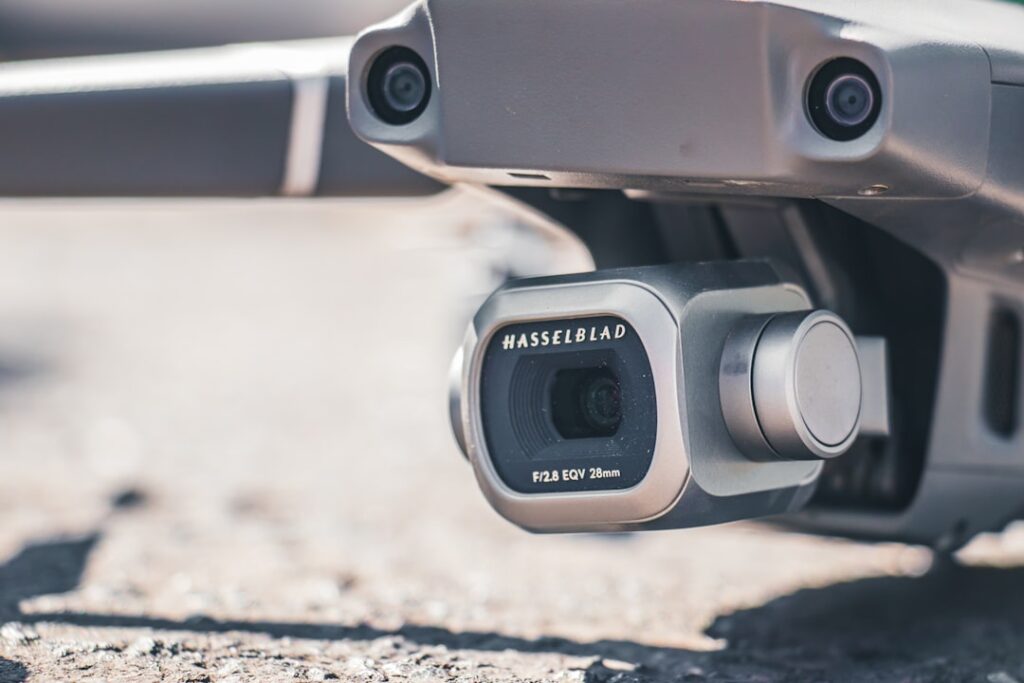
DJI is not a single drone — it’s a lineup of platforms spanning a roughly 20x price range with thermal imaging available at multiple tiers. Searches for “DJI with thermal camera” arrive without clarity on which DJI. For a homeowner researching a roof inspection drone, the Mavic 3 Thermal is the relevant product. For a fire department or utility inspection contractor, the Matrice 30T or M350 RTK with payload swaps is the relevant product. For someone reading legacy reviews, the Phantom 4 Pro V2 with bolt-on FLIR was the dominant choice in 2018-2021 before DJI discontinued the line. This DJI with thermal camera guide separates the active lineup from the discontinued, then matches each platform to use cases so you avoid buying the wrong tier.
Part of our Thermal Imaging for Homes guide — start there for the full picture →
The active DJI thermal lineup in 2026
DJI’s current thermal-capable production drones fall into three families. Each family targets a different operator and a different price ceiling.
Mavic family: Mavic 3 Thermal (M3T)
The Mavic 3 Thermal is the consumer-prosumer thermal drone in the lineup. Folding airframe, sub-1kg weight, 640×512 thermal resolution, 56x digital zoom on the visual camera, 45-minute flight time. Released as a 2022 platform and updated periodically since, it sits in the $5,000-7,000 range when bundled with extra batteries, the smart controller, and DJI Care insurance. The Mavic 3 Thermal is the right answer when one operator needs a thermal-equipped drone for residential roof inspection, light commercial work, search-and-rescue, or solar panel scanning at small to medium scales.
The Mavic platform sacrifices some thermal sensitivity (NETD around 50 mK) versus larger industrial drones (NETD 30-40 mK) and accepts a smaller thermal sensor. For home inspection use those compromises are invisible — the differences matter only on long-range industrial scans where every milliKelvin counts. The DJI Mavic thermal generation comparison walks through which Mavic generations carried thermal versus optical-only.
Matrice family: M30T and M350 RTK
The Matrice 30T is DJI’s professional all-in-one platform, with thermal sensor integrated alongside the wide and zoom cameras in a single fixed payload. The body is heavier, the flight time longer (41 minutes), and the weather sealing better (IP55). Price runs $14,000-22,000 with operator-grade controller and extras. The M30T targets emergency services, utility inspection, public safety, and commercial inspection businesses where a single rugged platform handles daily flight cycles.
The M350 RTK is the modular flagship, replacing the older M300 RTK. The thermal camera is not built in — it’s a swappable payload (Zenmuse H30T, H20T, or H20N) that mounts to the same airframe used for high-precision survey, lidar, and visual-only payloads. Price runs $20,000-35,000+ depending on payload mix. The M350 is the right answer for inspection contractors who own the drone as a capital asset and rotate payloads across job types throughout the week.
Mini family: not thermal-equipped
The DJI Mini series — Mini 3, Mini 4 — does not include thermal imaging. The Mini line targets the sub-249g regulatory category that exempts it from FAA recreational registration in the United States. Thermal sensors and the optics, processing, and battery to support them push weight above that ceiling, so no Mini variant has carried thermal to date.
The legacy DJI thermal lineup (no longer manufactured)
Two platforms appear in older guides and product reviews and are worth knowing about because they still circulate in the used market.
Phantom 4 Pro V2 with bolt-on FLIR. The Phantom 4 platform never shipped from DJI with thermal built in, but several third-party gimbals (FLIR Vue Pro, FLIR Duo Pro R) bolted onto the underside of the Phantom 4 to add thermal capability. This was the dominant residential thermal setup from 2017-2021. DJI discontinued the Phantom line in 2022, and FLIR support for the bolt-on gimbals has tapered. Used Phantom 4 Pro V2 setups still fly, but parts availability shrinks each year.
Matrice 200 series and Matrice 300 RTK. The M200, M210, and M300 RTK were the prior-generation professional platforms. The M300 RTK with Zenmuse H20T was the dominant utility-inspection drone from 2020-2023. DJI continues to support these platforms with parts and firmware, but new inspections are increasingly being flown on the M350 successor.
Decision framework: which DJI thermal platform fits which job
The wrong-tier purchase is the most common mistake. Six questions narrow the choice quickly.
How often will you fly thermal missions?
Under 20 flights per year, Mavic 3 Thermal. 20-200 flights per year, Mavic 3 Thermal or Matrice 30T depending on workload sensitivity. Over 200 flights per year, Matrice family. The duty cycle on the Mavic platform tolerates occasional professional use but accumulates wear faster than industrial drones at sustained high tempo.
Do you need swappable payloads?
If thermal is your only mission, fixed-payload platforms (Mavic 3 Thermal, M30T) make sense. If you also do high-resolution photogrammetry, lidar mapping, or zoom inspection from the same airframe, the M350 RTK with payload bay is the right choice.
What is the weather envelope?
Mavic 3 Thermal flies in light wind (<10 m/s sustained), light precipitation it cannot really handle, and operating temperatures of -10°C to 40°C. The Matrice 30T and M350 RTK fly in heavier wind (<15 m/s), light rain, and a wider temperature range. Front Range inspection work in Colorado regularly hits the Mavic's weather ceiling in spring and fall, which is part of why commercial operators in the region tend toward the Matrice line.
What is the operator’s certification level?
All commercial drone flight in the US requires FAA Part 107 certification regardless of airframe. The Matrice platforms add complexity worth dedicated training; the Mavic 3 Thermal is friendlier to a single-operator small business right out of the box.
What is the data delivery requirement?
Insurance roof inspections often require radiometric thermal data (per-pixel temperature) for documentation. All current DJI thermal platforms produce radiometric files. The Mavic 3 Thermal’s R-JPEG format is widely supported by analysis software (DJI Thermal Analysis Tool, FLIR Tools, Tyto Insights). The Matrice platforms produce the same format plus enhanced metadata useful for forensic reconstruction.
What is the total budget?
Under $10,000 all-in, Mavic 3 Thermal. $15,000-25,000, M30T. $25,000+, M350 RTK with payload mix. Add 15-25% for extra batteries, smart controller upgrades, DJI Care insurance, and the case/transport hardware that doesn’t come in the base box.
Home inspection specific recommendation
For residential home inspection use — roof scans, attic envelope assessment, exterior thermal mapping — the Mavic 3 Thermal is the practical choice for nearly every operator. The Matrice line is overkill for residential workflows and shifts the operator into industrial-rated training and maintenance routines that don’t pay back at residential inspection rates. The exception is a multi-inspector business handling commercial roof scans alongside residential; that workload may justify a single Matrice as the shared shop drone with Mavic 3 Thermals for daily residential routes. The home inspection tools buyer’s guide covers how drone thermal fits alongside handheld thermal cameras in a complete kit.
Operating cost beyond purchase
DJI Care insurance runs $400-2,000+ per year depending on platform. Replacement batteries run $200 (Mavic) to $700 (Matrice) each, with typical replacement intervals of 2-3 years per battery. Propeller sets are inexpensive. Smart controller replacements run $1,000-3,000 if damaged. Annual training and recurrency for Part 107 holders is modest but a real line item. Plan on 10-20% of the airframe purchase price annually in operating cost for a working drone in active service.
Thermal payload comparison across the active lineup
The thermal sensor inside the drone matters as much as the airframe around it. The Mavic 3 Thermal carries a 640×512 microbolometer sensor with a 40°x30° field of view, NETD of 50 mK, and radiometric output to roughly 150°C. The H20T payload on the Matrice line carries a 640×512 sensor with selectable wide and zoom lenses, NETD of 50 mK, and radiometric output to 500°C in the high-temperature mode used for industrial inspection. The H30T (newer Matrice payload) extends to 1280×1024 thermal resolution with improved NETD and broader temperature range.
For residential home inspection use, 640×512 resolution is more than adequate. The sensor captures clear thermal patterns on roofs, exterior walls, and attic envelopes at typical operating altitudes of 50-200 feet. Higher resolution payloads on the Matrice add value for industrial work — solar farm scanning, transmission line inspection, large-roof commercial — but rarely move the needle on a residential workflow.
Regulatory considerations for thermal drones
All DJI thermal drones require FAA Part 107 certification for commercial use. The Mavic 3 Thermal weighs roughly 920g, placing it firmly in the standard small UAS regulatory category that requires registration regardless of commercial or recreational use. The Matrice platforms are heavier still, requiring full Part 107 compliance and enhanced operational planning. Night operations are now permitted under Part 107 with anti-collision lighting; the Mavic 3 Thermal and Matrice models accommodate this with onboard or accessory lighting.
Operating over people, controlled airspace, and beyond visual line of sight each require specific FAA waivers or new Part 107 rule compliance (Category 1-4 for operations over people, LAANC authorization for controlled airspace, BVLOS waiver for beyond-line-of-sight flight). Commercial inspection contractors typically maintain LAANC authorization paperwork standing by for the airspace classes their service area includes.
Data processing and analysis workflow
The thermal image files DJI drones produce are R-JPEGs containing radiometric data — each pixel encodes a temperature reading rather than just a color. To extract those temperatures, operators use analysis software. DJI Thermal Analysis Tool is free and handles basic measurement. FLIR Tools and FLIR Thermal Studio handle DJI files with more advanced reporting. Third-party platforms (Tyto Insights, DroneDeploy with thermal modules) integrate DJI thermal output into larger inspection-management workflows.
The analysis step adds time per flight — typically 30-90 minutes for a residential roof scan including image review, measurement of points of interest, and report production. Operators new to thermal often underestimate this back-end time and quote thermal services purely on flight time. Build it into the pricing model from the start.
More Questions About DJI Drones With Thermal Imaging
Is a DJI thermal drone better than a handheld thermal camera?
A DJI thermal drone is better than a handheld thermal camera for roofs, upper walls, chimneys, and large properties that are hard or unsafe to reach. A handheld thermal camera is better for interior inspections, electrical panels, plumbing leaks, and close-up building envelope work.
Many home inspectors use both: a handheld camera inside the home and a drone for exterior and roof views. Handheld cameras cost less, need no FAA certification, and fit into most standard inspections without weather restrictions.
Can a DJI thermal drone measure roof temperature accurately?
A DJI thermal drone can measure roof surface temperatures within a few degrees under good conditions, but accuracy depends on emissivity settings, reflections, distance, humidity, and viewing angle. Metal roofs and glossy surfaces are especially prone to reflection errors.
For most inspections, relative temperature patterns are more useful than exact numbers. Thermographers adjust emissivity and reflected temperature in analysis software for more accurate readings when exact values matter for a report.
What happens if a DJI thermal drone loses signal?
If a DJI thermal drone loses its control signal, it typically triggers a return-to-home function, flying back to its takeoff point and landing, depending on the pilot’s settings. The pilot sets a return altitude high enough to clear trees, houses, and power lines.
Pilots should check return-to-home settings before every flight and keep the drone within visual line of sight as Part 107 requires. Flying near tall structures, metal roofs, or radio interference can increase the risk of signal loss.
Can a DJI thermal drone fly in strong wind?
DJI thermal drones can handle moderate wind, with the Mavic 3 Thermal rated for wind resistance up to about 12 meters per second, or roughly 27 miles per hour, according to DJI specifications. Larger Matrice models are built to handle stronger wind.
Strong wind shortens battery life, makes hovering less steady, and cools surfaces, which reduces thermal contrast. Most thermographers prefer calm or light wind for building inspections, even when the drone can fly safely in stronger conditions.
References
- InterNACHI inspector tools and thermal imaging guidance — InterNACHI
- ASHI Standards of Practice on inspection methodology — American Society of Home Inspectors
- ENERGY STAR: Seal and Insulate — U.S. Environmental Protection Agency (ENERGY STAR)
- ICC building envelope inspection references — International Code Council
Frequently asked questions
Which DJI with thermal camera should a home inspector buy?
For residential home inspection work, the Mavic 3 Thermal is the practical default. It carries radiometric thermal imaging, integrates with industry-standard analysis software, and stays within a budget that residential inspection revenue can support.
What is the difference between the Mavic 3 Thermal and the Matrice 30T?
The Mavic 3 Thermal is the consumer-prosumer platform with integrated thermal. The M30T is the industrial all-in-one platform with better weather sealing, longer flight time, and a higher-resolution thermal sensor at roughly three times the price.
Did DJI ever make a Phantom with built-in thermal?
No. The Phantom 4 platform supported third-party FLIR gimbals as bolt-on accessories during 2017-2021, but DJI itself never shipped a Phantom with integrated thermal. The Phantom line was discontinued in 2022.
Can I use the DJI Mini with a thermal camera?
No DJI Mini variant carries thermal imaging. The sub-249g weight class that defines the Mini line cannot accommodate the additional sensor, optics, and battery a thermal payload requires.
Can a DJI thermal drone be used for search and rescue?
Yes, DJI thermal drones are widely used in search and rescue because body heat stands out against cooler surroundings, especially at night. Search teams usually operate under specific FAA rules or authorizations. Civilians should coordinate with authorities rather than fly independently.
Do DJI thermal drones record GPS data for each image?
Yes, DJI enterprise thermal drones typically embed GPS coordinates, altitude, and time stamps in each image. That data helps map roof anomalies, solar panel defects, and building issues, and makes it easier to locate problems on the ground later.
How much training does a beginner need for a DJI thermal drone?
A beginner typically needs several hours of practice flying in open areas before attempting inspections near homes, plus Part 107 study for commercial work. Learning to interpret thermal images takes longer, which is why many operators take thermography courses.
Thermal imaging cameras
Infrared cameras reveal hidden moisture, missing insulation, and air leaks. Phone-attachment models are the budget entry point; standalone units have higher resolution.
| Product | Why | Buy |
|---|---|---|
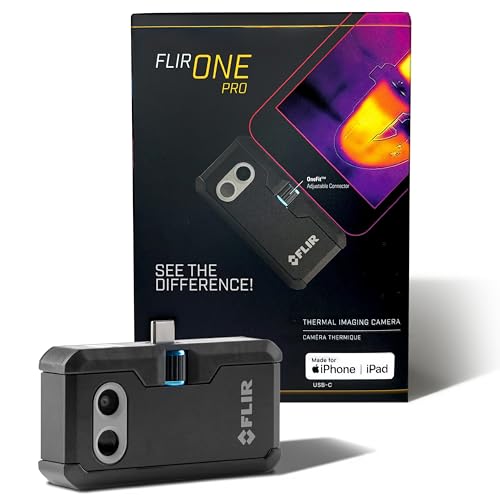 FLIR ONE Pro (phone) | Plugs into iPhone/Android; inspector favorite. | Amazon — $296.65 |
 Topdon TC001 | High-res phone module at a low price. | Amazon — $249.00 |
 FLIR C5 Compact | Standalone pocket camera with Wi-Fi. | Amazon — $593.99 |