Thermal Camera for Dji Mavic 3: What Homeowners Need to Know
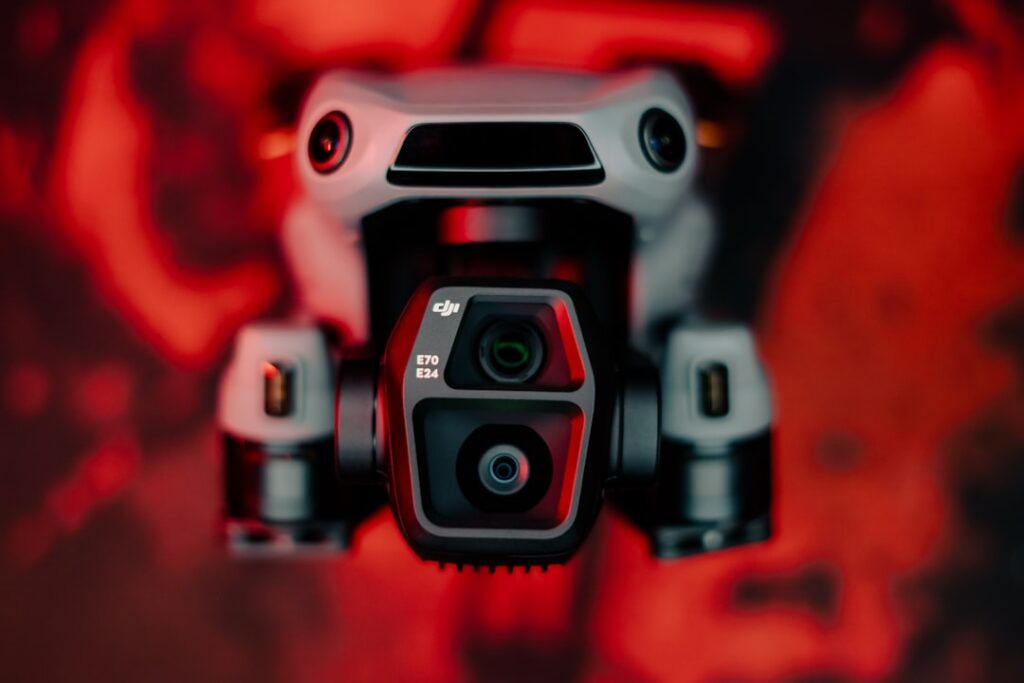
Searches for “thermal camera for DJI Mavic 3” usually come from two different buyers. The first owns a standard Mavic 3 and wants to know whether a thermal payload can be added. The second is comparing the Mavic 3T (the factory thermal variant) against the idea of retrofitting an aftermarket thermal sensor. The short answer is that the Mavic 3 platform is not designed for swappable thermal payloads the way the Matrice industrial series is, and the practical path for thermal capability on a Mavic-class airframe is to use the Mavic 3T factory variant rather than retrofit a third-party sensor. This guide walks through the payload-compatibility picture, where third-party thermal makes sense (rarely, on industrial platforms), and how to think about the build-versus-buy decision.
Thermal Camera for DJI Mavic 3: The Payload Reality
The standard Mavic 3 (with its 4/3 CMOS visible camera) and the Mavic 3 Classic (visible only) are not designed for swappable payloads. The gimbal-camera assembly is integrated into the airframe, and the platform does not provide the payload-data interface that industrial drones use to accept aftermarket sensors. The factory thermal variant (Mavic 3T) ships with a 640×512 radiometric thermal sensor integrated into the same gimbal assembly alongside a 4/3 CMOS visible camera, and that integration is what makes the platform usable for thermal work. The home inspection tools pillar covers how thermal imaging fits into the broader homeowner-inspector toolkit.
What this means in practice is that a homeowner who already owns a standard Mavic 3 and wants thermal capability has two reasonable paths: hire a Part 107 operator with a Mavic 3T or larger thermal platform for the specific job, or sell the standard Mavic 3 and purchase a Mavic 3T. Retrofitting an aftermarket thermal payload onto a Mavic-class airframe is generally not a viable path because the platform does not support it electrically, mechanically, or in software.
Where Third-Party Thermal Payloads Do Make Sense
Third-party thermal payloads have a real market, but the market is on industrial drones, not Mavic-class consumer platforms.
Matrice 300 RTK and Matrice 350 RTK
DJI’s industrial Matrice platforms accept multiple Zenmuse payload options (H20T, H30T, and others) and provide the payload data interface that supports aftermarket payloads from Workswell, Termoteknix, and other thermal manufacturers. A commercial inspection business with a Matrice platform can match the payload to the specific mission: long-range thermal for utility line inspection, dual-thermal for solar farm work, or industrial-temperature thermal for hot-asset inspection.
Open-Architecture Industrial Platforms
Non-DJI industrial drones (Freefly Alta, certain Skydio platforms, custom builds) sometimes offer more open payload integration, including third-party thermal options. These are commercial-volume buyer territory, not homeowner-relevant.
For Mavic-class users, the practical thermal options are the Mavic 3T factory variant or hiring a thermal-equipped operator. Aftermarket sensors mounted to a standard Mavic 3 (via 3D-printed brackets, USB-connected sensors, etc.) are technically possible for hobby experimentation but produce non-radiometric data of limited inspection value and void the platform warranty.
What the Mavic 3T Integrated Payload Provides
For homeowners considering the factory thermal variant, the integrated payload provides the specifications most residential inspection work needs.
Thermal Sensor
640×512 radiometric thermal sensor with approximately 50 millikelvin NETD (noise-equivalent temperature difference). Radiometric means every pixel records an actual temperature value, supporting quantitative analysis post-flight. The 640×512 resolution exceeds typical handheld thermal imagers and is sufficient for the inspection patterns common in residential thermography (roof moisture, envelope thermal anomalies, post-event documentation).
Visible Camera Integration
4/3 CMOS visible camera in the same gimbal, providing 48 MP stills and 4K video. The combination of thermal and visible streams in a single payload, time-synchronized and geo-tagged together, is what makes the inspection workflow viable; thermal data alone is hard to interpret without matched visible imagery.
Mission Modes
The platform supports waypoint missions, repeat-flight automation, and live thermal streaming to the controller. For recurring inspection of the same property (a property manager monitoring a roof), the automation matters.
The Hire-Versus-Buy Decision
For most homeowners, the right answer is hire, not buy. The decision framework:
Hire When
The inspection question is one-time (a suspected leak, post-event documentation, an energy audit). The total annual thermal-imaging need fits comfortably in a single visit. The homeowner does not hold Part 107 certification and does not intend to. The property is in restricted or controlled airspace where coordination is complex.
Hiring a Part 107 commercial operator for a residential thermal inspection typically runs a few hundred dollars and includes flight, data analysis, and a written report. That cost amortizes well below the cost of buying, learning, and maintaining a thermal platform for a single use.
Buy When
The work is recurring and revenue-generating (an inspector adding thermal as a service line). The portfolio is large enough to amortize ownership (real estate investors with multiple properties, property managers). The owner already holds Part 107 certification and has the operational infrastructure (insurance, software, training). The work pattern requires immediate availability rather than scheduled hire.
For these buyer profiles, the Mavic 3T at its package price (drone, controller, batteries, standard accessories) is the entry tier where ownership economics make sense. A look at the DJI Mavic 3 with thermal camera bundles covers the package-vs-build-your-own decision.
Operational Considerations the Spec Sheets Skip
Buying or hiring, several operational realities shape what thermal imaging actually produces.
Time-of-Day Constraints
Roof thermography for moisture surveys is most informative an hour or two after sunset on a clear day with at least 15 to 20 degrees of interior-to-exterior temperature differential. Midday flights produce thermal data that is dominated by solar loading rather than the underlying conditions of interest. Cloud cover during the day removes the solar contrast that makes daytime moisture surveys possible.
Weather Limits
Sustained winds above approximately 12 m/s degrade flight safety and image quality on the Mavic 3T. Precipitation prohibits flight. Cold weather (below 0 degrees Celsius) significantly shortens battery life. Front Range fall and spring weather generally provides the most usable flight windows; midsummer afternoons and winter overcast days often do not.
Pilot Skill Curve
Thermal imagery is genuinely harder to interpret than visible photography. False positives (a vent that looks like a leak), false negatives (a small wet area that has not yet developed contrast), and over-interpretation (assuming any temperature anomaly is a defect) are common new-pilot patterns. The Department of Energy’s documentation on thermographic inspection, along with InterNACHI and ASHI thermography training, helps shorten the curve.
Data Analysis
Radiometric thermal data lives in formats (R-JPEG, TIFF) that require specific software to analyze quantitatively. DJI’s software handles basic measurement; defensible inspection reporting often uses dedicated thermography software for the analysis and report generation. Plan for the post-flight workflow as part of the budget.
Regulatory Framework
FAA Part 107 certification is required for commercial use of any drone, including for inspection work, insurance documentation, and buyer reports. Personal recreational use does not require Part 107 but still requires FAA registration and compliance with airspace rules. Controlled airspace (around DIA, Centennial, Buckley Space Force Base, and other Front Range airports) typically requires LAANC authorization or other coordination before flight. Temporary flight restrictions during wildfires, large events, or other activities ground operations entirely in the restricted area.
For any thermal data intended to support an insurance claim, real estate transaction, or other commercial purpose, the operating pilot needs to be Part 107 certified regardless of whether they are being paid for the specific flight.
Common Misconceptions to Set Aside
A short list of misconceptions worth correcting.
“I can mount a FLIR One on my Mavic 3 and have a thermal drone.” Technically possible, practically useless for any inspection work. Phone-attachment thermal sensors are non-radiometric and have far lower resolution; mounted to a flying platform without integration, they produce data that does not support inspection reporting.
“The Mavic 3T is the same thermal capability as a Matrice.” It is not. The Mavic 3T provides the same 640×512 thermal sensor but with lower environmental tolerance, shorter flight time per battery, no laser rangefinder integration, and less payload flexibility than the Matrice tiers.
“Thermal imagery shows moisture directly.” It shows temperature differences. Moisture causes characteristic thermal signatures (wet materials retain heat differently from dry materials during cool-down), but interpreting the thermal data requires understanding the underlying physics of the building assembly being imaged.
References
- Department of Energy on thermographic inspections — U.S. Department of Energy
- InterNACHI thermal imaging training — International Association of Certified Home Inspectors
- ASHI thermal imaging continuing education — American Society of Home Inspectors
- ASHRAE building envelope and thermal guidance — American Society of Heating, Refrigerating and Air-Conditioning Engineers
Thermal imaging cameras
Infrared cameras reveal hidden moisture, missing insulation, and air leaks. Phone-attachment models are the budget entry point; standalone units have higher resolution.
| Product | Why | Buy |
|---|---|---|
 FLIR ONE Pro (phone) FLIR ONE Pro (phone) | Plugs into iPhone/Android; inspector favorite. | Amazon — $349.00 |
 Topdon TC001 Topdon TC001 | High-res phone module at a low price. | Amazon — $199.99 |
 FLIR C5 Compact FLIR C5 Compact | Standalone pocket camera with Wi-Fi. | Amazon — $449.00 |