Flower Moisture Meter: Plant Care vs Building Inspection
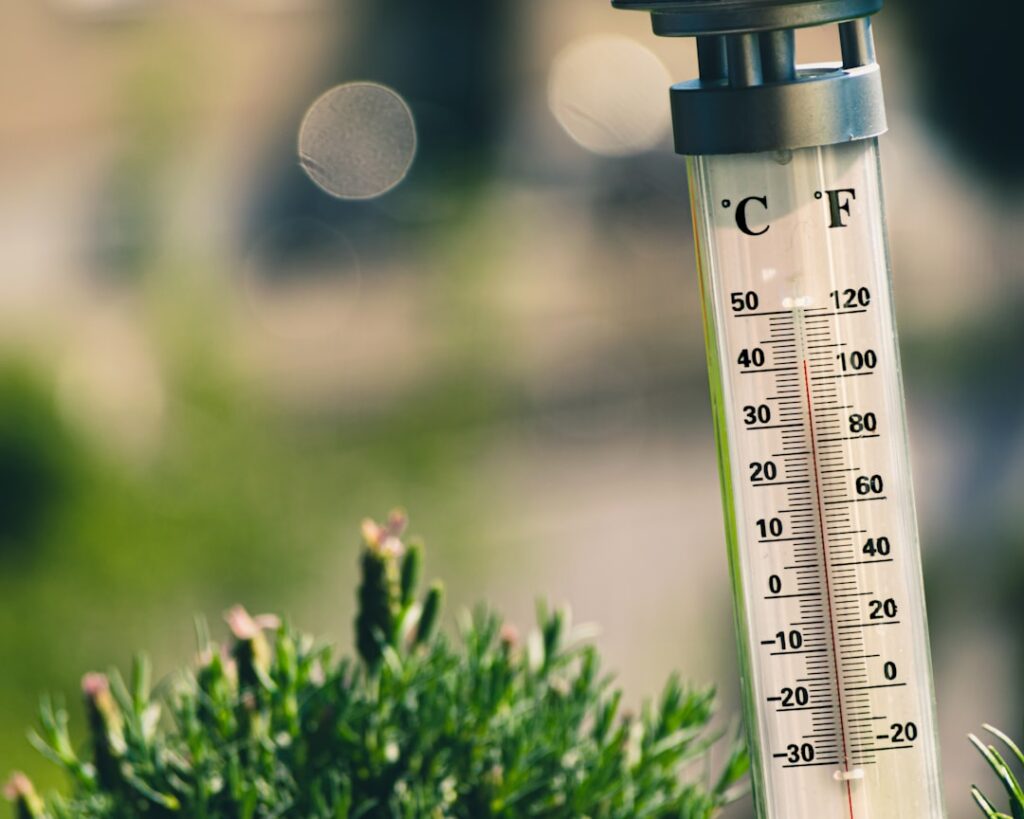
If you searched “flower moisture meter,” you are likely looking for a plant-care soil moisture meter — the simple probe-style tool gardeners use to decide when to water a houseplant or garden bed. Those tools are different in design, price, and purpose from the moisture meters used in building inspection and water damage restoration. This article covers both, side by side, because the same search phrase often pulls up listings from both categories and shoppers end up confused about what they actually need. Plant-care meters run $5 to $30 and measure soil moisture for watering decisions; building moisture meters run $30 to $1,000 and measure material moisture for inspection decisions.
Part of our Moisture Meters & Water Damage Detection guide — start there for the full picture →
Plant-care versus building moisture meters: why the distinction matters
Plant-care moisture meters and building moisture meters use related electrical principles but solve completely different problems. Plant meters answer: should I water this plant today? Building meters answer: is this material safe to leave in place or does it need to be replaced? The accuracy requirements, calibration standards, and price points reflect that gap.
A plant meter is essentially a two-probe galvanic device. The probes generate a small current when inserted into damp soil; the meter displays a 1-to-10 scale of relative wetness. No calibration is involved. A building moisture meter measures actual moisture content (percentage by weight or volume) against a calibrated reference scale specific to each material — wood species, drywall, concrete, masonry. Misreading a plant meter waters a basil plant wrong. Misreading a building moisture meter leaves mold growing inside a wall.
How plant-care soil moisture meters work
The typical garden-store soil moisture meter consists of a 6-to-10-inch metal probe with two electrodes, a small analog dial, and no batteries. Insert the probe 4 to 6 inches into the soil and the dial swings from “dry” (red zone, 1-3) through “moist” (green zone, 4-7) to “wet” (blue zone, 8-10). Some models add a light meter and pH indicator on the same probe assembly. Pricing runs $5 to $30 at hardware stores, garden centers, and Amazon.
The technology is galvanic — soil moisture conducts a tiny current between the two electrodes, and the resistance translates to needle deflection. It is an approximation, not a measurement. Different soil types (clay, loam, sand) and different fertilizer concentrations produce different readings at the same actual moisture content. The reading is useful for watering decisions on a known plant in a known pot, less reliable for absolute comparison between different pots or soils.
Common plant moisture meter brands and use cases
The dominant brands at the consumer level are Sustee, XLUX, Atree, and Sonkir. Sustee makes the colored-window passive indicators that change color based on capillary moisture — no probe, just a stick in the pot that turns blue when water reaches the top and fades to white as soil dries. XLUX and Sonkir offer the standard 1-to-10 needle-dial meters at $10 to $20.
The right use case for these tools is helping new plant owners learn the watering rhythm for each species in their care. African violets prefer 4 to 5 on the scale; succulents prefer 2 to 3; ferns prefer 6 to 8. The meter does not replace observation — leaf droop, soil color, pot weight — but it gives beginners a numeric reference for the visual cues. Experienced gardeners often stop using moisture meters after learning the routine for each plant.
Building moisture meters: a different technology
Building moisture meters use one of two technologies. Pin-type meters drive two probes into the material and measure electrical resistance with a calibrated scale for each material (wood species, drywall, plaster). Pinless meters use radio-frequency capacitance through a flat sensor pad pressed against the surface, scanning roughly a half-inch to three-quarter-inch deep without leaving probe holes.
Both technologies are designed for inspection-grade work: documenting moisture content in framing after a flood, verifying drying goals during water damage restoration, identifying hidden leaks behind drywall, and confirming flooring substrate readiness before installation. The standards body for water damage work — the IICRC and its S500 reference — requires documented moisture readings throughout the drying process, which plant meters cannot produce. The home inspection tools pillar covers building meter selection in detail.
When you actually need a building moisture meter
Building moisture meters are the right tool when something has gotten wet that should not be wet. A water heater leaked overnight. A roof ice dam pushed melt water back under shingles. A basement flooded in a heavy spring storm. A washing machine hose ruptured. In all of those scenarios, the visible surface is only the surface of the problem; moisture has traveled into framing, insulation, and subflooring where a plant meter is useless.
Building meter readings tell the homeowner or contractor whether the material can be dried in place or needs to be removed. A drywall reading above roughly 1 percent on a calibrated pin meter indicates elevated moisture that requires drying. A wood framing reading above 16 to 19 percent indicates problems; above 20 percent supports mold growth within 24 to 72 hours. For more on this methodology, the water damage moisture meter guide walks through IICRC S500 scanning patterns.
Pricing comparison: plant versus building meters
Plant moisture meters: $5 to $30. The Sustee passive indicators run $8 to $15 per pack of three. The XLUX 3-in-1 (moisture + light + pH) runs $13 to $18. The Sonkir dial meter runs $10 to $20. None require batteries and none require calibration. Lifetime is typically 3 to 5 years before the probes corrode enough to produce unreliable readings.
Building moisture meters: $30 to $1,200. Consumer-grade pin meters from General Tools, Klein, and Calculated Industries run $30 to $80. Mid-tier meters from Protimeter, Wagner Meters, and Delmhorst run $200 to $500. Professional-grade meters from Tramex, Delmhorst BD-2100, and Protimeter Surveymaster run $500 to $1,200 with integrated logging and report export.
Why plant meters fail at building inspection
Several reasons. First, plant meters are calibrated for soil, not for drywall, wood, or concrete. A plant meter pressed against wet drywall returns a reading, but the number maps to nothing meaningful. Second, plant meter probes are too short for framing — most are 6 to 10 inches, designed for plant root zones, not wall cavities. Third, plant meters lack the materials calibration tables that allow conversion between meter readings and actual moisture content per material.
A plant meter showing “10 wet” against a damp drywall surface tells you it is damp. A pin-type building meter shows the actual moisture content percentage, which can be compared against the IICRC drying goal, the wood species equilibrium moisture content, and the historical baseline elsewhere in the building. The first is useful information; the second is documentation.
Why building meters fail at plant care
The reverse problem applies. A building moisture meter set to wood mode and pressed into potting soil gives a reading that means almost nothing, because the meter’s calibration table is built for kiln-dried lumber, not living soil. Some building meters offer a “Reference” mode that reads on a 0-to-100 relative scale and would work for soil in a pinch, but the meter is wildly overspecified for the application and most of its features go unused.
The right tool for plant care is the $10 plant meter. The right tool for water damage inspection is the building meter. Buying one to do the other’s job wastes either money or accuracy.
Hybrid 3-in-1 meters and what to expect
Some consumer-grade meters market themselves as 3-in-1 or 4-in-1 tools combining moisture, light, pH, and temperature. These are plant-care tools regardless of marketing language. The XLUX, Atree, and similar 3-in-1 designs are useful for indoor gardening but produce inspection-grade readings on no material.
The exception is the Lignomat Mini-Ligno series, which is a true building moisture meter that some woodworkers also use on lumber stock for furniture-grade dryness checks. At $90 to $150 it occupies a niche between plant meters and full-pro building meters. For a deeper look at the home meter market, the home moisture meter guide compares specific brand offerings.
Soil moisture meter use cases by plant type
Different houseplants prefer different soil moisture levels. African violets, peace lilies, and tropical foliage plants prefer consistently moist soil with readings of 4 to 6 on a 1-to-10 dial. Cacti, succulents, and snake plants prefer dry soil with readings of 1 to 3. Orchids prefer specific bark-medium moisture that conventional probe meters do not read well. Fiddle-leaf figs and rubber trees prefer cycling between 3 (dry) and 6 (moist) for healthy root development.
Outdoor garden soil is more complex. A vegetable garden in active growth prefers 5 to 7 readings. A lawn prefers 4 to 6 readings during growing season. Newly planted shrubs and trees need higher moisture (6 to 8) during establishment, dropping to 3 to 5 once established. Reading consistency at the same depth and time of day matters more than absolute number — the meter’s job is to spot trends, not to measure absolute moisture.
Limitations of consumer plant meters
Consumer soil moisture meters have several known limitations. They read poorly in very dry soil because galvanic conduction requires some moisture to function — readings of “1 dry” sometimes reflect the meter’s failure to make contact rather than actual conditions. They also read unpredictably in heavily fertilized soil because fertilizer salts increase conductivity independent of moisture, biasing readings toward “wet.”
Probe corrosion is the most common failure mode. After 1 to 3 years of regular use, the metal probes oxidize enough to produce unreliable readings. The meter itself still works mechanically, but the readings drift toward false-dry as the probe resistance increases with corrosion. Cleaning the probes with fine sandpaper restores accuracy temporarily; eventually the meter needs replacement.
Decision framework: what should you buy?
If your goal is to water houseplants more consistently or test garden soil before planting, buy a plant-care moisture meter at $10 to $20. A Sustee passive indicator or an XLUX dial meter handles the job indefinitely. If your goal is to investigate a water leak, document post-flood damage, or verify drying after a remediation, buy a building moisture meter starting around $50 to $80 for consumer use or $200 to $500 for mid-tier work.
If you are not sure which problem you have, ask the question: do I need a number that I can compare against a published standard? If yes, buy a building meter. If you just need to know whether to water the plant today, buy a plant meter. The two answer different questions with different price tags.
References
- Buying and Owning a Home — Consumer FTC
- ENERGY STAR: Seal and Insulate — U.S. Environmental Protection Agency (ENERGY STAR)
- Moisture Content in Buildings — InterNACHI
- Inspector Resources — ASHI
Frequently asked questions
Are flower moisture meters accurate for houseplants?
They are accurate enough for the relative watering decision they were designed to make. A 1-to-10 dial gives consistent enough readings to learn the watering rhythm for each plant. They are not accurate for absolute moisture comparisons between different soils or pots.
Can I use a plant moisture meter to check for water damage?
No. Plant meters are calibrated for soil and use short probes designed for root zones. A reading on damp drywall or framing tells you it is damp but does not produce the calibrated moisture-content percentage needed for inspection or insurance documentation.
How much does a plant moisture meter cost?
Plant-care soil moisture meters run $5 to $30. The Sustee passive indicators run $8 to $15 per pack of three. The XLUX 3-in-1 and Sonkir dial meters run $10 to $20. None require batteries.
What is the difference between a soil and building moisture meter?
A soil moisture meter is calibrated to soil conductivity and uses short probes for plant root zones. A building moisture meter is calibrated to wood, drywall, and concrete with longer probes and produces actual moisture-content percentages used in inspection and water damage documentation.
Moisture meters for home inspection
Pin meters read deep but leave marks; pinless meters scan surfaces non-destructively. Many inspectors carry both.
| Product | Why | Buy |
|---|---|---|
 Klein Tools ET140 Pinless Klein Tools ET140 Pinless | Non-destructive scanning; affordable. | Amazon — $49.14 |
 General Tools MMD4E General Tools MMD4E | Best-selling pin meter for drywall/wood. | Amazon — $39.98 |
 Lignomat Mini-Ligno Lignomat Mini-Ligno | Trusted by woodworkers; species-calibrated. | Amazon — $99.00 |