Dji Mavic 3 With Thermal Camera: What Homeowners Need to Know
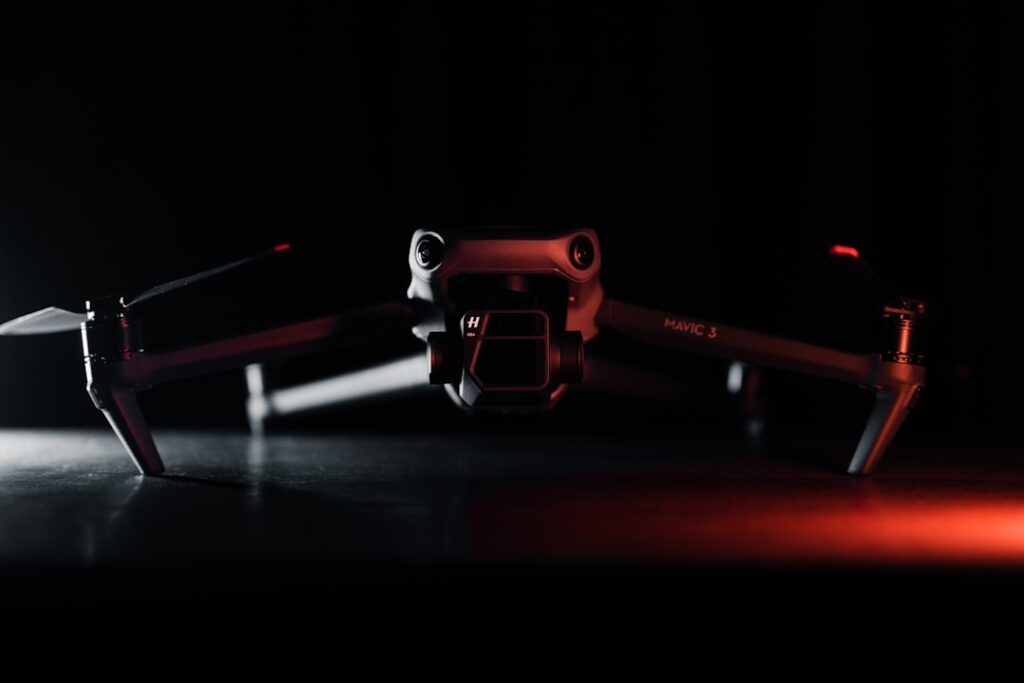
“DJI Mavic 3 with thermal camera” is a search that often translates to two practical buyer questions. Do I buy the factory Mavic 3T bundle, which packages the thermal-equipped airframe with the standard accessories, or do I buy the base Mavic 3 and add thermal capability some other way? The answer for the second path is short: there is no practical “add thermal” upgrade for a base Mavic 3, so the question collapses to which Mavic 3T package matches the buyer’s needs. This guide walks through the package tiers DJI sells for the Mavic 3T, the total realistic cost of ownership beyond the sticker price, and how to decide whether the bundle makes sense versus hiring a Part 107 operator for the specific job.
Part of our Thermal Imaging for Homes guide — start there for the full picture →
DJI Mavic 3 With Thermal Camera: The Package Reality
The thermal-equipped variant in the Mavic 3 family is the Mavic 3T. It is sold as a bundle, not as a base airframe plus optional thermal payload. The bundle includes the thermal-equipped airframe (with integrated 640×512 radiometric thermal sensor and 4/3 CMOS visible camera), a DJI RC controller, batteries (typically one to three depending on the specific bundle), props, charger, and a small accessory set. Pricing for the standard fly-more bundle typically lands in the upper five figures.
The standard Mavic 3 (without thermal) and the Mavic 3 Classic (visible-only) cannot be upgraded to thermal. The thermal sensor is integrated into the gimbal-camera assembly at the factory and is not a swappable component. Aftermarket sensors mounted to a base Mavic 3 are technically possible for experimentation but produce non-radiometric data that does not support inspection reporting, void platform warranties, and rarely meet any commercial inspection requirement. The home inspection tools pillar covers how aerial thermal capability fits into the broader homeowner-inspector toolkit.
What the Standard Bundle Includes
DJI typically sells the Mavic 3T in two configurations: the standard bundle and the fly-more or “combo” bundle.
Standard Bundle
Aircraft, controller (DJI RC), one battery, propellers, charger, USB-C cable, screwdriver, and basic case. This configuration covers the absolute minimum to fly but is impractical for working use because a single battery limits effective flight time to roughly 30 minutes total per session.
Fly-More or Combo Bundle
Same airframe plus additional batteries (typically two more, for three total), a multi-battery charging hub, additional propeller sets, ND filters where applicable, and a more substantial carry case. This configuration is the realistic minimum for working inspection use.
Enterprise Add-Ons
Care Enterprise (DJI’s commercial warranty and crash-replacement service), Flight Hub (DJI’s data management platform), and specialized accessories (RTK GPS modules, propeller guards for indoor use) round out the option list. Each adds meaningfully to total cost.
Total Cost of Ownership Beyond the Sticker
The Mavic 3T sticker price is the starting point. The first-year all-in cost for a working pilot typically runs significantly higher. The components.
Airframe and Standard Accessories
The fly-more bundle is the realistic starting cost. Below this configuration the platform is too constrained for productive use.
Care Enterprise or Equivalent
Commercial drone insurance and crash-replacement coverage. Standalone third-party hull coverage runs in the high three to low four figures per year for the platform value. DJI’s Care Enterprise bundles some of this; full third-party liability insurance is typically separate.
Part 107 Certification and Recurrent
Initial Part 107 study materials and the FAA knowledge exam. Recurrent training (every 24 months) keeps the certificate current. Total first-year Part 107 investment is typically a few hundred dollars in study materials plus the exam fee.
Analysis Software
Radiometric thermal data analysis software for defensible inspection reporting. DJI’s bundled software handles basic measurement; dedicated thermography software (FLIR Thermal Studio Pro or equivalent) is sometimes used for full reporting workflows.
Replacement Consumables
Propellers, batteries (which degrade over charge cycles), small parts, and SD cards. Annual consumable budget for an active pilot is typically a few hundred dollars.
FAA Registration
FAA registration is required for any commercial drone and renews periodically.
Local Permits and Operations
Some Front Range municipalities have additional drone operation rules. Insurance documentation, airspace coordination through LAANC, and operations log maintenance are part of the working pilot’s overhead.
The Hire-Versus-Buy Decision Mathematically
The package decision depends on annual thermal-inspection volume.
Low Volume (1 to 3 Thermal Inspections Per Year)
Hiring a Part 107 commercial operator for each specific job. Typical residential thermal inspection by a hired operator runs a few hundred dollars per visit and includes flight, analysis, and a written report. For one to three inspections, the total annual cost is well below the cost of the platform alone, and avoids the Part 107 certification, insurance, training, and operational overhead.
Moderate Volume (5 to 20 Thermal Inspections Per Year)
The economics shift toward ownership if the buyer already has Part 107 certification or is willing to obtain it. For inspectors adding thermal as a service line at this volume, ownership begins to pay back within the first year or two.
High Volume (50+ Thermal Inspections Per Year)
Ownership is clearly the right answer. The platform pays for itself within months, and the ability to deploy on short notice (rather than scheduling a hired operator) becomes a meaningful service differentiator. A look at the DJI drone thermal camera lineup covers the platform tiers in more depth.
Comparing the Mavic 3T to Other DJI Thermal Tiers
Within the DJI lineup, the Mavic 3T is the entry tier. The next tier up is the Matrice 30T (mid-tier commercial, similar thermal sensor but larger airframe, better environmental rating, laser rangefinder); the top tier is the Matrice 350 RTK with Zenmuse thermal payloads (industrial). For residential and small-commercial work, the Mavic 3T covers almost all realistic use cases; the Matrice tiers are aimed at commercial inspection volume, industrial applications, and public safety.
Buyers considering “stepping up” from the Mavic 3T typically have specific operational needs (harsher weather operation, longer flight time per battery, higher payload capacity for multiple sensors, dock-based remote operation) rather than just wanting more capability. For pure thermal sensor performance, the Mavic 3T’s 640×512 radiometric sensor matches what the Matrice 30T provides.
Operational Realities of the Mavic 3T Specifically
Several operational characteristics of the platform shape its real-world use.
Flight Time
Single-battery flight time on the Mavic 3T is approximately 45 minutes in ideal conditions. Real-world flight time with cold weather, headwinds, and operational maneuvering is typically lower. A three-battery loadout supports roughly 90 to 120 minutes of total flight time per session, which is enough for a typical residential inspection but leaves little margin for unexpected complications.
Wind Tolerance
Rated wind tolerance is approximately 12 m/s sustained. Operations above this rating degrade flight safety and image quality. Front Range fall and spring conditions often provide usable windows; midsummer afternoon thermals and winter storms often do not.
Cold Weather Performance
Below 0 degrees Celsius, battery capacity drops significantly. Pre-warming batteries before flight and keeping spare batteries in a warm case extend usable session time meaningfully. Operations below approximately -10 degrees Celsius are outside the manufacturer’s recommended envelope.
Thermal Capture Workflow
The platform supports live thermal streaming to the controller, multiple capture modes (single, interval, hyperlapse), and synchronized thermal-plus-visible capture. The thermal data is stored as R-JPEG (radiometric JPEG) that can be analyzed in DJI software or imported into third-party thermography tools.
What the Bundle Does Not Include
A short list of things that typically need to be purchased separately or operationally added.
Commercial drone insurance (third-party liability and hull coverage) is separate from DJI’s Care Enterprise.
Part 107 certification and operational compliance infrastructure (insurance, logs, registration).
Analysis software beyond DJI’s bundled tools, for buyers who need formal thermography reporting.
Field accessories like dedicated landing pads, sun shades for the controller, and quality SD cards rated for the data rates.
Training. Thermal imagery interpretation is genuinely harder than visible photography; thermography training from recognized organizations shortens the learning curve substantially.
Decision Framework Summary
The right Mavic 3T decision for a buyer depends on the answer to three questions. How many thermal inspections per year does the work justify? Is the buyer willing to obtain and maintain Part 107 certification and the surrounding operational infrastructure? Does the work pattern require immediate availability rather than scheduled hire? Buyers answering yes to recurring volume, Part 107 commitment, and on-demand operational need are the buyer profile where the Mavic 3T bundle earns its place. Everyone else is usually better served by hiring a Part 107 thermal operator for the specific job.
More Questions About the DJI Mavic 3 With Thermal Camera
Is the DJI Mavic 3 Thermal worth it for a home inspector?
A DJI Mavic 3 Thermal is often worth it for a home inspector who regularly offers roof, solar, or exterior thermal scans and can bill for them. Inspectors who only need thermal occasionally may find hiring a Part 107 operator or renting a drone more cost-effective.
Ownership costs include the aircraft, batteries, Part 107 certification, insurance, software, and training time. Inspectors who already use handheld thermal cameras can often add drone thermal services with a short learning curve and charge an add-on fee.
Can the Mavic 3 Thermal be used indoors?
The Mavic 3 Thermal can technically be flown indoors, but indoor flights are risky because GPS is unavailable, obstacle sensing can be confused by tight spaces, and wind from propellers stirs dust. Most indoor thermal work in homes is better done with a handheld thermal camera.
Indoor drone flights are generally outside FAA airspace regulations, but property owners, insurance, and safety should still guide the decision. Large warehouses or barns may suit indoor flights more than houses.
How many batteries do I need for a Mavic 3 Thermal?
Most commercial Mavic 3 Thermal operators carry at least three batteries for a day of residential inspections. One battery often covers a single roof scan, but cold weather, wind, and repeat passes reduce flight time quickly.
Extra batteries allow multiple properties in one outing and leave time for safe reserves. A charging hub and car charger help keep batteries ready. Batteries degrade over charge cycles and should be replaced when flight time drops or cells show swelling or warnings.
What training helps with Mavic 3 Thermal inspections?
Besides FAA Part 107 certification for commercial flights, thermography training helps Mavic 3 Thermal operators interpret images correctly. Courses on building science, emissivity, reflections, and weather conditions teach pilots to avoid false positives.
Many drone operators take Level I thermography certification, which covers camera settings and interpretation basics. DJI and third-party providers also offer software training for mission planning and thermal analysis. Practice flights on known roofs build skill faster than reading manuals alone.
References
- ENERGY STAR: Seal and Insulate — U.S. Environmental Protection Agency (ENERGY STAR)
- InterNACHI thermal imaging training — International Association of Certified Home Inspectors
- ASHI thermal imaging continuing education — American Society of Home Inspectors
- ASHRAE building envelope and HVAC guidance — American Society of Heating, Refrigerating and Air-Conditioning Engineers
Frequently asked questions
Can I upgrade a base Mavic 3 to add a thermal camera?
No. The thermal sensor in the Mavic 3T is integrated into the gimbal-camera assembly at the factory and is not a swappable component. Aftermarket sensors mounted to a base Mavic 3 produce non-radiometric data not useful for inspection reporting.
Is the fly-more bundle worth the upgrade over the standard bundle?
For working use, yes. A single battery is impractical; the multi-battery configuration is the realistic minimum for productive inspection sessions.
How does the Mavic 3T total cost compare to hiring a Part 107 operator?
For low annual thermal inspection volume (one to three jobs per year), hiring is dramatically cheaper. For moderate to high recurring volume by a Part 107-certified inspector, ownership pays back within months.
Does the Mavic 3 Thermal work with DJI Care?
Yes, the Mavic 3 Thermal can be covered by DJI's enterprise care plans, which provide replacement for accidental damage for a set number of incidents, depending on the plan. Coverage terms and prices change, so check current details with DJI or authorized enterprise dealers.
Can the Mavic 3 Thermal take thermal video?
Yes, the Mavic 3 Thermal records thermal video as well as still images. Video helps with live scanning and finding anomalies quickly, while radiometric still images are usually used in reports because they store temperature data for each pixel.
Is the Mavic 3 Thermal easy to fly for beginners?
The Mavic 3 Thermal is relatively easy to fly thanks to GPS hovering, obstacle sensing, and return-to-home features. Beginners still need practice, especially near houses, trees, and wires. Commercial use requires Part 107, which covers airspace and safety rules.
Thermal imaging cameras
Infrared cameras reveal hidden moisture, missing insulation, and air leaks. Phone-attachment models are the budget entry point; standalone units have higher resolution.
| Product | Why | Buy |
|---|---|---|
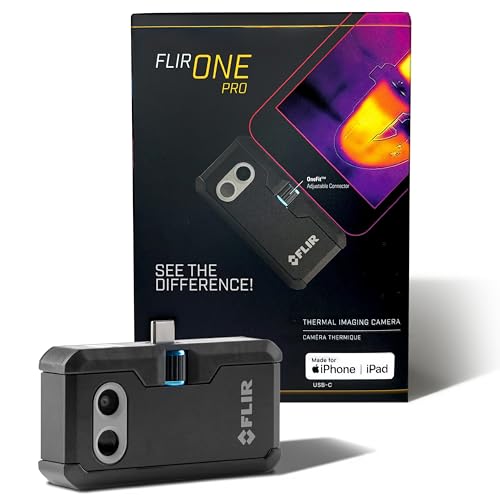 FLIR ONE Pro (phone) | Plugs into iPhone/Android; inspector favorite. | Amazon — $296.65 |
 Topdon TC001 | High-res phone module at a low price. | Amazon — $249.00 |
 FLIR C5 Compact | Standalone pocket camera with Wi-Fi. | Amazon — $593.99 |