Disposing of Asbestos Roof Sheets: A Homeowner Guide
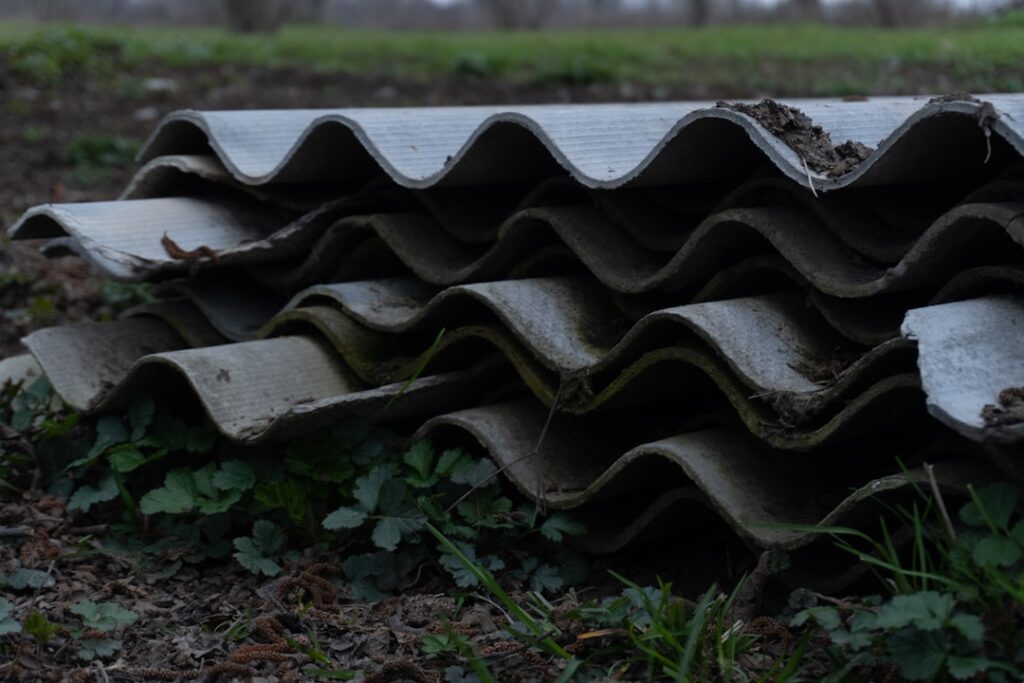
Grey corrugated roof panels on an old shed, detached garage, carport or barn are one of the more common places a homeowner runs into asbestos without expecting it. Many of those panels are asbestos-cement, a material made by binding asbestos fibers into cement so the sheets would resist weather, fire and rot. As long as the panels sit undisturbed, they are usually a low concern. The trouble starts when a roof fails, a storm cracks a few sheets, or an owner decides to tear down the outbuilding. At that point the material has to come off and go somewhere, and it cannot simply go in a dumpster. This guide walks through how disposing of asbestos roof sheets generally works: how to recognize the panels, what not to do to them, how removal is usually handled, how sheets are wrapped and labeled, how landfill acceptance works, where Colorado rules fit, and what the job tends to cost. It summarizes EPA and OSHA material current as of 2026. It is general information, not legal advice.
Part of our Asbestos in the Home guide — start there for the full picture →
Is this mold, asbestos, or water damage? Get a free instant screen
Upload a clear photo of the suspect area. You'll get an instant AI screening opinion and what to do next. This is screening guidance, not a professional determination.
Screening guidance only. AI can be wrong. Confirm asbestos, mold type, or lead with lab testing or a licensed professional before acting.
Recognizing Asbestos-Cement Roof Sheets
Asbestos-cement roofing usually shows up as rigid, corrugated or ribbed panels in a flat grey or weathered off-white color. The sheets feel heavy and stiff, more like thin concrete than metal or plastic, and older ones often carry a surface layer of moss, lichen or dark staining. They were used widely on agricultural buildings, garages, sheds, lean-tos and light industrial structures for much of the twentieth century. They appear to have been especially common in some countries, such as the United Kingdom and Australia, while in the United States asbestos roofing is more often encountered as cement shingles on houses. Corrugated asbestos-cement sheets still turn up on American outbuildings, particularly older farm and ranch structures, but how common they are varies a great deal by region and by the age of the building.
The key point is that appearance alone does not settle the question. EPA’s homeowner guidance says you generally cannot tell whether a material contains asbestos just by looking at it unless it is labeled, and that if you are in doubt you should treat it as if it contains asbestos and leave it alone. Modern fiber-cement panels look very similar to the older asbestos product, so age, origin and a lab result matter more than color or texture. Our guide to asbestos cement covers how the material was made and where else it shows up, and the broader asbestos roof guide explains roofing products in general.
EPA also recommends that sampling be done by a trained and accredited asbestos professional rather than by the homeowner, because sampling done incorrectly can release fibers and can be more hazardous than leaving the material alone. For a roof sheet that is about to be removed anyway, a professional sample is still worth having. It tells you whether the debris is regulated waste, it shapes what the landfill will accept, and it can save money if the panels turn out to be asbestos-free fiber cement. Before planning anything, it helps to review the asbestos and lead testing overview and the asbestos hub, which group the related topics together.
What Not to Do With Asbestos Roof Sheets
Most of the risk from asbestos-cement roofing comes from what people do to it, not from the sheets sitting in place. EPA explains that asbestos-containing materials may release fibers when they are disturbed, damaged, removed improperly, repaired, cut, torn, sanded, sawed, drilled or scraped. Weathered cement sheets also tend to get brittle with age, which makes them more likely to crack and shed debris when handled roughly.
EPA’s do’s and don’ts for homeowners include leaving undamaged asbestos-containing materials alone, not sawing, sanding, scraping or drilling holes in them, not dusting, sweeping or vacuuming debris that may contain asbestos, and having removal and major repair done by people trained and qualified to handle asbestos. Applied to roof sheets, those general rules translate into a practical list of things to avoid:
- Do not break the sheets to make them easier to carry. Snapping panels into smaller pieces creates fresh broken edges and fragments, which is exactly the kind of damage that can release fibers.
- Do not cut them with a power saw or grinder. Power tools turn cement into fine dust. EPA’s homeowner list specifically says not to saw or drill asbestos-containing materials.
- Do not power-wash or scrub the surface. Pressure washing to remove moss or lichen can erode the cement surface and spread slurry and debris around the yard, gutters and nearby soil.
- Do not walk on the roof. Asbestos-cement sheets are fragile and are not designed to carry a person’s weight between supports. Falls through these roofs are a well-known hazard, and a broken sheet also becomes damaged material.
- Do not drop or throw sheets to the ground. Impact breaks them. OSHA’s construction rules for roofing removal prohibit dropping or throwing removed asbestos roofing to the ground, which is a useful benchmark even for small projects.
- Do not dry sweep debris. Use wet wiping or a HEPA vacuum suitable for asbestos work rather than a broom or a household vacuum.
If a storm has already cracked some sheets, EPA’s general advice for slightly damaged material is to limit access to the area and avoid touching it. Keeping children, pets and foot traffic away from the outbuilding while you plan the next step is a reasonable first move. For material that is more than slightly damaged, EPA says repair or removal by a trained and accredited asbestos professional is needed.
How Asbestos Roof Sheet Removal Is Usually Done
Professional removal of asbestos-cement roofing follows a fairly consistent pattern. The details below draw on OSHA’s construction asbestos standard, 29 CFR 1926.1101, which applies to employers and workers. It does not directly govern a homeowner working on their own shed, but it describes how the work is supposed to be done and is the clearest benchmark for what careful removal looks like.
Class 2 work under OSHA
OSHA sorts asbestos construction work into classes. The standard defines Class 2 asbestos work (written as Class II in the regulation) as removal of asbestos-containing material that is not thermal system insulation or surfacing material, and it names roofing and siding shingles among its examples. Removing corrugated cement roof sheets is generally handled under the same category. Class 2 work brings requirements for regulated areas, trained workers and specific work practices, and the standard says respirators must be used during certain classes of work, depending on the circumstances.
OSHA’s roofing work practices
For removing roofing material that contains asbestos, 1926.1101 lists a set of work practices. Among them, the standard says that:
- Roofing material shall be removed in an intact state to the extent feasible.
- Wet methods shall be used to remove roofing materials that are not intact, or that will become not intact during removal, unless wet methods are not feasible or would create safety hazards.
- Cutting machines shall be continuously misted during use, unless a competent person determines that misting substantially decreases worker safety.
- Removed roofing shall not be dropped or thrown to the ground; unless it is carried or passed down by hand, it must be lowered by a covered, dust-tight chute, crane or hoist.
- Material that is not intact shall be lowered as soon as practicable and no later than the end of the work shift, and while it remains on the roof it must be kept wet, placed in an impermeable waste bag, or wrapped in plastic sheeting.
- Once lowered, unwrapped material shall be transferred to a closed receptacle in a way that prevents dust from spreading.
In practice, crews working on corrugated sheets typically mist the panels, unscrew or carefully cut the fixings rather than the sheets themselves, lift each sheet off whole, and pass it down by hand or lower it rather than sliding it off the edge. Our asbestos roof removal guide covers the broader process for residential roofs, including shingles.
Wetting, wrapping and labeling
EPA’s NESHAP overview summarizes the federal waste requirement in one line: the rule generally requires that asbestos-containing waste material be sealed in a leak-tight container while wet, labeled, and disposed of properly in a landfill qualified to receive asbestos waste. For roof sheets, that commonly means keeping panels damp, stacking them flat on a sheet of heavy plastic, wrapping the stack in polyethylene sheeting, sealing all seams with tape, and applying asbestos warning labels. Many landfills ask for double wrapping in thick polyethylene, often 6-mil, but the exact specification is set by each facility and by state rules, so it is worth confirming before buying materials.
Small broken pieces, fixings and swept-up debris usually go into heavy-duty, labeled asbestos waste bags rather than loose into the wrapped stack. Wrapped bundles should be kept to a size and weight that can be handled without tearing the plastic or breaking the sheets inside.
Step-by-Step: From Roof to Landfill
The table below pulls the process together. It is a general outline, not a substitute for the rules that apply to a specific job, and the right order of operations can change if a sheet is already badly damaged.
| Step | What to do | Why |
|---|---|---|
| 1. Confirm the material | Have an accredited professional sample the sheets and send them to a lab. | EPA says you generally cannot tell asbestos by looking, and professional sampling avoids releasing fibers. |
| 2. Check the rules | Ask the state program and local building department what applies to your building and whether a homeowner may do the work. | Federal NESHAP exempts many small residential buildings, but state and local rules can still apply. |
| 3. Call the landfill | Confirm the facility accepts asbestos-cement roofing, plus its packaging, paperwork, hours and fees. | Not every landfill takes asbestos, and each sets its own acceptance terms. |
| 4. Prepare the area | Lay plastic sheeting around the building, keep people and pets away, and arrange safe access that avoids standing on the sheets. | Catches debris and reduces both exposure and fall risk. |
| 5. Wet the sheets | Lightly mist panels before and during removal, without flooding them. | OSHA calls for wet methods on roofing that is not intact or will become not intact. |
| 6. Remove intact | Release fixings and lift each sheet off whole; avoid breaking or power-cutting panels. | OSHA says roofing should come off intact to the extent feasible, and intact sheets shed less. |
| 7. Lower, do not drop | Pass sheets down by hand or lower them with a hoist or chute. | OSHA prohibits dropping or throwing removed asbestos roofing to the ground. |
| 8. Wrap and label | Stack flat, wrap in heavy polyethylene, seal seams, and attach asbestos warning labels. | EPA’s NESHAP overview describes sealing wet waste in leak-tight containers and labeling it. |
| 9. Clean up | Wet-wipe surfaces and collect debris and the ground sheeting as waste; do not dry sweep. | EPA advises against sweeping or vacuuming debris that may contain asbestos. |
| 10. Transport and dispose | Haul in a covered load to the approved landfill and keep any receipts or waste records. | Proof of proper disposal can matter for permits, inspections and future sales. |
Landfill Acceptance and Calling Ahead
There is no universal rule that every landfill will take asbestos roof sheets. Some landfills are permitted to accept asbestos waste and run a designated area for it, while many others, along with most transfer stations and household drop-off sites, refuse it. That is why calling ahead is the single most important step in disposing of asbestos roof sheets. A quick call usually answers the questions that matter: whether the facility accepts non-friable asbestos-cement material, whether it requires an appointment, how loads must be wrapped and labeled, whether it wants lab results or a form, and what it charges.
EPA notes that landfills receiving asbestos have special requirements for handling and securing the waste so it does not release fibers into the air, and that transportation vehicles have special labeling requirements and waste shipment recordkeeping requirements under the federal rule. Whether those federal record requirements apply to a particular homeowner load depends on the job, but landfills often ask for paperwork anyway as a matter of policy. Our asbestos landfill guide goes deeper into how facilities screen loads, how fees are usually structured and why some sites turn away friable material.
Friability is a common sticking point. Intact asbestos-cement sheets are generally considered non-friable because the fibers are locked into a cement matrix. Sheets that have been smashed, crumbled or heavily weathered may be treated differently, because broken material is more likely to release fibers. The friable asbestos guide explains the distinction. In practical terms, a neatly wrapped stack of whole panels tends to be easier to dispose of than a pile of broken pieces, which is one more reason to remove sheets intact.
Colorado Rules for Homeowners
Federal rules set a baseline, but for most Front Range homeowners the state program and local permitting offices decide the details. EPA’s NESHAP overview notes that the federal renovation and demolition work practices exclude residential buildings with four or fewer dwelling units, and EPA’s homeowner page adds that federal law does not require people who inspect, repair or remove asbestos in detached single-family homes to be trained and accredited, while some states and localities do require this.
Colorado is generally regarded as one of the stricter states on asbestos. Its air quality regulations are commonly described as requiring an asbestos inspection before certain renovation and demolition work, using state-certified professionals for many projects, and limiting how much material a homeowner may remove from their own single-family residence before a licensed contractor and permit are required. Rules on outbuildings, notification, waste packaging and approved disposal sites are also set at the state level, and many cities and counties along the Front Range tie demolition permits to proof of an asbestos inspection. The specifics, including quantity thresholds and whether a detached shed or barn is treated the same as the house, can change and depend on the property, so check the current state asbestos program requirements and talk to your local building department before starting any removal.
Professional Removal Versus DIY Where Allowed
Where state and local rules allow a homeowner to remove a small amount of non-friable roofing from their own property, some owners choose to do it themselves. That can work for a handful of intact sheets on a low shed roof that can be reached safely from a ladder or scaffold. It is a much harder call for a large barn, a steep or high roof, or a roof where many sheets are already cracked.
EPA’s position for homeowners is cautious. It recommends that removal and major repair be done by people trained and qualified in handling asbestos, and it notes that improper removal may actually increase a family’s exposure. It also suggests avoiding a conflict of interest by using an asbestos inspector who is separate from the firm that does the removal.
A sensible way to decide is to ask a few questions. Can the work be done without standing on the sheets? Are most panels intact? Is the quantity within what the state allows a homeowner to remove? Has a landfill confirmed it will take the load? Can the right respirator, disposable coveralls, plastic sheeting and labels be obtained and used correctly? If the answer to any of those is no, a licensed contractor is usually the better route. For roofs that also have other asbestos products, such as shingles, see the asbestos roof shingles guide. Similar rules apply to indoor materials, covered in the guide to disposing of asbestos tiles.
What Removal and Disposal Typically Cost
Costs vary widely with roof size, access, the condition of the sheets, local labor rates, testing requirements and landfill fees, so any single figure would be misleading. It is more useful to know what drives the price:
- Testing and inspection. Sampling and lab analysis are usually a modest share of the total, and in many Front Range jurisdictions an inspection is needed before demolition or renovation anyway.
- Labor and access. A low shed roof that can be reached from the ground or a short scaffold costs far less to strip than a tall barn roof that needs lifts or extensive fall protection.
- Condition of the sheets. Broken, crumbling panels take longer to handle, need more wetting and bagging, and may be classified differently at the landfill.
- Containment and supplies. Plastic sheeting, labels, waste bags, protective equipment and clean-up time add up, even on small jobs.
- Disposal fees and haulage. Landfills that accept asbestos typically charge by weight or volume, sometimes with a minimum charge, and the trip may be long if the nearest accepting site is far away.
Getting at least two or three written quotes that spell out what is included, such as testing, permit handling, removal, disposal and clearance, makes comparisons much easier. Our asbestos removal price guide explains common pricing structures, and the asbestos siding removal cost guide covers a closely related exterior cement product.
References
- U.S. EPA. Protect Your Family from Exposures to Asbestos.
- U.S. EPA. Overview of the Asbestos National Emission Standards for Hazardous Air Pollutants (NESHAP).
- OSHA. 29 CFR 1926.1101, Asbestos (Construction Industry Standard).
Frequently asked questions
Can asbestos roof sheets go in a regular dumpster?
Generally no. EPA's NESHAP overview describes sealing asbestos waste wet in leak-tight containers, labeling it and disposing of it at a landfill qualified to receive asbestos. Most dumpster haulers and transfer stations refuse it, so call an accepting landfill first.
Should asbestos-cement sheets be broken up to make them easier to move?
No. Breaking sheets creates fresh edges and fragments that can release fibers. OSHA's roofing work practices say roofing should be removed intact to the extent feasible and not dropped or thrown to the ground.
Is removing asbestos roof sheets Class 2 work?
Under OSHA's construction standard, removal of asbestos-containing material that is not thermal system insulation or surfacing material is Class 2 work, and roofing and siding shingles are named examples. Cement roof sheets are generally handled in the same category.
Can a Colorado homeowner remove asbestos roof sheets alone?
Colorado limits how much material a homeowner may remove from their own home before a licensed contractor and permit are needed, and outbuildings can be treated differently. Check the current state program and your local building department before starting.
How should wrapped asbestos roof sheets be labeled?
Wrapped bundles are commonly sealed in heavy polyethylene with taped seams and asbestos warning labels. Each landfill sets its own labeling and paperwork terms, so ask the facility what it requires before you haul.
Found grey corrugated panels on an old shed or barn and not sure what to do next? Send us a few details about the building, and we can help you line up testing or an accredited abatement contractor on the Front Range.