Deck Repair: Boards, Rails, Ledgers and When to Rebuild
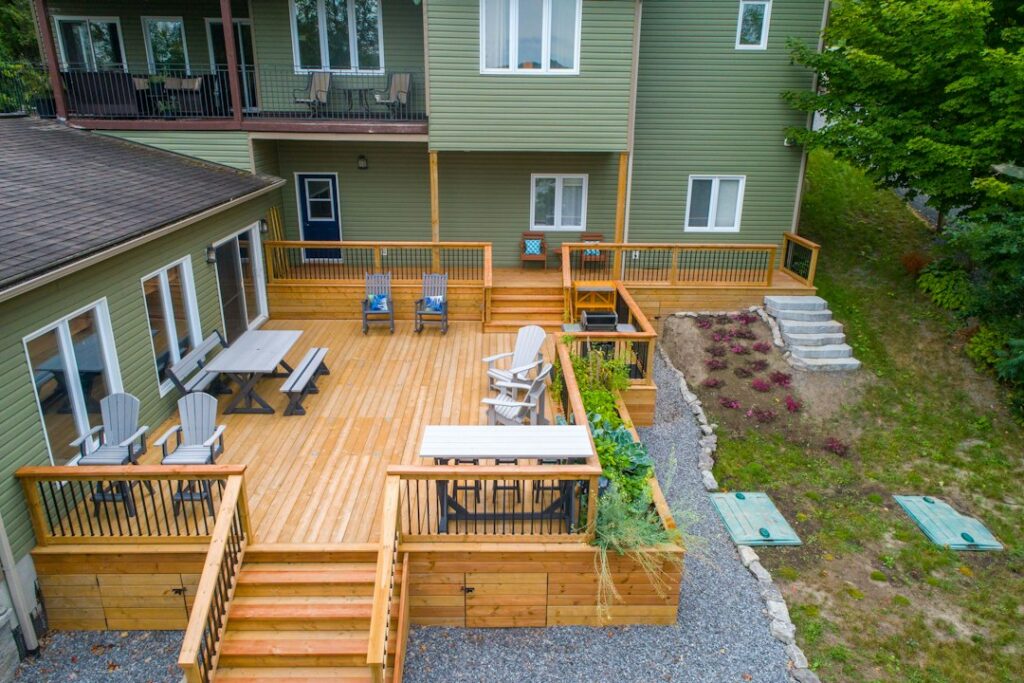
Decks fail slowly and then suddenly. A soft board, a railing that moves a little more each summer, a stair stringer darkening where it touches the ground: each one is easy to ignore until a guest leans on the rail or a crowd gathers for a party. Good deck repair starts by separating cosmetic wear from structural problems, because a fresh coat of stain over a failing ledger or undersized footing only hides the risk. This guide walks through the parts of a deck that most often need attention (boards, railings, stairs, the ledger connection, joists, beams and footings), how to tell when repair stops making sense and replacement is the better value, what permits typically apply along the Colorado Front Range and what homeowners commonly pay. It is general information, not an engineering assessment of any specific deck.
Part of our Structure & Exterior guide — start there for the full picture →
What Deck Repair Usually Involves
Most deck repair falls into one of three tiers. Surface repairs replace damaged decking boards, reset or replace popped fasteners and refinish the surface. Safety repairs fix loose or undersized railings, wobbly balusters and worn or unstable stairs. Structural repairs address the hidden frame: the ledger board that attaches the deck to the house, joists, beams, posts, footings and the metal connectors that tie them together.
The cost and urgency rise sharply from the first tier to the third. A homeowner can often handle a few board swaps over a weekend, while ledger, beam or footing work usually calls for a contractor, a permit and sometimes an engineer. The most important early step is to look underneath, not just across the top, because the framing is where serious defects hide.
Decking Boards and Fasteners
Boards are the most visible part of a deck and the most frequently replaced. Signs that a board needs attention include:
- Soft or spongy spots that give underfoot or let a screwdriver tip sink in.
- Deep checks and splits, especially at board ends near fasteners.
- Cupping or warping that creates trip edges.
- Dark staining that does not clean out, often a sign of moisture trapped at the joist.
- Nails backing out, a common cause of snagged feet and loose boards.
Replacing a few boards is straightforward if the joists beneath are sound. The replacement lumber will not match weathered boards immediately, so many owners clean and stain the whole surface after repairs. Swapping popped nails for exterior-rated deck screws holds boards more securely; our guides to deck board replacement and deck screws cover sizing and coatings compatible with treated lumber.
When boards come up, the tops of joists become visible. That is the best chance to check for rot along the joist tops, where water collects under each board. Joist tape applied during reinstallation can help shed water from those surfaces.
Railings, Balusters and Stairs
Railings are a life-safety component, and they are frequently where older decks fall short. A rail that looks solid can be attached with a few nails or lag screws into a rim joist that has started to rot, leaving it unable to resist a person falling against it. Common railing problems include posts notched and bolted only to the outside of the rim joist, loose or missing balusters, openings wide enough for a small child to pass through, and top rails that are too low by current standards.
Current codes and manufacturer systems set requirements for guard height, opening size and load resistance, and these differ by jurisdiction and code edition. Many older Front Range decks were built under earlier rules. When railings are replaced, they are generally expected to meet the current local code. Our deck railing guide goes deeper on post attachment and baluster spacing.
Stairs deserve equal attention. Stringers that sit directly on soil or a thin pad tend to rot from the bottom up. Treads can split or loosen, and riser heights that vary from step to step create a trip hazard. Missing handrails, or handrails that are hard to grip, are common findings. CDC notes that falls are the leading cause of injury death among adults 65 and older and stresses that falls can be prevented, which is one reason a solid handrail and even, well-supported steps matter on any deck that older relatives or visitors use.
Ledger Boards, Flashing and Attachment Failures
The ledger is the board bolted to the house that carries one side of an attached deck. It is the connection most often cited when decks pull away from houses, and it is also the hardest to inspect because it sits against siding and is often covered by trim or decking.
Flashing and water intrusion
Water that gets behind a ledger rots both the ledger and the house rim joist it is bolted to, and it can wet wall framing and sheathing. Proper flashing directs water out and over the ledger instead of letting it run behind. Missing, corroded or reverse-lapped flashing is a common finding on older decks, sometimes accompanied by stains on the basement ceiling or interior wall below. Our guide to deck flashing explains the typical layering of flashing, house wrap and siding.
Inadequate fasteners
Many older decks were attached with nails alone, which can withdraw under load and with repeated wetting and drying. Modern practice generally calls for through-bolts or structural lag screws in a specified pattern, and some designs add lateral load connectors that tie deck joists to the house floor framing. Ledgers attached to brick veneer, stucco over foam or a cantilevered floor rather than solid rim framing are red flags, as is any visible gap between the ledger and the wall.
Signs of a failing connection
Warning signs include a deck that sways or bounces noticeably, a gap opening between the deck and house, crushed or rotted wood at the ledger, rust streaks below bolts and joist hangers pulling away from the ledger face. Any of these warrants stopping heavy use until a qualified contractor or engineer evaluates the connection.
Joists, Beams, Posts and Footings
Below the boards, the frame carries everything. Joists can rot at the top, at the ends, or where they bear on a beam. Joist hangers can corrode, especially older galvanized hangers in contact with modern treated lumber, which is more corrosive to standard coatings. Missing hanger nails or hangers fastened with drywall screws are common shortcuts. Our deck joist guide covers sistering and hanger replacement.
Beams should bear fully on posts with appropriate connectors rather than being toenailed or notched excessively. Posts should sit on concrete footings with standoff bases that keep end grain off the concrete. Footings must reach below the local frost depth to resist heaving, a real concern on Front Range expansive soils, where seasonal movement can tilt posts and rack the frame. Our guide to deck footings explains frost depth and settlement signs.
Older decks may also be built from lumber treated with chromated copper arsenate (CCA). EPA notes that CCA-treated wood was used in residential decks and playsets before manufacturers stopped producing it for homeowner uses at the end of 2003. EPA does not require removing existing CCA structures, but it advises wearing goggles and a dust mask when sawing such wood, washing hands after handling, never burning it, and not reusing it as mulch. That guidance applies directly to repair work that cuts or removes old framing.
Deck Collapse Risk and Why It Matters
Deck failures are uncommon, but when they happen they tend to happen under the heaviest loads: parties, gatherings and holidays when many people stand near the rail or at the outer edge. Investigations of collapses often point to the same handful of causes, chiefly ledger attachments that pulled away from the house, decayed framing and inadequate post and footing connections. Snow load adds another factor in Colorado, where a deep, wet spring snow can sit on a deck for days.
No reliable national tally of deck collapse injuries is cited here, so homeowners should treat the risk qualitatively: an attached deck that has been in service for many years, was built without a permit, or shows any of the warning signs above deserves a closer look before it hosts a crowd. Hot tubs, large planters and outdoor kitchens add concentrated loads that the original design may not have considered.
Repair or Rebuild?
There is no single threshold, but several patterns tend to tip the decision toward replacement:
- Widespread framing decay. If many joists, the ledger and beams all show rot, repairs can cost nearly as much as new framing and still leave older components in place.
- Undersized or non-compliant design. Joists spanning too far, beams too small, or footings too shallow are hard to fix piecemeal.
- Improper ledger attachment. Correcting flashing and fastening often requires removing decking near the house anyway.
- Age of materials. A deck where the surface, railings and frame are all near the end of their life may be better replaced as a unit, perhaps with composite decking over new treated framing.
- Desire to change layout. If the owner wants a different size or height, rebuilding can be more efficient than retrofitting.
Conversely, a deck with a sound, properly attached frame and footings but tired boards and railings is usually a good repair candidate. Resurfacing a solid frame with new boards and rails can give it many more years of service.
Permits and Inspections
Permit rules vary by city and county along the Front Range. Many jurisdictions require a building permit for new decks above a certain height or size, for decks attached to the house, and for structural repairs such as replacing a ledger, beams or footings. Like-for-like board replacement is often exempt, but that is not universal. Checking with the local building department before work starts avoids problems when the home is later sold, because unpermitted structural work can surface during a buyer’s inspection or appraisal.
A pre-repair deck inspection is useful for scoping work. The American Society of Home Inspectors Standard of Practice lists attached and adjacent decks, balconies, stoops, steps, porches and their associated railings among the exterior items an inspector inspects. A home inspection is a visual evaluation, though; concealed ledger conditions may need a contractor or engineer to open up the area. Our overview of structure and exterior inspections explains what is and is not covered.
What Deck Repair Typically Costs
Pricing depends heavily on deck size, height, materials, access and the extent of hidden damage. These are broad 2026 ranges, not quotes:
- Board replacement. Swapping a handful of boards may cost from a couple hundred dollars to several hundred, depending on material and labor minimums.
- Railing repair or replacement. Tightening and reinforcing posts may be modest, while replacing railing systems commonly runs into the thousands for larger decks, especially with metal or composite systems.
- Stair rebuilds. New stringers, treads and handrails often cost from several hundred to a few thousand dollars.
- Ledger and flashing correction. Because decking must be removed and reinstalled near the house, this often lands in the low-to-mid thousands, more if siding or rim framing is rotted.
- Footing and beam work. Costs vary widely with access and the number of posts involved.
- Full replacement. New decks are usually priced per square foot and vary greatly by material, height and railing choice.
Detailed written quotes that specify fasteners, flashing, connectors and permit handling make comparison easier and show which contractors are addressing structure rather than surface alone.
DIY Repairs vs Hiring a Contractor
Some deck repair is well within reach of a handy homeowner, and some is not. Reasonable DIY tasks include replacing individual boards over sound joists, swapping popped nails for screws, tightening loose railing hardware, replacing a damaged baluster, cleaning and refinishing. These jobs carry limited structural risk, and mistakes are visible and easy to correct.
Work that changes how loads travel through the deck is different. Replacing a ledger, adding or resetting footings, sistering or replacing beams, rebuilding stairs and installing new railing posts all involve connections that must resist real forces, sometimes with a crowd standing on them. These tasks usually require a permit, specific fasteners and connectors installed exactly as the manufacturer lists, and sometimes an engineered design. A licensed and insured contractor familiar with local code is the safer route, and permitted work leaves a paper trail that helps at resale.
Whoever does the work, temporary shoring matters. Removing a post or beam without supporting the frame can drop the deck suddenly. Contractors typically install temporary supports before taking out any load-bearing member.
Deck Red Flags for Homebuyers
Buyers touring a home with a deck can spot several warning signs before the inspection. Look for a deck that bounces or sways when walked briskly, railings that move when pushed, stairs without a graspable handrail, and dark staining or soft wood where the deck meets the house. From below, look for rusted hangers, posts sitting directly on soil, footings that appear tilted and joists with visible rot at their ends. Ask the seller whether the deck was permitted and whether any repairs were done. None of these signs alone means the deck is unsafe, but each one is worth flagging for the inspector and, if needed, a contractor estimate before closing.
Maintenance That Prevents Repairs
Annual habits extend deck life considerably. Clean debris from gaps between boards so water drains. Keep planters elevated so they do not trap moisture. Refinish exposed wood on a schedule that suits sun exposure. Check railings each spring by pushing firmly, look at the ledger area for gaps or stains, and walk underneath to look at hangers, posts and footings. Snow shoveling with a plastic shovel, rather than metal, reduces surface damage. Small findings caught early, such as a single loose hanger or a corroded bolt, are usually inexpensive to correct. Our main home inspector hiring guide also explains how to book a professional review before buying a home with an older deck.
References
- Chromated Arsenicals (CCA) — U.S. Environmental Protection Agency
- ASHI Standard of Practice for Home Inspections — American Society of Home Inspectors
- About Older Adult Fall Prevention — Centers for Disease Control and Prevention
Frequently asked questions
How do I know if my deck needs repair or replacement?
Surface issues like a few soft boards or loose rails are usually repairable. Widespread rot in joists, beams or the ledger, undersized framing, shallow footings or an improperly attached ledger often make replacement the better value. A professional evaluation helps sort the two.
What is the most common cause of deck collapse?
Collapse investigations often point to the ledger connection to the house pulling away, frequently because of missing flashing, rot or nail-only attachment. Decayed framing and weak post or footing connections are also common factors.
Do I need a permit to repair a deck?
It depends on the jurisdiction and the work. Board replacement is often exempt, while ledger, beam, footing and railing replacement commonly require a permit. Check with the local building department before starting.
Can I replace deck boards myself?
Replacing boards over sound joists is a common DIY job. Use exterior-rated fasteners compatible with treated lumber, check the joist tops while boards are up, and leave structural repairs to a qualified contractor.
Is old pressure-treated deck wood hazardous?
Decks built before about 2004 may use CCA-treated lumber. EPA advises wearing goggles and a dust mask when sawing it, washing hands afterward, never burning it and not reusing it as mulch.
Planning repairs or buying a home with an older deck? Get in touch and we will match you with a Front Range inspector who looks underneath, not just across the boards.