Black Mold Nausea: A Plain-Language Guide for Homeowners
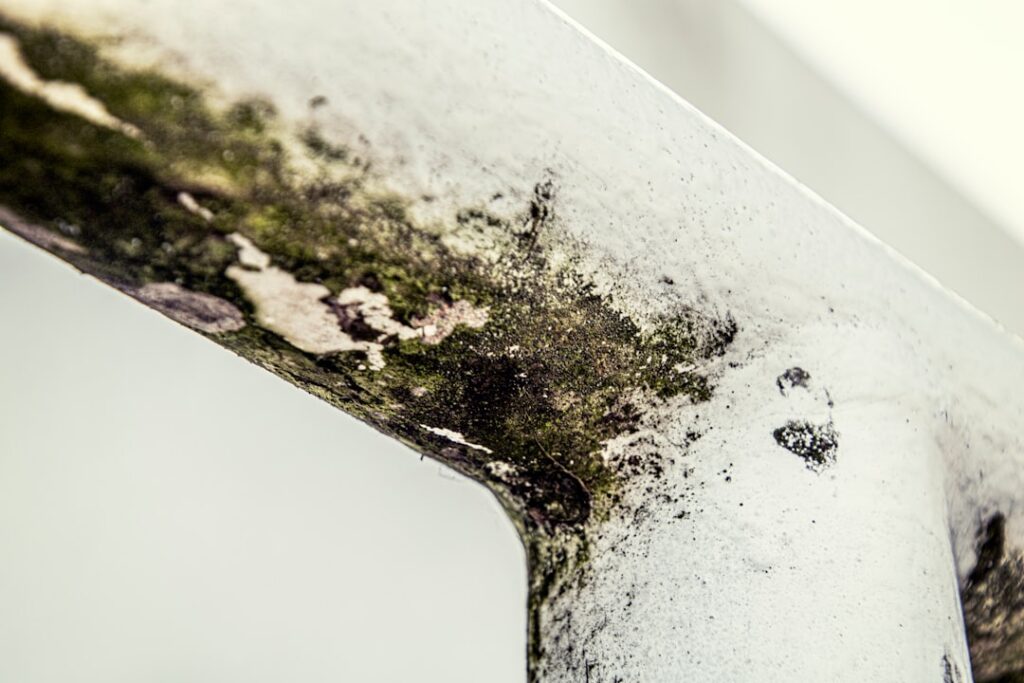
Black mold nausea is a search term that brings together two things — a personal symptom and a home concern — that need different professionals to address. This guide paraphrases EPA, CDC, and NIEHS guidance on residential mold for homeowners and is not medical advice. Anyone experiencing nausea or other gastrointestinal symptoms they suspect are related to mold should see a physician for evaluation. What this guide can address is the home: how to investigate whether indoor mold is plausibly contributing, what the building-side response looks like, and when to call a remediator.
Part of our Black Mold & Your Health guide — start there for the full picture →
Is this mold, asbestos, or water damage? Get a free instant screen
Upload a clear photo of the suspect area. You'll get an instant AI screening opinion and what to do next. This is screening guidance, not a professional determination.
Screening guidance only. AI can be wrong. Confirm asbestos, mold type, or lead with lab testing or a licensed professional before acting.
Black mold nausea: what CDC actually says about GI symptoms
The CDC’s official position on indoor mold and health is that some occupants in damp indoor environments experience symptoms including respiratory irritation, allergic responses, headaches, and skin or eye irritation. Gastrointestinal symptoms including nausea are not on the CDC’s primary symptom list, but they are reported by occupants in case reports and surveys. The agency notes that individual response to mold varies widely based on host factors, dose, and duration of exposure.
NIEHS publications similarly note that the range of reported symptoms in damp-building occupants is broad and that establishing causation for any specific symptom requires medical evaluation. Nausea in particular has many possible causes — viral illness, medication side effects, dehydration, pregnancy, food triggers, anxiety — and ruling those out is part of the diagnostic process a physician runs through.
Why the medical question has to come first
Nausea is non-specific. Self-diagnosing it as a mold response based on internet search results bypasses the cluster of more common causes that a physician can quickly identify or rule out. The reasonable order of operations:
- See a physician with a description of symptoms, timing, and home context
- Bring documentation if mold is visible at home
- Allow the physician to evaluate and order testing as appropriate
- In parallel, address the home if mold is present
If the household has multiple people with overlapping symptoms or a household member in a higher-risk group (infant, elderly, asthma, immune compromise), CDC guidance is to take the home investigation more seriously rather than waiting for symptoms to resolve on their own.
Investigating the home as a possible source
If a physician asks about home environment as part of the workup, here is what to look for. None of this replaces a professional assessment for ambiguous findings.
Visible growth
Black or dark staining on drywall, around windows, behind furniture pushed against exterior walls, in bathroom grout lines, on basement framing, or on attic sheathing. Cluster guides cover the look at black mold meaning and whether black mold is visible.
Smell
A persistent musty, earthy odor in a specific room or near HVAC supply registers is the most common smell complaint. The odor often appears before visible growth.
Moisture history
Past flooding, plumbing leaks, ice dams, sewer backups, or sustained high humidity in basements or crawlspaces are all moisture history flags. Even events from a year or more prior can leave active growth if drying was incomplete.
HVAC observations
Musty smell from supply registers, visible growth on coil pans or in plenum boxes, or wet insulation around AC equipment all suggest HVAC involvement. This is among the more serious findings because air distribution carries spores throughout the house.
Why exposure can produce non-respiratory symptoms in some people
Allergy and sensitization can produce systemic responses including headache, fatigue, and in some occupants, GI symptoms. Some occupants ingest spores from settled dust on food prep surfaces or from hand-to-mouth contact in contaminated spaces. The CDC and NIH are careful not to overstate the GI pathway, but it is recognized in case-based literature. Again, the responsible framing is that a physician determines what is happening in any individual case.
The broader mold inspection picture lives at our mold testing hub.
Home-side response when mold is identified
1. Locate and stop the moisture source
This is the controlling step. Plumbing repairs, grading work, bath fan rerouting, dehumidifier deployment, or crawlspace encapsulation are the typical interventions. Without source control, anything else is temporary.
2. Determine the scope
EPA’s 10-square-foot rule separates DIY from professional jobs. Above 10 square feet, or any HVAC involvement, professional remediation with containment is the recommended path.
3. Remove the contaminated material
Porous materials — paper-faced drywall, fiberglass batt with paper backing, carpet pad, upholstered items — usually require replacement rather than cleaning. Non-porous surfaces can typically be cleaned with detergent and water; CDC explicitly does not recommend household bleach as a primary remediation tool because it does not penetrate porous surfaces.
4. Verify and ventilate
For homes where occupants have reported symptoms, post-remediation air sampling and an extended ventilation period are worth the cost.
Reducing exposure while remediation is planned
- Keep the affected room closed and seal supply registers
- Run a HEPA air scrubber in occupied areas of the home
- Sensitive household members should consider temporary relocation per EPA guidance
- Avoid disturbing visible growth — handling or dry-brushing releases spores
- Wash food prep surfaces frequently if any chance of cross-contamination
When household members have overlapping symptoms
If two or more occupants have reported similar symptoms with a pattern tied to time at home, the case for professional assessment is stronger. Bring this pattern to the physician and to a mold assessor. The pattern itself is not diagnostic but it is informative.
What not to do
- Do not bleach over visible growth on porous surfaces — it discolors but does not remediate
- Do not rip into walls without containment if anyone in the household has reported respiratory or systemic symptoms
- Do not rely on consumer mold test kits as the primary basis for medical decisions — they have known limitations and the result requires interpretation
- Do not delay the physician visit while debugging the house
Connection between food, water, and mold
One specific scenario worth flagging: ingestion of moldy food or water from contaminated containers. The cluster guide on drinking moldy water covers the documented effects. Nausea from ingesting visibly moldy food or water is plausibly direct and is a reason to see a physician promptly.
When to call a professional
The professional split:
- Physician for any nausea persisting more than a few days, accompanied by other symptoms, or affecting multiple household members
- NACHI-certified mold assessor for visible growth larger than 10 square feet, hidden growth suspected behind walls, or HVAC involvement
- IICRC-credentialed remediator for the actual cleanup if scope warrants
- Plumber or contractor for source repair
Tracking the symptom pattern usefully
For homeowners trying to figure out whether home environment plays into nausea or other symptoms, a structured timeline is more useful than a vague impression. A simple log over two to four weeks captures:
- Daily symptom severity on a 1-10 scale
- Time spent in different parts of the home
- Time spent away from home
- Sleep location and duration
- Meals and any unusual ingestions
- Other variables — illness in the household, weather, medication changes
Patterns that emerge — symptoms worse on weekends when home longer, symptoms better during weeklong work travel — are informative for both physician and mold assessor. Patterns that do not emerge clearly suggest other causes worth investigating.
Differential diagnoses physicians consider
Persistent nausea with no clear cause goes through a standard differential workup. Common considerations:
- Gastritis or peptic ulcer disease
- Gallbladder issues
- Inner ear or vestibular problems
- Migraine variants with nausea
- Medication side effects
- Pregnancy in women of childbearing age
- Anxiety or depression with somatic symptoms
- Food sensitivities or intolerances
- Endocrine issues (thyroid, adrenal)
Environmental exposure including mold is one branch of the diagnostic tree, not the only one. A physician working through this list systematically usually identifies the cause faster than self-diagnosis from internet symptom matching.
When food and water in the home are the suspected route
Food prep surfaces in a mold-affected kitchen carry settled spore loads. Water from contaminated lines can also pose risk in extreme cases. Practical precautions while investigation is ongoing:
- Wash food prep surfaces with detergent before each use
- Cover food during storage; avoid open containers in the affected zone
- Consider bottled water if plumbing contamination is suspected
- Replace porous food-contact items (wooden cutting boards, fabric pot holders) after a documented event
- Refrigerator and pantry inventory check for any visibly affected items
The cluster guide on drinking moldy water covers the ingestion route in more depth.
Common testing approaches and their validity
Several testing categories show up in mold-related medical workups. Their validity varies widely:
Skin prick allergy testing
Well-validated for IgE-mediated allergic responses to specific mold species. Performed by allergists. Useful for confirming or ruling out allergic component to symptoms.
Specific IgE blood testing
Similar diagnostic value to skin testing, sometimes used when skin testing is impractical. Validated through standard medical channels.
Mycotoxin urine panels
Available from some commercial labs but not standardized across the industry. Results vary by lab and methodology. Mainstream medical bodies are cautious about clinical interpretation. A physician familiar with these panels should be the one to order and interpret them.
Home air sampling kits
Variable utility. EPA notes that quantitative thresholds for clinical significance are not established. More useful for confirming a remediation outcome than for diagnosing exposure.
What the home-side investigation looks like in practice
A NACHI-certified mold assessor performing a residential investigation typically:
- Walks the property exterior for grading, gutter discharge, and visible siding or roof issues
- Walks the interior with a moisture meter checking suspect walls and ceilings
- Scans accessible areas with an infrared camera looking for thermal anomalies that suggest moisture
- Inspects basement, crawlspace, and attic spaces
- Borescope-inspects wall cavities behind suspect areas where access is reasonable
- Collects air samples — typically two outdoor controls and three to five indoor samples
- Collects surface samples from any visible growth
- Submits samples to an AIHA-accredited lab for analysis
- Delivers a written report with findings, suspected causes, and recommended scope
Total time on site: typically two to four hours for a residential property. Total cost: $400–$900 depending on regional pricing and scope.
When the home investigation comes back clean
If a thorough assessment finds no significant mold issue and symptoms persist, the home is probably not the primary cause. Other environmental factors worth considering:
- Workplace environment
- Vehicle interior, especially in cars used daily
- Second residences, weekend properties, or recent travel locations
- School or daycare environment for children
- New furniture or building materials with VOC outgassing
- Pet dander or droppings in less-accessible areas
A physician can guide whether broader environmental investigation is worth pursuing or whether the diagnostic search should turn back toward non-environmental causes.
References
- CDC mold FAQ on health effects — Centers for Disease Control and Prevention
- EPA mold cleanup guidance — U.S. Environmental Protection Agency
- NIEHS overview of mold exposure — National Institute of Environmental Health Sciences
- InterNACHI mold inspection standards — International Association of Certified Home Inspectors
Front Range homeowners investigating their home as a possible exposure source can connect with a vetted inspector for a scoping assessment while medical questions go to a physician.