Black Mold Poisoning: A Plain-Language Homeowner Guide
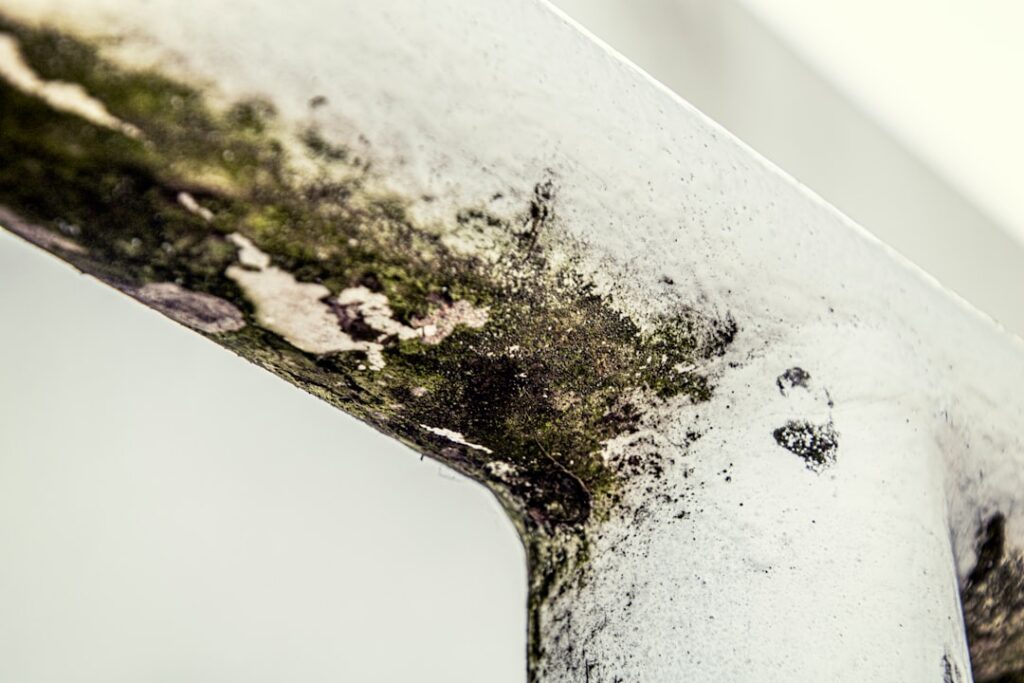
Many homeowners search for black mold poisioning with the misspelling that has propagated across consumer health content. The correct spelling is “poisoning,” and the underlying question is a medical one — what happens when someone is exposed to indoor mold for an extended period. We summarize EPA, CDC, NIEHS, and American Lung Association guidance below and frame the answer in homeowner terms. This article is general information, not medical advice. If you have symptoms you believe may be related to mold exposure, consult a physician — that side of the question requires clinical evaluation. We focus on what the home can do.
Part of our Black Mold & Your Health guide — start there for the full picture →
Is this mold, asbestos, or water damage? Get a free instant screen
Upload a clear photo of the suspect area. You'll get an instant AI screening opinion and what to do next. This is screening guidance, not a professional determination.
Screening guidance only. AI can be wrong. Confirm asbestos, mold type, or lead with lab testing or a licensed professional before acting.
What mainstream guidance says about “mold poisoning”
The term “mold poisoning” is used in consumer media but is not a single mainstream medical diagnosis. The CDC describes documented effects of indoor mold exposure as including allergic reactions, asthma exacerbation, respiratory irritation, and rare hypersensitivity pneumonitis. NIEHS adds context on invasive infections in immunocompromised individuals. The Institute of Medicine’s review of damp indoor spaces, indexed on PubMed, found evidence for associations between damp environments and certain respiratory outcomes while concluding that the evidence for systemic toxicity in non-occupational residential settings was limited.
What homeowners take from this: the symptoms popularly attributed to “mold poisoning” may, on workup, reflect allergic sensitization, asthma, sinus issues, or other established conditions — each with mainstream medical management. A physician’s evaluation distinguishes these possibilities. The home-side response is independent of the specific medical diagnosis: identify the source, remediate to scope, and prevent return.
The home-side question: where the exposure is coming from
Reducing or ending exposure starts with finding the source. Indoor mold grows where water has been or is present and a suitable substrate exists. The common sources are familiar to anyone who has read our mold cluster: plumbing leaks, roof intrusion, foundation seepage, condensation, chronic high humidity, and HVAC contamination.
Surface mold versus invasive infection
An important distinction. “Mold poisoning” in some uses refers to a medical condition where fungal cells colonize human tissue. This is rare and primarily affects immunocompromised individuals. It is medically distinct from surface mold growing on a wall. Home remediation does not treat invasive medical infection, and medical treatment of infection does not address surface colonies in a home. Both can require attention if both are present.
Where mold grows in homes
Mold colonies in residential settings typically appear in predictable locations.
Bathrooms
The combination of frequent moisture, warm temperatures, and porous materials makes bathrooms the most common location for visible mold. Caulk joints, tile grout, drywall behind toilets, and the back side of vanity cabinets are typical findings.
Basements
Below-grade rooms accumulate humidity, host plumbing penetrations through foundation walls, and are subject to seasonal seepage. Mold on cinder block, on rim joists, and on stored cardboard or fabric is common. Front Range basements have a documented spring pattern driven by snowmelt and shoulder-season humidity.
Kitchens
Under-sink cabinets, behind dishwashers, behind refrigerators with ice-maker supply lines, and around exterior wall plumbing penetrations. Kitchen mold is usually plumbing-driven and resolves once the leak is found.
Attics
Roof leaks and bathroom fans venting into the attic are the typical causes. Attic mold is harder for homeowners to assess safely because spore aerosolization during disturbance is significant and access is awkward.
HVAC components
Air handler drain pans, evaporator coils, and ductwork can support colonies that distribute spores throughout the conditioned space. HVAC mold warrants professional remediation.
How to test the home
The most informative single tool for homeowner assessment is a professional inspection. A trained inspector identifies visible mold and moisture indicators, applies a moisture meter to suspect substrates, and uses thermal imaging where indicated to screen for hidden moisture behind finished surfaces. Surface and air sampling are used selectively rather than universally.
When testing is useful
Surface sampling can document species for documentation purposes — insurance claims, real estate disputes, post-remediation verification. Air sampling is most useful after remediation to confirm cleanup effectiveness, or when investigating suspected hidden contamination. The EPA does not generally recommend pre-remediation sampling when mold is already visible because the cleanup plan does not change based on species.
What testing does not tell you
There is no environmental exposure metric that maps reliably from a home sample result to individual health outcome. The CDC notes this is why agencies emphasize prevention and remediation rather than measurement. Consumer “mycotoxin” tests sold for home use have contested interpretation in the peer-reviewed literature and rarely change the remediation plan.
How to interpret consumer “mold toxicity” content
The consumer wellness market has produced extensive content about “mold toxicity” — supplements, protocols, treatment programs, and lifestyle guides. The mainstream medical and public-health establishment has not generally endorsed these frameworks. The Institute of Medicine review, CDC guidance, and NIEHS topic pages consistently use more conservative terminology and limit claims to what published research supports.
This does not necessarily mean every claim in consumer wellness content is wrong — it means readers should weight claims by the strength of the underlying evidence. A board-certified allergist, pulmonologist, or family physician can place the question in clinical context using documented diagnostic frameworks. A web-based protocol cannot substitute for that conversation.
The difference between sensitization and toxicity
Two distinct mechanisms are often blurred in popular discussion. Allergic sensitization is an immune-system response to mold antigens — a person’s body learns to react to fungal proteins, and subsequent exposure produces allergic symptoms. This is documented, well-understood, and diagnosable through allergy testing. Toxicity, in the broad sense the term is used in consumer media, refers to direct harm from mycotoxins or other fungal byproducts independent of immune sensitization. The evidence base for residential-scale toxicity claims is more limited than for sensitization.
For homeowners, the distinction matters because the response is similar — remediate the source, address symptoms with a physician — but the framing affects how clinical evaluation proceeds. An allergist diagnosing sensitization can recommend specific avoidance and treatment strategies. A general practitioner addressing nonspecific symptoms attributed to “mold toxicity” may pursue a different differential workup.
When to remediate
The EPA’s threshold for homeowner DIY cleanup is approximately ten square feet on hard, non-porous surfaces. Above that, or for any HVAC contamination, or for porous-material involvement beyond a small patch, professional remediation under a recognized standard like IICRC S520 is appropriate. Homes with vulnerable occupants — children with asthma, elderly residents, immunocompromised individuals — should have a lower threshold for professional involvement.
Our walkthrough on what to do if you have black mold covers the homeowner decision flow, and the broader mold inspection pillar connects related resources.
Preventing recurrence
Source-side prevention is the highest-leverage homeowner action. Indoor relative humidity below sixty percent. Plumbing leaks repaired promptly. Annual roof inspection. Basement and crawl space humidity addressed systematically. Bathroom fans verified to vent to building exterior. HVAC condensate maintained annually.
For Front Range households, the seasonal cycle matters. Spring snowmelt warrants checking basements after the thaw. Summer monsoon storms warrant roof and window inspection after major events. Winter low humidity is generally protective indoors but the closed-house conditions raise other concerns including radon.
What to do if you think you have been exposed
The home side and the medical side are independent questions. Both deserve attention.
Home side
Schedule a professional mold inspection. Document the conditions, the suspected sources, and the remediation scope in writing. Pursue source repair and remediation under a recognized standard. Verify completion with post-remediation verification. Establish ongoing humidity control and inspection routines.
Medical side
Consult a physician. Bring documentation of the home conditions and any symptoms. Allergists, pulmonologists, and family physicians can each address different aspects of the question. Mainstream evaluation distinguishes allergic, asthmatic, infectious, and other possibilities — none of which are accurately diagnosable through internet searches.
Real estate context
Properties with disclosed mold history warrant a pre-purchase mold inspection. A passing inspection does not eliminate all risk — no inspection does — but it documents current condition, identifies any remaining issues, and provides a baseline. Buyers occasionally over-react to disclosure and walk away from properties where conditional remediation would have been a proportionate response. Conversely, some homes with no disclosed history have hidden colonies that surface only on inspection.
Front Range transactions with significant moisture history — flood damage, prior basement remediation, history of ice dam damage — benefit from a mold inspection layered on top of the standard pre-purchase home inspection. Our overview of mold inspection services covers what is typically included.
Misconceptions worth setting aside
Three misconceptions show up repeatedly. First, that mold color is diagnostic of risk — it is not. Second, that consumer mycotoxin tests provide actionable medical information — published evaluation is contested. Third, that bleach or fogger treatment “kills” mold permanently — these treatments do not address the moisture source or porous-material penetration, and recurrence is normal without source repair.
When to involve a physician
Anyone with unexplained respiratory symptoms, persistent cough, worsening asthma, rash, eye irritation, or any other concern that may relate to mold exposure should consult a physician. This is independent of whether visible mold has been found in the home. Both questions deserve their own track.
If you suspect mold is affecting your health, contact your healthcare provider. For home assessment and remediation, the mold inspection pillar outlines the process and questions to ask any contractor.
References
- A Brief Guide to Mold, Moisture, and Your Home — U.S. Environmental Protection Agency
- About Mold and Health — Centers for Disease Control and Prevention
- Mold Topic Overview — National Institute of Environmental Health Sciences
- Indoor Mold and Health Effects — National Center for Biotechnology Information
- Mold and Dampness — American Lung Association
Frequently asked questions
Is mold poisoning a real medical diagnosis?
The phrase is used in consumer media but is not a single mainstream medical diagnosis. Documented effects of indoor mold exposure include allergic reactions, asthma exacerbation, and rare hypersensitivity pneumonitis. A physician's evaluation distinguishes the possibilities.
Can a home test tell me if I have mold poisoning?
No. Consumer home tests measure environmental conditions, not health outcomes. The CDC notes there is no exposure metric that maps reliably to individual health risk. Symptom evaluation belongs with a physician.
How long does it take symptoms to appear after mold exposure?
This varies widely by individual. Some people experience allergic symptoms within hours of exposure to a contaminated space. Others develop sensitization over months. A physician can evaluate timing relative to exposure history.
What is the first step if I suspect mold in my home?
Schedule a professional mold inspection to assess the source, scope, and remediation plan. In parallel, consult a physician about any symptoms. The home side and the medical side run independently.
Front Range homeowners scheduling a professional mold assessment after a suspected exposure can contact us here for a connection to a vetted local inspector.