What Does.black Mold Look Like: A Plain-Language Guide
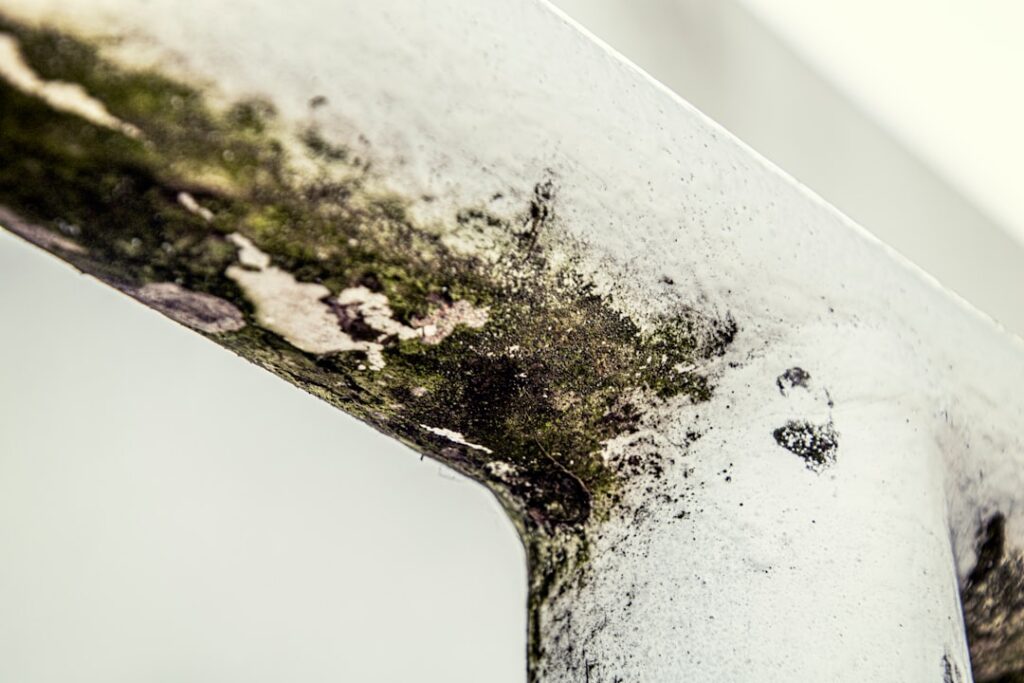
Search-query variations matter less than the underlying question — whether you typed “what does.black mold look like” with a period, “what does black mold look like” with a space, or “blackmoldlook like” with no spaces at all, the homeowner concern is the same: how do I recognize this stuff in my own home? This guide answers that question with EPA and CDC guidance current as of 2026 covering color, texture, common locations, and visual lookalikes. For health symptoms tied to suspected exposure, consult your physician, and for any patch larger than roughly 10 square feet, defer to an IICRC-certified remediation professional.
Is this mold, asbestos, or water damage? Get a free instant screen
Upload a clear photo of the suspect area. You'll get an instant AI screening opinion and what to do next. This is screening guidance, not a professional determination.
Screening guidance only. AI can be wrong. Confirm asbestos, mold type, or lead with lab testing or a licensed professional before acting.
What Does Black Mold Look Like at a Glance
Active black mold colonies typically read deep greenish-black to charcoal-black under indoor lighting, often with a glossy or slick sheen when the substrate is still damp. The colony usually forms a discrete patch with irregular edges rather than a uniform ring. On porous materials like drywall paper or unsealed wood, the colony can appear flat and almost ink-like; on painted gypsum or vinyl wallpaper, it often reads as a stippled cluster of small dark dots that merge as growth advances. The U.S. Environmental Protection Agency notes that visual identification cannot distinguish toxigenic species from harmless dark molds — the only reliable identification comes from a laboratory.
Size signals matter too. A patch smaller than a quarter usually represents very early growth still tracking moisture. Patches the size of a dinner plate usually mean weeks of unaddressed wetness. Patches exceeding the EPA’s 10-square-foot DIY threshold (roughly the size of a small kitchen rug) belong with certified remediators. For the larger remediation framework, the mold inspection and testing hub covers homeowner decisions from spotting through testing through cleanup.
The Color Spectrum: More Than One Shade
Stachybotrys chartarum — the species most homeowners call black mold — is one of many dark mold genera. Aspergillus niger presents brownish-black with a powdery surface. Cladosporium leans olive-green to nearly black with a velvety nap. Chaetomium can appear cottony grey-black on water-damaged drywall. Even the same Stachybotrys colony shifts from greenish-black when wet to dusty grey-black when dried.
The CDC consistently notes that visual identification is unreliable for species ID and recommends remediation of any indoor mold growth regardless of species. Practical takeaway: treat any dark, suspicious patch on a routinely-damp surface as remediation-worthy until proven otherwise. Lighting affects color perception — photograph any patch under multiple light sources before drawing a conclusion. A flashlight held at an angle to the surface also reveals three-dimensional buildup more clearly than overhead lighting alone.
Texture Across Growth Stages
Texture shifts dramatically as a colony ages. The same Stachybotrys patch can look like three different molds across one month if moisture comes and goes.
Early Growth: Pinprick Dots
Early Stachybotrys looks like 1-2 millimeter dark dots scattered across a damp surface, sometimes mistaken for soot or mildew specks. The patch tends to be tightly localized to the wettest zone, often following a linear pattern along the bottom edge of a wall, the underside of a window sill, or the back of a vanity cabinet. Early growth is the easiest stage to address — small area, low spore load, focused cleaning often resolves the issue.
Mature Growth: Slimy and Glossy
Mature wet-stage Stachybotrys is the texture most homeowners picture: a slick, almost greasy-looking patch that glistens under a flashlight. The slime layer is the colony’s metabolic output combined with continued moisture, and it’s where the species earned its slang nickname. A slimy texture on a dark patch in a chronically damp area is a strong signal to stop disturbance, photograph the area, and call a professional rather than wiping with a paper towel.
Dried Growth: Crusty and Powdery
When the moisture source resolves, the colony loses its slime and shifts to a dusty, crusty, almost ash-like layer. This stage is the most spore-friable: brushing against it or running a vacuum nearby releases airborne spores more easily than wet patches. Homeowners often celebrate the dried patch as evidence the problem is solved; in reality, the dormant colony reactivates the next time humidity rises.
Common Locations Where Black Mold Appears
Location is one of the strongest tiebreakers when visual ID is ambiguous. Black mold clusters in predictable spots driven by chronic moisture, cellulose-rich substrate, and poor airflow.
- Bathroom corners and grout — behind toilets, where floor meets wall, along shower-tile grout lines, inside vanity cabinets under leaky P-traps.
- Kitchen sink cavities — countertop undersides above leaking faucet supply lines, cabinet floors under disposals, behind dishwashers.
- Basement perimeter walls — the bottom 12-24 inches of drywall along below-grade walls where hydrostatic pressure pushes moisture through.
- Attic decking near roof leaks — discoloration on plywood sheathing underside, especially around plumbing vent boots and skylight curbs.
- Around HVAC supply registers — when warm humid air condenses on cool grilles, the staining ring around the register grows over months.
- Window sills and frames — particularly single-pane windows in older Front Range bungalows where condensation pools each winter.
- Crawl-space joist edges — the bottom flange of floor joists where ground moisture wicks upward.
- Laundry-room walls behind washers — slow supply-hose seeps create vertical staining stripes.
For a deeper visual breakdown of the most common location, what black mold on walls looks like covers paint blistering, paper-bubbling, and bleed-through patterns.
Substrate Matters: How the Surface Changes Appearance
The same mold colony presents differently across substrates, which trips up visual ID even for experienced inspectors. On unpainted drywall paper, mold reads as flat and ink-like. On painted gypsum, mold often shows as stippled dots that merge with continued growth. On bare wood (subfloor, framing), colonies tend to show grain-following patterns because moisture wicks along the wood fibers. On grout, mold builds up in the porous mineral matrix and stains the grout itself even after the surface is cleaned. On vinyl wallpaper, mold often grows underneath rather than on top, pushing the wallpaper outward in bubbles before showing visible color.
Concrete and tile don’t support direct mold colonization but can host surface biofilms — usually Cladosporium — when dust accumulates on chronically damp surfaces. The biofilm reads similar to mold visually but wipes off easily without returning, because the substrate beneath isn’t the food source.
Lookalikes to Rule Out
Several substances mimic mold closely enough to fool a quick glance. Soot from a candle or fireplace smears linearly with a finger swipe and won’t return after a thorough wipe. Mineral efflorescence on basement masonry presents as crystalline white-to-grey deposits that brush off as powder. Old water stains on drywall show as concentric rings of yellow-to-brown without three-dimensional buildup. The simple field test: dab a bleach-water solution (10 percent bleach) on a small area and wait 60 seconds. Organic growth lightens noticeably; dirt and soot don’t. HUD cautions against treating this as definitive, but it works for first-pass screening.
Spider droppings cluster as small dark pellets near corners and ceiling lines. Dust accumulation takes on a fuzzy grey appearance but lacks the three-dimensional buildup of active mold and disappears with a single wipe. If a homeowner photographs the area, cleans it, and the patch returns within a week, that’s a strong signal the substrate behind is feeding the growth.
What Black Mold Looks Like When Hidden
The most consequential black mold growth often isn’t visible at all. Cavity-side growth on the back of drywall, the inside of cabinet walls, or the underside of subfloor can advance for months before any dark spot pushes through. Indirect indicators include a persistent musty smell after cleaning, paint that bubbles or stains without an obvious water source, baseboards that show vertical staining lines, allergic symptoms that worsen in one specific room, and recurring discoloration in the same spot after fresh paint. When two or more indicators stack up, an air-quality sample or moisture-meter survey of suspect walls is the next step. If indirect indicators are stacking up in your home, connect with a vetted Front Range inspector for a same-week assessment.
Documenting the Patch Before You Clean
Photographs taken before any disturbance are valuable for three reasons: insurance documentation, inspector reference if you escalate to a professional, and your own future comparison if the patch returns. Include a ruler or coin in frame for scale. Photograph under multiple light sources (overhead, flashlight at an angle, daylight if available). Capture the surrounding context — not just the patch itself but the wall, floor, and any visible moisture source. If you can see the back side of the substrate (under a cabinet, behind furniture pulled away from the wall), photograph that too. The documentation step takes five minutes and routinely saves hundreds of dollars in re-inspection fees or insurance disputes later.
What Black Mold Looks Like Compared to Mildew
Mildew typically presents as a thin, flat, surface-only film that wipes away with cleaner — common on shower tile, grout, and damp fabric. Black mold builds up three-dimensionally, often shows a slimy sheen when wet, and tends to return after surface wiping because the substrate behind stays wet. The three-dimensional buildup is the most reliable visual difference. Mildew is also lighter — typically grey or pale-greenish rather than the deep greenish-black of mature Stachybotrys.
Front Range Patterns to Watch
Front Range homes show several distinctive mold appearance patterns driven by climate and housing stock. Ice-dam mold appears as ceiling staining near exterior eaves in February-April, often invisible until the cavity finally dries enough to show contrast. Slab-leak mold in 1980s-90s polybutylene-era homes (common in Douglas, Arapahoe, and Jefferson counties) shows up as warm patches on tile floors and base-of-wall colonies in multiple adjacent walls. Basement humidity mold during summer monsoon season produces base-of-wall colonies that disappear in winter when low humidity drops growth below visible threshold — then return next summer. Recognizing the regional pattern helps homeowners triage what they’re seeing and whether the mold call needs to happen immediately or can wait for routine seasonal inspection.
When to Stop Looking and Call a Pro
The EPA’s 10-square-foot threshold is the practical cutoff. Anything larger, anything on HVAC components, anything where the moisture source isn’t obvious, and any situation where household members have asthma or immune-compromising conditions belong with a certified remediator. Visual identification only gets you as far as “this looks like mold and the area exceeds the DIY threshold” — beyond that, professional assessment beats homeowner judgment every time. Front Range homeowners can get in touch through our contact page for a same-week appointment. The inspector’s tooling — moisture meters, boroscope, sometimes thermal imaging — almost always reveals more than a homeowner’s flashlight-and-eye assessment, particularly for cavity-side colonies that hide behind painted drywall.
References
- EPA Mold Cleanup in Your Home — U.S. Environmental Protection Agency
- CDC Basic Facts About Mold and Dampness — Centers for Disease Control and Prevention
- HUD Healthy Homes Mold Guidance — U.S. Department of Housing and Urban Development
- NIEHS Mold Health Topic — National Institute of Environmental Health Sciences
Front Range homeowners who’ve spotted a suspicious patch and want a vetted local inspector to confirm and scope can reach out through our contact page.