Best Weed Barrier (2026): 7 Landscape Fabrics Compared
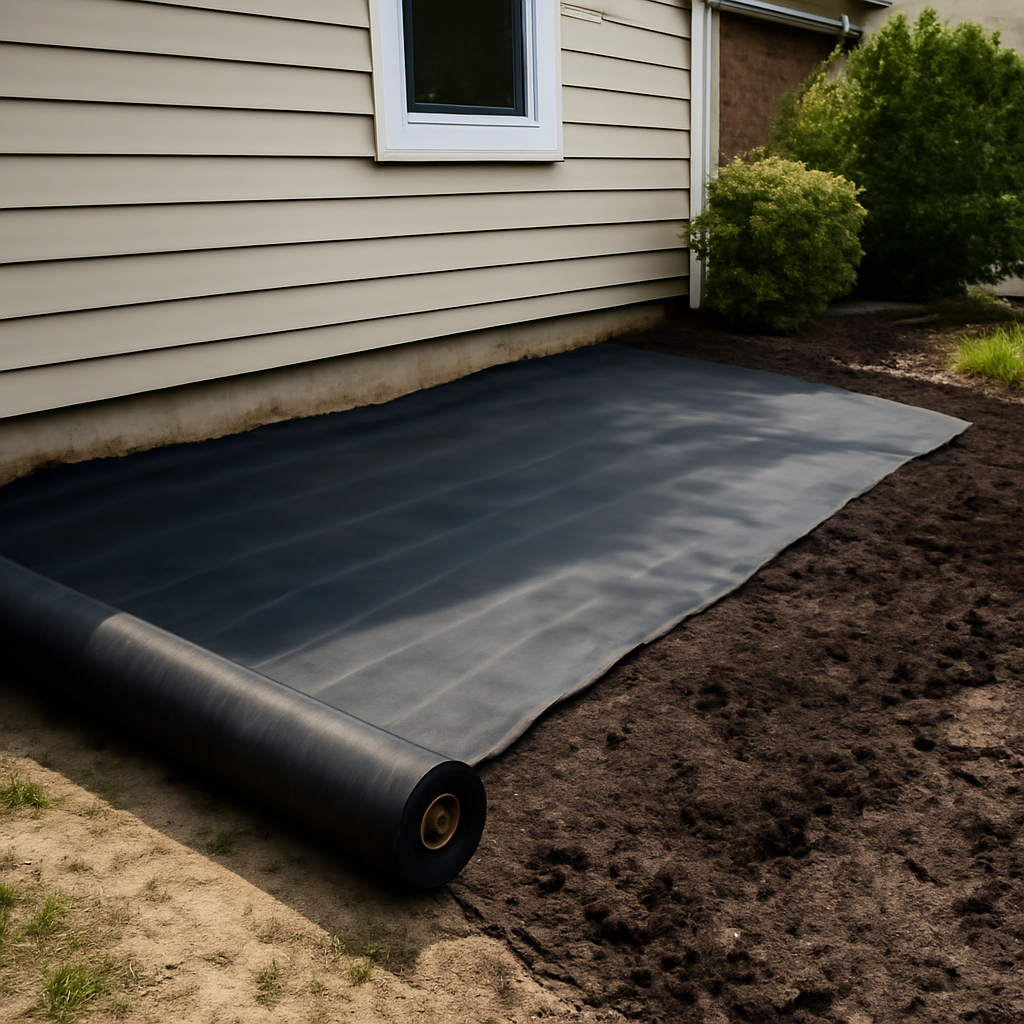
The best weed barrier is the right fabric in the right place, and sometimes the honest answer is no fabric at all. Landscape fabric does a good job under gravel paths, rock beds and driveways, where nothing is meant to grow. Under shredded bark in a perennial bed it works for a season or two, then weeds root in the mulch on top and the fabric gets in the way of planting. This guide compares current weed barrier fabrics on what their listings actually state, then covers when fabric helps, when it hurts, and how to keep it from trapping water against the house, which is the part a home inspector notices.
Part of our Structure & Exterior guide — start there for the full picture →
As an Amazon Associate we earn from qualifying purchases.
How we compared: we compared 18 current Amazon weed barrier listings on what each listing states: fabric weight in ounces, woven or non-woven construction, roll width and length, permeability and UV claims, tensile strength, included staples, intended uses and warranty. Almost every listing is woven polypropylene, and several are size variants from the same brand. We did not lab-test or install any of these fabrics hands-on. Prices and availability change often, so check the current listing before buying.
Quick picks: the best weed barrier fabrics by job
| Product | Best for | Key features | Price | Buy |
|---|---|---|---|---|
| Sunocity 3.5 oz, 4 x 300 ft | Best overall for beds and paths |
| $53.99as of Oct 21, 2026 1:34 pm GMT+0000 | Buy now →Check current price |
| DeWitt 5 oz, 3 x 250 ft | Planted beds, row alignment |
| $182.32as of Oct 21, 2026 1:34 pm GMT+0000 | Buy now →Check current price |
| Gorilla Grip 3.2 oz, 6 x 100 ft | Verified permeability claim |
| $39.99as of Oct 21, 2026 1:34 pm GMT+0000 | Buy now →Check current price |
| EXTRAEASY 3.2 oz, 4 x 300 ft | Long life under rock or mulch |
| $59.99as of Oct 21, 2026 1:34 pm GMT+0000 | Buy now →Check current price |
| AZHCHKE 5 oz, 13 x 120 ft | Gravel driveways and drains |
| $116.99as of Oct 21, 2026 1:34 pm GMT+0000 | Buy now →Check current price |
| FYFMFER 3.2 oz, 2 x 4 x 50 ft | Small projects, kit included |
| $23.99as of Oct 21, 2026 1:34 pm GMT+0000 | Buy now →Check current price |
| Pterying 3 oz, 6.5 x 300 ft | Wide beds, stated strength |
| $56.94as of Oct 21, 2026 1:34 pm GMT+0000 | Buy now →Check current price |
Prices are Amazon’s listed prices as of the time shown and change often; check Amazon for today’s price. As an Amazon Associate we earn from qualifying purchases.
The 7 picks, compared listing by listing
1. Sunocity 3.5 oz Woven, 4 x 300 ft — Best Overall Weed Barrier

4 ft by 300 ft woven polypropylene, 3.5 oz, UV resistant, sold with 90 staples and a 3-year limited warranty.
Check price on Amazon$53.99 as of Oct 21, 2026 1:34 pm GMT+0000 — prices change; see Amazon for current price.Why we like it
- Heavier 3.5 oz weave than most 3.2 oz rolls
- Only specific warranty term on the shelf
- SKU tied to 90 landscape staples
- 4 ft width suits beds and walkways
| Specification | Details |
|---|---|
| Material | Woven polypropylene, cross-weave |
| Weight | 3.5 oz |
| Size | 4 ft by 300 ft; folded to half width for shipping |
| Claims | UV resistant, permeable, breathable |
| Fasteners | Listing pairs this size with 90 landscape staples |
| Warranty | 3-year limited, covering weed penetration and cracking or tearing |
Sunocity SN-WB-04300H90 — 3.5 oz woven PP, 4 x 300 ft, UV resistant, 90 staples, 3-yr limited warranty
The Only Listings That Spell Out a Warranty Term and What It Covers
Only three of the 18 listings mention a warranty. DeWitt says only “limited manufacturer warranty.” The two Sunocity sizes, this 4-foot roll and a 6-foot version, are the only listings that state a term, 3 years, and say what it covers: weeds penetrating the barrier and the fabric cracking or tearing. The warranty excludes improper installation and normal wear, so it is not a promise of three weed-free years, but it is more than any other listing commits to.
At 3.5 ounces, Sunocity is heavier than the 3.2-ounce weave most of the shelf uses, and the listing calls out UV resistance, which matters wherever the fabric might be exposed between plants or at the edges. The Sunocity listings also tie this SKU to 90 landscape staples, the largest staple count named on the shelf.
The 4-foot width is a practical bed and path size; one note in the listing is that the roll ships folded to half width. The listing does not state a tensile strength or a permeability test, and like most woven fabric, it will fray at cut edges.
Pros
- Specific 3-year warranty with stated coverage
- 3.5 oz weave, UV resistant
- Staples paired with the roll
Cons
- No tensile or permeability test figures
- Woven edges fray when cut
- 300 ft is more than a small yard needs
Check Sunocity 3.5 oz Weed Barrier price on Amazon
2. DeWitt 5 oz Weed-Barrier, 3 x 250 ft — Best for Planted Beds

3 ft by 250 ft, 5 oz polypropylene weed barrier with a hydrophilic treatment, UV resistance and stripes every 12 inches.
Check price on Amazon$182.32 as of Oct 21, 2026 1:34 pm GMT+0000 — prices change; see Amazon for current price.Why we like it
- Hydrophilic treatment aimed at water flow
- Heavy 5 oz polypropylene
- Stripes every 12 in. for spacing plants
- Long-running weed barrier brand name
| Specification | Details |
|---|---|
| Material | Polypropylene with hydrophilic treatment |
| Weight | 5 oz |
| Size | 3 ft by 250 ft roll (listing says 2 pack) |
| Claims | UV resistant; resists punctures and tears |
| Layout aid | Printed stripes every 12 in. |
| Warranty | Limited manufacturer warranty; term not stated |
DeWitt 3 x 250 ft — 5 oz polypropylene, hydrophilic treatment, UV resistant, 12 in. stripes, limited warranty
The Only Fabric With a Treatment Meant to Pull Water Through
Fourteen listings claim permeability. DeWitt is the only one that names a mechanism, a hydrophilic treatment that lets air, water and nutrients pass through the fabric. In a planted bed, where the fabric sits between drip lines or a soaker hose and the roots, that claim is more meaningful than generic “breathable” language.
It is also one of the heaviest fabrics on the shelf. Two listings state 5 ounces, this DeWitt and the AZHCHKE driveway fabric; only one AMAGABELI felt-style listing claims more. Stripes every 12 inches make plant spacing easy in vegetable rows. The 3-foot width, shared with the GDNaid and Amazon Basics rolls, is among the narrowest here and suits single beds and rows.
The listing does not say whether the fabric is woven or non-woven, and its product dimensions field is blank. It also says “2 pack” while describing a single 3 by 250 foot roll, so confirm the quantity on the current listing.
Pros
- Hydrophilic treatment for water passage
- Heavy 5 oz fabric
- 12 in. stripes for row spacing
Cons
- Woven or non-woven not stated
- Pack quantity wording is unclear
- Warranty term not stated
Check DeWitt 5 oz Weed Barrier price on Amazon
3. Gorilla Grip 3.2 oz, 6 x 100 ft — Best Verified Permeability Claim

6 ft by 100 ft woven polypropylene weed barrier, 3.2 oz, third-party tested for water permeability, up to 80 lb tensile.
Check price on Amazon$39.99 as of Oct 21, 2026 1:34 pm GMT+0000 — prices change; see Amazon for current price.Why we like it
- Only listing citing third-party permeability testing
- Tensile strength figure stated
- UV resistance claimed
- Ships rolled, not folded
| Specification | Details |
|---|---|
| Material | Woven polypropylene |
| Weight | 3.2 oz |
| Size | 6 ft by 100 ft |
| Tensile strength | Up to 80 lb, per listing |
| Permeability | Third-party tested as water permeable, per listing |
| Warranty / staples | Not stated in listing |
Gorilla Grip 6 x 100 ft — 3.2 oz woven PP, third-party tested permeability, up to 80 lb tensile, UV resistant, ships rolled
The Only Listing That Backs Its Permeability Claim With Testing
Permeability is the claim that matters most for a fabric near a house, because a barrier that sheds water instead of passing it moves water sideways. Fourteen listings say they are permeable; Gorilla Grip is the only one that says its fabric was third-party tested and shown to be water permeable. The listing does not name the lab or the test, so treat it as a stronger claim rather than proof, but it is the only listing that goes that far.
It is one of three listings that state a tensile figure, at up to 80 pounds. Pterying states 146 pounds per 5-centimeter strip and AZHCHKE claims 800 pounds, but those numbers are likely measured differently, and none of the three names a test standard, so they cannot be compared directly.
The 6 by 100 foot roll suits a mid-size bed or path. The listing also notes the fabric arrives rolled, unlike the Sunocity and iropro rolls, which ship folded to half width. No warranty or staple count is stated.
Pros
- Third-party permeability testing claimed
- Tensile figure stated
- Ships rolled flat
Cons
- Test lab and method not named
- No staples or warranty stated
- Standard 3.2 oz weight
Check Gorilla Grip Weed Barrier price on Amazon
4. EXTRAEASY 3.2 oz, 4 x 300 ft — Best for Long Life Under Rock or Mulch

4 ft by 300 ft woven polypropylene, 3.2 oz, blocks up to 98 percent of sunlight, 7+ year life when covered per listing.
Check price on Amazon$59.99 as of Oct 21, 2026 1:34 pm GMT+0000 — prices change; see Amazon for current price.Why we like it
- States a sunlight-blocking figure
- Gives a service-life estimate when covered
- Advises overlapping sections
- 1,200 sq ft of coverage per roll
| Specification | Details |
|---|---|
| Material | Woven polypropylene |
| Weight | 3.2 oz |
| Size | 4 ft by 300 ft (1,200 sq ft) |
| Light blocking | Up to 98 percent of sunlight, per listing |
| Service life | 7+ years when covered with mulch, wood chips or gravel, per listing |
| Warranty | Not stated in listing |
EXTRAEASY 4 x 300 ft — 3.2 oz woven PP, blocks up to 98 pct sunlight, 7+ yr life when covered, 1,200 sq ft
The Only Listing That Ties Lifespan to Being Covered
Other listings say only that their fabric lasts. EXTRAEASY is the only one that gives a figure, 7 or more years, and attaches a condition: the fabric must be covered with mulch, wood chips or gravel. That condition is the most important thing to know about any polypropylene fabric. Sunlight breaks it down; covered fabric lasts far longer than exposed fabric.
It is also one of six listings that describe blocking sunlight, and the only one that puts a percentage on it, up to 98 percent. The installation advice is sound: clear the area, lay the fabric around trees, raised beds and irrigation lines, overlap sections and pin them.
The 7-year figure is not a warranty, and no warranty is stated. The listing also does not state tensile strength, staples or UV treatment, so keep the fabric fully covered.
Pros
- Clear lifespan condition stated
- Sunlight-blocking percentage given
- Good installation guidance
Cons
- No warranty behind the 7-year figure
- No staples included
- No UV treatment stated
Check EXTRAEASY Weed Barrier 4 x 300 price on Amazon
5. AZHCHKE 5 oz Driveway Fabric, 13 x 120 ft — Best for Gravel Driveways and Drains

13 ft by 120 ft, 5 oz woven geotextile for gravel driveways, French drains and erosion control, 800 lb tensile stated.
Check price on Amazon$116.99 as of Oct 21, 2026 1:34 pm GMT+0000 — prices change; see Amazon for current price.Why we like it
- Widest roll on the shelf at 13 ft
- Heavy 5 oz woven geotextile
- Highest stated tensile figure
- Lists French drains and retaining walls
| Specification | Details |
|---|---|
| Material | Woven polypropylene geotextile |
| Weight | 5 oz |
| Size | 13 ft by 120 ft (1,560 sq ft) |
| Tensile strength | 800 lb, per listing |
| Intended uses | Driveway stabilization, erosion control, French drains, retaining walls |
| Warranty | Not stated in listing |
AZHCHKE 13 x 120 ft — 5 oz woven PP geotextile, 800 lb tensile, 1,560 sq ft, driveway and drainage uses
The Only Roll Wide Enough to Cover a Driveway Lane in One Piece
Roll widths on the shelf run from 2.6 to 6.5 feet, except this one, at 13 feet. Gravel driveways and parking pads are where seams fail first: gravel works between overlapped strips and the base pumps up through the gap. A single 13-foot sheet covers a typical driveway lane with no center seam.
The listing is written for heavier work than flower beds. It names driveway stabilization, French drains, retaining walls and erosion control, and claims 800 pounds of tensile strength, the largest figure stated here. At 5 ounces, it ties DeWitt as one of the two heaviest fabrics after the AMAGABELI felt-style roll.
For a perforated-pipe French drain or a retaining wall, follow the drain or wall manufacturer’s fabric specification rather than any general listing. The listing does not state a test standard for its tensile claim, UV resistance or warranty.
Pros
- 13 ft width avoids driveway seams
- Heavy 5 oz geotextile
- Clear driveway and drainage focus
Cons
- Oversized for garden beds
- Tensile test method not named
- No warranty or UV claim stated
Check AZHCHKE 5 oz Driveway Fabric price on Amazon
6. FYFMFER 3.2 oz, 2 x 4 x 50 ft — Best Small-Project Kit

Two 4 ft by 50 ft pieces of 3.2 oz woven polypropylene with 20 U-shaped stakes and a pair of work gloves.
Check price on Amazon$23.99 as of Oct 21, 2026 1:34 pm GMT+0000 — prices change; see Amazon for current price.Why we like it
- Stakes and gloves actually in the box
- Two separate pieces for two beds
- Green guide lines for cutting
- Sensible prep and overlap instructions
| Specification | Details |
|---|---|
| Material | Cross-woven polypropylene |
| Weight | 3.2 oz |
| Size | Two 4 ft by 50 ft pieces (400 sq ft) |
| Included | 20 U-shaped stakes and one pair of work gloves |
| Layout aid | Green guide lines |
| Warranty | Not stated in listing |
FYFMFER 2-pack — 3.2 oz woven PP, 2 x (4 x 50 ft), 400 sq ft, 20 U-stakes, work gloves, guide lines
The Only Listing That Plainly Includes Stakes and Gloves
Three listings explicitly say installation tools are not included. FYFMFER is the only listing that plainly says U-shaped stakes are in the box, and the only one that adds work gloves, which makes it the simplest buy for one or two beds with no separate hardware order.
Splitting 100 feet into two 50-foot pieces is useful for separate areas, and the listing’s instructions are practical: clear weeds and debris first, overlap adjoining sections, pin edges and corners, and add a surface covering. Twenty stakes is light for 400 square feet, so plan on buying more for windy sites; Front Range spring winds lift any loose fabric edge.
The listing makes no UV, tensile or warranty claims, and 3.2 ounces is the standard weight for the category.
Pros
- Stakes and gloves included
- Two pieces for separate beds
- Clear install guidance
Cons
- Only 20 stakes for 400 sq ft
- No UV or tensile claim
- No warranty stated
Check FYFMFER Weed Barrier Kit price on Amazon
7. Pterying 3 oz, 6.5 x 300 ft — Best for Wide Beds With Stated Strength
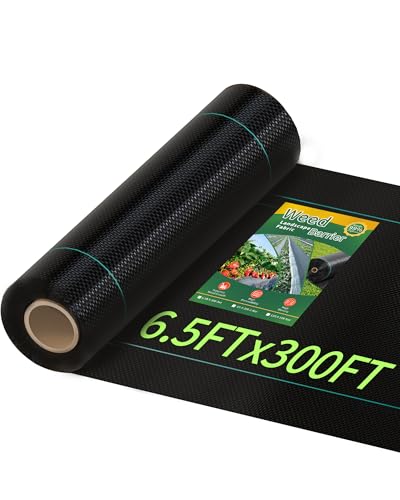
6.5 ft by 300 ft woven polypropylene, 3 oz, with a per-strip tensile figure and green alignment stripes.
Check price on Amazon$56.94 as of Oct 21, 2026 1:34 pm GMT+0000 — prices change; see Amazon for current price.Why we like it
- Most specific tensile figure on the shelf
- 6.5 ft width covers wide beds in one pass
- Says it avoids trapping excess moisture
- Tape-before-cutting tip to limit fraying
| Specification | Details |
|---|---|
| Material | Woven polypropylene |
| Weight | 3 oz |
| Size | 6.5 ft by 300 ft |
| Tensile strength | 146 lb per 5 cm strip; up to 600 lb across the full width |
| Layout aid | Green alignment stripes |
| Weight shipped / warranty | About 30 lb; warranty not stated |
Pterying S-GPC-3OZ — 3 oz woven PP, 6.5 x 300 ft, 146 lb per 5 cm strip, alignment stripes, about 30 lb
The Widest Standard Bed Roll and the Most Specific Strength Figure
Among the bed and path rolls (excluding the 13-foot driveway fabric), Pterying’s 6.5-foot width is the widest. A wider roll means fewer seams across a large bed, and seams are where weeds find their way through.
It is also the only listing that states tensile strength in a measured format, 146 pounds per 5-centimeter strip, rather than a single unexplained number. The listing says the weave allows rain and irrigation to pass while not trapping excess moisture, and it gives a useful tip: put tape along the cut line before cutting to reduce fraying. Six listings mention fraying in some form.
At 3 ounces it is a touch lighter than the 3.2-ounce norm, and the listing names no UV resistance or warranty. A 30-pound, 300-foot roll is also a lot for a small yard; Pterying sells a narrow 2.6-foot version for edging strips.
Pros
- Wide roll, fewer seams
- Specific tensile figure
- No-fray cutting advice
Cons
- No UV resistance stated
- Heavy, long roll
- No warranty stated
Check Pterying 3 oz Weed Barrier price on Amazon
Woven vs non-woven, and what the ounces mean
Sixteen of the 18 listings say they are woven polypropylene. Woven fabric is strong, cheap and tear resistant, which is why it dominates this shelf, but it frays at cut edges and its permeability depends on the tightness of the weave. Non-woven fabric, made from bonded fibers, typically cuts cleanly and passes water evenly. On this shelf the line is blurry: two AMAGABELI listings use “non woven” or “felt” in their titles while their feature text describes a woven design, so read past the title.
Fabric weight in ounces per square yard is a rough guide to thickness. The shelf runs from 2.4 ounces to 5.8 ounces, with 3.2 ounces the most common. Lighter fabric is fine under mulch in a flower bed; heavier fabric belongs under gravel and rock, where sharp stones and foot traffic puncture thin cloth. Tensile figures are useful only when the test method is stated, and most listings do not state one.
When a weed barrier helps, and when it does not
Weed fabric is a physical control, and it fits best in what EPA calls integrated pest management, which favors prevention and less risky controls such as mechanical methods before pesticides. It works well in some settings and poorly in others.
Good uses
- Under gravel paths, decorative rock and dry creek beds, where nothing is meant to grow and the fabric also keeps stone from sinking into soil.
- Under gravel driveways and parking pads, using a heavy geotextile.
- Under pavers or artificial turf, per the installer’s specification.
Weak uses
- Under organic mulch in perennial beds. EPA WaterSense notes that organic mulch such as wood chips, leaves and pine needles improves soil by adding nutrients as it decomposes. Fabric underneath separates that breaking-down mulch from the soil, and within a few seasons weeds root in the mulch layer on top of the fabric.
- Vegetable and annual beds. Constant replanting means constant cutting, and fabric gets in the way of amending soil each year.
- Exposed fabric. Polypropylene degrades in sunlight. Fabric left uncovered becomes brittle and shreds.
For perennial beds, many gardeners skip fabric and instead apply 3 to 4 inches of organic mulch, which EPA WaterSense says reduces evaporation, inhibits weed growth and moderates soil temperature. If weeds break through anyway, spot treatment is an option; see our weed killer comparison. Our general landscape fabric guide covers more installation detail.
Weed barrier near the foundation: avoid trapping water
Rock beds over fabric are common around Front Range foundations because they look tidy and need no watering. The risk is water. EPA’s mold and moisture guidance says the ground should slope away from the building foundation so water does not enter or collect around it. Fabric and rock change how water moves at the surface, so the installation has to preserve that slope.
- Grade the soil away from the house before laying any fabric. Fabric follows the soil, so a bed that slopes toward the wall will keep doing so under rock.
- Use a permeable fabric, never plastic sheeting, under foundation rock. Plastic sheds water sideways and can channel it to the wall.
- Do not tuck fabric up the foundation wall or under siding. Keep rock and fabric below the siding line.
- Make sure downspouts discharge beyond the bed, not onto the fabric.
- General advice: avoid sealing a rock bed against the foundation if it holds water there after rain or watering. If the soil under the rock stays wet, the installation is working against the house.
A weed barrier is also not a vapor barrier. The polyethylene sheeting used in crawl spaces is a different product with a different job; see our guide to vapor barriers for how it works.
How to install a weed barrier that lasts
- Clear and grade first. Remove existing weeds and roots, rake smooth and set the slope away from structures.
- Add edging. A border keeps rock and mulch from spilling onto the lawn and holds the fabric edge down. Our landscape edging comparison includes a perforated steel edging designed to let water drain through.
- Overlap seams. Several listings advise overlapping adjoining pieces; a generous overlap stops weeds finding the seam.
- Pin it well. Use plenty of U-shaped staples along edges, seams and corners. Wind is the enemy of half-pinned fabric.
- Plan irrigation first. Lay drip lines or a soaker hose before or on top of the fabric depending on the plan, and cut neat X-shaped slits for plants.
- Cover it completely. Two to three inches of rock or the mulch depth recommended for the plants keeps sunlight off the fabric, which is the single biggest factor in its lifespan.
Check moisture under the cover after the first few storms. A garden moisture meter pushed through the fabric near the house shows whether the bed is draining or holding water.
When to call a professional
A weed barrier cannot fix grading. If the yard slopes toward the house, if water stands in rock beds after storms, if window wells collect water or if the basement shows dampness after rain, the lot drainage needs attention first. Retaining walls, French drains and driveway bases are often contractor work with their own fabric specifications.
Grading and surface drainage are a routine part of an exterior inspection; our exterior and structure inspection overview explains what gets checked. Front Range buyers and owners who want the grading and foundation drainage looked at before re-landscaping can get in touch through our contact page to connect with a vetted local inspector.
Frequently asked questions
What is the best weed barrier for under rock?
A heavier woven polypropylene fabric, 3.2 ounces or more, holds up best under rock and gravel because sharp stones puncture thin cloth. For driveways and parking pads, a wide 5-ounce geotextile reduces seams. Always use a permeable fabric rather than plastic sheeting near a house.
Should landscape fabric go under mulch?
It can, but it is a weak use. Organic mulch breaks down on top of the fabric, and EPA WaterSense notes that decomposing organic mulch adds nutrients to soil, which fabric blocks. Weeds also root in the mulch layer. Many gardeners skip fabric in perennial beds and use 3 to 4 inches of mulch instead.
Is woven or non-woven weed barrier better?
Woven polypropylene is stronger and more tear resistant, which suits rock and gravel. Non-woven fabric typically cuts without fraying and passes water evenly, which suits planted beds. Most listings on this shelf are woven, and a few titles that say non-woven or felt describe woven designs in their features.
Can weed barrier cause water problems near the foundation?
It can if installed over soil that slopes toward the house or if plastic sheeting is used instead of permeable fabric. EPA advises that the ground slope away from the foundation so water does not collect there. Grade first, use permeable fabric, keep it below siding and send downspouts past the bed.
How long does landscape fabric last?
It depends mostly on sunlight exposure. One listing on this shelf estimates 7 or more years when the fabric is covered with mulch or gravel, but exposed polypropylene breaks down much faster. Only one brand states a specific warranty term, 3 years, on its fabric.
References
- Landscaping Tips — U.S. Environmental Protection Agency, WaterSense
- A Brief Guide to Mold, Moisture and Your Home — U.S. Environmental Protection Agency
- Integrated Pest Management (IPM) Principles — U.S. Environmental Protection Agency