Best Paver Sealers (2026): 6 Picks Compared by Finish and Joint
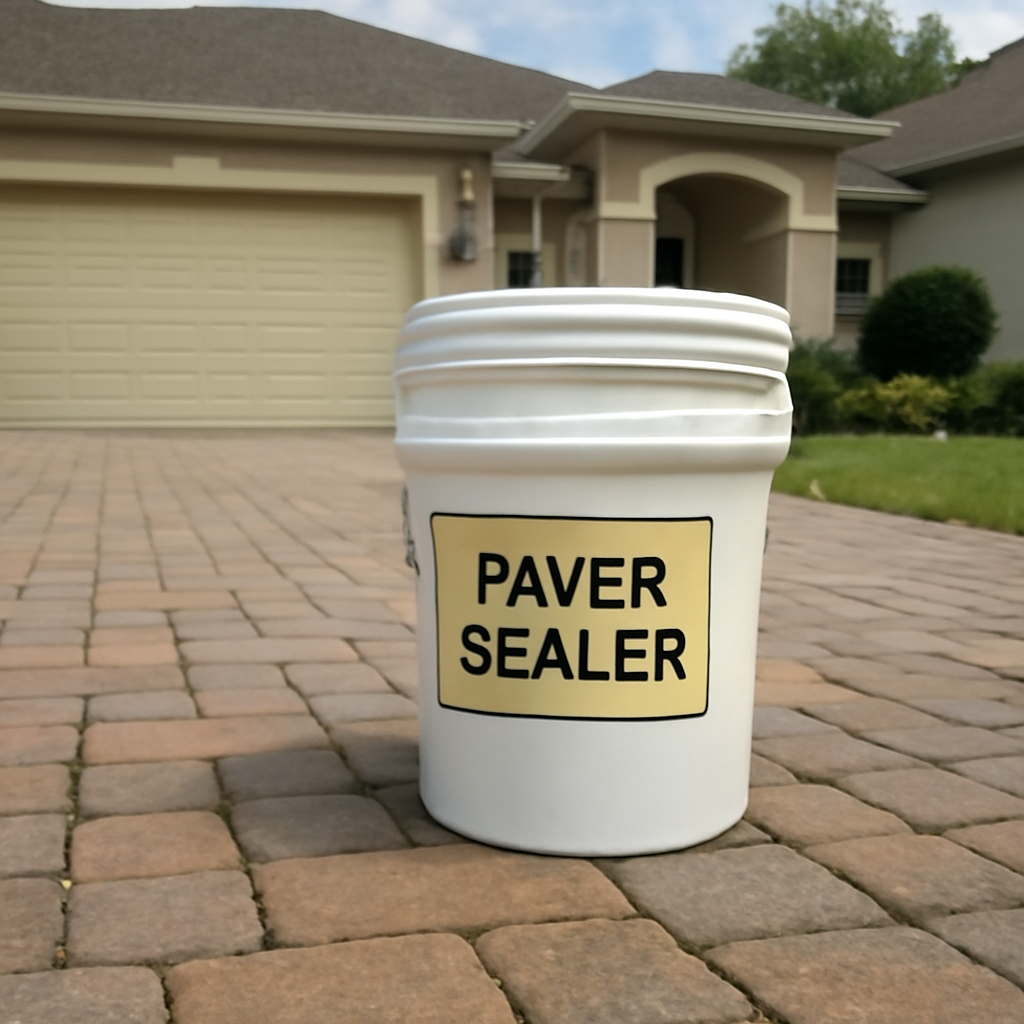
The best paver sealer does two jobs a concrete sealer does not. It has to protect the face of each paver from stains, fading and salt, and it has to deal with the sand in the joints, which is where weeds, ants and washouts start. The finish matters too: a high-gloss wet look on a north-facing patio that sees ice can be a slip hazard, while a low-gloss finish keeps more of the natural texture. This guide sorts sealers by finish, chemistry and paver type, then covers application timing for Front Range weather, joint sand and the safety points that come with solvent products. Six picks follow, each matched to a specific patio, walk or driveway.
Part of our Structure & Exterior guide — start there for the full picture →
As an Amazon Associate we earn from qualifying purchases.
How we compared: we compared 12 current Amazon paver sealer listings on what each listing states: chemistry, finish level, joint sand stabilization, paver and stone types it suits, coverage rate, temperature limits and VOC content. We did not apply or test any of these products. Several listings are the same sealer in different sizes, so the 12 listings cover ten distinct products. Prices and availability change often, so check the current listing before buying.
Quick picks: the best paver sealers by finish and use
| Product | Best for | Key features | Price | Buy |
|---|---|---|---|---|
| MasonryDefender Patio Paver Sealer | Patios with joint sand |
| $44.99as of Oct 20, 2026 8:14 pm GMT+0000 | Buy now →Check current price |
| DOMINATOR SG+ | High gloss on concrete pavers |
| $276.00as of Oct 20, 2026 8:14 pm GMT+0000 | Buy now →Check current price |
| DOMINATOR Low Gloss Wet Look | Brick, flagstone and stone |
| $229.00as of Oct 20, 2026 8:14 pm GMT+0000 | Buy now →Check current price |
| McKinnon Concrete and Paver Sealer | Semi-gloss middle ground |
| $149.99as of Oct 20, 2026 8:14 pm GMT+0000 | Buy now →Check current price |
| Foundation Armor AR500 | Deepest wet look, solvent |
| $224.99as of Oct 20, 2026 8:14 pm GMT+0000 | Buy now →Check current price |
| Shabebe Wet Look Stone Sealer | Testing a finish first |
| $24.99as of Oct 20, 2026 8:14 pm GMT+0000 | Buy now →Check current price |
Prices are Amazon’s listed prices as of the time shown and change often; check Amazon for today’s price. As an Amazon Associate we earn from qualifying purchases.
The six picks, compared listing by listing
1. MasonryDefender Patio Paver Sealer — Best for Patios With Joint Sand
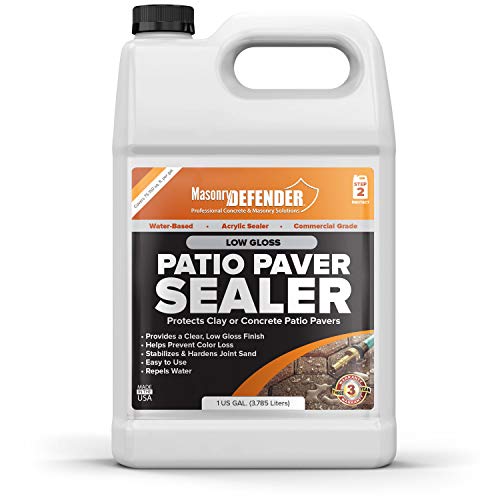
Low-gloss water-based acrylic that dries clear and hardens joint sand to discourage weeds and ants; VOC-compliant.
Check price on Amazon$44.99 as of Oct 20, 2026 8:14 pm GMT+0000 — prices change; see Amazon for current price.Why we like it
- Hardens and stabilizes joint sand
- Helps prevent weeds and ant colonies in joints
- Low-gloss finish keeps a natural look
- Water-based, low odor, soap-and-water cleanup
| Specification | Details |
|---|---|
| Chemistry | Water-based acrylic, VOC-compliant |
| Finish | Clear, low gloss, non-yellowing |
| Joint treatment | Hardens and stabilizes joint sand |
| Surfaces | Clay brick, paver stones, most horizontal concrete |
| Coverage | 75 to 150 sq ft per gallon |
| Application | Pump sprayer plus back-brush; 1 to 2 hours between coats |
MasonryDefender 300551 — water-based acrylic, low gloss, joint sand lock, clay brick + pavers, 75-150 sq ft/gal, 1 gal
The Only Sealer on the Shelf That Says It Locks Joint Sand
Only two of the 12 listings mention joint sand, and both are this MasonryDefender product, in 1-gallon and 2.5-gallon sizes. They say the sealer hardens and stabilizes the sand between pavers, which helps prevent weeds and ant colonies. Joint sand that stays put is what keeps pavers from shifting and edges from washing out in a summer downpour, so for an ordinary patio or walk this is the property that matters most.
It is also one of the few sealers here that names clay brick as well as concrete pavers. Some high-gloss sealers on the shelf specifically exclude clay and natural stone. The low-gloss finish darkens slightly without turning the patio into a mirror.
The coverage figure, 75 to 150 square feet per gallon, is the lowest stated, because joint sand absorbs sealer too. Buy for the full area plus joints. The listing does not state a temperature range or service life.
Pros
- Only listing that locks joint sand
- Works on clay brick and pavers
- Water-based, low odor
- Low-gloss, natural look
Cons
- Lowest coverage per gallon
- No temperature or life stated
- Low gloss only
Check MasonryDefender Patio Paver Sealer price on Amazon
2. DOMINATOR SG+ Clear Acrylic Sealer — Best High Gloss for Concrete Pavers

High-gloss wet-look water-based acrylic for concrete pavers, 250 to 400 sq ft per gallon, 45-minute recoat.
Check price on Amazon$276.00 as of Oct 20, 2026 8:14 pm GMT+0000 — prices change; see Amazon for current price.Why we like it
- Highest coverage stated, 250 to 400 sq ft per gallon
- 45-minute dry time between coats
- Only listing with a stated temperature limit
- Water-based, low VOC
| Specification | Details |
|---|---|
| Chemistry | Water-based clear acrylic, low VOC |
| Finish | High gloss wet look, color enhancing |
| Surfaces | Concrete pavers and decorative concrete; not for stone or clay |
| Coverage | 250 to 400 sq ft per gallon per coat |
| Temperature | Do not apply if surface is expected below 50 F within 48 hours before or after |
| Stated life | 2 to 4 years before resealing, depending on environment |
DOMINATOR SG+ PSG05G — water-based acrylic, high gloss, concrete pavers only, 250-400 sq ft/gal, 45-min recoat, 50 F limit
The Only Listing That Spells Out a Cold-Weather Limit
One listing out of 12 states a temperature rule, and it is a strict one: do not apply if the surface will drop below 50 F within 48 hours before or after. On the Front Range, that rules out many spring and fall weeks, and it is the kind of warning other listings leave to the label. Following it is what keeps a film sealer from curing cloudy or failing to bond.
The coverage claim is the highest on the shelf, 250 to 400 square feet per gallon per coat, and the 45-minute recoat time makes a two-coat job possible in a day. The listing gives a realistic reseal interval of 2 to 4 years.
It is specific about what it is not for: stone and clay. Use it on concrete pavers and decorative concrete only. High gloss also means more sheen when wet, so consider a slip-resistant additive on steps and pool surrounds.
Pros
- Highest stated coverage
- Fast recoat
- Clear temperature rule and reseal interval
Cons
- Concrete pavers only, not stone or clay
- 50 F rule narrows the season
- High gloss can be slick when wet
Check DOMINATOR SG+ price on Amazon
3. DOMINATOR Low Gloss Wet Look Paver Sealer — Best for Brick, Flagstone and Natural Stone

Water-based low-gloss wet-look paver sealer that lists brick, flagstone, bluestone and natural stone; 5-gallon pail.
Check price on Amazon$229.00 as of Oct 20, 2026 8:14 pm GMT+0000 — prices change; see Amazon for current price.Why we like it
- Lists brick, flagstone, bluestone and natural stone
- Low gloss keeps texture and traction closer to bare
- Water-based, no harsh fumes
- 5 gallons for larger patios and driveways
| Specification | Details |
|---|---|
| Chemistry | Water-based |
| Finish | Low gloss wet look |
| Surfaces | Brick, flagstone, bluestone, pavers and natural stone |
| Protects against | Sun damage, oil, stains and water damage |
| Size | 5-gallon pail |
| Coverage / temperature | Not stated in listing |
DOMINATOR DSLG05G — water-based, low-gloss wet look, brick/flagstone/bluestone/stone, 5 gal
The Low-Gloss Water-Based Option That Names Natural Stone
Four listings offer a low-gloss finish: the two MasonryDefender sizes, Foundation Armor’s AR350 and this DOMINATOR. Of those, this is the one that names flagstone and bluestone, two of the most common natural stones on Colorado patios, along with brick and concrete pavers. That fills the gap left by the SG+, which excludes stone and clay.
Low gloss is the safer choice where people walk in snow and rain. It deepens color without the slick sheen of a high-gloss film, and on irregular flagstone it looks more natural.
The listing is short on numbers. It does not state coverage, dry time, temperature limits, VOC content or service life, and its claim that it “bonds deep” is unusual wording for a film sealer. Ask the seller for the data sheet, and test a small area first.
Pros
- Names flagstone, bluestone and brick
- Low gloss for better footing
- Water-based, low fumes
Cons
- No coverage or temperature data
- No VOC figure stated
- 5-gallon size only in this listing
Check DOMINATOR Low Gloss Wet Look price on Amazon
4. McKinnon Concrete and Paver Sealer — Best Semi-Gloss Middle Ground

Semi-gloss wet-look sealer for pavers, brick, stone and concrete that names freeze-thaw; made in Tampa, Florida.
Check price on Amazon$149.99 as of Oct 20, 2026 8:14 pm GMT+0000 — prices change; see Amazon for current price.Why we like it
- Semi-gloss sits between low and high gloss
- Names freeze-thaw and UV resistance
- Indoor and outdoor use
- Only paver listing stating it is made in the USA
| Specification | Details |
|---|---|
| Chemistry | Not named; described as a penetrating, color-enhancing formula |
| Finish | Semi-gloss wet look |
| Surfaces | Concrete, pavers, brick, natural stone; driveways, patios, pool decks |
| Resists | Sun, rain, freeze-thaw and foot traffic |
| Application | Roller, brush or pump sprayer |
| Size / origin | 5 gallons; made in the USA |
McKinnon 160278 — semi-gloss wet look, pavers/brick/stone/concrete, freeze-thaw + UV, 5 gal, made in USA
The Only Semi-Gloss Finish on the Shelf
Gloss levels on this shelf split mostly into low gloss and high gloss. McKinnon is the only listing that offers semi-gloss, a middle setting for owners who want more color depth than low gloss gives but less slip risk and glare than a high-gloss film.
It is one of three listings that name freeze-thaw, and the only paver listing that states US manufacture. The listing describes the formula as penetrating while also producing a wet-look finish “without a heavy topical film,” which is an unusual combination. Without a named chemistry, treat it as a film-type sealer for planning purposes.
No coverage rate, VOC content, temperature limit or service life is stated. For a 5-gallon purchase, that is a lot of missing data, so request the technical sheet before buying.
Pros
- Only semi-gloss option
- Freeze-thaw named
- Works on pavers, brick, stone and concrete
- US made
Cons
- Chemistry not named
- No coverage or VOC data
- 5 gallons only
Check McKinnon Concrete and Paver Sealer price on Amazon
5. Foundation Armor AR500 — Best Deep Wet Look (Solvent)

Solvent-based acrylic high-gloss wet look for exterior concrete and pavers; offered in 700, 350 and 50 VOC versions.
Check price on Amazon$224.99 as of Oct 20, 2026 8:14 pm GMT+0000 — prices change; see Amazon for current price.Why we like it
- Solvent acrylic gives the deepest color enhancement
- Non-yellowing high-gloss finish
- Names road salts, UV, snow and ice
- Three VOC versions for state rules
| Specification | Details |
|---|---|
| Chemistry | Solvent-based acrylic |
| Finish | High gloss wet look, non-yellowing |
| Surfaces | Unsealed or solvent-acrylic-sealed concrete and concrete pavers |
| Coverage | 175 to 225 sq ft per gallon |
| VOC | This listing is 700 VOC; 350 and 50 VOC versions exist |
| Size | 5-gallon pail |
Foundation Armor AR500 — solvent acrylic, high gloss wet look, 175-225 sq ft/gal, 700 VOC (350/50 available), 5 gal
One of Only Two Solvent-Based Sealers Here, and the Glossier One
Two listings are solvent-based acrylics, both from Foundation Armor: AR350 in low gloss and this AR500 in high gloss. Solvent acrylics penetrate a little further and give a deeper, darker wet look than most water-based products, which is why contractors use them on stamped concrete and tumbled concrete pavers.
The AR500 is one of five listings on the shelf that name road or de-icing salts, and it also names UV, snow and ice. It is self-priming, and resealing takes a single coat over the existing solvent acrylic.
The cost is VOC. This version is 700 VOC, and the EPA notes that solvent products release organic compounds during and after use and advises increasing ventilation and following label precautions. Apply outdoors only, with a respirator rated for organic vapors, and never near open flame. The listing limits it to unsealed surfaces or those previously sealed with a solvent-based acrylic.
Pros
- Deepest wet-look finish
- Names road salts and snow
- Lower-VOC versions offered
Cons
- 700 VOC solvent in this version
- High gloss can be slick when wet
- Only over bare or solvent-acrylic surfaces
Check Foundation Armor AR500 price on Amazon
6. Shabebe Wet Look Natural Stone Sealer 32 Oz — Best for Testing a Finish First
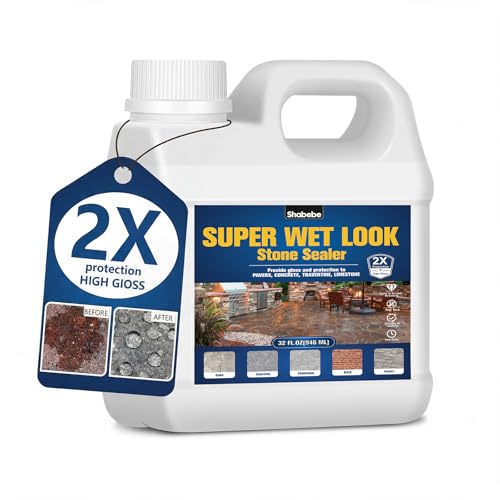
Zero-VOC water-based wet-look stone sealer in a 32 oz bottle for stamped, colored and exposed-aggregate surfaces.
Check price on Amazon$24.99 as of Oct 20, 2026 8:14 pm GMT+0000 — prices change; see Amazon for current price.Why we like it
- 32 oz size, smallest on the shelf
- Zero-VOC, no-odor water base
- Names stamped, colored and exposed aggregate
- Names de-icing salts and freeze-thaw
| Specification | Details |
|---|---|
| Chemistry | Zero-VOC water-based |
| Finish | Wet look, color enhancing, gloss |
| Surfaces | Exposed aggregate, stamped, colored concrete; stone, brick, pavers; slate, sandstone |
| Resists | De-icing salts, freeze-thaw, UV, stains |
| Application | Brush, roller or sprayer; test a small area first |
| Size / coverage | 32 oz; coverage not stated |
Shabebe SBB-WST — zero-VOC water-based wet look, stamped/aggregate/stone, salts + freeze-thaw, 32 oz
The Only Quart-Size Sealer, Which Makes It the Right Test Kit
Every other listing on the shelf is a gallon or larger, and seven of them are 5-gallon pails. Shabebe’s 32-ounce bottle is the only small size. That makes it the practical way to answer the question every paver project should start with: what will this sealer actually look like on my surface? The listing itself tells buyers to test a small area first.
It names more decorative surfaces than most listings, including exposed aggregate, stamped and colored concrete, slate and sandstone, and it is one of three listings that name freeze-thaw. It states a zero-VOC water base.
A quart will not do much more than a test patch or a small stoop, and the listing does not state coverage. Some of its comparative claims, such as percentage improvements over other sealers, are marketing rather than measured specifications.
Pros
- Small size for testing
- Zero-VOC water base
- Names salts and freeze-thaw
Cons
- Too small for a full patio
- No coverage stated
- Comparative claims are unverified
Check Shabebe Wet Look Stone Sealer price on Amazon
How paver sealer differs from concrete sealer
Poured concrete driveways and walks are usually best served by a breathable penetrating sealer that leaves no film, which our concrete sealer guide covers. Pavers are different. They are individual units with sand-filled joints, they are often chosen for color and pattern, and owners usually want some color enhancement. That is why 11 of the 12 listings on this shelf promise some gloss or wet-look finish, and only one, Foundation Armor’s SX5000, is a penetrating silane-siloxane.
The EPA notes that interlocking pavers are one of the permeable pavement types that let rain and snowmelt seep through joints into the gravel below. A film sealer on the paver faces does not change that much, but a sealer that hardens joint sand reduces how much water the joints accept. On a patio with good base drainage, that is usually a fair trade for fewer weeds and less sand loss.
Choosing a finish: low, semi or high gloss
- Natural or matte: no visible change. Best where traction and a natural look matter most.
- Low gloss: modest darkening and sheen. A good default for patios and walks that see snow.
- Semi-gloss: more depth, a little more sheen. A compromise for showpiece patios.
- High gloss wet look: maximum color and shine. Best for decorative areas and covered patios; consider an anti-slip additive on steps and sloped walks.
Gloss also shows wear. High-gloss film scuffs in traffic lanes and under patio furniture, and those spots need touch-ups.
Prep and application timing on the Front Range
Let new pavers settle and efflorescence clear
New pavers often develop efflorescence, a white bloom of mineral salts, in their first months. Sealing over it traps it. The EPA’s building moisture guidance lists salt deposition below the surface as one of the ways moisture damages masonry and concrete. Wait until efflorescence has stopped appearing, clean it off with a product made for the job, and let the pavers dry fully before sealing.
Clean, re-sand and dry
Pressure-wash carefully to avoid blasting out joint sand, remove oil and organic stains, then top up joints with fresh sand and let everything dry, usually a day or more of dry weather. If pavers need cutting during repairs, OSHA notes that cutting and grinding stone, concrete and brick creates respirable crystalline silica, so cut wet and wear a rated respirator.
Watch the weather
Spring and fall are the usual sealing seasons, but Front Range temperatures swing hard. Follow each label’s temperature range; the one listing here that states a limit requires the surface to stay above 50 F for 48 hours on either side. Avoid sealing in direct afternoon sun on hot summer days, which can make film sealers blush or bubble.
Apply thin
Two thin coats beat one heavy coat. Puddled sealer turns cloudy and slippery. Back-brush or back-roll to work sealer into texture and joints.
Our paver sealer guide goes step by step through the process.
Water-based vs solvent-based, and what you already have
The most important question before buying is what, if anything, is already on the pavers. Water-based and solvent-based acrylics are not freely interchangeable. A solvent product applied over a water-based film can soften or lift it, and a water-based product may not bond to an old solvent coating. Both Foundation Armor listings say they are for unsealed surfaces or surfaces previously sealed with a solvent-based acrylic. If you do not know the history, a simple test helps: wipe a small area with a rag dampened with xylene or a similar solvent, outdoors and with gloves. A solvent acrylic usually turns tacky; a water-based film often does not.
Water-based products, which make up most of this shelf, are easier to live with: lower odor, soap-and-water cleanup, and less risk to nearby plants. Solvent products give a deeper color and often reseal more easily, at the cost of fumes and flammability.
How much sealer to buy
Measure the patio or walk in square feet and divide by the low end of the label’s coverage range, then plan on two coats. Coverage claims on this shelf run from 75 to 400 square feet per gallon, a five-fold spread, and the low figures are usually closer to reality on porous concrete pavers and wide sand joints. Tumbled and textured pavers absorb more than smooth ones. Buying one extra gallon is cheaper than a visible lap line where a second batch starts.
Solvent safety and slip resistance
Two listings here are 700 VOC solvent acrylics. The EPA explains that products with organic solvents release VOCs while you use them and for some time after, and recommends providing plenty of fresh air and following label instructions carefully. Apply solvent sealers outdoors only, keep pets and children off the area, store leftovers outside the house and keep every ignition source away.
Slip resistance deserves equal attention. A wet-look sealer on a patio that gets snow, frost or irrigation overspray can be slick. Use low gloss on walking surfaces, add an anti-slip grit where a manufacturer offers one, and keep high gloss for decorative or covered areas.
When sealing will not fix the patio
Sealer protects pavers that are sound and well laid. It will not fix pavers that are sinking, rocking or heaving, edges that have spread, or water pooling against the house. Those are base and drainage problems, often tied to an undersized or poorly compacted base or to soil that swells and shrinks. Our guides to paver base and paver installation cost explain what a proper rebuild involves.
If you are buying a home with a paver patio or driveway that slopes toward the foundation, have the hardscape drainage checked with the rest of the exterior. Our structure and exterior hub covers what that inspection includes, and you can reach out through our contact page to connect with a vetted Front Range inspector.
Frequently asked questions
What is the best type of sealer for pavers?
For most patios and walks, a water-based acrylic in a low-gloss finish that also hardens joint sand is a good default. High-gloss and solvent-based sealers give a deeper wet look but can be slicker and need more ventilation. Penetrating sealers suit owners who want no visible change.
Does paver sealer stop weeds in the joints?
Sealers that harden and stabilize joint sand help discourage weeds and ants. Of the 12 listings we compared, only one product, in two sizes, makes that claim. Re-sand joints before sealing so there is enough sand to lock.
When should you seal new pavers?
Wait until any efflorescence, the white mineral bloom common on new pavers, has stopped appearing and been cleaned off, then seal on dry pavers in moderate weather. Follow the label's temperature limits. One listing we compared requires the surface to stay above 50 F for 48 hours before and after.
Is wet-look paver sealer slippery?
High-gloss wet-look film sealers can be slick when wet or frosty. Low-gloss and natural finishes are safer on walking surfaces. Where you want gloss on steps or sloped walks, use an anti-slip additive if the manufacturer offers one.
How often should pavers be resealed?
It depends on traffic, sun and the product. One listing we compared states 2 to 4 years before resealing. Reseal when water stops beading on the surface, joints start losing sand, or the finish looks dull in traffic lanes.
References
- Soak Up the Rain: Permeable Pavement — U.S. Environmental Protection Agency
- Volatile Organic Compounds’ Impact on Indoor Air Quality — U.S. Environmental Protection Agency
- Moisture Control Guidance for Building Design, Construction and Maintenance — U.S. Environmental Protection Agency
- Silica, Crystalline — Occupational Safety and Health Administration