Best Mold Remediation Company Near Me: How to Define Best
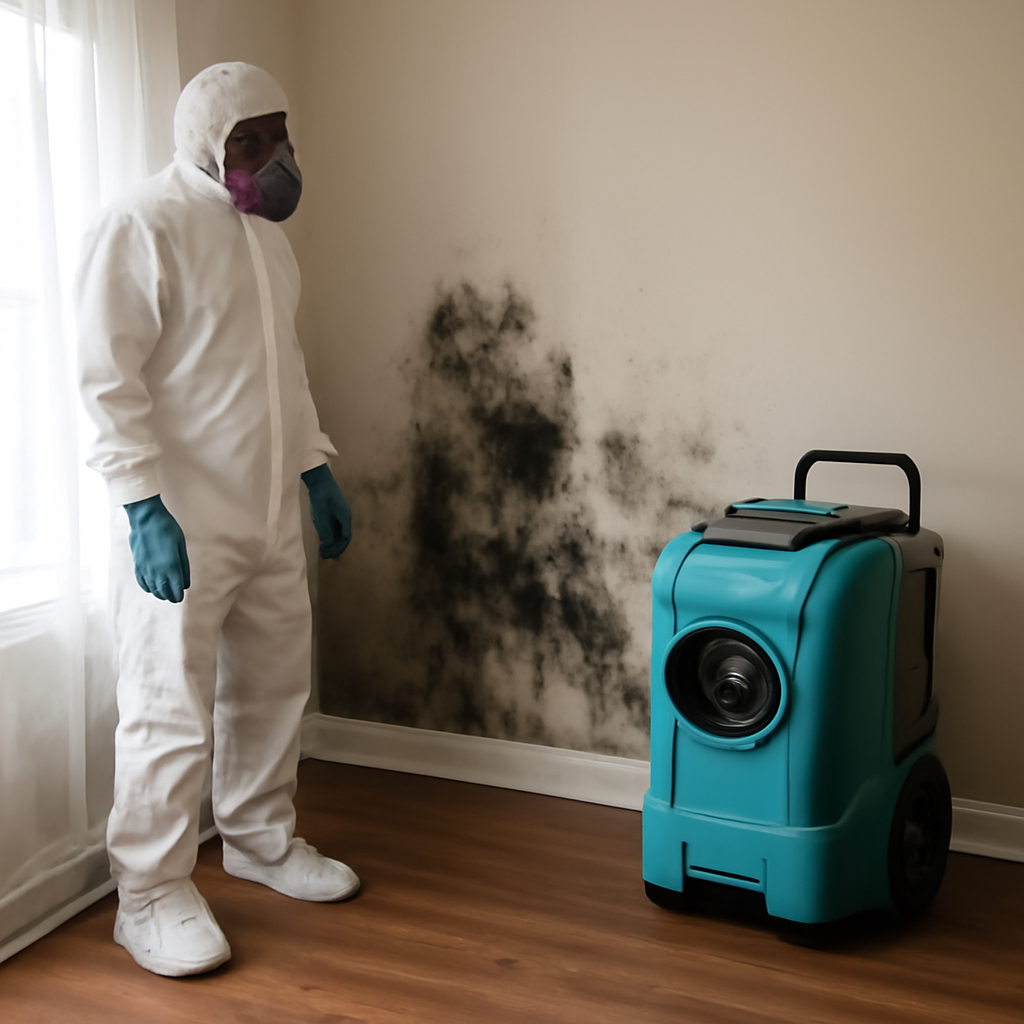
Searching for the best mold remediation company near me produces marketing language but not much in the way of objective criteria. “Best” varies by what the homeowner needs — emergency response, real-estate documentation, large complex projects, or simple residential cleanup. This guide breaks down the credentials, scope quality, contract terms, and review patterns that actually distinguish a quality remediator from a marketing front. EPA, CDC, and IICRC guidance current as of 2026 anchors the framework. Consult your physician for symptoms and a certified professional for any testing decisions.
Is this mold, asbestos, or water damage? Get a free instant screen
Upload a clear photo of the suspect area. You'll get an instant AI screening opinion and what to do next. This is screening guidance, not a professional determination.
Screening guidance only. AI can be wrong. Confirm asbestos, mold type, or lead with lab testing or a licensed professional before acting.
The credential floor every “best” company should clear
IICRC S520 certification is the consensus industry standard. Technicians should hold the Applied Microbial Remediation Technician (AMRT) credential, which requires passing a written exam covering the standard. General liability insurance with a pollution liability rider is essential because most standard CGL policies exclude mold claims. Workers’ compensation coverage is non-negotiable. Verified business licensing at the city or county level is the minimum local requirement. Colorado does not require a mold-specific license at the state level.
Companies that meet only the marketing definition of “best” — flashy websites, large ad budgets, friendly sales staff — sometimes fail one or more of these credential checks. Asking for the certificate of insurance, the IICRC company number, and the AMRT certificate of each technician on the job is reasonable due diligence and not a sign of hostility. Reputable firms respond to these requests promptly.
Scope quality: the strongest single differentiator
The single best test of a remediation company’s quality is the written scope they produce. A high-quality scope identifies the affected area in square feet, lists every material to be removed (specifying drywall thickness, insulation type, subfloor material), describes the containment plan in detail (number of negative air machines, CFM rating, air changes per hour, containment barrier specifications), specifies the cleaning protocol (HEPA vacuum, antimicrobial wipe-down, media blasting where applicable), addresses the moisture source, and references IICRC S520 explicitly.
A poor scope says “remediate affected areas” and presents a single round-number price. The difference between the two scopes is not just paperwork. A detailed scope predicts a detailed execution; a vague scope predicts a vague outcome and a project that drifts in cost and quality. Comparing three written scopes side by side is the most powerful tool a homeowner has.
Third-party post-remediation verification
The single best signal that a remediation company is operating in good faith is willingness — even insistence — on independent third-party post-remediation verification (PRV). A company that grades its own work has a structural conflict of interest. Independent industrial hygienists or qualified mold inspectors typically charge $300 to $700 for clearance sampling, and that line item protects the homeowner more than any other quality control measure.
The “best” companies build PRV into the standard process and provide a written report from the assessor as part of project closeout. Lesser companies skip the step, perform their own verification, or use a related firm that lacks independence. Ask explicitly during the quote phase: “Will an independent third party perform the post-remediation verification?” The answer reveals a lot.
Warranty terms that matter
Warranty quality varies widely. A meaningful workmanship warranty covers regrowth on remediated surfaces for 12 to 24 months, conditional on the homeowner repairing the underlying moisture source. The warranty should specify what triggers a re-cleaning, who pays for it, and what conditions void the warranty (typically uncorrected moisture sources, additional water events, or modification of the remediated area without notification).
Lifetime warranties on porous-material remediation are marketing claims that rarely survive a real claim event. Be skeptical of warranty language that sounds expansive but lacks specifics about regrowth triggers and re-cleaning obligations. Read the warranty document carefully before signing the contract — not after.
Sample reports and case studies
Quality remediation companies produce documented case work and can share sample reports (with personal information redacted). The reports should show pre-remediation assessment photos, moisture maps, scope of work, daily progress logs, post-remediation visual inspection, third-party verification results, and final close-out documentation. A company that cannot produce sample reports is either too new to have them or unwilling to share them. Both are signals.
Reference our broader mold inspection and testing hub for the inspection-side documentation that complements remediation reporting. The cluster on commercial mold damage restoration documentation shows what large-project paperwork looks like.
Reviews: what to read past the star count
Star ratings on Google, Yelp, and the Better Business Bureau matter less than the texture of recent reviews. Look for patterns. Repeated complaints about scope expansion, surprise charges, slow response, or unfriendly disputes are red flags. Repeated praise for thorough documentation, fair pricing, helpful project managers, and successful real-estate closings are positive signals.
Review velocity matters too. A company with 30 reviews over five years with no recent activity is harder to evaluate than a company with 200 reviews including 20 in the past six months. The recent ones tell you who is at the firm right now and how they operate.
Pricing within a healthy range
Typical Front Range residential mold remediation runs $1,500 to $6,000 for a single contained area, with the national average near $2,500 to $3,500. A quote that comes in at half the median is usually skipping containment, clearance, or both. A quote at three times the median is usually anticipating insurance coverage rather than reflecting actual work.
The “best” companies tend to cluster in the middle of the pricing range with detailed scopes that justify the price. Cheap is usually expensive in this category, and overpriced is usually padded. Three quotes with itemized scopes lets you triangulate the right price for the actual work.
Communication and project management
Beyond credentials and scope, the day-to-day project management is where many remediations succeed or fail. The “best” companies assign a project manager who walks the homeowner through the work plan, provides daily progress updates with photographs, returns phone calls within four hours during business hours, and produces the final report within a week of project completion.
Smaller companies often have the owner running this role personally; larger companies have dedicated project managers. Either model works. Companies where the salesperson disappears after the contract is signed and the field crew shows up without context tend to produce sub-par outcomes.
What customer service should look like during the project
Containment setup explained before it goes up. Daily start-and-end calls during active work. Photographs of removed materials before they leave the site. Daily moisture readings logged. Cleanup of the work zone at end-of-day. Clear notification before any scope expansion. Written change orders for any cost increase.
Specialty capabilities that matter for complex projects
For projects involving HVAC contamination, the company should hold NADCA certification in addition to IICRC S520. For projects involving asbestos-containing materials (pre-1980 popcorn ceilings, vermiculite insulation, some pipe insulations), the company should hold or coordinate with an asbestos abatement contractor licensed under EPA NESHAP and state-level rules. For projects involving lead-based paint disturbance (pre-1978 housing), EPA RRP certification is required by federal rule.
The best companies maintain or partner for these adjacent certifications. A small residential remediator without these capabilities is fine for simple jobs but should refer out for complex multi-hazard projects rather than work outside their scope.
Insurance carrier relationships
For insurance-driven projects, the company’s working relationship with adjusters matters. The “best” companies have established estimating language, software (Xactimate is the dominant carrier-side platform), and adjuster relationships that streamline approvals. They are not necessarily “preferred vendors” in carrier programs — preferred-vendor status sometimes constrains scope to the carrier’s benefit rather than the homeowner’s.
Ask whether the company will negotiate scope and pricing with the adjuster on the homeowner’s behalf, what their Xactimate experience looks like, and whether they have written off project portions when carriers under-paid versus passing those costs to the homeowner.
Putting it together: a one-page comparison
Build a one-page comparison table with three columns. List each company’s IICRC S520 certification status, technician AMRT credentials, insurance coverage, scope detail rating, third-party PRV stance, warranty terms, sample reports availability, review profile, and itemized price. The right hire usually emerges visually from this comparison. The cheapest quote with the thinnest scope rarely wins; the mid-priced quote with the most thorough scope and PRV commitment usually does.
Front Range specifics
Denver, Boulder, Colorado Springs, and the I-25 corridor have a well-developed remediation market with both national franchises and quality independents. Mountain communities west of the I-70 corridor have fewer options and longer response times. Plan accordingly if you are in a mountain or remote area; the best Front Range firms will travel for substantial projects but typically with a mobilization fee.
Practical questions to ask during the site visit
Use the on-site assessment as a credential check. Ask the person walking the home what their role is and what credentials they hold. Some firms send sales-trained staff for assessments who can’t answer technical questions; others send AMRT-credentialed technicians or project managers who handle both assessment and field work. The quality of the on-site conversation predicts the quality of the project execution.
Walk through the proposed scope verbally. Ask why specific materials will be removed and others left. Ask how the containment will be built. Ask what equipment will be on site and for how long. Ask who the actual technicians on the project will be and what credentials they hold. These questions are not gotchas; they are normal due diligence and reputable firms respond directly without evasion.
Subcontractors and crew composition
Some “best” companies maintain in-house crews of W-2 employees. Others subcontract some or all of the field work to independent technicians. Both models can produce quality outcomes, but the in-house model offers better consistency and accountability. Ask explicitly during the quote phase whether the technicians performing the work will be W-2 employees of the company you are hiring, or subcontractors whose names and credentials may not be known until the day of work.
Subcontracted crews can be excellent. The issue is transparency: the homeowner should know who is actually doing the work and what credentials those individuals hold. A firm that resists answering this question is a firm to remove from the shortlist.
Insurance restoration vs out-of-pocket projects
Best practices differ slightly between insurance-driven projects and out-of-pocket homeowner projects. Insurance projects involve the carrier as an additional decision-maker. The remediation company’s adjuster fluency and Xactimate experience matter. Out-of-pocket projects give the homeowner more direct control over scope and pricing, but also less leverage to compel scope expansion mid-project. Knowing which path your project is on shapes how you negotiate and what you prioritize.
For out-of-pocket projects, the homeowner has full discretion to accept the cheapest reasonable scope or pay for premium service. For insurance projects, the carrier’s preferred scope often becomes a baseline, with the homeowner negotiating expansions or additions. The best companies handle both scenarios competently, but the management style differs.
Sample report walkthrough
Ask each candidate to show a sample remediation report. The report should include a pre-remediation assessment with photographs, moisture mapping, and identification of the moisture source. It should include the detailed scope of work as executed. It should include daily progress logs with photographs. It should include the post-remediation verification report from the independent third party. It should include disposal documentation and any warranty paperwork.
A 30-page comprehensive report is the standard for quality work. A 3-page summary with a few photographs is below the standard. The difference matters at resale time, when a buyer’s inspector will review the report and decide whether the historical mold problem is resolved or still represents a risk. Documented professional remediation with a thorough report is a transaction asset.
References
- EPA: A Brief Guide to Mold, Moisture, and Your Home — U.S. Environmental Protection Agency
- CDC: Mold Cleanup and Remediation — Centers for Disease Control and Prevention
- InterNACHI: Mold Inspection and Cleanup Guide — International Association of Certified Home Inspectors
- CDPHE: Indoor Air Quality Resources — Colorado Department of Public Health and Environment
For Front Range homeowners weighing competing remediation quotes and looking for a vetted independent assessor to review scopes, reach out through our contact page.