Mold Remediation Company Colorado Springs Guide
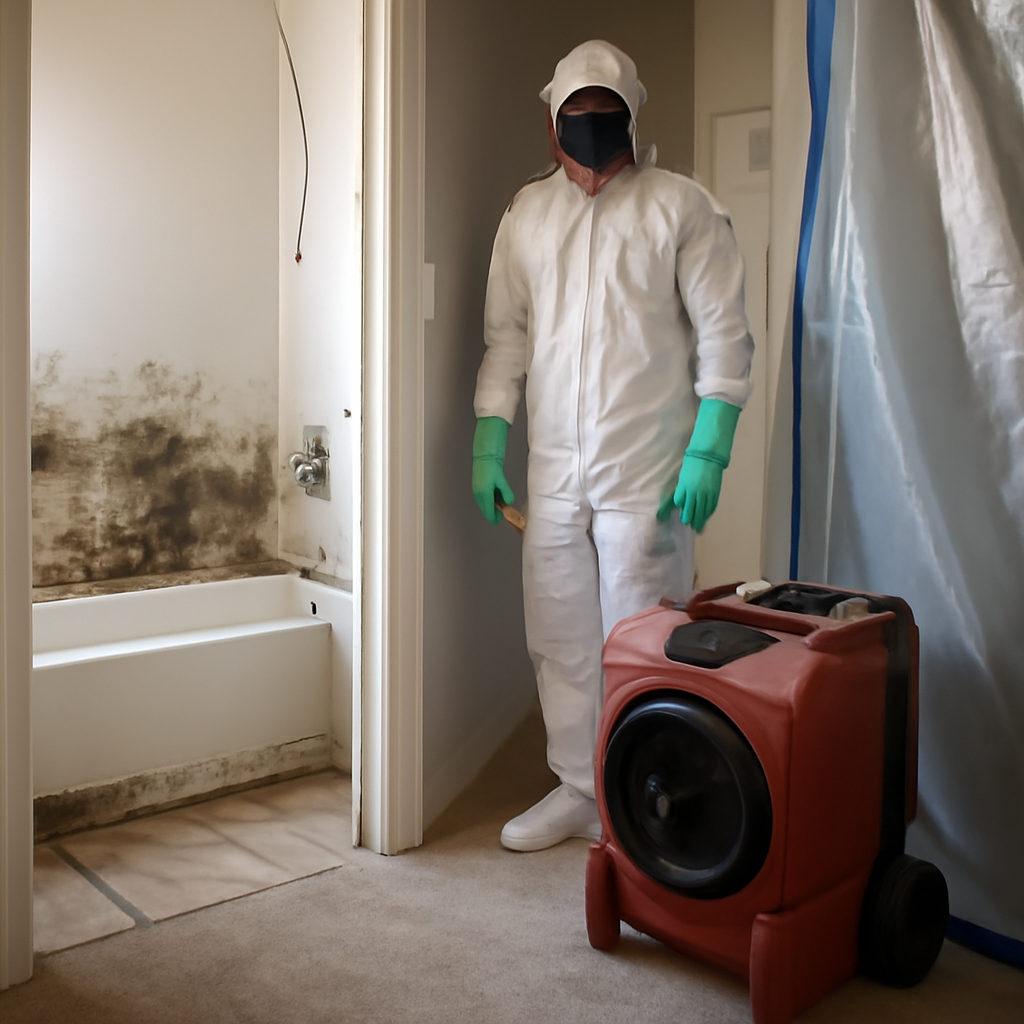
Colorado Springs sits at over 6,000 feet against the foot of Pikes Peak, in a dry, high-altitude climate that keeps outdoor humidity low for most of the year. That dryness gives the city an advantage against mold, but it does not eliminate the problem — indoor moisture, basement seepage, and water intrusion still create plenty of work for local remediation firms. Choosing a mold remediation company in Colorado Springs means understanding the local conditions and knowing how to vet a contractor. This guide summarizes EPA, CDC, and Colorado health-department guidance current as of 2026 and is educational only; consult a certified professional for decisions about your home.
Is this mold, asbestos, or water damage? Get a free instant screen
Upload a clear photo of the suspect area. You'll get an instant AI screening opinion and what to do next. This is screening guidance, not a professional determination.
Screening guidance only. AI can be wrong. Confirm asbestos, mold type, or lead with lab testing or a licensed professional before acting.
What a Mold Remediation Company in Colorado Springs Does
A mold remediation company in Colorado Springs performs the EPA’s standard cleanup sequence: assessing contamination, correcting the moisture source, containing the work area, removing or cleaning affected materials, drying the structure, and verifying the result. The local angle is the high-altitude, semi-arid climate, which shapes where moisture problems arise despite the generally dry air.
Reputable local firms emphasize finding and fixing the moisture source, because mold in a dry climate almost always traces to a specific intrusion — a leak, basement seepage, or an indoor humidity issue — rather than ambient dampness. The remediation steps are universal; the diagnostic focus on locating that hidden water source is where local experience helps. Homeowners can review the full process in guidance on how mold remediation is done.
Why Mold Occurs in a Dry Climate Like Colorado Springs
The low outdoor humidity of the Front Range works against mold, but indoor conditions can override that advantage. Finished basements trap moisture, evaporative coolers add humidity when poorly managed, and tightly sealed newer homes can hold interior moisture without adequate ventilation. Each creates pockets where mold establishes despite the dry climate.
Water intrusion is the other major driver. Spring snowmelt and summer thunderstorms can flood basements and crawl spaces, ice dams can force water behind exterior walls, and plumbing failures saturate materials regardless of climate. When water sits for more than a day or two, mold grows in Colorado Springs just as it would anywhere. The dry air simply means problems concentrate around specific water sources rather than spreading from general humidity.
Common Mold Problems in Colorado Springs Homes
Basements lead the list, with mold appearing on foundation walls and around window wells after snowmelt or storms. Crawl spaces with inadequate vapor barriers collect ground moisture. Bathrooms and kitchens with poor ventilation develop growth, and areas around evaporative coolers can harbor mold when pads and lines stay damp.
Plumbing leaks behind walls, roof leaks reaching attic sheathing, and condensation on cold surfaces in winter round out the common scenarios. Because the dry climate masks ambient humidity, a musty odor or visible patch often points to a specific, locatable leak. Finding it is the focus of a thorough mold assessment that local firms perform before cleanup.
The Remediation Process Step by Step
A Colorado Springs remediation begins with assessment and moisture mapping, using meters and infrared imaging to find the wet materials feeding the growth. The moisture source is corrected — a leak repaired, drainage improved, a vapor barrier added, or indoor humidity controlled.
The work area is contained with sheeting and negative air pressure to keep spores from spreading. Porous materials with significant growth, such as drywall and insulation, are removed and bagged; hard surfaces are cleaned with detergent and HEPA-vacuumed. The structure is dried with dehumidifiers and air movers — often quick in the dry climate — until moisture readings normalize. The area is verified clean and dry, with independent clearance testing on larger jobs before reconstruction.
What Mold Remediation Costs in Colorado Springs
Costs track regional and national ranges. Industry estimates place typical residential remediation between roughly $1,200 and $3,500, with small contained jobs in the low hundreds and extensive contamination exceeding $10,000. The affected area’s size and location drive the price, along with material removal and any structural repair.
Basement and crawl-space work, common in the area, can raise costs through difficult access. Inspection typically runs $300 to $600, and reconstruction is usually quoted separately. Homeowners should gather multiple itemized estimates and be cautious of bids far below the rest, which often skip containment or ignore the moisture source. Broader pricing context appears in guidance on mold abatement costs.
How to Vet a Mold Remediation Company in Colorado Springs
Colorado does not have a statewide mold remediation license, so vetting matters more here than in licensed states. Choose firms that follow EPA remediation guidance, hold relevant industry certifications such as IICRC credentials, carry liability insurance, and provide written scopes itemizing containment, removal, drying, disposal, and moisture-source repair.
Verify certifications with the issuing body, request references from recent local jobs, and confirm the crew uses containment and HEPA filtration. Ask whether the company uses an independent assessor for clearance testing, which avoids the conflict of a contractor grading its own work. A reputable Colorado Springs firm explains the moisture cause, documents the work, and stands behind a verified result.
Preventing Mold in Colorado Springs Homes
Prevention leverages the dry climate while guarding against indoor moisture. Keep indoor relative humidity between 30 and 50 percent, run bathroom and kitchen exhaust fans, and manage evaporative coolers so pads and lines do not stay wet. Watch basements and crawl spaces after snowmelt and storms, and maintain vapor barriers below grade.
Keep gutters clear and grading sloped away from the foundation, address ice-dam conditions in winter, and repair any plumbing leak immediately. Drying wet materials within 24 to 48 hours prevents mold from establishing. With the region’s natural dryness on their side, attentive homeowners can keep mold rare. The broader mold inspection and testing hub offers further detection and prevention guidance.
Evaporative Coolers and Local Mold Risk
Evaporative coolers, widely used across Colorado Springs for their efficiency in dry air, deliberately add moisture indoors by drawing air through water-saturated pads, and that design makes them a common local mold contributor. When a cooler runs with damp pads left sitting, when its supply line or pan leaks, or when it is not drained and cleaned at season’s end, it becomes both a moisture source and a place where mold grows directly in the unit and its ductwork.
Managing the cooler removes much of this risk. Pads should dry between uses where possible, water lines and pans checked for leaks, and the unit cleaned and winterized when cooling season ends. Because evaporative cooling raises indoor humidity by design, homes using it should watch indoor relative humidity and ventilate adequately to stay in the 30-to-50-percent range. A local remediation firm familiar with these coolers knows to check them as a moisture source that homeowners often overlook.
DIY Versus Hiring a Company in Colorado Springs
The dry climate gives Colorado Springs homeowners a real advantage for small do-it-yourself cleanups, since surfaces dry quickly and a localized problem is less likely to have spread far before it is noticed. The EPA supports homeowner cleanup of mold on hard surfaces under roughly 10 square feet, using detergent, gloves, an N95 respirator, and eye protection. For a small bathroom patch or a spot of surface mold on intact paint, careful DIY work is appropriate and inexpensive.
The line is crossed when mold is embedded in porous materials, covers a larger area, sits inside walls or HVAC and evaporative-cooling systems, or keeps returning despite cleaning. At that point a homeowner lacks the containment, HEPA filtration, and drying equipment a job needs, and disturbing extensive growth without containment can spread spores through the home. Households with members who have asthma, allergies, or weakened immune systems should lean toward professional help even for moderate jobs, since the CDC advises sensitive individuals avoid mold cleanup entirely. Knowing where DIY ends and a company begins keeps a small task from becoming a spread problem.
Comparing Estimates From Colorado Springs Firms
Because Colorado does not license mold remediation, the quality of estimates a homeowner collects becomes a primary tool for vetting. Gathering at least three written, itemized estimates allows a line-by-line comparison of what each firm actually proposes — containment, removal, drying, disposal, moisture-source repair, and whether clearance testing is included — rather than a misleading comparison of bottom-line totals. A complete estimate reads like a plan, identifying the suspected water source and how it will be corrected.
An outlier low bid deserves scrutiny rather than instant acceptance, since it often reflects skipped containment, surface treatment of porous materials that should be removed, ignored moisture repair, or reconstruction costs left off that reappear later. Paying somewhat more for a thorough, documented job frequently costs less than a bargain that fails and must be redone, possibly with spread contamination. Colorado Springs homeowners protect themselves by treating the estimate as a window into a firm’s standards and by asking pointed questions about anything a quote leaves vague.
High Altitude and Colorado Springs Building Conditions
At over 6,000 feet, Colorado Springs combines thin, dry air with sharp temperature swings, and both shape where indoor moisture collects. The dry air dries wetted materials quickly once a source is fixed, which works in a homeowner’s favor during remediation, but the large day-to-night and season-to-season temperature changes drive condensation on cold surfaces — uninsulated basement walls, single-pane windows, and exterior walls in winter — where warm indoor air gives up its moisture. Mold then establishes in those localized cold, damp pockets even though the ambient humidity outdoors is low.
The area’s housing adds its own factors. Homes built on expansive clay soils can develop foundation movement and cracks that admit water, snowmelt and intense summer storms test basement waterproofing and window-well drainage, and ice dams in winter can force water behind fascia and into wall cavities. A capable local firm understands these high-altitude and regional building patterns and looks for the specific intrusion behind a mold problem rather than assuming general dampness, which the dry climate rarely supplies.
What to Expect When You Hire a Local Firm
Knowing the typical arc of a project helps a Colorado Springs homeowner judge whether a company is working to a standard. The job begins with an assessment and a written scope describing the affected area, the suspected moisture source and how it will be corrected, the containment plan, which materials will be removed versus cleaned, and whether clearance testing is included. Reputable firms communicate findings as they go, especially if opening a wall reveals contamination beyond the surface, rather than quietly expanding the bill.
Timelines depend on scope. A small contained job may finish in a day, a single-room project with material removal and drying often runs three to five days, and extensive contamination with structural repair and clearance can stretch past a week. The dry climate frequently shortens the drying phase, but the moisture source must still be confirmed resolved before reconstruction. A homeowner should expect milestone-based payments rather than a large upfront demand, daily moisture logs on a drying job, and a clear handoff to clearance verification before the area is closed back up.
Insurance and Documentation for Colorado Homeowners
Whether insurance helps a Colorado Springs homeowner depends, as elsewhere, on the cause of the water. Many policies cover mold that follows a sudden covered event such as a burst pipe but exclude mold from gradual leaks, deferred maintenance, or flooding without separate flood coverage, and mold-specific caps are common. Because dry-climate mold so often traces to a single identifiable intrusion, documenting that source clearly can be the difference between a covered claim and a denied one.
A qualified local firm supports this with the records insurers expect: the inspection report, moisture readings, photographs of the source and damage, an itemized scope, and clearance results. Homeowners should photograph the problem at discovery, note the date, contact the insurer early, and keep all invoices. The same documentation serves a future home sale, where disclosed but properly remediated mold with a clear paper trail reassures buyers far more than an undocumented patch. Choosing a company that documents thoroughly protects both the current claim and the home’s long-term value.
When to Call a Professional
Call a professional when mold exceeds about 10 square feet, involves porous structural materials or HVAC and cooling systems, follows flooding, keeps returning, or affects a home with sensitive occupants. The CDC advises vulnerable individuals avoid the work area during removal.
A qualified Colorado Springs company also locates the hidden moisture source that dry-climate mold usually hides, documents the work for insurance or disclosure, and verifies the result. For a small surface patch, careful DIY cleaning works; for larger or recurring problems, a vetted professional firm is the reliable path.
References
- Mold Cleanup in Your Home — U.S. Environmental Protection Agency
- Mold and Your Health — Colorado Department of Public Health and Environment
- About Mold and Your Health — Centers for Disease Control and Prevention
- A Brief Guide to Mold, Moisture and Your Home — U.S. Environmental Protection Agency
Colorado Springs and Front Range homeowners can get in touch through our contact page for a connection to a vetted local inspector before hiring a mold remediation company.