Best Mold Remediation Company: National Evaluation Framework
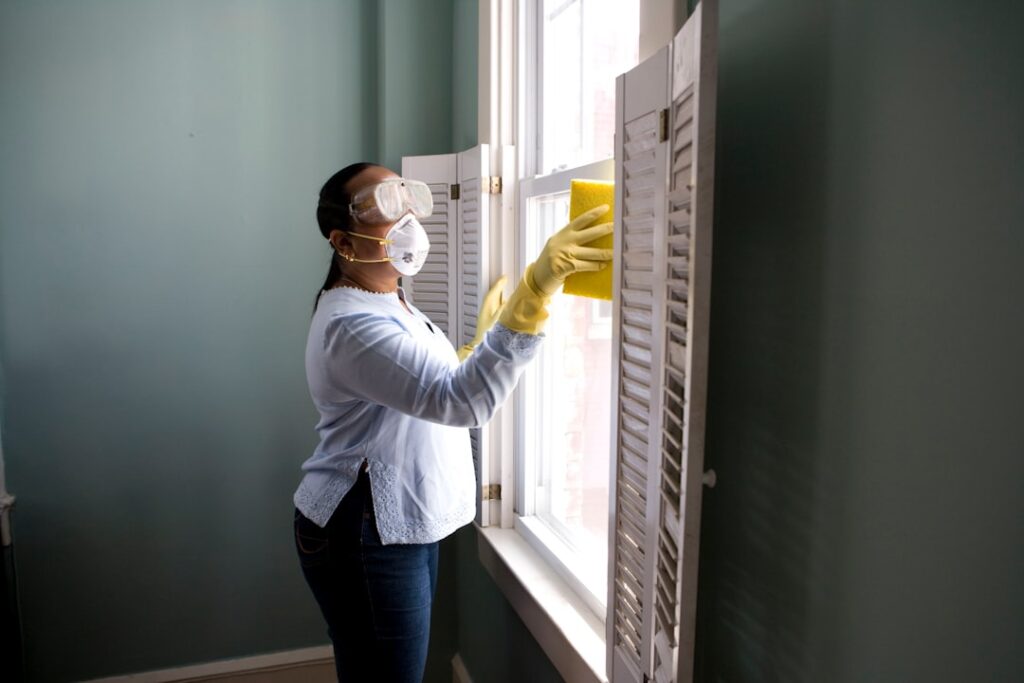
Picking the best mold remediation company for a residential project requires a national-level evaluation framework rather than a list of brand names. Quality varies enormously among national franchises, regional firms, and local independents. This guide breaks down the credentials, scope quality, contract terms, communication style, and verification practices that distinguish a quality remediator from a marketing front, drawn from EPA, CDC, and IICRC guidance current as of 2026. Consult your physician for symptoms and a certified professional for any testing decisions.
Is this mold, asbestos, or water damage? Get a free instant screen
Upload a clear photo of the suspect area. You'll get an instant AI screening opinion and what to do next. This is screening guidance, not a professional determination.
Screening guidance only. AI can be wrong. Confirm asbestos, mold type, or lead with lab testing or a licensed professional before acting.
The credential floor: non-negotiable minimums
IICRC S520 certification at the company level. AMRT-credentialed technicians actually on the job (not just one credentialed person at the home office). General liability insurance with a pollution liability rider — most standard CGL policies exclude mold by default. Workers’ compensation coverage. Verified business licensing at the state, county, or city level as applicable. These five items are the credential floor. Companies that fail any of them should not be on the shortlist.
Some states (Texas, Florida, Louisiana, New York, and others) require state-issued mold remediation licenses. Many states (Colorado, Ohio, and most western and midwestern states) do not. The IICRC credential is the consistent baseline across all U.S. markets and the strongest single signal of professional capability. State licensing where required is in addition to, not instead of, IICRC.
National franchises vs regional firms vs local independents
Each model has strengths and weaknesses. National franchises (ServiceMaster, ServPro, BELFOR and others) offer brand consistency, established insurance-carrier relationships, and 24-hour response capability. Quality varies by individual franchisee owner. Regional firms often combine franchise-like scale with local market expertise. Local independents may offer the most personalized service and the deepest area knowledge, with the trade-off being smaller equipment fleets and limited capacity for very large losses.
None of the three models is inherently better. The right hire depends on project scope and the specific operators in your market. A small residential job often goes well with a local independent. A large multi-room project with insurance involvement often goes well with a regional firm or franchise that has the equipment and adjuster relationships to move quickly.
Scope quality: the strongest single quality signal
The written scope is the most reliable test of remediator quality. A high-quality scope identifies the affected area in square feet, lists every material to be removed (specifying drywall thickness, insulation type, subfloor material), describes the containment plan (number of negative air machines, CFM rating, air changes per hour, containment barrier specifications), specifies the cleaning protocol (HEPA vacuum, antimicrobial wipe-down, media blasting where applicable), addresses the moisture source, and references IICRC S520 explicitly.
A poor scope says “remediate affected area” with a single round-number price. Comparing three written scopes side by side is the single most valuable exercise a homeowner can perform. The cheapest scope with the least detail is almost always more expensive in the long run because of regrowth, failed real-estate transactions, or insurance disputes.
Independent third-party verification
The strongest single signal of a quality remediator is willingness — even insistence — on independent third-party post-remediation verification. A company that grades its own work has a structural conflict of interest. Independent industrial hygienists or qualified mold inspectors typically charge $300 to $700 for clearance sampling. The best companies build this into the standard process and provide the assessor’s report as part of project closeout.
Ask explicitly during the quote phase: “Will an independent third party perform the post-remediation verification?” The answer reveals a lot about the firm’s professional posture. Companies that resist or refuse independent verification are companies to skip, regardless of price.
Warranty terms that have substance
A meaningful workmanship warranty covers regrowth on remediated surfaces for 12 to 24 months, conditional on the homeowner repairing the underlying moisture source. The warranty should specify what triggers a re-cleaning (visible regrowth, failed post-remediation testing within a defined window), who pays for re-cleaning (typically the contractor, at no cost, if the moisture source was not changed by the homeowner), and what voids the warranty.
Lifetime warranties on porous-material remediation are marketing language. Read the actual warranty document, not just the sales-page summary, before signing. Reputable firms will provide the warranty document for review during the quoting phase rather than presenting it only after contract signing.
Communication and project management
Day-to-day project management is where many remediations succeed or fail. The best companies assign a dedicated project manager, provide daily progress updates with photographs, return calls within four hours during business hours, and produce final close-out documentation within a week of project completion. Smaller companies often have the owner running this role personally. Either model works as long as someone is consistently available.
Companies where the salesperson disappears after contract signing and the field crew shows up without context tend to produce sub-par outcomes. Sample weekly progress reports during the quoting phase will reveal which firms operate with strong project-management discipline and which improvise. Our broader homeowner mold inspection hub covers how the inspection and remediation workflows interact.
Specialty capabilities for complex projects
For HVAC contamination, hold or partner for NADCA certification in addition to IICRC S520. For asbestos-containing materials (pre-1980 popcorn ceilings, vermiculite insulation, some pipe insulations), the company should hold or coordinate with an asbestos abatement contractor licensed under EPA NESHAP and state-level rules. For pre-1978 lead-based paint disturbance, EPA RRP certification is required by federal rule.
The best companies maintain or partner for these adjacent certifications. A small remediator without these capabilities is fine for simple jobs but should refer out for complex multi-hazard projects rather than work outside their scope. Asking about specialty capabilities during the quote phase is reasonable.
Sample reports and documented case work
Quality companies produce documented case work and can share sample reports with personal information redacted. Reports should show pre-remediation assessment photos, moisture maps, scope of work, daily progress logs, post-remediation visual inspection, third-party verification results, and final close-out documentation. A company unable to produce sample reports is either too new to have them or unwilling to share them. Both are signals worth noting.
Reviews: pattern recognition beyond star ratings
Star ratings on Google, Yelp, and the Better Business Bureau matter less than the texture of recent reviews. Look for patterns. Repeated complaints about scope expansion, surprise charges, slow response, or unfriendly disputes are red flags. Repeated praise for thorough documentation, fair pricing, helpful project managers, and successful real-estate closings are positive signals.
Review velocity matters. A company with 30 reviews over five years and no recent activity is harder to evaluate than a company with 200 reviews including 20 in the past six months. The recent ones tell you who is at the firm right now. Review filtering services and incentivized review programs muddy the picture; cross-reference between platforms.
Pricing within a healthy range
National residential mold remediation pricing runs $1,500 to $6,000 for a single contained area, with the U.S. average near $2,500 to $3,500. A quote at half the median is usually skipping containment, clearance, or both. A quote at three times the median is usually anticipating insurance coverage rather than reflecting actual work. The best companies tend to cluster in the middle of the range with detailed scopes that justify the price.
Cheap is usually expensive in this category. Overpriced is usually padded. Three quotes with itemized scopes lets you triangulate the right price for the actual work needed. Reference our cluster on defining the best local remediator for regional pricing context.
Insurance carrier relationships
For insurance-driven projects, established estimating language (Xactimate is the dominant carrier-side platform) and adjuster relationships streamline approvals. The best companies are not necessarily “preferred vendors” in carrier programs — preferred-vendor status sometimes constrains scope to the carrier’s benefit rather than the homeowner’s. Independent companies with strong Xactimate fluency often negotiate better outcomes for homeowners than preferred vendors do.
Ask whether the company will negotiate scope with the adjuster on the homeowner’s behalf, what their Xactimate experience looks like, and how they handle disputes when carriers under-pay versus passing costs to the homeowner.
What “best” looks like in different scenarios
For a small DIY-adjacent job under the EPA’s 10 square foot threshold, the best remediator is the one who tells you honestly that you can handle it yourself with appropriate PPE. For a real-estate transaction, the best is the one with the strongest documentation and third-party verification practice. For a major insurance-driven loss, the best is the one with the equipment, project management capacity, and adjuster fluency to handle a complex scope.
The “best mold remediation company” is therefore situational. A national franchise excellent for large insurance jobs may be over-scaled for a residential bathroom scope. A small local independent ideal for residential work may lack the capacity for a multi-story commercial loss. Match the firm to the project.
The one-page comparison method
Build a one-page comparison table with three columns. List IICRC S520 status, AMRT credentials, insurance coverage, scope detail rating, third-party PRV stance, warranty terms, sample-report availability, review profile, and itemized price. The right hire usually emerges visually. The cheapest quote with the thinnest scope rarely wins. The mid-priced quote with the most thorough scope and PRV commitment usually does.
Customer service signals before contract signing
The customer-service pattern shows up in how quickly emails are returned, how the assessment visit unfolds, and whether the salesperson and the project manager are the same person. Companies that have separate roles for sales, project management, and field work often hand the homeowner off multiple times during the engagement. Companies with smaller teams sometimes keep one person involved throughout, which produces better continuity.
Neither model is inherently better. The signal is consistency: does the homeowner know who to call with questions during the work, and does that person have authority to make decisions? Companies where the homeowner has to escalate to a manager for any non-trivial question often have weak day-to-day project management. Pay attention to how questions get answered during the quoting phase — that pattern continues during the work.
What separates great work from adequate work
Adequate work meets the IICRC S520 standard. Great work goes beyond. Examples include: documenting the moisture source diagnostic in detail, not just identifying it; producing daily progress photographs that show the work in progress rather than just before-and-after shots; making proactive recommendations for moisture-source repairs that fall outside the remediation scope; building containment slightly larger than strictly necessary to provide extra margin; using slightly larger air movers and dehumidifiers than the calculation requires for faster drying.
None of these go-beyond elements appear in the contract or the price. They appear in the execution. Asking former customers about their experience during the work — not just the final outcome — surfaces these patterns. Reviews focused on “they finished on time and the price was fair” are the floor. Reviews focused on “they noticed problems we weren’t asking about and helped us understand the full scope” are the signal of great work.
Geographic considerations: where the best companies are concentrated
The best mold remediation companies tend to cluster in metropolitan areas with large markets and high regulatory enforcement. Areas with strict state licensing (Texas, Florida, New York, Louisiana, California) typically have higher-quality remediator markets because the licensing barriers exclude marginal operators. Areas without state licensing (Colorado, Ohio, most western and midwestern states) have more variability — quality firms exist but coexist with marginal ones.
For homeowners in unlicensed states, the IICRC certification check is even more important because it’s the primary credential filter available. State-licensed contractors in licensed states have an additional layer of quality assurance, but IICRC remains the consensus standard regardless of state regulation.
Long-term relationship value
For homeowners who plan to stay in their current home for many years, building a relationship with a single trusted remediator pays back in future projects. The firm knows the home’s history, has documentation from previous work, and can respond faster when new moisture problems develop. The relationship is similar to the value of having a trusted plumber or HVAC contractor — the deep familiarity with the property reduces friction on every subsequent engagement.
This long-relationship value is sometimes worth more than picking the absolute cheapest firm on a single project. A mid-priced firm that earns trust through the first project becomes a multi-decade relationship; a cheap firm that produces a one-off result requires starting the vetting process over for the next problem.
References
- EPA: A Brief Guide to Mold, Moisture, and Your Home — U.S. Environmental Protection Agency
- CDC: Mold Cleanup and Remediation — Centers for Disease Control and Prevention
- InterNACHI: Mold Inspection and Cleanup Guide — International Association of Certified Home Inspectors
- NIEHS: Mold and Indoor Air Quality — National Institute of Environmental Health Sciences
For Front Range homeowners weighing competing national franchise and local independent quotes, reach out through our contact page to connect with a vetted local inspector or independent assessor.