Best Mold Remediation Companies Near Me: A Guide
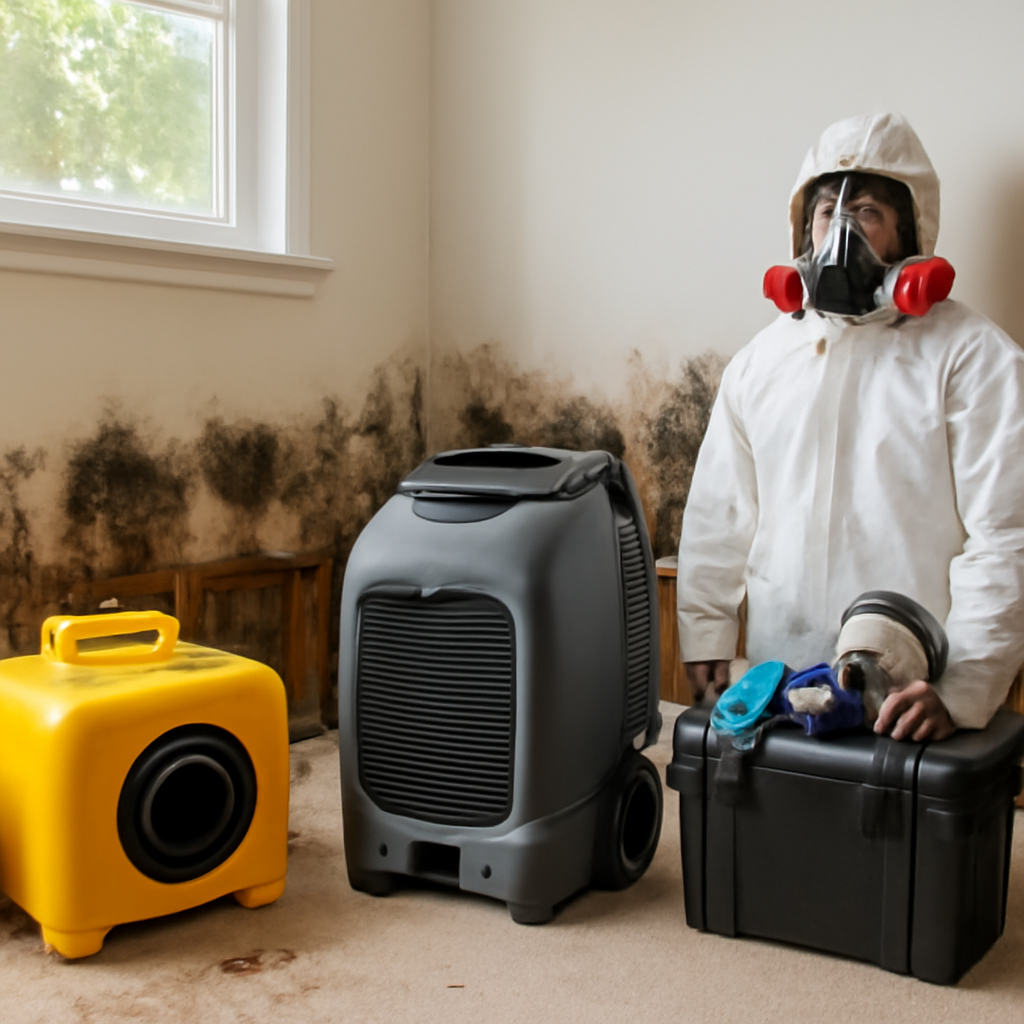
“Best mold remediation companies near me” is a search that rewards skepticism, because the company with the slickest ad is not always the one that fixes the problem. The best company is the one that diagnoses the moisture source, scopes the work clearly, and stands behind a result you can verify. This guide summarizes EPA and CDC guidance current as of 2026 and is educational only; consult your physician about symptoms and verify any company’s licensing and insurance directly before hiring.
Part of our Mold Removal & Remediation guide — start there for the full picture →
Is this mold, asbestos, or water damage? Get a free instant screen
Upload a clear photo of the suspect area. You'll get an instant AI screening opinion and what to do next. This is screening guidance, not a professional determination.
Screening guidance only. AI can be wrong. Confirm asbestos, mold type, or lead with lab testing or a licensed professional before acting.
What makes the best mold remediation company?
The best companies share a pattern: they investigate before they quote. A strong remediation firm identifies why the area is wet, defines a written scope, contains the work zone, removes or cleans affected materials, dries the space, and supports independent verification of the result. The EPA describes remediation as moisture-first, so a company that names a price before explaining the water source has skipped the foundation.
Three qualities reliably distinguish the best from the rest: verifiable credentials, independence from the testing party, and transparent, scope-based bidding. A company strong on all three is far more likely to deliver lasting results than one leading with the lowest number and the vaguest promise. The sections below show how to evaluate each.
Credentials that separate the best companies
Licensing requirements differ by state. Some states license or register mold remediators; others leave it to industry certification. The best companies carry current general liability insurance and, ideally, pollution-specific coverage, and they train technicians to recognized standards. Ask for proof, and confirm policies are active rather than lapsed.
Worker-safety practices reveal professionalism too. OSHA sets standards for respiratory protection and hazard handling, and a company that follows them tends to apply the same rigor to your home. The diligence parallels hiring any home inspection professional: verify credentials directly. For what a credible diagnosis should contain before remediation, our mold inspection and testing hub is a useful reference.
The independence question
The EPA and many consumer advocates recommend that the party testing for mold be separate from the party paid to remediate. A company that both tests and remediates has an incentive to find more mold and recommend more work. The best arrangement uses an independent inspector to diagnose and a separate contractor to clean up. On small, plainly visible jobs this matters less; on large or contested ones, it matters enormously, and the better companies acknowledge the tension rather than dismissing it.
How to compare companies and their bids
Gather at least three written estimates for any sizable job and compare them on scope rather than price alone. A complete bid states the affected area in square feet, the materials to be removed versus cleaned, the containment method, whether HEPA air scrubbers and negative pressure are used, the drying plan, and how the moisture source will be repaired.
A bid far below the others usually omits something the job needs, often containment or source repair. A bid far above without a larger scope deserves equal scrutiny. The best value is the estimate that matches the diagnosed problem, documented in enough detail that you understand what you are paying for.
What a thorough scope looks like
The best companies write scopes that read like plans. A good one identifies the moisture source and its repair, defines the containment boundary, lists materials for removal versus cleaning, specifies HEPA filtration and negative air pressure where warranted, and describes drying equipment and timeline. It also states whether post-remediation verification is included. A one-line scope with a single number is a sign to ask for more before committing.
Red flags even highly rated companies can show
Reviews do not immunize a company against bad practices. Watch for pressure to sign on the spot, inability or unwillingness to name the moisture source, refusal to provide a written scope, and demands for large upfront payment. Be wary of any guarantee to “remove all mold,” since spores exist naturally everywhere and the realistic goal is returning to normal background levels.
Scare tactics about “toxic black mold” are another flag; the CDC notes the cleanup response is the same regardless of species, so fear-based upselling is unwarranted. A company that both performs its own testing and quotes a large remediation off that test presents a conflict worth a second, independent opinion before you proceed.
What mold remediation costs
Cost scales with the size and accessibility of the growth and the materials removed. Small contained jobs in an open area are at the lower end, while multi-room growth, HVAC contamination, basement or crawl-space work, and extensive drywall and flooring removal climb significantly. Reconstruction and refinishing are typically separate from the remediation line item.
Ask about containment setup, equipment rental days, disposal fees, and any required testing, since these can move the total. For a structured view of how square footage and material removal drive pricing, our guide to basement mold remediation cost lays out the same cost logic that applies to most projects.
Getting real value
The best value is the appropriate scope at a fair price with clear documentation, not the cheapest bid. Insisting on a written scope tied to the moisture source, comparing three bids on that scope, and arranging independent verification on larger jobs guards against both overcharging and undersized work. A modest spend on an independent diagnosis often prevents a far larger overcharge on remediation.
The contract and warranty
Put everything in writing before work starts. The contract should restate the scope, the price, the timeline, payment terms tied to milestones rather than a large upfront sum, and a change-order process for conditions discovered mid-job. That process prevents surprise charges when a crew opens a wall and finds more than expected.
Ask about warranty. The best companies may warranty against regrowth in the treated area for a defined period, contingent on the moisture repair holding. Read the exclusions, since growth from a new or unrepaired leak typically falls outside coverage. Keep all documentation for insurance and any future sale of the home.
Health and safety expectations
Mold exposure can cause allergic reactions, asthma attacks, and irritation of the eyes, nose, and throat, with greater risk for people who have respiratory conditions or weakened immunity, according to the CDC. During active remediation, sensitive occupants should stay out of the work area, and containment should keep spores from reaching living space. The best crews use N95 or better respirators, gloves, and eye protection as standard practice.
For growth beyond roughly ten square feet, hidden growth inside walls, or HVAC contamination, the EPA recommends professional remediation because containment and HEPA filtration are needed to prevent cross-contamination. A company that treats these controls as optional is not among the best, whatever its star rating.
Front Range context
Colorado’s dry climate suppresses widespread surface mold compared with humid regions, but it does not remove the need for remediation. Finished basements, swamp-cooler moisture, ice-dam leaks, and plumbing failures create localized damp pockets across Denver-area homes, and these are the jobs the best Front Range companies handle most.
Because outdoor spore counts here are seasonally low, post-remediation clearance results stand out clearly against an outdoor control, making verification meaningful. A company familiar with regional construction and weather reads these conditions more accurately than one applying a humid-climate template.
How to read reviews and references critically
Online reviews are a starting point, not a verdict. A high average rating can reflect responsive customer service rather than technical quality, and the two are not the same. Read the detailed reviews, not just the star count, looking for specifics: did the company identify the moisture source, was the work documented, did the problem stay fixed months later? Vague praise tells you little; a review describing a contained job with verified results tells you a lot.
Ask for references from jobs similar to yours and actually call them. Useful questions include whether the final cost matched the estimate, whether the moisture source was correctly identified, and whether mold returned afterward. A company confident in its work will provide references readily. Be wary of a pattern of reviews complaining about surprise charges, returned mold, or pressure tactics, since those reflect the practices that cause real problems.
Comparing the scope, not just the sticker price
The most expensive mistake homeowners make is choosing on price without comparing scope. Two bids can differ by a wide margin simply because one includes containment, source repair, and verification while the other does not. Lay the bids side by side and check each against the same list: affected square footage, materials removed versus cleaned, containment method, HEPA filtration, drying plan, moisture source repair, and verification.
When a line item appears in one bid but not another, ask why. Sometimes the cheaper company genuinely found an efficiency; more often it omitted necessary work that will surface as a change order or a returning mold problem. The best company is the one whose scope matches the diagnosed problem at a fair price, documented clearly enough that you understand what each dollar buys. Spending modestly on an independent diagnosis first gives you a neutral scope to compare every bid against.
Contracts, payment, and warranty in practice
The contract is where promises become enforceable. It should restate the full scope, the price, the timeline, and a payment schedule tied to milestones rather than a large upfront sum. A fair structure might involve a modest deposit, a payment at completion of removal, and a final payment after drying and verification. Avoid any company demanding most of the cost before work begins.
The contract should also define a change-order process for conditions discovered mid-job, so additional charges require your approval rather than appearing on the final invoice. Read the warranty carefully: a warranty against regrowth in the treated area is meaningful only if the moisture source was repaired, and it typically excludes growth from a new or unrepaired leak. Keep every document, including the scope, photos, lab results, and verification, for insurance and for any future sale of the home.
Questions to ask before hiring
Bring the same questions to every estimate so you can compare answers. What is the moisture source and how will you repair it? Will you provide a written scope in square feet? How will you contain the area and filter the air? Is your testing independent from your remediation? What does your warranty cover and void? Can you show current liability and pollution insurance? How are payments structured? How a company answers, and how readily, often tells you more than its reviews. The best companies treat these questions as routine, because answering them clearly is part of how they do business.
The role of an independent diagnosis
The single most useful step before hiring any remediation company is an independent diagnosis. An inspector with no stake in the cleanup identifies the moisture source, documents the extent of growth, and produces a report you can hand to every bidder. This does two things: it grounds each bid in the same defined problem, and it removes the incentive for a company to find more mold than exists in order to enlarge the job.
The cost of an independent inspection is modest relative to a remediation, and it often pays for itself by preventing an inflated scope. With a neutral report in hand, you can compare companies on how well their proposed work matches the documented problem, rather than trusting each company’s self-interested assessment. The best companies welcome this arrangement, because confident, honest operators have nothing to fear from an independent baseline.
Specialized situations that narrow the field
Some jobs require capabilities not every company has, which narrows your list of candidates. HVAC contamination demands experience shutting down and cleaning systems without spreading spores through the ducts. Crawl-space and basement work requires comfort with confined, damp spaces and often with encapsulation. Mold following sewage or floodwater involves contaminated-water protocols beyond ordinary remediation.
For these situations, ask specifically about relevant experience and equipment, and weight it heavily in your choice. A general remediator may handle a bathroom-ceiling job well but lack the protocols for HVAC or sewage work. Matching the company’s demonstrated capability to your specific situation matters more than a high overall rating, because the best company for a simple job is not necessarily the best for a complex one.
After the work: verification and records
The job is not finished when the visible mold is gone; it is finished when an independent check confirms the result and you have the documentation to prove it. On larger jobs, independent verification, by someone other than the remediation company, re-inspects visually, confirms materials dried with moisture readings, and may collect clearance air samples against an outdoor control. This protects you from paying for incomplete work and confirms the moisture source was addressed.
Keep the full record: the diagnostic report, the scope, before-and-after photos, lab and verification results, and the final invoice. This package supports any insurance claim, answers a future buyer’s questions, and provides a baseline if growth ever recurs in the same area. Documentation that an independent professional verified success carries far more weight than a company’s own assurance, which is one more reason the best companies cooperate with independent verification rather than resisting it.
The record also informs any future moisture problem. If a new stain appears elsewhere later, the prior documentation lets a contractor rule out the treated area and focus on the new source, saving time and cost. Viewing the paperwork as a lasting home asset rather than disposable receipts is a small habit that pays off whenever water becomes an issue again, and it reinforces why the best companies build verification and documentation into the job from the start. For a future sale, that file also reassures buyers the problem was professionally resolved rather than concealed, which can ease an inspection contingency down the road. Buyers and their inspectors tend to react more calmly to a documented, verified remediation than to an unexplained patch of fresh paint, so the paperwork can protect both the sale and the price. In that sense, choosing the best company is not only about fixing today’s problem well but about creating a record that serves the home for years. The companies that treat documentation as standard, rather than something to be requested, tend to be the same ones that diagnose carefully and verify their work, because all three habits reflect a commitment to doing the job properly. When you weigh candidates, the willingness to produce a complete record is a useful proxy for the overall quality you can expect, since a company confident in its work has no reason to withhold the evidence of it.
More Questions About Hiring Local Mold Remediation Companies
How quickly should a mold remediation company respond?
A good mold remediation company typically responds to an inquiry within a day and can schedule a site assessment within a few days, with faster emergency response for active water damage. Fast response matters most when water is still present, since mold can begin growing on wet materials within roughly 24 to 48 hours. For mold that is old and dry, a short wait to collect multiple bids is reasonable. Slow replies, missed appointments or vague scheduling during the bid stage usually predict poor communication during the project.
Should I check a mold company’s licensing in my state?
Yes, check whether the state where the home is located licenses mold remediation, and verify the company’s license if it does. A minority of states regulate mold remediation directly, while many others rely on general contractor licensing or no licensing at all. The state licensing board’s website usually offers a search tool. Where no mold license exists, ask for proof of general liability insurance, pollution liability coverage, workers’ compensation and recognized industry certifications for the crew performing the work.
Can a mold remediation company help with an insurance claim?
Yes, many mold remediation companies help with insurance claims by documenting damage, sharing photos and moisture readings and preparing estimates in the format insurers use. That help is valuable, but the homeowner still controls the claim and should communicate directly with the insurer. Be cautious of companies asking for an assignment of benefits that lets them deal with the insurer without the homeowner’s involvement, and read any such form carefully before signing. Ask the insurer whether an adjuster must see the damage before work begins.
What should I do before a mold remediation crew arrives?
Before a mold remediation crew arrives, move furniture, valuables and personal items out of the work area and nearby rooms if this can be done without disturbing visible mold. Clear a path from the entrance to the work zone, arrange parking for equipment, and note where electrical outlets are. Turn off the HVAC system if the crew requests it. Pets and vulnerable occupants should stay away from the work area. Photograph the affected rooms beforehand to document condition for insurance and any later disputes.
References
- Mold Cleanup in Your Home — U.S. Environmental Protection Agency
- About Mold and Health — Centers for Disease Control and Prevention
- Mold Hazards and Worker Protection — Occupational Safety and Health Administration
- A Brief Guide to Mold, Moisture and Your Home — U.S. Environmental Protection Agency
Frequently asked questions
How do I find the best mold remediation company near me?
Look for verifiable credentials and insurance, independence from the testing party, and transparent scope-based bids. The best company diagnoses the moisture source before quoting and puts the full scope in writing, rather than leading with the lowest price.
How many quotes should I get?
Get at least three written estimates and compare them on scope, not price alone. A bid far cheaper than the others usually omits containment, source repair, or material removal the job actually requires.
Are companies that test and remediate trustworthy?
They can be, but the EPA recommends keeping testing independent from remediation to avoid a conflict of interest. On large or disputed jobs, use a separate inspector to diagnose and get an independent opinion before a big remediation.
Should a company guarantee to remove all mold?
No. Mold spores exist everywhere, so removing all of them is impossible. The realistic goal is returning to normal background levels, and a guarantee to remove all mold is a marketing red flag.
What should the contract include?
It should restate the scope, price, timeline, milestone-based payment, a change-order process, and any warranty with its exclusions. Avoid contracts demanding large upfront payment before work begins.
Do local mold remediation companies charge for estimates?
Many local mold remediation companies provide free estimates, while some charge a modest assessment fee, often credited toward the job if hired. A paid independent assessment from a separate mold inspector is a different service and usually produces a more neutral scope for comparing bids.
Is a national franchise or a local mold remediation company better?
Neither a national franchise nor a local mold remediation company is automatically better. Franchises may offer standardized processes and insurance-claim experience, while local firms may offer more flexibility. Judge each on credentials, scope quality, references, insurance and willingness to accept independent verification.
Can a mold remediation company also do the rebuild?
Many mold remediation companies also handle rebuilding drywall, flooring and finishes, which can simplify scheduling. Confirm the rebuild is priced separately, that it starts only after post-remediation verification passes, and that the company holds the contractor license required for construction in that state.
Front Range homeowners comparing remediation companies can get in touch through our contact page for an independent read on the moisture source and scope before they sign anything.