Best Deck Cleaner (2026): 7 Picks for Wood and Composite

The best deck cleaner depends on two things: what the deck is made of and what is actually on it. Gray, weathered wood needs a cleaner that lifts dead fibers and dirt without bleaching the wood white or raising fuzz. Composite decking needs something that removes the black and green spotting that grows in its surface texture without voiding a warranty. Mildew, tree sap and grill grease each respond to different chemistry. This guide compares seven cleaners by job, explains oxygen bleach versus chlorine bleach in plain terms, and covers how to clean before staining or painting without damaging the boards.
Part of our Structure & Exterior guide — start there for the full picture →
As an Amazon Associate we earn from qualifying purchases.
How we compared: we compared 14 current Amazon listings for deck and outdoor cleaners on what each listing states: active chemistry where named, surfaces approved, dilution, coverage, dwell time and plant-safety claims. We did not lab-test any cleaner or use it hands-on. Several listings are pack sizes or versions of one product, so the 14 listings cover nine product lines. Prices and availability change often, so check the current listing before buying.
Quick picks: the best deck cleaners by job
| Product | Best for | Key features | Price | Buy |
|---|---|---|---|---|
| Star Brite Deck and Fence Cleaner | Best oxygen bleach for wood |
| $29.99as of Nov 19, 2026 9:49 pm GMT+0000 | Buy now →Check current price |
| Simple Green Oxy Solve Outdoor | Best for pressure washers |
| $23.99as of Nov 19, 2026 9:49 pm GMT+0000 | Buy now →Check current price |
| DeckMAX Deck Cleaner Kit | Best for composite decking |
| $38.36as of Nov 19, 2026 9:49 pm GMT+0000 | Buy now →Check current price |
| 30 SECONDS Outdoor Cleaner | Best for mildew and algae stains |
| $11.96as of Nov 19, 2026 10:37 pm GMT+0000 | Buy now →Check current price |
| Home Armor Deck and Patio Wash | Best for decks plus stone patios |
| — | Buy now →Check current price |
| Star Brite Non-Skid Deck Cleaner | Best for painted and vinyl surfaces |
| $29.74as of Nov 19, 2026 10:37 pm GMT+0000 | Buy now →Check current price |
| 30 SECONDS with Spray Wand | Best no-mix sprayer |
| $38.49as of Nov 19, 2026 10:37 pm GMT+0000 | Buy now →Check current price |
Prices are Amazon’s listed prices as of the time shown and change often; check Amazon for today’s price. As an Amazon Associate we earn from qualifying purchases.
The 7 picks, compared listing by listing
1. Chlorine-Free Star Brite Home Deck and Fence Cleaner — Best Oxygen Bleach for Wood

Chlorine-free oxygenated bleach cleaner for wood, composite, vinyl and aluminum; preps wood for staining or sealing.
Check price on Amazon$29.99 as of Nov 19, 2026 9:49 pm GMT+0000 — prices change; see Amazon for current price.Why we like it
- Only listing that names oxygenated bleach chemistry
- States chlorine-free, solvent-free and phosphate-free
- Aimed at prep before stain or sealer
- Short 5 to 10 minute dwell time
| Specification | Details |
|---|---|
| Chemistry | Oxygenated bleach; chlorine-, solvent- and phosphate-free; biodegradable |
| Surfaces | Wood, composite, vinyl, aluminum |
| Targets | Graying, mold and mildew stains, embedded dirt |
| Dwell time | 5 to 10 minutes |
| Plant safety | Described as safe for plants and lawns |
| Size / model | 32 oz; model 51032 |
Star Brite 51032 — oxygenated bleach, chlorine-free, wood/composite/vinyl/aluminum, 5–10 min dwell, stain prep, 32 oz
The Only Listing That Names Its Bleach Type Outright
Fourteen listings on this shelf, and only this one says what kind of bleach it uses and that it contains no chlorine. Two Simple Green listings name peroxide, a related oxygen-based chemistry. The other listings describe what they remove but not their active ingredient. For wood, that distinction matters: oxygen-based cleaners lift graying and organic stains with less risk of turning wood blotchy or chalky, which is why they are the usual choice before staining.
The listing is explicit about that use. It calls the product a prep step for staining, sealing or restoration and says it removes graying and mildew stains without discoloration. It is also one of the few listings that names aluminum, useful for decks with aluminum railings.
The weak spot is quantity. A 32 oz bottle is small, and the listing does not state coverage or dilution. Check the label before buying for a large deck, because you may need several bottles.
Pros
- Oxygen bleach named; chlorine-free stated
- Built for pre-stain cleaning
- Works on wood, composite, vinyl and aluminum
Cons
- Small 32 oz bottle
- Coverage and dilution not stated
- Will not cut heavy grease like a degreaser
Check Star Brite Deck and Fence Cleaner price on Amazon
2. Simple Green Oxy Solve Total Outdoor Cleaner — Best for Pressure Washer Users

Peroxide-based concentrate for pressure washer or manual use on wood, composite, vinyl and concrete; up to 6,400 sq ft.
Check price on Amazon$23.99 as of Nov 19, 2026 9:49 pm GMT+0000 — prices change; see Amazon for current price.Why we like it
- Largest stated coverage on the shelf
- Peroxide chemistry named in the listing
- Only listing that claims EPA Safer Choice certification
- Works by pressure washer or by hand
| Specification | Details |
|---|---|
| Chemistry | Peroxide-based concentrate |
| Coverage | Up to 6,400 sq ft per bottle |
| Application | Pressure washer or manual |
| Surfaces | Wood, vinyl, concrete, brick, composite |
| Certification named | EPA Safer Choice |
| Size / weight | 128 fl oz; 9.27 lb |
Simple Green Oxy Solve Total Outdoor — peroxide concentrate, up to 6,400 sq ft, pressure washer or manual, Safer Choice
The Only Listing That Claims an EPA Safer Choice Certification
Safer Choice is an EPA program that helps buyers find products containing ingredients that are safer for human health and the environment. This Oxy Solve listing is the only one on the shelf that names that certification. Many other listings say “eco-friendly” or “plant safe,” but those are manufacturer descriptions, not a third-party program. You can confirm a product’s status on EPA’s Safer Choice product search.
It also states the highest coverage on the shelf, up to 6,400 sq ft, tied with its Deck and Fence sibling listing, which uses the same peroxide concentrate. DeckMAX, the next highest, states 1,500 sq ft. That makes Oxy Solve a strong choice for someone cleaning a large deck, a fence line and a driveway in one weekend.
The listing does not give a dilution ratio for manual use or a dwell time. A pressure washer also brings its own risk to soft wood; see the pressure-washing section below before using one.
Pros
- Covers up to 6,400 sq ft
- Safer Choice certification named
- Peroxide chemistry stated
Cons
- Dilution and dwell time not in listing
- Best value needs a pressure washer
- Not specific about mildew removal
Check Simple Green Oxy Solve Outdoor price on Amazon
3. DeckMAX Premium Deck Cleaner Kit — Best for Composite Decking

Concentrated composite and wood deck cleaner for black and green staining; covers 1,500 sq ft; brush included.
Check price on Amazon$38.36 as of Nov 19, 2026 9:49 pm GMT+0000 — prices change; see Amazon for current price.Why we like it
- Names Trex, TimberTech and Fiberon by brand
- Targets black and green spotting on composites
- Natural-bristle scrub brush included
- Zero VOCs and no harsh solvents claimed
| Specification | Details |
|---|---|
| Surfaces | Composite (Trex, TimberTech, Fiberon named) and wood |
| Targets | Black and green staining, mold, grime, ground-in dirt and grease |
| Coverage | Up to 1,500 sq ft |
| Kit | 64 fl oz concentrate plus natural-bristle scrub brush |
| Application | Manual scrubbing or with a pressure washer |
| Chemistry | Not named; described as zero VOC and solvent-free |
DeckMAX WCC — composite + wood deck cleaner, 1,500 sq ft, natural-bristle brush included, zero VOC claim, 64 oz
The Only Kit That Includes a Brush
Nine of the 14 listings mention composite decking, so composite compatibility alone is not rare. DeckMAX stands out in two ways. Its listings are the only ones that name three composite brands, Trex, TimberTech and Fiberon. And this kit version is the only listing on the shelf that ships with a scrub brush. A second DeckMAX listing sells the same concentrate without the brush.
Composite boards have embossed grain that traps dirt and organic growth, and a soft brush is usually the right tool for it. Many composite makers caution against high-pressure washing that can scar the surface, so a cleaner designed to work with brushing is a practical fit.
The listing does not name its active ingredient, which makes it harder to compare against oxygen bleach products. It also calls itself “recommended by manufacturers,” without saying which. Check your decking maker’s care guide for approved cleaners before using any product, since some warranties depend on it.
Pros
- Names major composite brands
- Brush included in the kit
- 1,500 sq ft from 64 oz
Cons
- Active chemistry not disclosed
- “Manufacturer recommended” claim is vague
- Dilution ratio not stated
Check DeckMAX Deck Cleaner Kit price on Amazon
4. 30 SECONDS Outdoor Cleaner Concentrate (1 Gallon) — Best for Mildew and Algae Stains
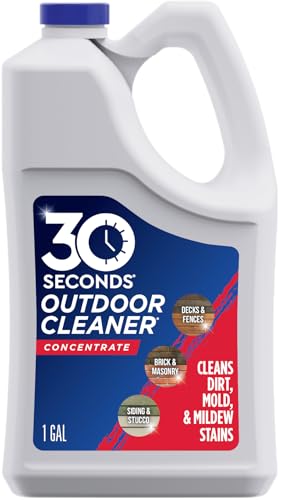
Concentrate for mold, mildew, dirt and grime stains on decks, composite and stained wood; mix 1 to 1 with water.
Check price on Amazon$11.96 as of Nov 19, 2026 10:37 pm GMT+0000 — prices change; see Amazon for current price.Why we like it
- Clear 1 to 1 dilution ratio stated
- Names stained and composite surfaces
- Plant and lawn safe when used as directed
- Same product cleans siding, gutters and fences
| Specification | Details |
|---|---|
| Form | Concentrate; mix 1 to 1 with water |
| Targets | Stains from mold, mildew, dirt and grime |
| Surfaces | Decks, composite, stained surfaces, concrete, brick, siding, canvas, painted surfaces |
| Plant safety | Safe around landscaping when used as directed; breaks down once rinsed into soil |
| Chemistry | Not named in listing |
| Size / model | 1 gallon; 1G30S |
30 SECONDS 1G30S — outdoor stain cleaner concentrate, 1:1 dilution, decks/composite/stained wood, plant-safe as directed
The Only Concentrate That States an Exact Dilution Ratio
Most concentrates on the shelf either leave dilution to the label or let you choose it. This 30 SECONDS gallon states a 1 to 1 mix, which makes it easy to calculate how much you need. Its three-pack sibling adds a coverage figure: one gallon of concentrate cleans up to 200 sq ft of porous surface and up to 600 sq ft of non-porous surface. Wood decking counts as porous, so plan on the lower number.
It is also the most explicit about previously stained surfaces, naming stained decks alongside composite. That makes it a good choice for maintenance cleaning between stain coats, when the goal is to remove green or black growth without stripping the finish.
Remember what “stain remover” means here. The EPA’s mold guidance notes that dead mold can still cause allergic reactions in some people, so removing growth matters, not only killing it. Rinse thoroughly and brush stubborn spots.
Pros
- Exact 1 to 1 dilution
- Safe for stained and composite decks per listing
- Plant-safe as directed
Cons
- Active chemistry not named
- Porous coverage is modest per gallon
- May need repeat treatment for heavy growth
Check 30 SECONDS Outdoor Cleaner price on Amazon
5. Home Armor Deck and Patio Wash (1 Gallon) — Best for Decks Plus Stone Patios

Deck and patio wash for wood, composite, concrete and stone; spray at chosen dilution, wait 10 minutes, rinse.
Check price on AmazonWhy we like it
- Covers wood, composite, concrete and stone
- Simple spray, wait and rinse routine
- No scrubbing required per listing
- Plant-safe when used as directed
| Specification | Details |
|---|---|
| Surfaces | Wood and composite decks, concrete, stone |
| Targets | Dirt and grime stains |
| Method | Pour into a sprayer at chosen dilution; spray; wait 10 minutes; rinse |
| Plant safety | Rinse plants before and after; safe around plants as directed |
| Chemistry | Not named in listing |
| Size / model | 1 gallon; HA505 |
Home Armor HA505 — deck and patio wash, wood/composite/concrete/stone, 10-minute dwell, rinse, 1 gal
The Only Home Armor Version Without Cedar and Metal Warnings
Three Home Armor listings appear on the shelf. Two of them, the Outdoor Cleaner+ hose-end bottle and the Outdoor Cleaner concentrate, warn against use on cedar or redwood less than two years old and against contact with metal, fabrics and vegetation. Warnings like those usually signal a stronger oxidizing chemistry. This Deck and Patio Wash carries no such warnings in its listing and is framed as a routine maintenance wash.
That makes it the gentler Home Armor option for a deck that runs into a flagstone or concrete patio, which is a common Front Range layout. One product covers both surfaces.
The trade-off is strength. The listing describes lifting dirt and grime, not mold or mildew, so heavy organic growth may need one of the targeted cleaners above.
Pros
- Wood, composite, concrete and stone
- No cedar or metal warnings in listing
- Short 10-minute dwell
Cons
- Not aimed at mold or mildew
- Dilution left to the user
- Chemistry not disclosed
Check Home Armor Deck and Patio Wash price on Amazon
6. Marine-Grade Star Brite Non-Skid Deck Cleaner — Best for Painted and Vinyl Surfaces

Boat deck cleaner that leaves a UV protective coating; safe for fiberglass, vinyl, painted surfaces and composite decks.
Check price on Amazon$29.74 as of Nov 19, 2026 10:37 pm GMT+0000 — prices change; see Amazon for current price.Why we like it
- Leaves a protective coating that repels dirt
- Rated for painted, vinyl, rubber and metal surfaces
- Also named for composite and Trex decks
- Wet, apply, light scrub, rinse
| Specification | Details |
|---|---|
| Type | Non-skid deck cleaner and protectant |
| Surfaces | Fiberglass, vinyl, rubber, plastic, metal, painted surfaces; composite and Trex decks |
| Protection | Leaves a coating described as repelling dirt, stains and UV |
| Method | Wet deck, apply, scrub lightly, rinse |
| Size / origin | 1 gallon; made in the USA |
Star Brite 085900N — non-skid deck cleaner and protectant, painted/vinyl/fiberglass/composite, UV coating, 1 gal
The Only Cleaner That Leaves a Protective Coating Behind
Two Star Brite Non-Skid listings, this gallon and a 32 oz bottle, are the only cleaners on the shelf that describe leaving a protective coating. That is useful on a painted deck, a vinyl or PVC deck, or a painted porch floor, where the goal is to clean the surface without stripping it and to slow down the next round of dirt.
It is designed for boat decks, and the listing does not name bare wood. That is a real limitation: a coating left on bare wood could interfere with a stain or sealer you apply later. Use it for maintenance on painted, vinyl and composite surfaces, not as a pre-stain prep for wood.
Pros
- Leaves a dirt- and UV-repelling coating
- Safe for painted and vinyl surfaces
- Gallon size for larger decks
Cons
- Bare wood not named as a surface
- Not for pre-stain prep
- Coverage not stated
Check Star Brite Non-Skid Deck Cleaner price on Amazon
7. 30 SECONDS Mold and Mildew Stain Remover with Battery Spray Wand — Best No-Mix Sprayer
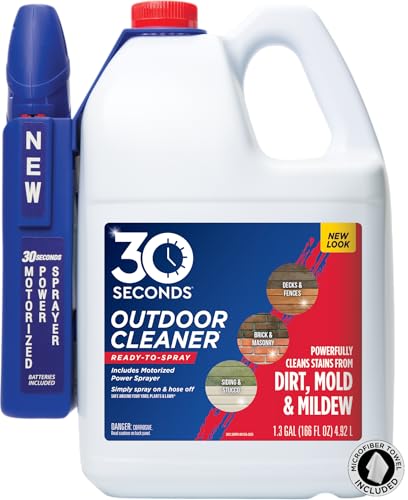
Ready-to-use 1.3 gallon outdoor cleaner with a battery-powered spray wand for decks, siding, fences and driveways.
Check price on Amazon$38.49 as of Nov 19, 2026 10:37 pm GMT+0000 — prices change; see Amazon for current price.Why we like it
- Ready to use, nothing to mix
- Battery wand means no pumping
- Targets algae, mold, mildew and moss
- Plant and lawn safe as directed
| Specification | Details |
|---|---|
| Form | Ready to use, 1.3 gallons |
| Applicator | Battery-powered spray wand included |
| Targets | Algae, mold, mildew, moss, dirt and grime stains |
| Surfaces | Decks, composite, stained surfaces, siding, fences, concrete, stucco |
| Method | Spray on, hose off |
| Weight / model | 11.5 lb; 30S149ZBP |
30 SECONDS 30S149ZBP — ready-to-use outdoor stain remover, 1.3 gal, battery spray wand, decks/composite/siding
The Only Listing With a Powered Applicator
Several listings come with hose-end sprayers, and the 30 SECONDS three-pack includes one. This is the only listing that includes a battery-powered wand, so there is nothing to pump and no mixing at the hose. For a homeowner who wants to treat a deck, its railings and a north-facing fence in one afternoon without a pressure washer, that is the most convenient setup here.
The convenience has limits. A ready-to-use formula is more water than product, so 1.3 gallons will not go as far as the concentrated gallon in pick 4. The listing does not state coverage. As with the concentrate, the chemistry is not named.
Pros
- Powered wand, no pumping
- No mixing required
- Broad list of outdoor surfaces
Cons
- Coverage not stated
- Less product per dollar than concentrate
- Chemistry not disclosed
Check 30 SECONDS with Spray Wand price on Amazon
Oxygen bleach versus chlorine bleach on a deck
Most deck-cleaning advice comes down to this choice, and the shelf reflects it: only three listings name an oxygen-based chemistry (Star Brite Home and the two Simple Green Oxy Solve listings), and none names chlorine as an ingredient.
Oxygen bleach (sodium percarbonate or hydrogen peroxide)
Oxygen-based cleaners release oxygen in water, which loosens dirt, graying and organic stains. On wood, they are generally regarded as the gentler option: they brighten without the harsh whitening that chlorine can cause, and they rinse away cleanly before a stain or sealer. They tend to need a bit more dwell time and some scrubbing.
Chlorine bleach (sodium hypochlorite)
Household chlorine bleach removes mildew discoloration quickly, which is why it shows up in many do-it-yourself recipes. On wood it brings drawbacks that finish makers often warn about: it can leave wood looking washed out or blotchy, it can weaken surface fibers and leave them fuzzy, and residue left in the wood can interfere with a new finish. It also corrodes metal fasteners and connectors and can harm nearby plants.
There is a safety issue too. The EPA’s mold guidance warns never to mix chlorine bleach with cleaning products that contain ammonia, because toxic fumes can result. If you use any bleach-based cleaner, do not combine it with other products, keep the area ventilated and wear gloves and eye protection.
Reading the warnings
When a listing does not name its chemistry, its warnings are a clue. Cleaners that caution against use on young cedar or redwood, on metal, or near vegetation are usually stronger oxidizers. Those can work well on concrete or siding but deserve a test patch on a deck. For more on choosing products for organic growth, see our guide to mold and mildew cleaners.
Cleaning wood versus composite decking
Wood
Wood decks need two things from a cleaner: removal of dirt and organic growth, and removal of the gray, sun-damaged surface layer before a new finish. Oxygen bleach cleaners do both reasonably well. Some refinishers follow cleaning with a separate wood brightener to neutralize the cleaner and restore color; that step is optional for most homeowners.
Composite
Composite and PVC decking does not need brightening and should not be sanded or stripped. The main problems are mildew spotting, pollen, grease and the white or gray film that can form on some older composites. Use a cleaner approved by the decking manufacturer, a soft brush and low pressure if you use a washer at all. Nine of the 14 listings on this shelf name composite as a suitable surface.
Our main deck cleaner guide covers homemade and commercial options in more depth.
Pressure washing without damaging the deck
A pressure washer speeds up rinsing but is the most common way homeowners damage soft wood decks. High pressure can cut into the soft earlywood between grain lines, leave lap marks and raise a fuzzy surface that needs sanding.
- Use the lowest pressure that rinses the cleaner away, and a wide fan tip.
- Keep the tip moving along the length of the boards, not across them.
- Hold the wand a consistent distance from the surface and never aim it at one spot.
- Avoid pressure washing composite unless the manufacturer allows it, and stay within its limits.
- Let the deck dry for at least the time the stain or paint label requires before refinishing, often two days or more.
Older decks: treated wood and safety
Decks built before 2004 may be framed or decked with CCA-treated lumber. The EPA says manufacturers stopped producing CCA-treated wood for homeowner uses at the end of 2003 and that existing structures do not have to be removed. Its guidance for older CCA decks is to apply a penetrating coating, such as an oil- or water-based stain, on a regular basis, which may reduce leaching. That makes routine cleaning and resealing a sensible maintenance habit on an older deck. Wash hands after handling the wood, and never burn scraps.
Cleaning day is also a good moment to look at the structure: loose railings, popped fasteners, soft boards, rusted hangers and a ledger board without flashing where the deck meets the house. If you find soft wood or spongy spots while scrubbing, our structure and exterior inspection guide explains what a professional evaluation covers. The ASHI Standard of Practice includes attached decks, balconies, steps and their railings in a standard home inspection.
Front Range timing and conditions
Along the Front Range, the cleaning window is usually late spring, after the last hard freeze and before the hottest weeks, or early fall. A few local considerations:
- Clean on an overcast, mild day. Strong sun at altitude dries cleaners on the boards before they can work and before they are rinsed, which can leave streaks.
- Pre-wet nearby plants and rinse them again afterward, even with plant-safe products. Several listings on the shelf include that step in their directions.
- North-facing decks and areas under trees grow the most mildew and algae; treat those first and expect to repeat yearly.
- Winter de-icers tracked onto decks can leave residue. Rinse them off in spring before cleaning.
For a broader comparison of products for organic growth on outdoor surfaces, see our roundup of mold cleaners. Buying a home with a weathered deck and want to know whether it needs cleaning or repair? Reach out through our contact page to connect with a vetted Front Range inspector.
Frequently asked questions
What is the best deck cleaner for wood decks?
For most wood decks, an oxygen bleach or peroxide-based cleaner is the safest starting point, especially before staining. It lifts graying and mildew stains with less risk of blotchy whitening than chlorine bleach. Rinse thoroughly and let the wood dry fully before applying a finish.
Can I use chlorine bleach to clean my deck?
Chlorine bleach removes mildew stains quickly but can leave wood washed out, weaken surface fibers and corrode metal fasteners. Never mix it with ammonia-containing products; EPA warns the combination can produce toxic fumes. An oxygen bleach cleaner is usually the better choice for wood.
What should I use to clean a composite deck?
Use a cleaner your decking manufacturer approves, a soft brush and low water pressure. Many current cleaners name composite surfaces, and some name specific brands such as Trex, TimberTech and Fiberon. Avoid sanding or harsh stripping products on composite boards.
Should I pressure wash my deck before staining?
A pressure washer can help rinse, but high pressure can gouge soft wood and raise fuzzy fibers. Use the lowest effective pressure with a wide fan tip, keep it moving along the boards, and let the deck dry for the time the stain label requires before applying finish.
How often should a deck be cleaned?
Most decks benefit from a cleaning once a year, usually in spring, with a quick rinse whenever debris builds up. Shaded and north-facing decks may need attention more often because mildew and algae grow faster there. Clean before every restain or repaint.
Will deck cleaner kill plants and grass?
Some deck cleaners, especially chlorine bleach products, can harm plants and grass. Wet plants before and after cleaning, cover them with plastic sheeting during application, and rinse thoroughly. Oxygen bleach cleaners are generally gentler but still need care.
How long should a deck dry after cleaning before staining?
A wood deck typically needs about 24 to 48 hours of dry weather after cleaning before staining, and sometimes longer in humid conditions. Check the stain label, as some products specify moisture content limits for the wood.
Can deck cleaner remove gray weathered wood?
Yes, deck cleaners combined with a wood brightener can remove much of the gray, weathered layer and restore a lighter wood tone. Heavily weathered wood may also need light sanding to fully restore the surface before staining.
More Questions About Deck Cleaners
How much does professional deck cleaning cost?
Professional deck cleaning typically costs a modest amount per square foot, with industry estimates often placing a basic clean of an average-size deck in the low hundreds of dollars, and more when stripping old finish, brightening wood, or restaining are included. Prices vary by deck size, condition, railings, and stairs. Composite deck cleaning usually costs less than wood restoration. Ask whether the quote includes protecting plants, rinsing, and any wood brightener needed after cleaning.
What is a wood deck brightener and do you need one?
A deck brightener is usually an oxalic or citric acid product applied after cleaning to restore wood’s natural color, neutralize alkaline cleaners, and remove gray tannin stains. It is especially useful after oxygen bleach or stripper cleaners and before staining, since it helps the stain absorb evenly. Not every deck needs one, but weathered gray wood and decks with iron or tannin stains benefit. Wear gloves and eye protection, rinse well, and protect nearby plants from runoff.
Can you clean a deck without a pressure washer?
Yes, a deck can be cleaned effectively without a pressure washer by applying a deck cleaner, letting it dwell, scrubbing with a stiff brush or push broom, and rinsing thoroughly with a garden hose. This method is gentler on soft wood and composite boards and avoids the fuzzing and gouging that pressure washers can cause. Oxygen bleach cleaners work well with brush scrubbing. It takes more effort but gives good results for most decks.
How do you remove mildew and algae from a deck?
Mildew and algae on a deck usually come off with an oxygen bleach or mildew cleaner, scrubbing, and a thorough rinse. Shady, damp areas grow algae fastest. Trim plants for better sunlight and airflow, keep leaves and debris off boards, and make sure water drains between boards. Persistent dark staining can be treated with a dedicated mildew stain remover. Recurring growth may mean the deck stays wet too long, which also increases rot risk in wood decks.
References
- A Brief Guide to Mold, Moisture and Your Home — U.S. Environmental Protection Agency
- Safer Choice — U.S. Environmental Protection Agency
- Chromated Arsenicals (CCA) — U.S. Environmental Protection Agency
- ASHI Standard of Practice — American Society of Home Inspectors