Best Concrete Patch (2026): 6 Picks for Spalls, Holes and Steps
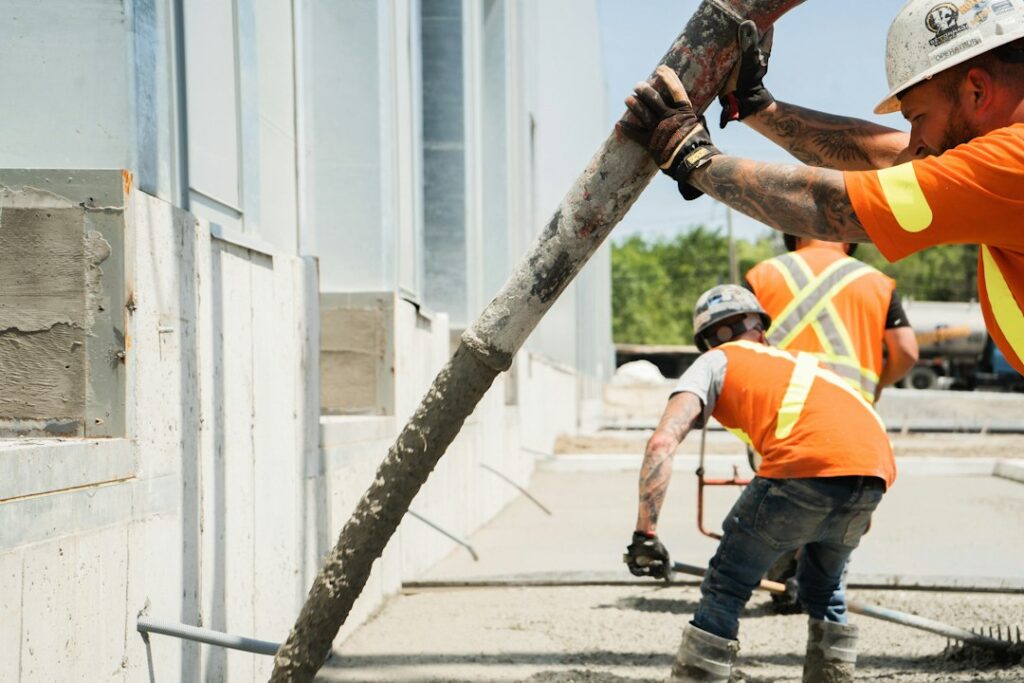
The best concrete patch is not the same product as a crack filler. Patches rebuild missing concrete: the chipped edge of a front step, a pothole in a garage floor, a spalled patch of driveway where salt and frost have popped off the surface. That means depth, bond and the ability to hold an edge matter more than flexibility. On the Front Range, a patch also has to survive the conditions that caused the damage in the first place, which is repeated freezing and thawing with de-icing salt on top. This guide sorts patches by how deep they go, how they bond, how fast they take traffic and where they belong, then explains when a damaged slab is a resurfacing or replacement job.
Part of our Structure & Exterior guide — start there for the full picture →
As an Amazon Associate we earn from qualifying purchases.
How we compared: we compared 11 current Amazon concrete patch listings on what each listing states: product type, maximum depth, minimum application temperature, set and cure times, traffic times, surface finish and whether it can be painted. One listing is a thin crack-sealing caulk, which we covered separately in our crack filler roundup and left out of these picks. Several listings are the same patch in different sizes. We did not apply or test any of these products. Prices and availability change often, so check the current listing before buying.
Quick picks: the best concrete patches by repair
| Product | Best for | Key features | Price | Buy |
|---|---|---|---|---|
| Rust-Oleum Pourable Concrete Patch | Deep holes and spalls |
| $35.98as of Oct 20, 2026 9:53 pm GMT+0000 | Buy now →Check current price |
| DAP Concrete and Mortar Repair | Step edges and spot leveling |
| $11.98as of Oct 20, 2026 9:53 pm GMT+0000 | Buy now →Check current price |
| Sika Sikacryl Ready-Mix Patch | Textured, broom-finished surfaces |
| $9.99as of Oct 20, 2026 9:53 pm GMT+0000 | Buy now →Check current price |
| Rust-Oleum Concrete Patch and Repair | High-strength epoxy repairs |
| $37.39as of Oct 20, 2026 9:53 pm GMT+0000 | Buy now →Check current price |
| Quikrete Vinyl Concrete Patch | Bulk shallow repairs |
| $25.36as of Oct 20, 2026 9:53 pm GMT+0000 | Buy now →Check current price |
| Red Devil 0641 Concrete Patch | Large premixed job, light gray |
| $43.06as of Oct 20, 2026 9:53 pm GMT+0000 | Buy now →Check current price |
Prices are Amazon’s listed prices as of the time shown and change often; check Amazon for today’s price. As an Amazon Associate we earn from qualifying purchases.
The six picks, compared listing by listing
1. Rust-Oleum Pourable Concrete Patch 5 Lb — Best for Deep Holes and Spalls
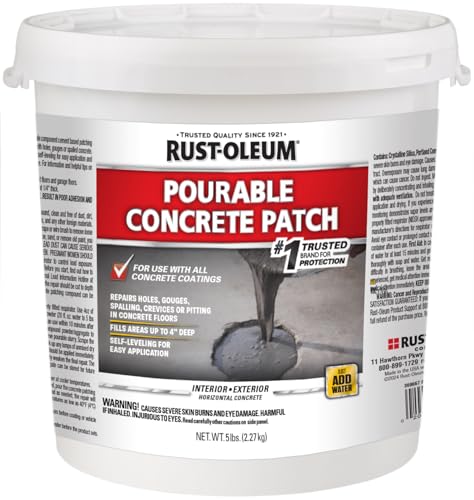
Add-water pourable patch that fills holes, spalls and gouges up to 4 in deep in one pour; vehicles in about 3 hours.
Check price on Amazon$35.98 as of Oct 20, 2026 9:53 pm GMT+0000 — prices change; see Amazon for current price.Why we like it
- Up to 4 inches deep in a single application
- Foot traffic in 1 hour, vehicles in 3
- Sets in temperatures as low as 40 F
- Smooth pourable mix self-levels into holes
| Specification | Details |
|---|---|
| Type | Add-water, mix-and-pour cementitious patch |
| Depth | Up to 4 in in a single application |
| Traffic | Foot traffic in 1 hour; vehicle traffic in as little as 3 hours |
| Temperature | Sets at temperatures as low as 40 F |
| Uses | Large cracks, holes, spalls, gouges and crevices in floors; interior and exterior |
| Size | 5 lb pail |
Rust-Oleum 369667 — pourable add-water patch, up to 4 in deep, foot 1 hr, vehicles 3 hr, sets to 40 F, 5 lb
The Only Patch That States a Multi-Inch Depth Limit
Only two of the 11 listings state a depth figure. DAP’s mortar repair works in quarter-inch layers. This Rust-Oleum pourable is the only one that states a multi-inch limit, up to 4 inches in a single application. That is the difference between filling a shallow divot and rebuilding a real pothole in a garage floor or a deep spall in a driveway.
It also has the fastest stated vehicle traffic time on the shelf, as little as 3 hours, and it is one of two listings that name a minimum application temperature, 40 F. For a fall repair on the Front Range that has to be driven on the same evening, those three figures together make it the default pick.
The limits come with the format. A pourable mix self-levels, so it suits horizontal surfaces and will not hold a vertical step edge without forms. It is a mix-with-water product, so you need a bucket, a drill paddle or trowel and clean water. The listing does not mention freeze-thaw or salt resistance; none of our six picks does.
Pros
- Deepest stated single-pour repair
- Vehicles in about 3 hours
- Sets down to 40 F
Cons
- Horizontal surfaces only without forms
- Must be mixed with water
- No freeze-thaw or salt claim
Check Rust-Oleum Pourable Concrete Patch price on Amazon
2. DAP Concrete and Mortar Repair 32 Oz — Best for Step Edges and Spot Leveling

Gray ready-to-use patch for cement and masonry that states cure time by depth and sets in 3 to 5 hours above 40 F.
Check price on Amazon$11.98 as of Oct 20, 2026 9:53 pm GMT+0000 — prices change; see Amazon for current price.Why we like it
- States cure time per quarter inch of depth
- Works on concrete and mortar joints
- Sets in 3 to 5 hours; paintable in 2 to 4
- Will not sink or shrink, per the listing
| Specification | Details |
|---|---|
| Type | Ready-to-use concrete and mortar repair |
| Cure | 48 hours for a 1/4 in repair; add 48 hours per additional 1/4 in |
| Set / paint | Sets in 3 to 5 hours; latex paint after 2 to 4 hours, oil paint after 24 |
| Temperature | Apply above 40 F |
| Depth | For repairs thicker than 1/2 in, refer to product instructions |
| Size | 32 oz |
DAP 7079834611 — ready-to-use concrete/mortar repair, 48-hr cure per 1/4 in, sets 3-5 hr, above 40 F, paintable, 32 oz
The Only Listing That Ties Cure Time to Repair Depth
Most listings give one cure time regardless of thickness. This DAP repair is the only one that explains how depth changes it: 48 hours for a quarter-inch repair, plus another 48 hours for each additional quarter inch. That is honest and useful, because a thick patch that looks dry on top can still be soft underneath. It also tells you this product is built for thin, layered work, not deep pours.
It is one of two listings that name mortar, making it the right choice for the chipped nose of a concrete step, a broken corner on a stoop or a gap where mortar has fallen out of a brick step. It is also one of three paintable products here.
For anything over half an inch, the listing points you to the product instructions, which in practice means building up in layers. For deep holes, the Rust-Oleum pourable is faster.
Pros
- Depth-based cure guidance
- Good on steps, corners and mortar
- Paintable, with stated wait times
- Minimum temperature stated
Cons
- Slow cure on thick repairs
- Layering needed beyond 1/2 in
- Small 32 oz size
Check DAP Concrete and Mortar Repair price on Amazon
3. Sika Sikacryl Ready-Mix Concrete Patch — Best for Textured, Broom-Finished Surfaces

Ready-to-use acrylic patch, textured to blend with existing concrete, for spalls and cracks on slabs, walls and walks.
Check price on Amazon$9.99 as of Oct 20, 2026 9:53 pm GMT+0000 — prices change; see Amazon for current price.Why we like it
- Only patch described as textured to blend in
- Repairs spalls on slabs, walls and walkways
- Premixed acrylic, water cleanup
- Sets in a few hours, full cure in about a day
| Specification | Details |
|---|---|
| Type | Ready-to-use acrylic concrete repair patch |
| Finish | Gray, textured |
| Uses | Spalls and cracks in masonry; slabs, walls, walkways and sidewalks |
| Cure | Sets in a few hours; full cure in about a day |
| VOC | Listing says it follows VOC regulations |
| Size | 1 qt |
Sika Sikacryl 472189 — premixed acrylic patch, gray textured, spalls on slabs/walls/walks, ~1-day cure, 1 qt
The Only Patch That Says It Is Textured to Match the Surface
Most premixed patches dry smooth, which leaves a slick, obvious spot on a broom-finished sidewalk or driveway. Sika’s listing is the only one of the 11 that describes a textured patch made to blend with the existing surface. On front walks and porches, where appearance matters, that is the reason to choose it.
It is also the only listing that names walls along with slabs and sidewalks, so it can handle a spalled patch on a foundation wall above grade or the face of a retaining wall. It is applied with a putty knife or trowel straight from the container.
The listing does not state a depth limit, a traffic time or a temperature range. Treat it as a surface repair for spalls a fraction of an inch to perhaps half an inch deep, and use a pourable for anything deeper.
Pros
- Textured finish blends with broom finish
- Works on walls as well as slabs
- Premixed, water cleanup
Cons
- No depth or traffic time stated
- No temperature range stated
- Quart size limits big jobs
Check Sika Sikacryl Ready-Mix Patch price on Amazon
4. Rust-Oleum Concrete Patch and Repair Epoxy — Best High-Strength Repair

Two-part industrial epoxy patch that bonds permanently without shrinking and can be painted or coated in 8 hours.
Check price on Amazon$37.39 as of Oct 20, 2026 9:53 pm GMT+0000 — prices change; see Amazon for current price.Why we like it
- Only two-part epoxy on the shelf
- Bonds permanently without shrinking or cracking
- Can be painted or coated in 8 hours
- Works under any concrete coating, per listing
| Specification | Details |
|---|---|
| Type | Two-part industrial-strength epoxy |
| Strength claim | Creates a surface the listing calls stronger than concrete |
| Recoat | Paint or coat after 8 hours |
| Uses | Cracks and holes, indoor and outdoor |
| Odor | No unpleasant odors, per listing |
| Size | 24 fl oz |
Rust-Oleum 301012 — two-part epoxy patch, high-strength bond, no shrink, coat in 8 hr, 24 fl oz
The Only Epoxy Patch, Built for Floors That Will Be Coated
Every other patch here is cement-based, acrylic or vinyl. This Rust-Oleum is the only two-part epoxy. Epoxy bonds strongly to clean concrete and cures hard, which is why it is the standard repair under garage floor coatings: holes and gouges filled with epoxy do not telegraph through the finish or break loose under hot tires.
The listing says it works with any concrete coating and can be painted or coated in 8 hours, so you can patch and coat a garage floor on the same weekend. It is one of three paintable products on the shelf.
Epoxy has drawbacks outdoors. It is rigid and does not breathe, so on an exterior slab that wicks moisture or moves with frost it can debond at the edges. It also must be mixed in the correct ratio and used within its working time. Use it indoors and on garage floors; use a cementitious patch outside.
Pros
- Only epoxy option
- Strong bond, no shrinkage
- Coat in 8 hours
Cons
- Rigid, less suited to exterior slabs
- Two-part mixing required
- Small 24 oz size
Check Rust-Oleum Concrete Patch and Repair price on Amazon
5. Quikrete Vinyl Concrete Patch — Best for Bulk Shallow Repairs
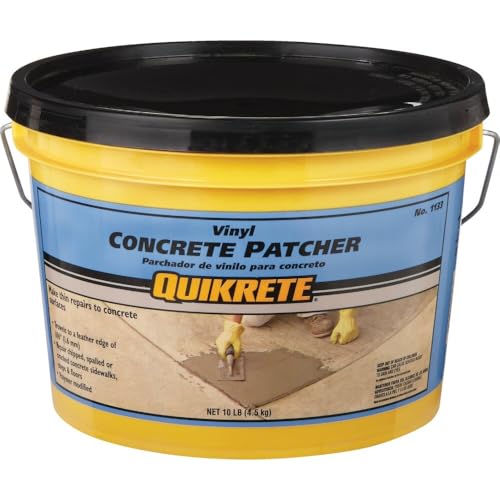
Vinyl-modified ready-mix patch paste in an 11 lb pail for cracks, holes and surface imperfections; made in the USA.
Check price on Amazon$25.36 as of Oct 20, 2026 9:53 pm GMT+0000 — prices change; see Amazon for current price.Why we like it
- Largest container on the shelf by weight
- Vinyl-modified for shallow, feathered repairs
- Water-resistant formula, indoor and outdoor
- Made in the USA
| Specification | Details |
|---|---|
| Type | Vinyl concrete patch paste |
| Uses | Cracks, holes, surface imperfections on driveways, sidewalks, patios |
| Formula | Water-resistant, indoor and outdoor |
| Size | Title says 10 lb; bullets say 11 lb pail |
| Origin | Made in the USA |
| Depth / cure | Not stated in listing |
Quikrete 113311 — vinyl concrete patch, water-resistant, driveways/walks/patios, 10-11 lb pail, made in USA
The Most Material per Container, for Spreading Thin
At 10 to 11 pounds, this is the largest container on the patch shelf by stated weight. Vinyl concrete patch is traditionally used for shallow repairs that can be feathered to a thin edge, such as filling surface pits, smoothing a rough patch of walk or leveling a low spot before a resurfacer. Having a full pail on hand makes sense when a slab has many small defects rather than one big hole.
It is one of four listings that state US manufacture, along with the three Red Devil sizes.
The listing is thin on specifics. It gives no depth limit, cure time, traffic time or temperature range, and it contradicts itself on weight. Read the pail’s directions, especially on how thin it can be feathered and how deep a single layer can go.
Pros
- Largest container
- Suited to thin, feathered repairs
- Made in the USA
Cons
- No depth or cure times stated
- Weight stated two ways
- Not for deep holes
Check Quikrete Vinyl Concrete Patch price on Amazon
6. Red Devil 0641 Concrete Repair Patch 1 Gallon — Best Large Premixed Job

Premixed 1-gallon gray patch that dries light to medium gray, stays flexible and cleans up with water; made in USA.
Check price on Amazon$43.06 as of Oct 20, 2026 9:53 pm GMT+0000 — prices change; see Amazon for current price.Why we like it
- Full gallon of premixed patch
- Dries light to medium gray for pale concrete
- Described as flexible, will not shrink or crack
- Soap-and-water cleanup; made in the USA
| Specification | Details |
|---|---|
| Type | Premixed concrete repair patch |
| Color | Dries light to medium gray |
| Flexibility | Listing says it provides maximum flexibility and will not shrink or crack |
| Use | Interior or exterior cracks and breaks |
| Size | 1 gallon (also sold in quart and tube sizes) |
| Depth / cure | Not stated in listing |
Red Devil 0641 — premixed patch, dries light-medium gray, flexible, interior/exterior, 1 gal, made in USA
The Only Patch That Specifies a Lighter Gray Color
Color mismatch is the most visible patch failure. Red Devil’s three sizes are the only listings that describe their color precisely, light to medium gray and ideal for lighter shades of concrete. Weathered Front Range concrete often bleaches pale in high-altitude sun, so a patch that dries darker stands out for years.
The Red Devil line is also, along with the DAP caulk-style filler we left out, the only listing family on this shelf that describes its product as flexible. Flexibility helps on hairline-to-small cracks that move slightly. The gallon size makes it a practical choice for a slab with many small breaks.
Like many premixed patches, the listing gives no depth, cure, traffic or temperature data. Premixed acrylic or latex patches generally work best in thin applications; for deep breaks, use a pourable.
Pros
- Light gray color for pale concrete
- Flexible, premixed
- Gallon size, made in the USA
Cons
- No depth or cure data
- Not for deep holes
- Flexibility claim not quantified
Check Red Devil 0641 Concrete Patch price on Amazon
Patch, crack filler or resurfacer?
These three products are often shelved together but do different jobs:
- Crack filler: seals a narrow line in otherwise intact concrete. Thin, often flexible. See our concrete crack filler guide.
- Patch: rebuilds missing concrete, from a chipped step corner to a pothole. Thicker, bonds to the edges of the hole and holds a shape.
- Resurfacer: a thin overlay across a whole slab that has widespread scaling or pitting. Our guide to concrete resurfacing covers when that makes more sense than spot repair.
Our concrete patch guide walks through choosing among patch types.
Why Colorado concrete spalls, and what that means for a patch
Spalling, where the top of a slab flakes or pops off, is the most common reason Front Range homeowners buy a patch. The EPA’s building moisture guidance notes that brick and concrete can be damaged by freeze-thaw cycles and by salt deposited below the surface. Water soaks into the top layer, freezes and expands, and the paste breaks away. De-icing salt keeps the surface wet longer and makes each cycle worse; the EPA notes that road salt can damage private and public property.
That has two consequences for a patch. First, a patch is only as durable as the concrete around it, so if the surrounding surface is scaling too, the patch will be one island in a failing slab. Second, none of the 11 listings on this shelf claims freeze-thaw resistance, and the only one that mentions salt is the caulk-style filler we excluded. Protect the repair once it cures: seal the slab with a breathable penetrating sealer from our concrete sealer guide, shovel early and use de-icer sparingly.
Prep: the step that decides whether a patch lasts
- Remove everything loose. Chip out crumbling concrete with a cold chisel and hammer until you reach solid material. A patch bonded to weak concrete fails with it.
- Undercut the edges. Square or slightly undercut the edges of the hole so the patch locks in. Feathered edges thinner than the product allows are where patches chip.
- Control dust. Chipping and grinding concrete releases fine dust. OSHA notes that cutting, grinding, drilling and crushing concrete creates respirable crystalline silica, so use wet methods or a vacuum and wear a respirator rated for silica.
- Clean and dampen. Vacuum out dust, then dampen the hole for cementitious patches unless the label says otherwise. Do not leave standing water.
- Check the weather. Two listings here state a 40 F minimum. On the Front Range, also watch the overnight low; a patch that freezes before it cures is likely to fail.
- Cure and protect. Keep traffic off for the stated time, longer for thick repairs, and keep the patch from drying too fast in direct sun and wind.
Steps, stoops and garage floors
Steps. Broken step noses are a trip hazard and a common inspection note. For a missing corner, build up in layers with a trowelable patch, using a board clamped to the riser as a form. If the step is separating from the house or tilting, patching will not hold; our guide to concrete steps explains the causes.
Patios. Spalls on a patio are usually from water ponding or downspout discharge. Fix the water source as well as the surface: redirect the downspout and check that the patio slopes away from the house.
Garage floors. Gouges and pits under a coating should be filled with a product the coating maker approves, often an epoxy patch. Older homes deserve a caution: the EPA lists vinyl floor tiles and their adhesives, asbestos cement products and older patching compounds used on walls and ceilings among materials that may contain asbestos. Do not grind or chip unknown old coatings without testing first. Our guide to asbestos in concrete explains what to look for.
When a slab needs more than a patch
Patching is the right repair for isolated damage on sound concrete. It is the wrong one when spalling covers most of a surface, when slabs have heaved or sunk so edges are offset, when cracks are wider at one end, or when water runs toward the foundation. Those signs point to soil movement, poor drainage or a failing base, all common on expansive Front Range clay. The EPA’s homeowner moisture guide advises making sure the ground slopes away from the foundation so water does not collect around it.
If you are buying a home with damaged steps, a broken garage slab or a spalled driveway, have them evaluated with the grading and foundation. Our structure and exterior hub explains what a thorough exterior inspection covers, and you can contact us to connect with a vetted Front Range inspector.
Frequently asked questions
What is the best concrete patch for deep holes?
A pourable cementitious patch built for depth is the best match. Among the listings we compared, one pourable states up to 4 inches deep in a single application and vehicle traffic in about 3 hours. Premixed acrylic and vinyl patches are better for shallow repairs.
Can you patch concrete in cold weather?
Only within the product's temperature range. Two listings we compared state a 40 F minimum. On the Front Range, also check the overnight forecast, because a patch that freezes before curing is likely to fail. Early fall is the safest season for exterior patching.
How do you make a concrete patch last outside?
Remove all loose concrete, undercut the edges, clean out dust and follow the label on dampening and curing. Once it cures, seal the slab with a breathable penetrating sealer and limit de-icing salt, since none of the patch listings we compared claims freeze-thaw resistance.
What is the difference between concrete patch and crack filler?
Crack filler seals a narrow line in otherwise intact concrete and is often flexible. Patch rebuilds missing concrete, such as a chipped step, a spall or a hole, and is designed to bond to the edges and hold a shape. Many repairs need both.
Can you patch a broken concrete step?
A chipped corner or nose can be rebuilt with a trowelable patch in layers, using a board as a form. If the step is cracked through, tilting or pulling away from the house, the problem is usually settlement or soil movement, and patching will not hold.
References
- Moisture Control Guidance for Building Design, Construction and Maintenance — U.S. Environmental Protection Agency
- Winter Is Coming! And With It, Tons of Salt on Our Roads — U.S. Environmental Protection Agency
- Silica, Crystalline — Occupational Safety and Health Administration
- A Brief Guide to Mold, Moisture and Your Home — U.S. Environmental Protection Agency
- Learn About Asbestos — U.S. Environmental Protection Agency