Black Mold on Concrete: Causes, Look-Alikes and Cleanup
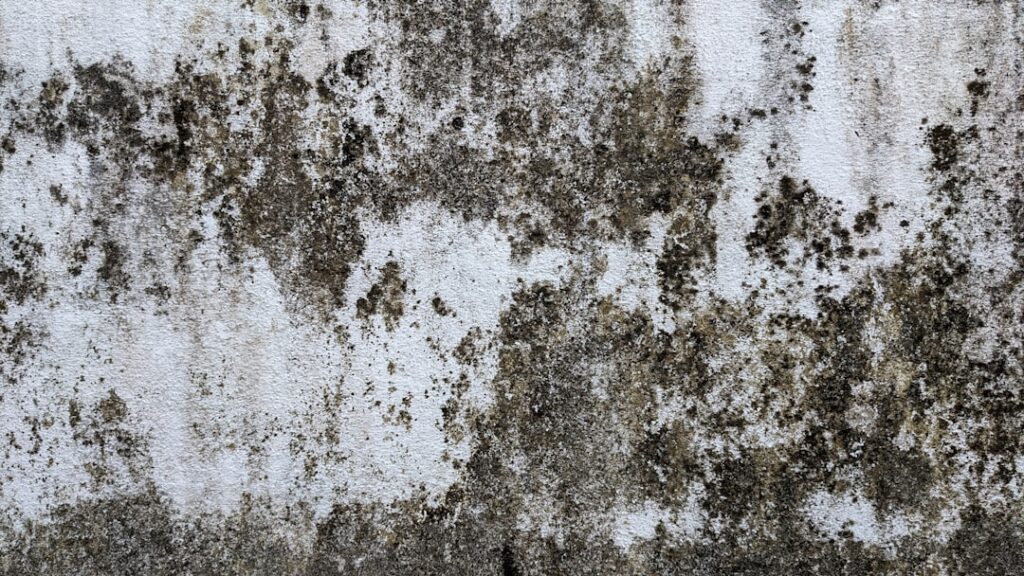
Dark spots on a basement wall, a patio slab or a garage floor raise an obvious question: is it mold, and is it dangerous? Black mold on concrete is common, but the concrete is rarely what the mold is feeding on. Mold usually grows on the thin layer of dust, soil, soap residue and organic film that collects on concrete when the surface stays damp. Several things that are not mold at all, including efflorescence, algae and plain dirt, can look similar. This guide explains why mold appears on concrete, how to tell it from look-alikes, how to clean it, and how to deal with the moisture that keeps it coming back. It summarizes EPA and CDC guidance current as of 2026 for general education. It is not medical advice, and large or recurring problems belong with a qualified mold professional.
Part of our Black Mold & Your Health guide — start there for the full picture →
Is this mold, asbestos, or water damage? Get a free instant screen
Upload a clear photo of the suspect area. You'll get an instant AI screening opinion and what to do next. This is screening guidance, not a professional determination.
Screening guidance only. AI can be wrong. Confirm asbestos, mold type, or lead with lab testing or a licensed professional before acting.
Why Black Mold Grows on Concrete
Mold needs two things to grow indoors: moisture and food. EPA’s mold course, in its chapter introducing molds, says moisture is the most important factor influencing indoor mold growth and that mold can grow on virtually any organic substance. It lists paper, cloth, wood, plant material and soil among the organic materials buildings are full of. Concrete itself is mostly mineral, so it is a poor food source. What concrete does offer is a porous, often cool surface that holds water and collects whatever settles on it.
That is the likely explanation for most black mold on concrete. Dust, soil tracked in from outside, pollen, leaf debris, cardboard fibers, paint and adhesive residue, and films left by cleaning products or spilled liquids all build up on slabs and walls. When the surface stays damp, mold can grow in that layer and in organic material lodged in the pores. Painted concrete adds another possible food source in the paint itself. CDC’s mold page notes that mold can grow in dust and paints as well as on wood, paper and drywall.
This matters for cleanup. Removing the organic film and drying the concrete usually removes the mold’s foothold. Leaving the surface damp and dirty usually means the mold comes back, whatever product is used.
“Black mold” is also a loose label. EPA’s mold course states that black mold is not a species or specific kind of mold, and neither is toxic mold. Many molds are dark green, gray, brown or black, and color does not identify the species or the risk. The black mold hub covers the term in more detail, and the guide to black spot mold covers the speckled pattern often seen on damp surfaces.
Where It Shows Up: Basements, Slabs and Outdoor Concrete
Basement walls
Foundation walls are the most common indoor site. EPA’s mold course lists basement walls among common sites for indoor mold growth and names condensation from high humidity or cold spots as a common moisture source. Concrete walls in contact with cool soil often sit below the dew point of humid summer air, so moisture condenses on them. Water can also wick through the concrete from wet soil. Mold tends to appear low on walls, behind stored boxes and furniture, along cold corners and around penetrations. The guide to black mold on basement walls covers patterns and causes specific to walls.
Basement and garage slabs
Slabs collect dust and debris and can stay damp from below, especially without a vapor barrier. Mold often appears under rugs, carpet, cardboard boxes and furniture, where moisture is trapped and organic material sits directly on the concrete. Carpet laid over a slab can hide growth until it is lifted.
Patios, driveways and walkways
Outdoor concrete is a different situation. It is exposed to soil, leaf litter, bird droppings, pollen and regular wetting from rain, snowmelt and sprinklers. Dark growth on shaded patios, north-facing walks and around downspouts is common and may be mold, mildew, algae, lichen or simply ground-in dirt. Outdoors, the concern is mainly appearance and slipperiness rather than indoor air quality. Indoors, the concern is the moisture problem the growth reveals and the potential for exposure.
Front Range specifics
Colorado’s dry climate does not prevent mold on concrete. Basements still get condensation in summer, snowmelt can saturate soil against foundations in spring, and expansive clay soils common in parts of the Front Range can affect grading and drainage around homes over time. Sprinklers aimed at foundation walls are a frequent local culprit. Many Front Range homes also have finished basements added years after construction, sometimes over slabs and walls that were never fully protected from moisture, which can let mold develop behind finishes before anyone notices it on the exposed concrete.
Is It Mold? Efflorescence, Algae, Mildew and Dirt
Not everything dark or fuzzy on concrete is mold. EPA’s mold course chapter on investigating mold problems warns that not everything that looks like mold is mold, and specifically notes that alkaline crystals on soil or concrete walls may look like mold but, unlike mold, are usually water-soluble.
- Efflorescence is a white, powdery or crystalline deposit left when water moves through concrete and evaporates, leaving dissolved salts behind. It is usually white or off-white rather than black, crumbles to powder, and dissolves or fades when dampened and scrubbed. It is a moisture signal, not a mold. The guide to efflorescence explains how to identify and address it.
- Algae tends to be green to black, slick and smooth, and grows mainly outdoors where light reaches damp concrete.
- Mildew is a common name for flat, powdery mold growth, often gray or white; it is still mold and is handled the same way.
- Dirt and soot wipe off evenly, do not have a fuzzy or spotty texture, and do not regrow after cleaning.
- Rust and mineral stains are typically orange-brown and do not wipe away.
Color can mislead; the guide on whether mold can be brown explains why shade is a poor identifier.
| What it looks like | Likely cause | Fix |
|---|---|---|
| Black or dark green fuzzy spots, musty smell, regrows | Mold on dirt or film on damp concrete | Scrub with detergent and water, dry fully, fix the moisture source |
| White powdery or crystalline crust | Efflorescence from water moving through concrete | Dry brush or scrub, then address water intrusion and drainage |
| Slick green to black film outdoors in shade | Algae, sometimes mixed with mold or moss | Scrub or pressure wash carefully, improve sun and drainage |
| Gray or white flat powdery patches | Mildew (surface mold) | Clean as mold, reduce humidity |
| Even dark smudging that wipes off and does not return | Dirt, soot or tire marks | Ordinary cleaning |
| Dark ring under a rug, box or carpet | Trapped moisture from slab; possible mold | Remove covering, clean, dry, test slab moisture |
| Orange-brown stains | Rust or mineral deposits | Mineral stain remover per label; check for leaks |
When identification is uncertain, sampling is rarely necessary to proceed. CDC says that if mold is seen or smelled it should be removed and the type does not need to be known. EPA’s Brief Guide also notes that in most cases, if visible mold growth is present, sampling is unnecessary.
Health Considerations
CDC’s mold page says exposure to damp and moldy environments may cause a variety of health effects, or none at all. For some people, CDC says mold can cause a stuffy nose, sore throat, coughing or wheezing, burning eyes or skin rash, and people with asthma or mold allergies may have severe reactions. EPA’s Brief Guide notes that molds have the potential to cause health problems and can produce allergens and irritants.
No one can judge risk from color alone. Indoor growth should be removed and its moisture source fixed regardless of what shade it is. Anyone with symptoms, asthma or immune concerns should talk with a physician and consider having someone else do the cleanup.
How to Clean Black Mold off Concrete
EPA’s Brief Guide says to scrub mold off hard surfaces with detergent and water and dry completely. Concrete is a hard surface, though its porosity means cleaning takes more scrubbing than tile or glass. EPA’s Brief Guide also says homeowners can usually handle mold areas under about 10 square feet themselves; larger areas or growth tied to significant water damage call for guidance from EPA’s remediation documents or an experienced contractor.
Indoor concrete step by step
- Protect yourself. EPA’s Brief Guide recommends avoiding breathing mold or spores, and describes protective equipment for cleanup, including an N-95 respirator, gloves and goggles.
- Clear the area. Remove boxes, rugs and stored items. Discard soaked cardboard and porous items that are moldy.
- Dampen first. Lightly mist the surface to reduce spores becoming airborne during dry brushing.
- Scrub. Use a stiff nylon brush with water and a household detergent. Work the solution into the surface texture and pores.
- Rinse. Rinse with clean water and remove the dirty water with a wet vacuum or towels so residue does not stay on the concrete.
- Dry thoroughly. Run fans and a dehumidifier. EPA notes that if wet materials are dried within 24 to 48 hours, in most cases mold will not grow.
- Recheck. Return in a few days and after the next humid spell or rain to see whether growth returns.
On bleach: CDC’s mold page says mold can be removed from hard surfaces with household products, soap and water, or a bleach solution of no more than 1 cup of household laundry bleach in 1 gallon of water, and warns never to mix bleach with ammonia or other cleaners. EPA’s Brief Guide states that using a biocide such as chlorine bleach is not recommended as a routine practice during mold cleanup, and stresses that dead mold may still cause allergic reactions, so the mold must be removed, not only killed. On porous concrete, scrubbing and drying do the real work. The guides to how to get rid of mold and sprays that kill mold compare product options.
Outdoor concrete
Patios and walkways can be scrubbed with detergent and water or pressure washed. Pressure washing should be done cautiously, because high pressure close to the surface can etch concrete and drive water toward foundations. Directing rinse water away from the house and plantings is sensible. Improving sun exposure, trimming plants and fixing downspouts reduce regrowth more than any cleaner. Shaded north-facing walks, areas under decks and spots beside downspouts tend to regrow first, so those are the places to check after a wet spring. Garage slabs sit somewhere in between: snowmelt dripping off vehicles in winter can keep a Front Range garage floor damp for weeks, and a squeegee plus good drainage toward the door helps more than repeated cleaning.
Sealers after drying
Penetrating concrete sealers can reduce how much water soaks into the surface and make future cleaning easier. A sealer should only be applied after the concrete is clean and fully dry, and it is not a fix for water coming through the wall or slab. Sealing over damp concrete can trap moisture, and coatings on walls with active water intrusion may blister or peel. Products vary, so following the manufacturer’s instructions on surface preparation and moisture limits is important.
Finding and Fixing the Moisture Source
Cleaning without fixing moisture is temporary. EPA’s Brief Guide puts it directly: the key to mold control is moisture control. Common sources for concrete include:
- Groundwater and wet soil. Water can wick through foundation walls and slabs from saturated soil, especially after snowmelt or heavy rain.
- Condensation. Humid air meeting cool concrete, common in basements during warm months.
- Grading and drainage. EPA’s Brief Guide recommends making sure the ground slopes away from the foundation so water does not enter or collect around it, and cleaning and repairing roof gutters regularly. Settled backfill, short downspouts and sprinklers aimed at walls are frequent problems.
- Plumbing leaks. Leaks from water heaters, laundry connections or pipes can keep a slab wet.
- Cracks and penetrations. Gaps around pipes and cracks in walls or slabs can let water in.
Telling these apart takes some detective work. Condensation tends to rise with indoor humidity and appear on the coolest surfaces; groundwater tends to follow rain or snowmelt and appear low on walls. A masonry moisture meter can show whether concrete is wet and whether readings change after weather events. EPA’s mold course lists concrete and brick among materials moisture meters can be used on. A common home test is taping a square of plastic sheet to the concrete for a day or two: moisture under the plastic suggests water coming through, while moisture on top suggests condensation. That test is rough, but it helps narrow the source. Logging readings before and after a storm, and comparing a wall near a downspout with an interior wall, often makes the pattern clear. If moisture readings climb after rain and stay high, the fix likely lies outside at the grading, gutters and downspouts rather than inside with a dehumidifier.
Keeping indoor humidity in check helps prevent condensation. EPA recommends keeping indoor humidity below 60 percent, ideally 30 to 50 percent; CDC advises no higher than 50%. The guide to basement humidity covers dehumidifiers and ventilation.
Painted, Finished and Covered Concrete
Bare concrete is the easiest case. Many basements have painted walls, sealed floors, carpet, laminate or framed and insulated walls against the foundation, and each changes how mold behaves and how it should be handled.
- Painted walls. Mold can grow on the paint film itself, and moisture coming through the wall often pushes paint off in blisters and flakes. Peeling paint with white powder behind it usually indicates efflorescence and water moving through the concrete. Cleaning the surface helps briefly, but repainting over a damp wall rarely lasts.
- Carpet and pad on a slab. Carpet traps moisture against the slab and gives mold an ideal food source. EPA’s Brief Guide notes that absorbent or porous materials such as carpet may have to be thrown away if they become moldy. A musty smell in a finished basement often points here first.
- Floating floors and rugs. Laminate and vinyl over a damp slab can hide growth on the underside or on the underlayment. Lifting a corner near the wettest wall is a reasonable first check.
- Framed walls against concrete. Drywall, wood studs and insulation placed directly against a damp foundation wall can grow mold out of sight. Water stains at the bottom of drywall, swollen baseboards or a persistent odor justify a closer look, sometimes by removing a baseboard or cutting a small inspection hole.
EPA’s mold course chapter on investigating mold problems notes that areas that are always or often damp, including basements and laundry or utility rooms, are common locations for mold growth in homes, and that hidden mold investigation calls for caution because disturbing moldy areas may spread spores. When growth on concrete seems to continue behind finishes, the cleanup can grow beyond a simple scrub, and a professional assessment is often worth the cost.
When to Call a Professional
- Growth covering more than about 10 square feet, consistent with EPA’s Brief Guide threshold.
- Mold that returns after cleaning and drying.
- Standing water, recurring seepage or flooding in a basement.
- Musty odors with no visible source, which may point to hidden growth behind finished walls or under flooring.
- Occupants with asthma, allergies or weakened immune systems.
The guides to basement mold remediation and basement mold removal cost explain what professional work involves. The mold inspection pillar explains when an inspection makes sense. Structural cracks, bowing walls or significant water intrusion may also call for a foundation or drainage specialist.
Preventing Mold on Concrete Long-Term
- Keep stored items on shelves or pallets rather than directly on slabs, and use plastic bins instead of cardboard.
- Leave a gap between stored items and foundation walls for air circulation.
- Run a dehumidifier in damp seasons and watch readings with a hygrometer.
- Extend downspouts away from the foundation and keep gutters clear.
- Adjust sprinklers so they do not wet foundation walls.
- Sweep and vacuum basement floors regularly to remove the dust that mold feeds on.
- Avoid carpet directly on basement slabs prone to dampness; CDC advises against carpet in places like basements that may have a lot of moisture.
- Seal clean, dry concrete if appropriate, and recheck after wet weather.
Not sure whether the dark staining is mold or efflorescence, or where the water is coming from? Our contact page is the place to start.
References
- U.S. EPA. A Brief Guide to Mold, Moisture and Your Home
- U.S. EPA. Mold Course Chapter 1: Introduction to Molds
- U.S. EPA. Mold Course Chapter 3: Investigating Mold Problems
- Centers for Disease Control and Prevention. Mold: About Mold
Frequently asked questions
Can mold actually grow on concrete?
Mold usually grows on the dust, soil, residue and organic film that collects on damp concrete rather than on the concrete itself. EPA notes that mold can grow on virtually any organic substance, and concrete holds moisture that lets it grow in that layer.
How can black mold be told apart from efflorescence?
Efflorescence is usually white and crystalline or powdery, and EPA notes such alkaline crystals are usually water-soluble. Mold is typically dark, spotty or fuzzy, may smell musty, and regrows if the surface stays damp.
Should bleach be used on moldy concrete?
CDC allows a solution of no more than 1 cup of household bleach per gallon of water on hard surfaces and warns never to mix bleach with ammonia. EPA says biocides are not recommended as routine practice. Scrubbing with detergent and drying fully matter most.
Is black mold on a patio a health concern?
Outdoor growth is mainly a cosmetic and slip concern. Indoor growth on basement walls or slabs is a bigger concern because it affects indoor air and signals a moisture problem. Anyone with symptoms should talk with a physician.
Will sealing concrete stop mold?
A penetrating sealer on clean, dry concrete can reduce water absorption and make cleaning easier, but it will not stop mold if water is coming through the wall or slab. Fix drainage, leaks and humidity first.
Dark patches on the basement slab coming back every summer? Share a photo and where it appears, and we can help sort out whether it is mold, efflorescence or a drainage issue.