Best Bathroom Cleaner (2026): 7 Sprays and Foams Compared

The best bathroom cleaner is the one spray you can trust on every hard surface in the room: tub, shower walls, sink, vanity top, fixtures and glass. That is a harder job than it sounds. A cleaner that dissolves hard-water film can etch a stone vanity, a bleach foam that lifts mildew can spot a colored bath mat, and a disinfecting claim only counts if the surface stays wet long enough. This roundup focuses on whole-room sprays and foams rather than toilet bowl products, matches each pick to the problem it handles best, and then covers chemistry, surface compatibility, ventilation and when bathroom grime is really a moisture problem behind the tile.
Part of our Structure & Exterior guide — start there for the full picture →
As an Amazon Associate we earn from qualifying purchases.
How we compared: we reviewed 13 current Amazon listings returned for bathroom cleaners and kept the 8 that are true multi-surface bathroom sprays or foams, setting aside toilet bowl gels, gel stamps and wand kits. We compared those 8 on what each listing states: chemistry (bleach or bleach-free), germ-kill claims, stains named, surfaces approved and format. We did not lab-test these products or use them hands-on. Prices and availability change often, so check the current listing before buying.
Quick picks: the best bathroom cleaners by job
| Product | Best for | Key features | Price | Buy |
|---|---|---|---|---|
| Lysol Power Foaming Bathroom Cleaner | Best overall disinfecting foam |
| $3.84as of Oct 20, 2026 8:58 pm GMT+0000 | Buy now →Check current price |
| Scrubbing Bubbles Grime Fighter | Best for tubs and tile soap scum |
| $3.97as of Oct 21, 2026 3:33 am GMT+0000 | Buy now →Check current price |
| Scrubbing Bubbles Foaming Bleach | Best for mildew stains |
| $3.97as of Oct 20, 2026 8:58 pm GMT+0000 | Buy now →Check current price |
| The Pink Stuff Bathroom Foam | Best for limescale and shine |
| $5.99as of Oct 21, 2026 3:33 am GMT+0000 | Buy now →Check current price |
| Zep Foaming Bathroom Cleaner | Best for rust and glass doors |
| $4.88as of Oct 21, 2026 3:33 am GMT+0000 | Buy now →Check current price |
| Scrubbing Bubbles Mega Foamer | Best for large tub surrounds |
| $7.99as of Oct 21, 2026 3:33 am GMT+0000 | Buy now →Check current price |
| Lysol All Purpose Cleaner | Best for vanities and counters |
| $7.27as of Oct 21, 2026 3:33 am GMT+0000 | Buy now →Check current price |
Prices are Amazon’s listed prices as of the time shown and change often; check Amazon for today’s price. As an Amazon Associate we earn from qualifying purchases.
The 7 picks, compared listing by listing
1. Lysol Power Foaming Bathroom Cleaner — Best Overall
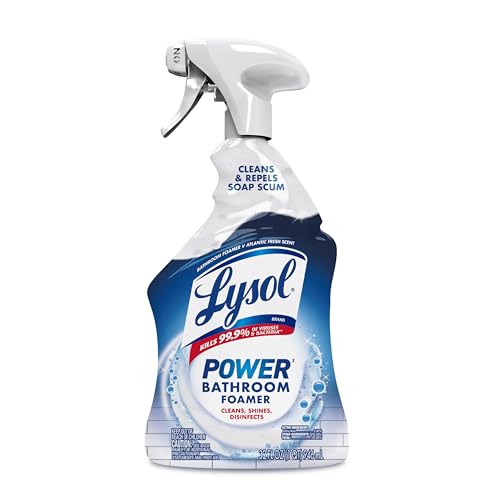
Bleach-free foam claiming a bacteria and virus kill that targets soap scum, limescale, mold and mildew.
Check price on Amazon$3.84 as of Oct 20, 2026 8:58 pm GMT+0000 — prices change; see Amazon for current price.Why we like it
- Disinfecting claim covers bacteria and viruses
- Names soap scum, limescale, mold and mildew
- Only listing here that states septic safe
- Bleach-free, so fewer mixing worries
| Specification | Details |
|---|---|
| Format | Foaming trigger spray, 32 fl oz |
| Chemistry stated | 0% bleach; active ingredient not stated in listing (check the label) |
| Germ claim | Kills 99.9% of bathroom bacteria and viruses when used as directed |
| Stains named | Soap scum, limescale, mold, mildew, grime |
| Surfaces | Washable hard non-porous surfaces: glazed porcelain and tile, stainless fixtures, laminate, linoleum |
| Model | 19200-02699 |
Lysol Power Foaming Bathroom Cleaner — bleach-free disinfecting foam, soap scum + limescale + mildew, septic safe, 32 oz
The Broadest Stain List of Any Bathroom Spray on This Shelf
All 8 of the on-topic listings mention soap scum, so that alone does not separate them. What sets the Lysol foamer apart is how many other jobs its listing claims at once. It is one of only 3 listings that name limescale, one of only 2 that name mold or mildew, and one of 3 that claim to kill viruses as well as bacteria. No other spray on the shelf hits all four. It also states a 30-second sanitizing time for soap scum areas, the only listing to give a time at all.
It is also one of just 2 listings that state 0% bleach (the other is the Lysol all-purpose spray), and the only bathroom spray that says septic safe. That matters for a cleaner that ends up rinsed down the tub drain every week in a rural Front Range home.
The surface list is narrower than the Scrubbing Bubbles listings. It names glazed porcelain, glazed ceramic tile, stainless fixtures, laminate and linoleum, but not natural stone, sealed granite, quartz or acrylic. If your vanity is stone, check the label or use a pH-neutral stone cleaner there. The listing does not name its active ingredient, so read the back label before using it in the same session as any other product.
Pros
- Covers germs, scum, scale and mildew stains
- Bleach-free and septic safe per the listing
- Only listing with a stated working time
Cons
- No stone, quartz or acrylic in the surface list
- Active ingredient not named
- Disinfecting still needs full label contact time
Check Lysol Power Foaming Bathroom Cleaner price on Amazon
2. Scrubbing Bubbles Grime Fighter Disinfectant Spray — Best for Tub and Tile Soap Scum

Citrus trigger spray claiming 100% soap scum removal plus a bacteria and virus kill, with a long approved-surface list.
Check price on Amazon$3.97 as of Oct 21, 2026 3:33 am GMT+0000 — prices change; see Amazon for current price.Why we like it
- Claims 100% soap scum removal
- Title claims a bacteria and virus kill
- Lists sealed granite, quartz and Corian
- Bottle made from 100% recycled content
| Specification | Details |
|---|---|
| Format | Trigger spray, 32 fl oz |
| Chemistry stated | Not stated in listing (check the label) |
| Germ claim | Kills 99.9% of viruses and bacteria per the title, when used as directed |
| Stains named | Soap scum, grime and buildup |
| Surfaces | Tile, tubs, shower walls, curtains, doors, sinks, counters, stainless, chrome, fiberglass, sealed granite, quartz |
| Model | 382173 |
Scrubbing Bubbles Grime Fighter — soap scum + disinfecting spray, sealed granite/quartz listed, 100% recycled bottle, 32 oz
One of Only Three Listings That Approve Sealed Granite and Quartz
Three of the 8 bathroom sprays name sealed granite and quartz in their surface lists: this Grime Fighter, its 20 oz aerosol sibling and the Scrubbing Bubbles bleach foam. Of those three, this is the only one that also claims to kill viruses in its title, and the only one in a 100% recycled-content bottle (the bleach foam states 30%). For a bathroom with a stone-look vanity top and a fiberglass tub, that combination of wide surface approval and a disinfecting claim is the appeal.
“Sealed” is the important word. Sealer wears off stone over time, and acidic or harsh cleaners attack unsealed granite and marble. Our sibling roundup of the best granite cleaners covers pH-neutral options for stone that has not been resealed recently.
The listing does not mention limescale or hard water, which is a real gap in Front Range homes. It is a scum-and-grime cleaner first. Pair it with a limescale foam for faucets and glass if your water leaves white spots.
Pros
- Strong soap scum claim
- Disinfecting claim covers viruses
- Widest approved surface list with stone
- Recycled-content bottle
Cons
- No limescale or hard water claim
- Chemistry not stated in listing
- Stone approval applies to sealed surfaces only
Check Scrubbing Bubbles Grime Fighter price on Amazon
3. Scrubbing Bubbles Foaming Bleach Bathroom Cleaner — Best for Mildew Stains

Penetrating bleach foam that targets mold and mildew stains and built-up soap scum on tile, grout, tubs and sinks.
Check price on Amazon$3.97 as of Oct 20, 2026 8:58 pm GMT+0000 — prices change; see Amazon for current price.Why we like it
- Only bleach-based spray among the picks
- Targets mold and mildew stains directly
- Clinging foam reaches grout lines
- Long approved-surface list including sealed stone
| Specification | Details |
|---|---|
| Format | Foaming trigger spray, 32 oz |
| Chemistry stated | Bleach; concentration not stated in listing |
| Germ claim | Not stated in listing |
| Stains named | Mold and mildew stains, built-up soap scum |
| Surfaces | Tubs, showers, chrome, fiberglass, vinyl, glass, porcelain, laminate, Corian, sealed granite and quartz |
| Model / bottle | 70809; bottle 30% recycled content |
Scrubbing Bubbles Foaming Bleach — bleach foam for mold and mildew stains + soap scum, wide surface list, 32 oz, 70809
The Only Bleach Formula Among the Eight Bathroom Sprays
Just one of the 8 bathroom sprays contains bleach, and this is it. It is also one of only 2 listings that name mold and mildew stains. That makes it the tool for the gray-black speckling in grout lines and caulk corners that a bleach-free foam leaves behind. The listing describes it erasing stains, which is accurate to what bleach does: it whitens discoloration.
Two cautions from the EPA apply directly. First, the agency does not recommend biocides such as chlorine bleach as a routine part of mold cleanup and says dead mold can still cause allergic reactions, so the growth must be removed, not just bleached. Second, it says never to mix chlorine bleach with products containing ammonia because toxic fumes can form. Use this foam on its own, rinse it off, and keep the fan running.
Mildew that returns quickly is a ventilation signal. Our guide on how to prevent mold in a bathroom covers fan run times and humidity, and the best grout cleaner roundup covers stained grout that a spray alone cannot reach.
Pros
- Bleach whitens mildew stains
- Foam clings to vertical tile
- Approved for many surfaces
Cons
- No disinfecting claim in the listing
- Bleach can spot fabrics and colored grout
- Never combine with ammonia or acid cleaners
- Strong odor in small rooms
Check Scrubbing Bubbles Foaming Bleach price on Amazon
4. Stardrops The Pink Stuff Miracle Bathroom Foam — Best for Limescale and Shine
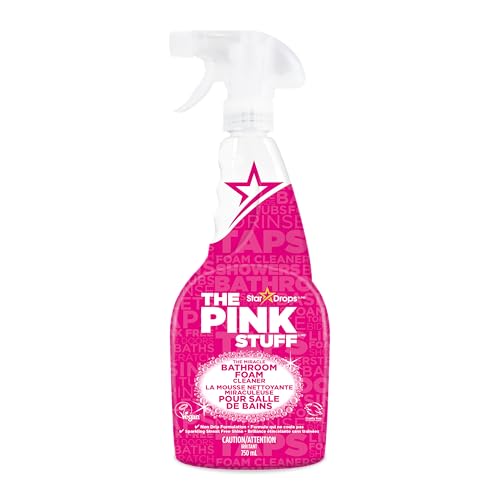
Clinging foam that removes and prevents limescale, soap scum and hard water stains with a streak-free finish claim.
Check price on Amazon$5.99 as of Oct 21, 2026 3:33 am GMT+0000 — prices change; see Amazon for current price.Why we like it
- Names limescale and hard water stains
- Claims to prevent limescale, not just remove it
- Streak-free finish claim for fixtures
- Also rated for toilet exteriors
| Specification | Details |
|---|---|
| Format | Foam spray, about 25 fl oz |
| Chemistry stated | Not stated in listing (check the label or SDS) |
| Germ claim | Not stated in listing |
| Stains named | Limescale, soap scum, hard water stains |
| Surfaces | Tiles, sinks, tubs, showers, faucets, toilet exteriors |
| Model | 82383 |
The Pink Stuff Bathroom Foam — limescale + soap scum + hard water stain foam, streak-free claim, 25 oz, model 82383
The Only Listing That Names Both Limescale and Hard Water Stains
Three of the 8 bathroom sprays name limescale and 2 name hard water stains, but this is the only one that names both, and the only one that claims to prevent limescale as well as remove it. For many Denver-metro bathrooms, that white crust around faucet bases and the cloudy film on chrome are the main complaint, not germs.
The listing makes no germ claim, so treat it as a cleaner rather than a disinfectant. It also does not state its chemistry or a surface warning list. Limescale removers usually work with acids, and acids etch marble, travertine and limestone, so keep it off natural stone unless the label says otherwise. On chrome and glazed tile it is the right tool.
Pros
- Limescale removal and prevention claims
- Streak-free finish for fixtures
- Clinging foam increases dwell time
Cons
- No disinfecting claim
- Chemistry not stated in listing
- Smaller bottle than the 32 oz sprays
Check The Pink Stuff Bathroom Foam price on Amazon
5. Zep Home Pro Multi-Purpose Foaming Bathroom Cleaner — Best for Rust and Glass Doors

Professional-grade bathroom foam for soap scum, rust and hard water stains on showerheads, glass doors and tubs.
Check price on Amazon$4.88 as of Oct 21, 2026 3:33 am GMT+0000 — prices change; see Amazon for current price.Why we like it
- Only listing here that names rust stains
- Calls out showerheads and glass shower doors
- Wipes away in 2 to 3 minutes
- Approved for acrylic and fiberglass tubs
| Specification | Details |
|---|---|
| Format | Foaming spray, 32 fl oz |
| Chemistry stated | Not stated in listing (check the label or SDS) |
| Germ claim | Not stated in listing |
| Stains named | Soap scum, rust, dirt, hard water stains |
| Surfaces | Acrylic, fiberglass, ceramic tile, porcelain, laminate, glass, chrome, Corian |
| Model | R53106, eucalyptus and sea salt scent |
Zep Home Pro Foaming Bathroom Cleaner — soap scum, rust, hard water stains, 2–3 min wipe, acrylic/fiberglass, 32 oz, R53106
The Only Bathroom Spray That Names Rust and Approves Acrylic
Rust appears in exactly one of the 8 bathroom spray listings, and acrylic appears in exactly one; both are this Zep foam. That pairing matters for a specific kind of bathroom: an acrylic or fiberglass tub-shower insert, glass doors, and orange iron staining from well water or old galvanized supply lines. Many older Front Range homes and foothills properties on wells have exactly that setup.
The listing gives a practical working window: wipe the foam off with a damp sponge within 2 to 3 minutes. That short dwell time is a hint that this is a stronger formula, and that leaving it to dry on a surface is not the plan. It makes no germ claim, so it is a stain and scum remover rather than a disinfectant.
The listing does not state its chemistry. Rust and hard-water removers are commonly acid-based, so wear gloves, ventilate and keep it off natural stone and away from any bleach product. If rust shows up in every fixture, the water supply is the real issue; see the buying guide below.
Pros
- Names rust and hard water stains
- Approved for acrylic and fiberglass
- Short stated working time
Cons
- No germ-kill claim
- Chemistry not stated in listing
- No natural stone approval
Check Zep Foaming Bathroom Cleaner price on Amazon
6. Scrubbing Bubbles Mega Bathroom and Shower Foamer — Best for Large Tub Surrounds

Two 20 oz aerosol foamers with a wide-range nozzle, claiming full limescale and soap scum removal in showers and tubs.
Check price on Amazon$7.99 as of Oct 21, 2026 3:33 am GMT+0000 — prices change; see Amazon for current price.Why we like it
- Wide-range nozzle covers big walls quickly
- Claims 100% limescale and soap scum removal
- Bacteria claim when used as directed
- Two cans per pack
| Specification | Details |
|---|---|
| Format | Aerosol foam, two 20 oz cans |
| Chemistry stated | Not stated in listing |
| Germ claim | Removes 99.9% of bathroom bacteria when used as directed |
| Stains named | Limescale, soap scum, grime, buildup |
| Surfaces | Showers, tubs and bathroom surfaces; detailed list not stated in listing |
| Model | 306384, Rainshower scent |
Scrubbing Bubbles Mega Foamer — 2 x 20 oz aerosol, wide nozzle, limescale + soap scum claim, bacteria claim, 306384
The Only Aerosol on the Shelf That Also Claims Limescale Removal
Two of the 8 bathroom listings are aerosols: this Mega Foamer and the 20 oz Grime Fighter aerosol. Only the Mega Foamer adds a limescale claim. An aerosol with a wide spray pattern is faster than a trigger bottle on a full tile surround or a large walk-in shower, which is the job this pick is for.
The trade-off is air quality. The EPA lists aerosol sprays and cleansers among household sources of volatile organic compounds and notes that indoor levels can spike during and after use. In a windowless bathroom, run the exhaust fan before, during and after spraying, and step out while the foam dwells. If your fan barely moves a tissue, our bathroom exhaust fan guide explains what to look for.
The listing’s bacteria wording says “removes” rather than “kills,” and it does not mention viruses. It is a scum and scale cleaner with a germ claim, not a full-spectrum disinfectant.
Pros
- Fast coverage on large surfaces
- Limescale and soap scum claim
- Two-can pack
Cons
- Aerosol adds to indoor VOCs
- No virus claim
- Detailed surface list not given
Check Scrubbing Bubbles Mega Foamer price on Amazon
7. Lysol All Purpose Cleaner Spray — Best for Vanities and Counters

Bleach-free disinfectant spray for counters, sinks, tubs and showers that also cuts grease, sold as a two-bottle pack.
Check price on Amazon$7.27 as of Oct 21, 2026 3:33 am GMT+0000 — prices change; see Amazon for current price.Why we like it
- Claims to kill viruses and bacteria
- Bleach-free formula
- Moves between bathroom and kitchen
- Two 32 oz bottles
| Specification | Details |
|---|---|
| Format | Trigger spray, two 32 fl oz bottles |
| Chemistry stated | 0% bleach; active ingredient not stated in listing |
| Germ claim | Kills 99.9% of viruses and bacteria when used as directed |
| Stains named | Soap scum, grease, grime |
| Surfaces | Hard non-porous surfaces: counters, sinks, tubs, showers, cabinets, appliance exteriors |
| Model | 1920099041, lemon scent |
Lysol All Purpose Cleaner — bleach-free disinfectant spray, soap scum + grease, multi-room, 2 x 32 oz
The Only Disinfecting Spray Here Built for the Whole House
This is the one listing among the 8 that is not bathroom-specific, and it earns its spot for the daily wipe-down: vanity top, faucet handles, light switches, door hardware. It is one of 3 listings with a virus claim and one of 2 that state 0% bleach. It also cuts grease, which the bathroom-only sprays do not claim, so one bottle can serve both rooms.
It is not a limescale or mildew product; the listing names neither. Think of it as the germ-control spray for touch points, used alongside one of the scum or scale picks for the tub and shower. Our sibling roundup of the best soap scum removers goes deeper on shower glass and tile if that is where the work is.
Pros
- Virus and bacteria claim
- Bleach-free, multi-room use
- Two-bottle pack
Cons
- No limescale or mildew claim
- Not specialized for shower buildup
- Stone surfaces not named
Check Lysol All Purpose Cleaner price on Amazon
What a bathroom cleaner should do, and how to read the label
Bathroom grime is a mix of three things: soap scum (soap residue bonded with minerals and body oils), mineral scale from hard water, and organic growth such as mildew and pink bacterial films. Every listing on this shelf claims soap scum, so the useful question is what else it handles.
- Bleach (sodium hypochlorite) whitens mildew and organic stains and is a classic disinfectant chemistry. It does not dissolve mineral scale. One spray here contains bleach.
- Acid-based cleaners dissolve limescale, hard-water film and rust. They are the right choice for chrome and glass in hard-water homes and the wrong choice for marble, travertine and limestone, which they etch.
- Bleach-free disinfectants kill germs without chlorine and are easier to rotate with other products, though you still should not mix them.
- Plant-based or Safer Choice products trade some strength for a milder profile. The EPA says products bearing its Safer Choice label have every ingredient reviewed, must meet pH limits that reduce skin and eye irritation risk, and have restricted VOC content. None of the 8 listings here claims that label.
Most listings do not name their active ingredient. When a listing is silent, the label and the manufacturer’s safety data sheet are the place to look, especially before using two products in the same bathroom.
Disinfecting claims and contact time
“Kills 99.9%” claims come with a condition: “when used as directed.” The EPA defines a disinfectant as a product that destroys or irreversibly inactivates bacteria, fungi and viruses on hard surfaces, regulates disinfectants as pesticides, and says the EPA registration number on the label is the only reliable way to identify one. It also explains contact time: the surface has to stay visibly wet for the full time printed on the label, with more product applied if it starts to dry.
In practice, that means spraying, leaving the surface wet for the stated minutes, then wiping. Spray-and-wipe in one motion cleans but does not disinfect. Clean first if the surface is visibly dirty, since grime shields germs from the product. On this shelf, 3 of 8 listings claim to kill viruses; others claim bacteria only, and several make no germ claim at all.
Surface compatibility: stone, acrylic, glass and grout
The surface list is the most overlooked part of a bathroom cleaner listing. A few patterns from this shelf:
- Natural stone: only 3 listings approve sealed granite and quartz, and none approves marble, travertine or unsealed stone. Use a pH-neutral stone cleaner on those surfaces.
- Acrylic and fiberglass inserts: scratch easily. Use non-abrasive sprays and soft sponges; only one listing here names acrylic explicitly.
- Glass shower doors: soap scum and hard-water film bond together, which is why limescale-rated foams outperform general sprays here.
- Grout and caulk: porous, so stains sit below the surface. Persistent black in caulk often means it needs replacing rather than cleaning.
Toilets are a separate job. Bowl cleaners are formulated to cling under the rim and sit in water; see our sibling roundup of the best toilet bowl cleaners for those.
Safety: mixing, ventilation, gloves and storage
Bathrooms are small, often poorly ventilated rooms, which makes cleaner safety more important than in a kitchen. The CDC warns that household chlorine bleach can release chlorine gas when mixed with certain other cleaning products and says plainly not to mix household cleaners; the EPA names ammonia as one product never to combine with bleach. Acid-based scale removers belong in the same category. If you switch products mid-clean, rinse the surface thoroughly first.
- Ventilate: the EPA advises increasing ventilation when using products that release VOCs and following label precautions. Run the exhaust fan and open a window if there is one.
- Gloves and goggles: for bleach or strong cleaning solutions, the EPA recommends gloves of natural rubber, neoprene, nitrile, polyurethane or PVC, plus goggles.
- Storage: the EPA’s indoor air guidance advises keeping household products out of reach of children and pets, and storing what you keep in a well-ventilated spot.
- Exposure: if fumes build up, the CDC says to open windows and doors, leave the area and call Poison Control at 1-800-222-1222.
Front Range bathrooms: hard water, dry air and ventilation
Colorado’s dry climate helps bathrooms dry out faster than in humid regions, but showers still put a lot of moisture into a small space, and many older Denver-area homes have undersized or missing exhaust fans. The EPA notes that if mold keeps reappearing in a shower or elsewhere in the bathroom, increasing ventilation and cleaning more often will usually prevent it from recurring or keep it to a minimum.
Hard water is the bigger daily factor. Mineral film builds up on glass and fixtures within days in some neighborhoods, and well water in the foothills can add iron staining. A practical routine for many Front Range homes is a weekly scum-and-germ spray, a limescale foam every couple of weeks on chrome and glass, and a squeegee after every shower.
When bathroom grime is a building problem
Cleaners handle surfaces. They cannot fix water that is getting behind the tile. Signs that call for a professional rather than a stronger spray include grout that stays dark after cleaning, soft or loose tiles, peeling paint on the ceiling, a musty smell that returns within hours, and staining on the ceiling below an upstairs bath. The EPA says that if mold covers more than about 10 square feet, or there has been significant water damage, homeowners should follow professional remediation guidance or hire an experienced contractor.
Our structure and exterior hiring guide covers what to ask when hiring for leaks and moisture damage. If you are buying or selling a Front Range home and want bathrooms, ventilation and hidden moisture checked by a professional, get in touch through our contact page to connect with a vetted local inspector.
Frequently asked questions
What is the best bathroom cleaner for most homes?
A bleach-free foaming spray that claims both soap scum removal and an EPA-registered disinfecting claim covers most weekly cleaning. Add a limescale foam for chrome and glass if you have hard water, and a bleach foam only for mildew stains. Always check the surface list before using any cleaner on stone.
Can I use bathroom cleaner on granite or marble vanities?
Only if the label approves it. A few listings name sealed granite and quartz, but none here approves marble or unsealed stone. Acid-based limescale removers etch natural stone, so use a pH-neutral stone cleaner on those surfaces.
Is it safe to mix bathroom cleaners for a stronger clean?
No. The CDC warns that bleach can release chlorine gas when mixed with certain other cleaning products, and the EPA says never to mix bleach with ammonia. Rinse surfaces well between products and ventilate the room.
How long should bathroom disinfectant stay on the surface?
For the full contact time on the product label. The EPA says the surface must stay visibly wet for that whole period, and more product should be applied if it dries. Spraying and wiping immediately cleans but does not disinfect.
Why does mildew keep coming back in my bathroom?
Recurring mildew usually means moisture is not leaving the room. The EPA notes that more ventilation and more frequent cleaning usually prevent it from recurring. If it returns quickly despite a working fan, have the area checked for leaks behind the tile.
References
- Chlorine Chemical Fact Sheet — Centers for Disease Control and Prevention
- Selected EPA-Registered Disinfectants — U.S. Environmental Protection Agency
- Volatile Organic Compounds’ Impact on Indoor Air Quality — U.S. Environmental Protection Agency
- A Brief Guide to Mold, Moisture and Your Home — U.S. Environmental Protection Agency
- Mold Cleanup in Your Home — U.S. Environmental Protection Agency
- Learn About the Safer Choice Label — U.S. Environmental Protection Agency