Best Toilet Bowl Cleaner (2026): 8 Picks Compared by Stain Type

The best toilet bowl cleaner is the one matched to what is actually in your bowl. A gray ring at the waterline in a Front Range home is usually mineral scale from hard water, not dirt, and it calls for an acid-style or limescale-rated gel. A bowl that needs germ control after a stomach bug calls for a registered disinfectant used for its full contact time. Rust streaks, septic tanks, kids who touch everything and plain convenience all push the choice in different directions. Below are eight picks, each chosen for a specific job, followed by a buying guide on chemistry, safety and when a stained or running toilet is really a plumbing problem.
Part of our Plumbing & Water guide — start there for the full picture →
As an Amazon Associate we earn from qualifying purchases.
How we compared: we compared 15 current Amazon listings for toilet bowl gels, wand systems with preloaded pads, in-bowl gel stamps and tank drop-ins, on what each listing states: stated chemistry (bleach, bleach-free, hydrogen peroxide), germ-kill and contact-time claims, stain types named, septic statements and application style. We did not lab-test these products or use them hands-on. Several listings are pack-size variants of the same product. Prices and availability change often, so check the current listing before buying.
Quick picks: the best toilet bowl cleaners by stain and job
| Product | Best for | Key features | Price | Buy |
|---|---|---|---|---|
| Lysol Power Clinging Gel | Best overall for rings and germs |
| $4.49as of Oct 21, 2026 1:00 am GMT+0000 | Buy now →Check current price |
| Clorox Clinging Bleach Gel | Best bleach disinfecting gel |
| $4.97as of Oct 21, 2026 1:00 am GMT+0000 | Buy now →Check current price |
| Lysol OXI Action Gel | Best hydrogen peroxide formula |
| $4.49as of Oct 21, 2026 1:00 am GMT+0000 | Buy now →Check current price |
| Zep Pro-Strength Stain Eliminator | Best for heavy scale and rust |
| $9.99as of Oct 21, 2026 1:00 am GMT+0000 | Buy now →Check current price |
| Amazon Basics Bleach Gel | Best store-brand bleach gel |
| $3.82as of Oct 21, 2026 1:00 am GMT+0000 | Buy now →Check current price |
| Method Antibacterial Toilet Cleaner | Best naturally derived formula |
| $5.49as of Oct 21, 2026 1:00 am GMT+0000 | Buy now →Check current price |
| Clorox ToiletWand Kit | Best touch-free scrubbing |
| $20.41as of Oct 21, 2026 1:00 am GMT+0000 | Buy now →Check current price |
| Scrubbing Bubbles Tank Drop-Ins | Best between-clean maintenance |
| $5.87as of Oct 21, 2026 1:00 am GMT+0000 | Buy now →Check current price |
Prices are Amazon’s listed prices as of the time shown and change often; check Amazon for today’s price. As an Amazon Associate we earn from qualifying purchases.
The 8 picks, compared listing by listing
1. Lysol Power Toilet Bowl Cleaner Clinging Gel — Best Overall

Bleach-free clinging gel that claims a 30-second bacteria kill and names rings, limescale and hard water stains.
Check price on Amazon$4.49 as of Oct 21, 2026 1:00 am GMT+0000 — prices change; see Amazon for current price.Why we like it
- Disinfects without chlorine bleach, per the listing
- Names limescale and hard water rings directly
- States a 30-second bacteria kill time
- Angled neck reaches under the rim
- Listing calls it septic safe
| Specification | Details |
|---|---|
| Format | Clinging gel in an angled-neck squeeze bottle |
| Chemistry stated | 0% bleach; active ingredient not stated in listing (check the label) |
| Germ claim | Kills 99.9% of household bacteria and viruses when used as directed; bacteria in 30 seconds |
| Stains named | Toilet rings, hard water, limescale |
| Septic | Listed as septic safe |
| Size | 24 fl oz, pack of 2 (a 4-pack listing also exists) |
Lysol Power Clinging Gel — bleach-free disinfecting gel, 30-sec bacteria claim, limescale and hard water rings, septic safe, 2 x 24 oz
The Only Bleach-Free Gel Here That Pairs a Disinfecting Claim With a Limescale Claim
Eight of the 15 on-topic listings are squeeze-bottle gels, covering seven distinct products (the Lysol Power gel appears twice, as a 2-pack and a 4-pack). That is the core of this category, and it is where most homeowners should start. Within that group, the Lysol Power listing is the one that most cleanly combines the two jobs people actually buy a bowl cleaner for: it claims to kill bacteria and viruses, and it names hard water and limescale as stains it removes.
The Clorox gel also disinfects, but with bleach, and its listing talks about rings and mold stains rather than limescale. The Lysol OXI Action gel names limescale and rust but makes only a sanitizing claim against bacteria. Only the Power listing and its 4-pack twin state a 30-second kill time, the shortest contact time on the shelf.
What the listing does not say matters too. It never names the active ingredient, so a homeowner cannot tell from the listing alone whether the scale-dissolving action comes from an acid. That matters for one reason: anything acidic must never share a bowl with bleach. Read the back label or the manufacturer’s safety data sheet before switching between products.
Pros
- Covers germs and mineral rings in one product
- Shortest stated kill time on the shelf
- Bleach-free and septic-safe per the listing
- Also sold in a 4-pack for multi-bath homes
Cons
- Active ingredient not named in the listing
- Heavy rust is not mentioned
- Still needs a brush for crusted rings
Check Lysol Power Clinging Gel price on Amazon
2. Clorox Toilet Bowl Cleaner Clinging Bleach Gel — Best Bleach Disinfecting Gel

Thick bleach gel that claims to kill bacteria and viruses, whiten the bowl and lift rings plus mold and mildew stains.
Check price on Amazon$4.97 as of Oct 21, 2026 1:00 am GMT+0000 — prices change; see Amazon for current price.Why we like it
- Bleach formula brightens and whitens the bowl
- Only listing here naming mold and mildew stains
- Claims to kill bacteria and viruses
- Wide dispensing bottle coats the bowl fast
| Specification | Details |
|---|---|
| Format | Thick clinging gel, wide dispensing bottle |
| Chemistry stated | Contains Clorox bleach; concentration not stated in listing |
| Germ claim | Kills 99.9% of germs, including bacteria and viruses per the title |
| Stains named | Toilet rings, mold and mildew stains |
| Septic | Not stated in listing |
| Size / model | 24 fl oz, pack of 2; model C-HH447 |
Clorox Clinging Bleach Gel — bleach disinfecting gel, whitens, rings plus mold and mildew stains, 2 x 24 oz, C-HH447
The Only Listing That Names Mold and Mildew Stains in the Bowl
Just two of the 15 listings state that they contain bleach: this Clorox gel and the Amazon Basics cling formula (pick 5). Of those two, only the Clorox listing names mold and mildew stains as a target, and no other product on the whole shelf mentions mold at all. That makes it the logical choice for the dark speckling that forms under the rim and around the waterline in a toilet that sits unused, such as a guest bath or basement half-bath.
Bleach also brightens. The listing leans on whitening, which is a real difference from the bleach-free gels, but bleach is not a scale dissolver. A hard-water ring that has turned brown or gray is mineral, and bleach alone will not lift it.
The listing does not mention septic systems. Normal household use of bleach cleaners is common in septic homes, but the EPA’s septic care guidance warns against pouring large volumes of toxic cleaners down drains, so dose by the label rather than by eye. For black growth that keeps coming back, our guide to black mold in a toilet bowl covers the moisture and water-quality causes behind it.
Pros
- Bleach disinfection plus whitening
- Only listing naming mold and mildew stains
- Thick gel clings under the rim
Cons
- Not a limescale or rust remover
- Never combine with acid or ammonia cleaners
- No septic statement in the listing
- Bleach odor in small, unvented bathrooms
Check Clorox Clinging Bleach Gel price on Amazon
3. Lysol OXI Action Toilet Bowl Cleaner — Best Hydrogen Peroxide Formula

Bleach-free hydrogen peroxide gel that names lime scale and rust stains and sanitizes above the waterline in 5 minutes.
Check price on Amazon$4.49 as of Oct 21, 2026 1:00 am GMT+0000 — prices change; see Amazon for current price.Why we like it
- Only listing naming hydrogen peroxide as the cleaner
- Targets both lime scale and rust stains
- Contains no chlorine bleach
- States septic safe and no residue
| Specification | Details |
|---|---|
| Format | Clinging gel, angled-neck bottle |
| Chemistry stated | Hydrogen peroxide; 0% chlorine bleach |
| Germ claim | Sanitizer: kills 99.9% of two named bacteria in 5 minutes above the waterline |
| Stains named | Lime scale, rust, hard water |
| Septic | Stated safe for plumbing and septic when used as directed |
| Size | 24 fl oz, pack of 2 |
Lysol OXI Action — hydrogen peroxide gel, 0% bleach, lime scale and rust, 5-min sanitizing claim, septic safe, 2 x 24 oz
The Only Peroxide-Based Gel, and One of Just Two Listings That Name Rust
Hydrogen peroxide appears in exactly one of the 15 listings, and this is it. Rust stains are named by only two: this gel and the Zep stain eliminator, which matters for well homes with orange iron streaks below the rim.
Read the germ claim carefully. The disclaimer says it kills 99.9% of two specific bacteria in 5 minutes as a toilet bowl sanitizer, above the waterline. That is a sanitizing claim, not the broader bacteria-and-virus disinfecting claim the Power and Clorox gels make. If the goal is germ control after illness, one of those is the better fit. If the goal is a bright bowl without chlorine smell, this is the stronger choice.
The listing does not explain how a peroxide formula dissolves mineral scale, so check the label for any additional ingredients.
Pros
- Peroxide formula with no chlorine bleach
- Names rust as well as lime scale
- Septic and plumbing statement in the listing
Cons
- Sanitizes rather than disinfects
- Longer stated contact time than Lysol Power
- Full ingredient list not in the listing
Check Lysol OXI Action Gel price on Amazon
4. Zep Home Pro Pro-Strength Stain Eliminator — Best for Heavy Scale and Rust
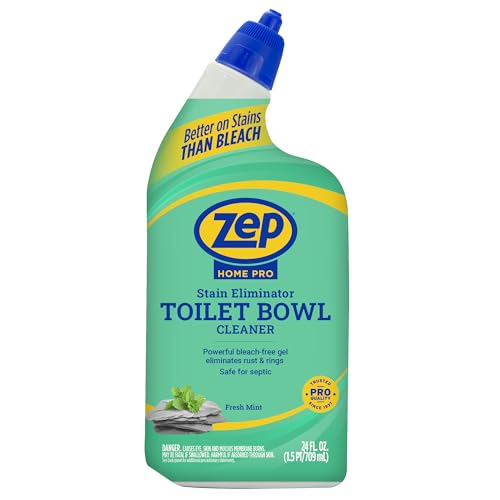
Professional-strength clinging bowl cleaner built around dissolving tough limescale and rust stains.
Check price on Amazon$9.99 as of Oct 21, 2026 1:00 am GMT+0000 — prices change; see Amazon for current price.Why we like it
- Built specifically for limescale and rust stains
- Thick formula clings for longer contact
- Rated for bowls, urinals and fixtures
- Angled spout for under-rim application
| Specification | Details |
|---|---|
| Format | Thick clinging liquid, angled spout |
| Chemistry stated | Not stated in listing (check the label or SDS) |
| Germ claim | Not stated in listing |
| Stains named | Tough limescale, rust |
| Septic | Not stated in listing |
| Size / model | 24 fl oz, single bottle; Zeptbc24 |
Zep Home Pro Stain Eliminator — pro-strength limescale and rust bowl cleaner, clinging formula, angled spout, 24 oz
The Only Listing Positioned Purely as a Stain Remover, With No Germ Claim
Every other bottle gel on this shelf leads with germs. The Zep listing does not make a germ-kill claim at all; it is pitched entirely at dissolving limescale and rust. Ten of the 15 listings mention hard water or limescale somewhere, but most treat it as one benefit among several. This is the one to reach for when the ring has been there for years and the routine cleaner has stopped making progress.
The trade-off is information. The listing does not name its chemistry, a septic position or any surface warnings. Professional-strength scale removers are often strongly acidic, which is exactly why the label matters more than the listing here. Wear gloves and eye protection, ventilate, and never use it in the same session as a bleach gel.
A stain that returns within weeks of a deep clean usually points to the water, not the cleaner. Our guide to hard water stains explains what causes those rings and when a softener is worth discussing.
Pros
- Dedicated to limescale and rust
- Clinging formula increases dwell time
- Works on urinals and other fixtures too
Cons
- No germ-kill claim at all
- Chemistry and septic position not stated
- Single bottle rather than a multipack
Check Zep Pro-Strength Stain Eliminator price on Amazon
5. Amazon Basics Toilet Bowl Cleaner With Bleach — Best Store-Brand Bleach Gel

Bleach cling-action bowl cleaner with an angled neck and a stated fit for all plumbing types and septic tanks.
Check price on Amazon$3.82 as of Oct 21, 2026 1:00 am GMT+0000 — prices change; see Amazon for current price.Why we like it
- Bleach cling formula for routine cleaning
- States compatibility with septic tanks
- Angled neck reaches under the rim
- Two-bottle pack covers multiple bathrooms
| Specification | Details |
|---|---|
| Format | Cling-action gel, angled-neck bottle |
| Chemistry stated | Contains bleach; concentration not stated in listing |
| Germ claim | Not stated in listing (cleans and deodorizes) |
| Stains named | Tough stains and grime, not specified further |
| Septic | Stated compatible with all plumbing types and septic tanks |
| Size / model | 24 fl oz, pack of 2; model 04413 |
Amazon Basics Bleach Gel — bleach cling formula, septic-compatible statement, angled neck, 2 x 24 oz, model 04413
The Only Bleach Gel on the Shelf With a Septic Statement
Of the two bleach-containing listings, this is the only one that addresses septic systems, stating compatibility with all plumbing and septic tanks. Seven of the 15 listings make some septic statement, and most of them are bleach-free formulas, so a bleach option that says it outright is useful for rural homes in Elbert and Douglas counties that still want the brightening bleach provides.
The listing is thin elsewhere. It does not claim to disinfect, which is a meaningful difference from the Clorox gel. Under EPA rules, a disinfecting claim requires a registered product with an EPA registration number on its label, so a cleaner that only promises to clean and deodorize should be treated as a cleaner.
Pros
- Bleach brightening for routine cleaning
- Explicit septic and plumbing statement
- Two-bottle pack
Cons
- No disinfecting claim in the listing
- Stain types not specified
- Not a scale or rust remover
Check Amazon Basics Bleach Gel price on Amazon
6. Method Antibacterial Toilet Bowl Cleaner — Best Naturally Derived Formula

Spearmint antibacterial cleaner described as naturally derived, in a 100% recycled bottle, for bowl, seat and rim.
Check price on Amazon$5.49 as of Oct 21, 2026 1:00 am GMT+0000 — prices change; see Amazon for current price.Why we like it
- Describes a naturally derived formula
- Only listing with a 100% recycled bottle
- Rated for bowl, seat and under the rim
- Cleans and sanitizes in one step, per the title
| Specification | Details |
|---|---|
| Format | Liquid toilet cleaner, single bottle |
| Chemistry stated | Naturally derived formula; active ingredient not stated in listing |
| Germ claim | Kills 99.9% of household germs, per the title |
| Surfaces | Toilet bowl, seat and under the rim |
| Packaging | 100% recycled plastic bottle; not tested on animals |
| Size / model | 24 fl oz; model 01221, spearmint scent |
Method Antibacterial — naturally derived spearmint toilet cleaner, bowl/seat/rim, recycled bottle, 24 oz, model 01221
The Only Listing Here That Covers the Seat as Well as the Bowl
Method’s listing is the one on this shelf that names the toilet seat as a use surface alongside the bowl and rim, and it is the only one built around packaging and sourcing claims: a naturally derived formula, a 100% recycled bottle and no animal testing. For households that want to reduce the number of harsh products under the sink, that is the appeal.
The listing is short on stain detail. It mentions grease and grime but not limescale, rust or hard water, so in a hard-water home it works best as the weekly cleaner, with an occasional scale treatment from one of the picks above. “Naturally derived” is a marketing description, not a certification; it does not mean the product carries the EPA Safer Choice label, and the listing does not claim that it does.
Pros
- Naturally derived formula, recycled bottle
- Cleans seat, rim and bowl
- Antibacterial claim in the title
Cons
- No limescale or rust claim
- Active ingredient not named
- Single bottle only
Check Method Antibacterial Toilet Cleaner price on Amazon
7. Clorox ToiletWand Toilet Cleaning Kit — Best Touch-Free Scrubbing

Long-handle wand, storage caddy and 16 disposable pads preloaded with cleaner that pop off into the trash after use.
Check price on Amazon$20.41 as of Oct 21, 2026 1:00 am GMT+0000 — prices change; see Amazon for current price.Why we like it
- Replaces both the brush and the bottle
- Pads preloaded with germ-killing cleaner
- Used pads click off into the trash
- 16 heads in the starter kit
| Specification | Details |
|---|---|
| Format | Wand system with disposable preloaded scrubbing pads |
| Contents | 1 long-handle wand, 1 caddy, 6 original and 10 scented pads |
| Germ claim | Pads kill 99.9% of germs when used as directed |
| Stains named | Hard water and lime stains, claimed 2x faster than brush plus liquid |
| Disposal | Pads go in the trash, not down the toilet |
| Model | TU_32003 |
Clorox ToiletWand Kit — wand + caddy + 16 preloaded pads, germ-kill claim, hard water and lime stains, TU_32003
The Largest Starter Kit Among the Wand Systems
Three of the 15 listings are ToiletWand products: this 16-head starter kit, a 6-head starter kit and a 30-count refill pack. This one combines the wand and caddy with the most heads, so it is the sensible entry point; once the wand is in the house, the refill pack keeps it going.
The system’s real advantage is hygiene, not chemistry. There is no stored wet brush, and the cleaner is measured onto each pad. The refill listing on the same shelf states the pad solution is septic safe and non-abrasive on porcelain and enamel, and that pads must go in the trash rather than the toilet. Flushing a pad is a clog waiting to happen; if it already has, see our guide to a clogged toilet.
Pros
- No brush to store or rinse
- Preloaded cleaner, no bottle needed
- Most heads of the starter kits on the shelf
Cons
- Ongoing refill purchases
- Pads cannot be flushed
- Less dwell time on heavy scale
- Creates more trash than a brush
Check Clorox ToiletWand Kit price on Amazon
8. Scrubbing Bubbles Continuous Clean Tank Drop-Ins — Best Between-Clean Maintenance

Five tank tablets that release cleaner with every flush to slow hard water, mineral and limescale stains.
Check price on Amazon$5.87 as of Oct 21, 2026 1:00 am GMT+0000 — prices change; see Amazon for current price.Why we like it
- Cleans a little with every flush
- Targets hard water and limescale stains
- No scrubbing between deep cleans
- Five-count box is the larger size listed
| Specification | Details |
|---|---|
| Format | Tablet dropped into the toilet tank |
| Chemistry stated | Not stated in listing |
| Life per tablet | Up to 4 weeks per tablet; box marketed as up to 25 weeks |
| Stains named | Hard water, minerals, limescale |
| Pet note | Listing advises against pets regularly drinking treated bowl water |
| Count | 5 tablets (a 3-count listing also exists) |
Scrubbing Bubbles Continuous Clean — 5 tank tablets, up to 4 weeks each, hard water and limescale prevention
A Tank Tablet That States Its Own Per-Tablet Life
Three of the 15 listings are tank drop-ins (two Scrubbing Bubbles box sizes and a Vacplus 12-pack), and one more is an in-bowl gel stamp from Lysol. Drop-ins are prevention, not cleaning: they slow the ring from forming but do not remove one that is already there. Start with a clean bowl from one of the gels above, then add a tablet.
A note from the inspection side: tank tablets sit in the water around the flapper and fill valve. Some toilet manufacturers advise against in-tank chemicals, so check your toilet’s manual first. A flapper that degrades early can show up as a toilet that runs between flushes, which the EPA notes can waste as much as 200 gallons a day. If that sounds familiar, see our guide to a toilet that keeps running.
Pros
- Hands-off stain prevention
- Names hard water and limescale
- Stated life per tablet
Cons
- Does not remove existing rings
- Chemistry not stated in listing
- In-tank chemicals may affect tank parts
- Pet caution on treated water
Check Scrubbing Bubbles Tank Drop-Ins price on Amazon
How to choose a toilet bowl cleaner by chemistry
Bowl cleaners fall into a handful of chemistries, and the stain decides which one you need. Listings rarely state concentrations, so use the listing to shortlist and the label or safety data sheet to confirm.
Bleach (sodium hypochlorite)
Bleach gels whiten and disinfect. They are good at organic staining, the pink and black films that grow in damp bowls, and they are the classic choice for germ control. They do not dissolve calcium or iron deposits. On this shelf, two listings name bleach directly.
Acid-based limescale and rust removers
Hard-water rings are calcium and magnesium carbonate, and rust stains are iron. Both respond to acids, which is why the strongest stain removers in this category are often acid-based. Treat any cleaner that promises to dissolve limescale or rust as potentially acidic until the label says otherwise, and never put it in the same bowl as bleach.
Hydrogen peroxide (oxygen) cleaners
Peroxide formulas offer a bleach-free alternative that still brightens. The one peroxide gel on this shelf also names lime scale and rust, which makes it a good middle path for households that dislike chlorine odor.
Plant-based and naturally derived formulas
These trade some stain power for a gentler ingredient profile and often better packaging. They suit weekly cleaning in soft-water homes and households with young children, as long as nobody mistakes “naturally derived” for “safe to drink.” The EPA’s Safer Choice label is the meaningful mark here: the agency says it reviews every ingredient, along with pH and VOC content, and audits certified products annually.
Disinfect vs clean: reading the claim on the label
A cleaner removes dirt and stains. A sanitizer reduces bacteria on a surface. A disinfectant destroys or irreversibly inactivates bacteria, fungi and viruses on hard surfaces, and the EPA regulates disinfectants as pesticides that must be registered before sale. On this shelf, six listings claim to kill viruses as well as bacteria, while the OXI Action gel makes a narrower sanitizing claim and the Zep stain remover makes no germ claim at all.
Two practical rules follow from the EPA’s guidance. First, look for the EPA registration number on the label; the agency says that number, not the brand name, is the only reliable way to identify a product. Second, respect the contact time. The EPA explains that the surface must stay visibly wet for the full contact time stated on the label, and re-applied if it dries. In a toilet bowl, that means applying the gel, letting it dwell under the rim for the stated time, then brushing and flushing. A quick squirt and immediate flush cleans; it does not disinfect.
Safety: mixing, ventilation, gloves and kids
The single most important safety rule with toilet cleaners is not to mix them. The CDC warns that household chlorine bleach can release chlorine gas when mixed with certain other cleaning products, and the EPA specifically says never to mix bleach with cleaners that contain ammonia because toxic fumes can form. Acid-based scale removers belong in the same do-not-mix category. If you switch products, flush several times between them, and never pour a second cleaner into a bowl that still holds the first.
- Ventilate. The EPA lists cleansers, disinfectants and aerosol sprays among household sources of volatile organic compounds, and advises increasing ventilation and following label precautions. Run the bath fan; if yours is weak or missing, our bathroom exhaust fan guide explains what a working one should do.
- Protect skin and eyes. The EPA recommends gloves made of natural rubber, neoprene, nitrile, polyurethane or PVC when using bleach or strong cleaning solutions, and goggles to keep splashes out of the eyes.
- Store out of reach. The CPSC advises keeping cleaning supplies in a locked cabinet or box, out of children’s reach, and in their original child-resistant containers.
- If someone is exposed to fumes, the CDC says to open windows and doors, leave the area and call Poison Control at 1-800-222-1222.
Septic systems, hard water and Front Range homes
Septic homes across Elbert, Douglas and El Paso counties do not need special cleaners, but they do need restraint. The EPA notes that a septic system relies on living organisms to treat waste and warns against pouring large volumes of toxic cleaners down drains. Using a bowl cleaner as directed is normal; dumping half a bottle to fight a stubborn ring is not. Seven listings on this shelf make a septic statement, so if that matters, choose one that says it. For maintenance beyond cleaners, see our guide to septic tank treatment.
Hard water is the bigger factor for most Denver-area households. Municipal supplies vary widely across the metro, and many private wells are harder still, so a ring that reappears every few weeks is normal in some homes. A scale gel every few weeks plus a mild weekly cleaner usually beats daily bleach. If scale is also showing up on fixtures and glass, our sibling roundup of the best soap scum removers covers the shower side, and the best bathroom cleaner roundup covers sinks, tubs and counters.
When a stained toilet is a plumbing problem
Cleaners handle stains. They do not fix water that keeps flowing, leaks at the base or a bowl that refills on its own. Rust stains that appear in every fixture can point to iron in well water or corroding pipes. Black growth that returns days after cleaning often means a moisture or ventilation problem in the room. A constant faint stain line from the rim down often means water trickling from the tank past a worn flapper.
These are the moments when a plumber or a home inspection is the better spend. Our plumbing and water hiring guide walks through what to ask before you hire. If you are buying or selling a Front Range home and want the bathrooms, fixtures and water supply looked at by a professional, contact us to connect with a vetted local inspector.
Frequently asked questions
What is the best toilet bowl cleaner for hard water rings?
Choose a gel that names limescale or hard water on its label and let it dwell under the rim before brushing. Bleach whitens but does not dissolve mineral deposits. Heavy, years-old rings may need a dedicated limescale or rust remover, used with gloves and good ventilation.
Can I mix bleach toilet cleaner with another bowl cleaner?
No. The CDC warns that bleach can release chlorine gas when mixed with certain other cleaning products, and the EPA says never to combine bleach with ammonia. Treat acid-based scale removers the same way. Flush several times between products and never add a second cleaner to a bowl that still holds the first.
Are toilet bowl cleaners safe for septic systems?
Most bowl cleaners used as directed are compatible with septic systems, and several listings state it outright. The EPA warns against pouring large volumes of toxic cleaners down drains because septic systems rely on living organisms. Use label doses rather than extra product.
Does a toilet bowl cleaner disinfect if I flush right away?
Usually not. Disinfecting claims depend on contact time, and the EPA says the surface must stay visibly wet for the full time on the label. Apply the gel, wait the stated time, brush and then flush.
Are tank drop-in tablets bad for toilets?
Tank tablets sit in water around the flapper and fill valve, and some toilet makers advise against in-tank chemicals. Check your toilet's manual first. If the toilet starts running between flushes, inspect the flapper, since a leaking one wastes a lot of water.
References
- Chlorine Chemical Fact Sheet — Centers for Disease Control and Prevention
- Selected EPA-Registered Disinfectants — U.S. Environmental Protection Agency
- Volatile Organic Compounds’ Impact on Indoor Air Quality — U.S. Environmental Protection Agency
- A Brief Guide to Mold, Moisture and Your Home — U.S. Environmental Protection Agency
- How to Care for Your Septic System — U.S. Environmental Protection Agency
- Poison Prevention Information Center — U.S. Consumer Product Safety Commission