Best All-Purpose Cleaners (2026): 8 Sprays Compared by Use

The best all purpose cleaner is the one that matches what you are actually cleaning and whether you need to kill germs or only remove dirt. “All purpose” covers a wide range: fragrance-free plant-based sprays, bleach-free disinfectants, bleach cleaners for mildew, heavy-duty degreasers sold by the gallon and mop-bucket concentrates. Those products differ in chemistry, in which surfaces they are safe on and in what they put into indoor air. This guide matches eight cleaners to specific jobs, then explains how to read the label: cleaning versus disinfecting, contact time, the EPA Safer Choice mark, natural stone and wood, and which products must never be mixed.
Part of our Structure & Exterior guide — start there for the full picture →
As an Amazon Associate we earn from qualifying purchases.
How we compared: we compared 15 current Amazon listings for household all-purpose cleaners on what each listing states: format, germ-kill claims, bleach and other stated exclusions, surfaces named, scent, certifications named and pack size. The 15 listings cover 11 distinct formulas, because the Lysol spray appears in four listings and the standard Method spray in two. A melamine scrubbing pad that came up in the same search was set aside as a tool rather than a cleaner. We did not lab-test these products or use them hands-on. Prices and availability change, so check the current listing before buying.
Quick picks: the best all-purpose cleaners by use case
| Product | Best for | Key features | Price | Buy |
|---|---|---|---|---|
| Seventh Generation Free and Clear | Fragrance-free everyday cleaning |
| $20.60as of Oct 20, 2026 9:41 pm GMT+0000 | Buy now →Check current price |
| Method All-Purpose Spray | Stone, sealed wood and glass |
| $2.65as of Oct 20, 2026 9:41 pm GMT+0000 | Buy now →Check current price |
| Lysol All Purpose Cleaner | Bleach-free disinfecting |
| $3.84as of Oct 20, 2026 9:41 pm GMT+0000 | Buy now →Check current price |
| Clorox Clean-Up with Bleach | Bathroom mildew and stains |
| $15.87as of Oct 20, 2026 9:41 pm GMT+0000 | Buy now →Check current price |
| Method Antibacterial Spray | Plant-scent sanitizing |
| $4.79as of Oct 20, 2026 9:41 pm GMT+0000 | Buy now →Check current price |
| Zep All-Purpose Degreaser | Heavy grease and garage grime |
| $8.78as of Oct 20, 2026 9:41 pm GMT+0000 | Buy now →Check current price |
| Amazon Basics All Purpose | Floors and stainless steel |
| $6.91as of Oct 20, 2026 9:41 pm GMT+0000 | Buy now →Check current price |
| Fabuloso 2X Concentrate | Mop-bucket floor cleaning |
| $4.97as of Oct 20, 2026 7:57 pm GMT+0000 | Buy now →Check current price |
Prices are Amazon’s listed prices as of the time shown and change often; check Amazon for today’s price. As an Amazon Associate we earn from qualifying purchases.
The 8 picks, compared listing by listing
1. Seventh Generation Free and Clear All Purpose Cleaner — Best for Fragrance-Free Everyday Cleaning

Plant-based, unscented spray with no dyes, fragrance or VOCs per listing; names granite, stainless and sealed wood.
Check price on Amazon$20.60 as of Oct 20, 2026 9:41 pm GMT+0000 — prices change; see Amazon for current price.Why we like it
- Only listing stating no VOCs and no fragrance
- Plant-based cleaning agents
- Names granite, stainless steel and sealed wood
- Four-bottle pack for whole-house use
| Specification | Details |
|---|---|
| Format | Ready-to-use trigger spray, 23 oz, pack of 4 |
| Stated exclusions | No dyes, no fragrance, no VOCs |
| Cleaning agents | Plant-based, per listing; specific ingredients not listed |
| Surfaces named | Countertops, granite, stainless steel, laminate floors, sealed wood, glass, car interiors |
| Soils named | Grease, grime, stains, soap scum |
| Germ-kill claim | None; a cleaner, not a disinfectant |
Seventh Generation Free and Clear — 4 x 23 oz spray, unscented, no dyes or VOCs stated, plant-based, granite and sealed wood named
The Only Listing That Claims No VOCs and No Fragrance
Of the 11 distinct formulas on this shelf, Seventh Generation Free and Clear is the only one whose listing says it contains no fragrance and no VOCs. Every other cleaner here is scented, and several make scent a headline feature. For indoor air, that matters: the EPA lists cleansers, disinfectants and aerosol sprays among household sources of volatile organic compounds and notes that levels of several organics average two to five times higher indoors than outdoors. A fragrance-free, low-VOC cleaner is the simplest form of what the EPA calls source control.
The listing also names granite, which only two other formulas here mention in some form (Clorox says sealed granite; Method says stone). Plant-based surfactants without acids are generally the safer family on sealed stone, though a dedicated pH-neutral product is still the best choice for polished marble; see our granite cleaner roundup for stone-specific picks.
What the listing does not do is make any germ-kill claim. That is honest labeling: it is a cleaner, and the CDC notes that in most situations cleaning with soap or detergent and water removes most germs on surfaces. It also does not state the EPA Safer Choice label, so if that certification matters, check the bottle.
Pros
- Unscented, with no dyes or VOCs stated
- Names granite, stainless and sealed wood
- Four bottles per pack
- Good choice around people sensitive to fragrance
Cons
- No disinfecting claim
- Ingredients not itemized in the listing
- Heavy grease may need a degreaser
Check Seventh Generation Free and Clear price on Amazon
2. Method All-Purpose Cleaner Spray (French Lavender) — Best for Stone, Sealed Wood and Glass

28 fl oz controlled-mist spray named for counters, tile, stone, sealed wood and glass; Leaping Bunny certified.
Check price on Amazon$2.65 as of Oct 20, 2026 9:41 pm GMT+0000 — prices change; see Amazon for current price.Why we like it
- Names stone, sealed wood, tile and glass
- Even, controlled mist limits overspray
- Made without parabens, phthalates, sulfates or phosphates
- Bottle made from recycled plastic
| Specification | Details |
|---|---|
| Format | Ready-to-use trigger spray, 28 fl oz |
| Surfaces named | Non-porous counters, tile, stone, sealed wood, glass |
| Stated exclusions | No parabens, phthalates, sulfates or phosphates |
| Certification named | Leaping Bunny (cruelty free) |
| Packaging | Bottle (minus trigger) from 100% recycled plastic |
| Model | 00005; also sold in Pink Grapefruit 4 packs |
Method 00005 — 28 oz controlled-mist spray, lavender, stone/sealed wood/glass named, Leaping Bunny, recycled bottle
The Widest Surface Range Among the Non-Disinfecting Sprays
Three listings on the shelf name the Leaping Bunny cruelty-free certification: two for this Method formula and one for Mrs. Meyer’s. Among the cleaners that make no germ-kill claim, this Method spray names the widest mix of surface types in one sentence: counters, tile, stone, sealed wood and glass. That makes it the practical single bottle for a kitchen with a stone counter, a tile backsplash, wood cabinet fronts and a glass range hood.
“Stone” in a listing is a broad word. Sealed granite and quartz tolerate most gentle cleaners; unsealed marble, limestone and travertine are sensitive to acids and can etch. Method does not state the formula’s pH, so test in an inconspicuous spot first on any natural stone, and use a stone-specific cleaner on polished marble.
The same formula appears in a Pink Grapefruit 4-pack listing for buyers who want volume. Method’s antibacterial spray (pick 5) is a different formula with a germ-kill claim and citric acid, so the two are not interchangeable.
Pros
- Names stone and sealed wood alongside glass
- Controlled mist reduces airborne spray
- Clear list of excluded ingredients
Cons
- Fragranced
- pH not stated for natural stone
- No disinfecting claim
Check Method All-Purpose Spray price on Amazon
3. Lysol All Purpose Cleaner (Lemon) — Best Bleach-Free Disinfecting Spray

32 oz disinfecting spray that the listing says kills 99.9% of viruses and bacteria, with 0% bleach.
Check price on Amazon$3.84 as of Oct 20, 2026 9:41 pm GMT+0000 — prices change; see Amazon for current price.Why we like it
- Disinfects without bleach, per listing
- Also cuts soap scum and grease
- Long list of named household surfaces
- Same formula sold in 2- and 4-packs
| Specification | Details |
|---|---|
| Format | Ready-to-use trigger spray, 32 fl oz |
| Germ-kill claim | Kills 99.9% of viruses and bacteria, including the COVID-19 virus, when used as directed |
| Bleach | 0% bleach, per listing |
| Surfaces named | Hard, non-porous counters, sinks, stovetops, cabinets, appliance exteriors, high chairs, tubs and showers |
| EPA registration number | not stated in listing; check the label |
| Model | RAC75352CT |
Lysol RAC75352CT — 32 oz disinfecting spray, 0% bleach, 99.9% germ claim, hard non-porous surfaces, lemon scent
The Only Disinfecting Spray Here That Is Also Bleach-Free and a Degreaser
Three distinct formulas on this shelf make germ-kill claims: Lysol, Clorox Clean-Up and Method Antibacterial, across six listings in total. The Lysol listing is the one that combines a disinfecting claim with both 0% bleach and degreasing, which makes it the general-purpose disinfectant for kitchens and bathrooms where a bleach odor or bleach spotting on fabrics is a concern. Four listings on the shelf are this formula in different scents and pack sizes; this single 32 oz bottle is the simplest place to start.
Disinfecting has rules. The EPA explains that a registered disinfectant’s label lists the organisms it works against, how to apply it and its contact time, meaning how long the surface must stay visibly wet. Every registered product carries an EPA registration number, which the EPA calls the only accurate way to identify a product on its disinfectant lists. The Lysol listing does not state the registration number or the contact time, so read both on the bottle before relying on it for disinfection.
The CDC also notes that routine disinfecting is likely not needed unless someone in the home is sick. For everyday wiping, a cleaner such as pick 1 or 2 does the job with less chemical exposure.
Pros
- Disinfects without bleach per listing
- Handles grease and soap scum too
- Widely available in multipacks
Cons
- Contact time and EPA number not in listing
- Fragranced
- Hard, non-porous surfaces only
Check Lysol All Purpose Cleaner price on Amazon
4. Clorox Clean-Up Multi-Surface Cleaner with Bleach — Best for Bathroom Mildew and Stains
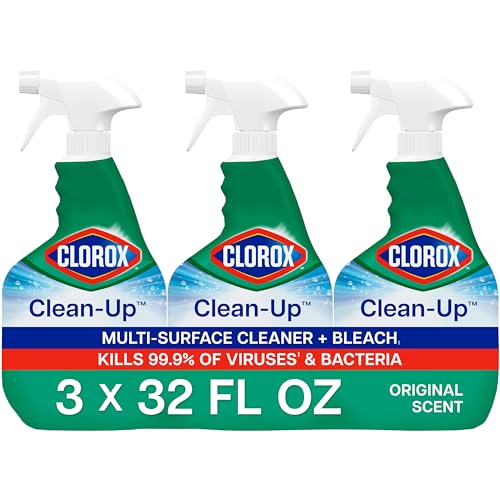
Three 32 oz bleach cleaner sprays for mildew and mold stains on tubs, sinks and shower walls; disinfects per listing.
Check price on Amazon$15.87 as of Oct 20, 2026 9:41 pm GMT+0000 — prices change; see Amazon for current price.Why we like it
- Only bleach-based formula on the shelf
- Named for mold and mildew on shower walls
- Removes allergens, per listing
- Lists sealed granite, stainless and fiberglass
| Specification | Details |
|---|---|
| Format | Ready-to-use trigger spray, 32 fl oz, pack of 3 |
| Active chemistry | Contains bleach (concentration not stated in listing) |
| Claims | Kills 99.9% of bacteria and viruses; removes 99% of allergens such as dust mite and pet dander matter |
| Surfaces named | Stainless steel, sealed granite, glazed porcelain and ceramic, enamel, fiberglass |
| Caution in listing | Avoid prolonged contact with porcelain |
| Model | TU_2447556 |
Clorox Clean-Up — 3 x 32 oz bleach spray, disinfecting and allergen claims, mildew and mold stains, sealed granite named
The Only Bleach Cleaner and the Only Mold Claim on the Shelf
Clorox Clean-Up is the only formula of the 11 that contains bleach, and the only listing that calls itself a mold and mildew cleaner. Lysol and Amazon Basics both advertise the absence of bleach. That makes this the tool for grout lines, caulk and shower walls where mildew stains keep returning, and the wrong tool almost everywhere fabric, wood or colored surfaces can be splashed.
Two safety points come with it. The CDC warns never to mix household bleach with any other cleaner or disinfectant, because it can release vapors that are dangerous to breathe, and the EPA specifically warns against combining chlorine bleach with ammonia-containing cleaners. Do not follow this spray with a vinegar, ammonia or acid cleaner on the same surface without rinsing thoroughly in between, and ventilate the bathroom while using it.
The EPA’s mold guidance adds context: it does not recommend biocides such as bleach as a routine practice during mold cleanup, because dead mold can still cause allergic reactions and must be physically removed, and because the moisture source is the real problem. A bleach spray handles surface mildew on a shower wall; mold on drywall, in a closet or around a window means a moisture problem. Our mold remover roundup covers dedicated products and when to step back.
Pros
- Bleach lifts mildew staining on tile and caulk
- Disinfecting and allergen claims
- Three-bottle pack
Cons
- Never mix with ammonia or acid cleaners
- Can spot fabrics and colored surfaces
- Strong odor; needs good ventilation
- Bleach concentration not stated
Check Clorox Clean-Up with Bleach price on Amazon
5. Method Antibacterial All-Purpose Cleaner (Citron) — Best Plant-Scent Sanitizing Spray

28 oz antibacterial spray made with citric acid; listing names six germs it kills and says it cleans and sanitizes.
Check price on Amazon$4.79 as of Oct 20, 2026 9:41 pm GMT+0000 — prices change; see Amazon for current price.Why we like it
- Only listing naming its active acid
- Lists six specific germs by name
- Cleans and sanitizes in one step
- No bleach odor
| Specification | Details |
|---|---|
| Format | Ready-to-use trigger spray, 28 fl oz |
| Stated ingredient | Made with citric acid |
| Germs named | Staph aureus, influenza A, rhinovirus, E. coli, Enterobacter aerogenes, Salmonella enterica |
| Claim | Kills 99.9% of household germs; cleans and sanitizes in one step |
| Contact time / EPA number | not stated in listing |
| Model | 52079 |
Method 52079 — 28 oz antibacterial spray, citric acid, six named organisms, citron scent
The Only All-Purpose Listing That Names Its Acid
Most listings on this shelf describe what a formula leaves out. The Method antibacterial listing is the only one that names an active acid, citric acid, and the only one that lists the specific organisms it kills: six, from staph to salmonella. Naming organisms is how EPA-registered disinfectant labels work, so this listing reads closer to a label than the “99.9% of germs” wording on the others.
Citric acid is a mild acid, which is useful against light hard-water film on faucets and sinks but is the wrong chemistry for unsealed marble, limestone or travertine, which etch. Keep this one off natural stone and use pick 1 or a dedicated stone cleaner there. Like any acid-containing product, it should never be used together with a bleach cleaner; rinse between them.
The listing does not state the contact time or EPA registration number. The word “sanitize” on a label usually refers to a shorter, lower-level germ reduction than “disinfect,” so read the bottle’s directions for which claim applies to which surface.
Pros
- Names its acid and six target organisms
- Bleach-free germ-kill option
- Handles light mineral film on fixtures
Cons
- Acid: avoid natural stone
- Contact time not in listing
- Never combine with bleach products
Check Method Antibacterial Spray price on Amazon
6. Zep All-Purpose Cleaner and Degreaser (1 Gallon) — Best for Heavy Grease and Garage Grime

1-gallon concentrated cleaner and degreaser with light, medium and full-strength dilutions for kitchens, trim and walls.
Check price on Amazon$8.78 as of Oct 20, 2026 9:41 pm GMT+0000 — prices change; see Amazon for current price.Why we like it
- Only gallon-size product on the shelf
- Three stated dilution levels
- Named for cabinets, painted doors and trim
- Professional-grade degreasing per listing
| Specification | Details |
|---|---|
| Format | Concentrate, 128 fl oz jug |
| Dilution | 3 oz per 32 oz water (light), 6 oz per 32 oz (medium), full strength (tough) |
| Surfaces named | Countertops, appliances, cabinets, painted doors and trim, walls, floors, tile, stainless, porcelain, fiberglass |
| Germ-kill claim | None stated |
| Ingredients / pH | not stated in listing; see SDS |
| Model | ZU0567128 |
Zep ZU0567128 — 1 gal concentrate, 3 dilution levels, degreaser for kitchens, trim, walls and garage surfaces
The Only Gallon Concentrate With Stated Dilution Levels
Two formulas on the shelf are sold as concentrates with dilution instructions: Zep and Fabuloso. Zep is the only one in a full gallon and the only one with three levels for light, medium and tough soil. That flexibility suits the jobs that ready-to-use sprays struggle with: greasy range hoods and cabinet fronts, scuffed baseboards and painted trim before repainting, a garage workbench or the grime on a laundry room wall behind a dryer.
Degreasers are usually alkaline, and full-strength alkaline cleaners can dull some finishes and irritate skin. Zep does not state the pH or ingredients in the listing, so check the Safety Data Sheet, wear gloves at medium and full strength, and test on painted surfaces first. The listing’s tip to vacuum trim before spraying is sensible: wetting dust turns it into mud.
For an oven interior, a dedicated product is still the better tool; our oven cleaner roundup covers caustic and fume-free options.
Pros
- Gallon concentrate lasts a long time
- Three stated dilution strengths
- Wide list of hard surfaces
Cons
- Needs a separate spray bottle
- No pH or ingredient detail in listing
- Gloves advisable at strong dilutions
Check Zep All-Purpose Degreaser price on Amazon
7. Amazon Basics All Purpose Cleaner (Lemon) — Best for Floors and Stainless Steel

Two 32 oz bottles of lemon all-purpose cleaner with no acids, bleach or phosphates; names hardwood floors and stainless.
Check price on Amazon$6.91 as of Oct 20, 2026 9:41 pm GMT+0000 — prices change; see Amazon for current price.Why we like it
- States no acids, bleach or phosphates
- Names hardwood floors and stainless steel
- Two 32 oz bottles per pack
- Spray-and-wipe directions stated
| Specification | Details |
|---|---|
| Format | Ready-to-use spray, two 32 fl oz bottles |
| Stated exclusions | No harsh chemicals, petroleum solvents, phosphates, acids, dyes or bleach |
| Surfaces named | Hardwood floors, tile, countertops, walls, stainless steel |
| Scent | Lemon essential oils |
| Directions | Spray from 6 to 12 inches, then rinse or wipe |
| Model | 103302AMZ (formerly Presto) |
Amazon Basics 103302AMZ — 2 x 32 oz spray, no acids/bleach/dyes stated, hardwood floors and stainless named
The Longest Exclusion List and the Only Spray Naming Hardwood Floors
The Amazon Basics listing excludes more than any other on the shelf: harsh chemicals, petroleum-based solvents, phosphates, acids, dyes and bleach. It is also the only ready-to-use spray that names hardwood floors. Mr. Clean’s liquid says finished wood floors are fine when diluted, and Method and Seventh Generation say sealed wood. For a spot-clean on a wood floor, a kitchen wall or a stainless fridge door, a no-acid, no-bleach formula is a low-risk choice.
Wood floors still need restraint. Spray the cloth or a small area rather than flooding boards, and wipe dry. Our hardwood floor cleaner roundup covers products designed for finished wood specifically.
The listing makes no disinfecting claim and does not name a certification. “No harsh chemicals” is a marketing phrase with no fixed meaning; the specific exclusions are the useful part.
Pros
- No acids or bleach, safe for more surfaces
- Names hardwood floors and stainless
- Two bottles per pack
Cons
- No germ-kill claim
- Scented with lemon oil
- No third-party certification stated
Check Amazon Basics All Purpose price on Amazon
8. Fabuloso 2X Concentrated All-Purpose Cleaner — Best for Mop-Bucket Floor Cleaning
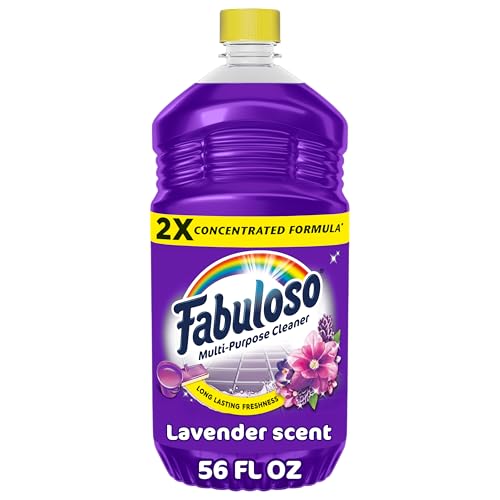
56 oz double-strength concentrate: 1/8 cup per gallon of water for floors, or straight onto a sponge.
Check price on Amazon$4.97 as of Oct 20, 2026 7:57 pm GMT+0000 — prices change; see Amazon for current price.Why we like it
- 1/8 cup per gallon of water
- No-rinse floor use, per listing
- Double the actives of Fabuloso Original
- Less plastic per use, per listing
| Specification | Details |
|---|---|
| Format | Liquid concentrate, 56 fl oz bottle |
| Dilution | 1/8 cup per gallon of water, or applied to a sponge |
| Uses named | Floors, furniture, appliances; no-rinse floor cleaning |
| Strength | 2X the active ingredients of Fabuloso Original, per listing |
| Scent | Lavender |
| Model | 61037883 |
Fabuloso 61037883 — 56 oz 2X concentrate, 1/8 cup per gallon, no-rinse floors, lavender
The Only Concentrate Dosed for a Mop Bucket
Zep’s dilutions are written per 32 oz spray bottle; Fabuloso’s are written per gallon of water, which is how floors get cleaned. That makes this the concentrate for tile, vinyl and laminate floors in kitchens, mudrooms and basements. The listing calls it a no-rinse floor cleaner and says the 2X formula uses half the plastic of the original for the same number of uses.
Fabuloso is strongly scented, and the scent lingers by design. That is a plus for some households and a drawback in small, poorly ventilated rooms or around anyone with asthma. The listing names no ingredients and makes no claim about hardwood, so keep it to resilient flooring and tile, and do not use it alongside bleach in the same bucket.
Pros
- Dosed for a gallon bucket
- No-rinse floor use
- Concentrate stretches one bottle
Cons
- Heavy, lingering fragrance
- Hardwood not named
- No ingredient detail in listing
Check Fabuloso 2X Concentrate price on Amazon
Cleaner chemistry: what each type is for
“All purpose” is a marketing category, not a chemistry. Under the label, household cleaners fall into a few families, and knowing which one is in the bottle tells you what it can safely do.
- Neutral surfactant cleaners (plant-based or conventional) lift everyday dirt, fingerprints and light grease. They are the safest family on the widest range of surfaces. Picks 1, 2 and 7 sit here.
- Alkaline degreasers break down cooking grease and oily grime. Strong ones can dull finishes and irritate skin. Zep is the heavy-duty example on this shelf.
- Mild acids such as citric acid dissolve light mineral film and soap scum but etch marble, limestone and travertine. The Method antibacterial spray names citric acid. For heavier hard-water and rust deposits, see our rust remover roundup.
- Bleach (sodium hypochlorite) disinfects and whitens mildew stains. The CDC notes most household bleach contains 5% to 9% sodium hypochlorite; the Clorox Clean-Up listing does not state its concentration.
- Quaternary and other registered disinfectants kill listed organisms when left wet for the labeled contact time. Lysol’s listing makes a disinfecting claim without naming its active ingredient; the label and Safety Data Sheet will.
Cleaning versus disinfecting
The CDC defines cleaning as removing germs, dirt and impurities with water, soap and scrubbing, and disinfecting as using chemicals that kill remaining germs. In most situations, the CDC says, cleaning alone removes most germs, and disinfecting is likely not needed unless someone in the home is sick or a sick person recently visited.
When disinfecting is warranted, the EPA’s guidance on registered disinfectants comes down to three label checks:
- Registration number. Every registered disinfectant has an EPA registration number on the label, and the EPA says it is the only accurate way to identify a product on its pathogen lists.
- Organisms. The label lists what the product works against. If a pathogen is not on the label, the EPA has not reviewed data on that use.
- Contact time. The surface must stay visibly wet for the full labeled time, which may mean reapplying. Spraying and immediately wiping cleans, but it does not disinfect.
Clean visibly dirty surfaces first; the CDC advises cleaning with a soap or detergent cleaner before disinfecting. None of the six disinfecting listings on this shelf states its contact time, so the bottle is the source of truth.
Safety, storage and indoor air
- Never mix products. The CDC warns never to mix bleach with other cleaners or disinfectants, and the EPA warns that bleach plus ammonia-containing cleaners can produce toxic fumes. Acids and bleach are another dangerous pairing. Rinse a surface between products, and never combine them in a bucket.
- Ventilate. The EPA advises increasing ventilation and following label precautions when using products that emit VOCs, and lists cleansers, disinfectants and aerosol sprays among those sources. Run the bathroom or kitchen exhaust fan or open a window.
- Protect skin and eyes. The CDC advises checking whether a bleach product calls for gloves or eye protection, and the EPA’s mold guidance recommends nitrile, neoprene, natural rubber or PVC gloves when using bleach or strong cleaning solutions.
- Store safely. The CPSC recommends keeping chemicals and cleaning supplies in their original child-resistant containers, in a locked cabinet and out of children’s sight and reach.
- Look for the Safer Choice mark if it matters to you. The EPA’s Safer Choice program reviews every ingredient in a product regardless of percentage, sets pH limits to reduce skin and eye irritation and restricts VOC content. None of the 15 listings here names the Safer Choice label, so check the bottle; a fragrance-free version of the label also exists.
Front Range homes: dry air, hard water and mudrooms
Colorado’s dry climate changes cleaning habits more than most people expect. Fine dust settles quickly on counters and window sills, so a gentle daily cleaner gets more use than a disinfectant. Homes on hard water also see white mineral film on faucets, sinks and glass shower doors; an all-purpose spray will not dissolve heavy scale, and an acid-based product or a water softener is the longer-term fix. Winter brings road grit and de-icer residue into entryways, which a mop-bucket concentrate on tile handles well. Glass and mirrors are their own job; our window cleaner roundup covers sprays, foams and hose-end products.
Bathrooms are where cleaning and building science meet. Mildew that returns within days of a bleach cleaning usually points to a ventilation or moisture problem: a bath fan that does not vent outdoors, a failing caulk joint or a slow leak. The EPA recommends keeping indoor humidity below 60 percent, ideally 30 to 50 percent.
When a cleaner is not enough
Recurring mold on drywall or ceilings, musty odors from a basement or crawl space, staining that spreads under paint and water marks around windows, tubs or toilets are signs of moisture, not dirt. Cleaning removes what you can see but leaves the cause. The EPA notes that hidden mold may require an experienced professional to investigate.
A home inspection evaluates the building envelope, plumbing and ventilation that drive these problems. Our guide to structure and exterior inspections explains what inspectors check, and Front Range buyers, sellers and homeowners can reach out through our contact page to connect with a vetted local inspector.
Frequently asked questions
What is the best all purpose cleaner for most homes?
For everyday cleaning, a neutral, fragrance-free cleaner such as Seventh Generation Free and Clear handles counters, stainless and sealed surfaces with the least impact on indoor air. Keep a separate registered disinfectant, such as Lysol All Purpose, for times when someone is sick, and a bleach cleaner only for mildew.
Do all purpose cleaners disinfect?
Only some do. On our shelf, three formulas make germ-kill claims: Lysol, Clorox Clean-Up and Method Antibacterial. To disinfect, a product must be EPA registered and stay visibly wet on the surface for the contact time on its label. The CDC notes routine cleaning with soap or detergent removes most germs.
Can all purpose cleaner be used on granite?
Sealed granite tolerates most neutral cleaners. Avoid acidic cleaners such as citric acid or vinegar on marble, limestone and travertine, which etch. Seventh Generation names granite and Clorox names sealed granite, but a pH-neutral stone cleaner is the safest choice for polished natural stone.
Is it safe to mix all purpose cleaner with bleach?
No. The CDC warns never to mix bleach with other cleaners or disinfectants, and the EPA warns that bleach and ammonia can produce toxic fumes. Acids and bleach are also dangerous together. Use one product, rinse the surface and ventilate before using another.
Are plant-based all purpose cleaners as effective?
For everyday dirt, grease and fingerprints, plant-based surfactant cleaners work well on most household surfaces. They usually make no disinfecting claim, so they are not substitutes for a registered disinfectant when germ-kill matters. Heavy grease may still need an alkaline degreaser.
References
- Cleaning and Disinfecting with Bleach — Centers for Disease Control and Prevention
- Selected EPA-Registered Disinfectants — U.S. Environmental Protection Agency
- Learn About the Safer Choice Label — U.S. Environmental Protection Agency
- Volatile Organic Compounds’ Impact on Indoor Air Quality — U.S. Environmental Protection Agency
- A Brief Guide to Mold, Moisture, and Your Home — U.S. Environmental Protection Agency
- Poison Prevention — U.S. Consumer Product Safety Commission