Asbestos Remediation Near Me: Finding a Licensed Pro
When a renovation, inspection, or damaged material turns up suspected asbestos, the next search is usually for help nearby. Looking up asbestos remediation near me is the right instinct, because asbestos removal is regulated work that licensed professionals are required to handle, not a weekend project. This guide summarizes EPA, OSHA, and CDC guidance current as of 2026 and is informational only; rely on a licensed abatement contractor for removal decisions and consult your physician about any exposure concerns. Below is how to find a qualified local contractor, what federal and state rules require, and why do-it-yourself abatement is strongly discouraged.
Part of our Asbestos in the Home guide — start there for the full picture →
Is this mold, asbestos, or water damage? Get a free instant screen
Upload a clear photo of the suspect area. You'll get an instant AI screening opinion and what to do next. This is screening guidance, not a professional determination.
Screening guidance only. AI can be wrong. Confirm asbestos, mold type, or lead with lab testing or a licensed professional before acting.
How to Find Asbestos Remediation Near You
Finding the right local contractor comes down to verifying credentials, not just proximity. Asbestos abatement is licensed work in most states, and the contractor you hire should hold the proper state license or certification for the type of work involved. Start by confirming licensing through your state’s regulatory agency, which in Colorado is the Colorado Department of Public Health and Environment.
A qualified local abatement contractor will carry state certification, employ trained and accredited workers, follow federal work-practice standards, and provide proof of insurance. Reputable firms will explain their containment plan, air monitoring approach, and disposal procedure before any work begins. Treat licensing and a clear written scope as non-negotiable. For a broader look at the testing-to-abatement journey, our overview of asbestos and lead hazards in older homes sets the context for where remediation fits.
Why Asbestos Removal Must Be Done by Licensed Pros
Asbestos is hazardous when its fibers become airborne and are inhaled. Intact, undisturbed asbestos-containing material often poses little immediate risk, but disturbing it during removal releases microscopic fibers that can stay suspended in the air and lodge in the lungs. The CDC and federal health agencies link asbestos exposure to serious respiratory diseases, which is why removal is tightly regulated.
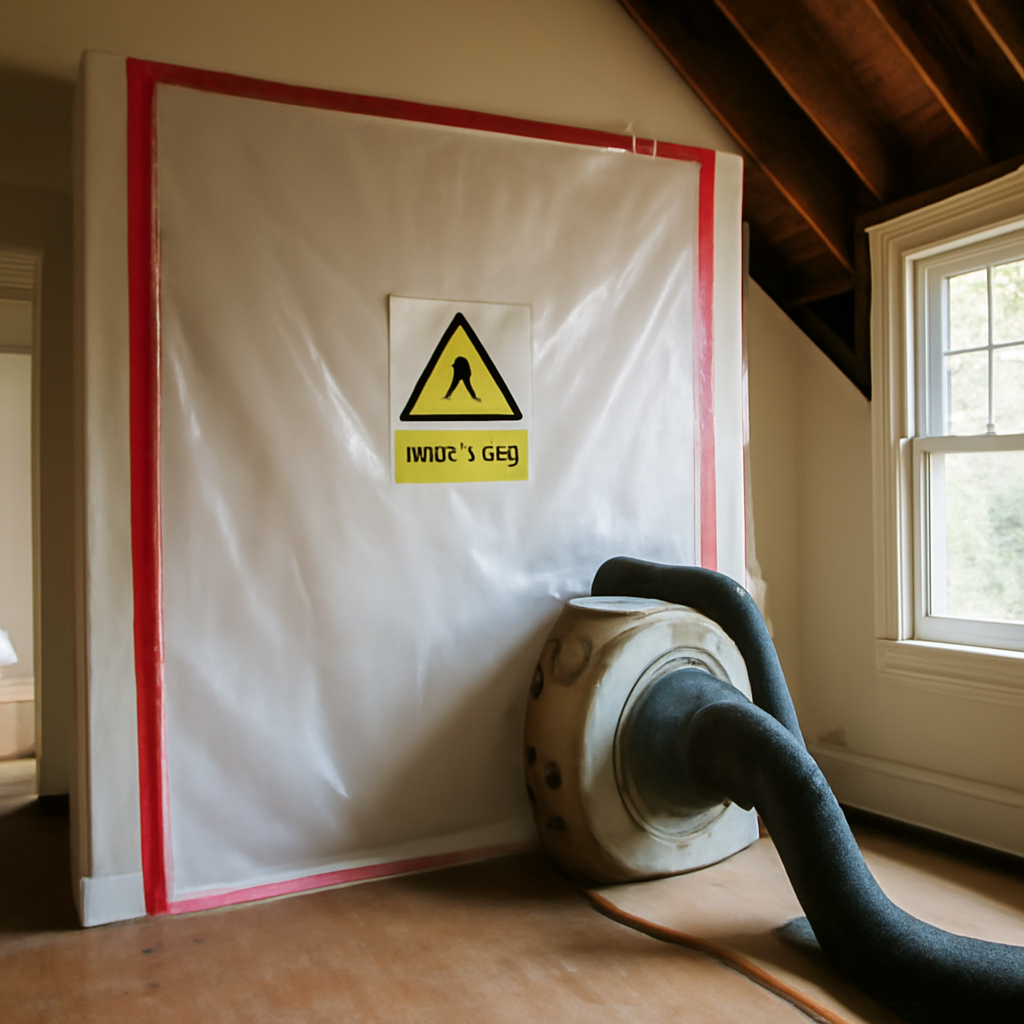
Licensed abatement professionals are trained to contain the work area, control fiber release, use proper respiratory protection, and dispose of waste legally. They set up negative-air containment, wet the material to suppress dust, and conduct air monitoring. None of that is reasonable for a homeowner to replicate safely. The combination of health risk and regulatory complexity is exactly why this work belongs to certified contractors.
What NESHAP and Federal Rules Require
The EPA regulates asbestos under the National Emission Standards for Hazardous Air Pollutants, commonly called NESHAP. NESHAP sets requirements for how regulated asbestos-containing material is handled, removed, and disposed of, with the goal of preventing fiber release into the air. It covers notification, work practices, wetting, and waste disposal for many renovation and demolition activities.
OSHA separately regulates worker exposure on the job, setting permissible exposure limits and requiring protective measures, monitoring, and training for abatement workers. Together, NESHAP and OSHA standards mean a licensed contractor must follow specific procedures that a homeowner is neither trained nor equipped to meet. Compliance is not optional, and improper removal can create both a health hazard and a legal liability.
Notification and Permitting
For many projects, contractors must notify regulators before work begins and follow permitting requirements. Larger jobs and demolitions often trigger formal notification under NESHAP. A licensed contractor knows when notification is required and handles it, which is one more reason to hire a pro rather than attempt removal independently.
State Licensing on Top of Federal Rules
States layer their own licensing on top of federal standards. In Colorado, asbestos abatement and inspection work is regulated by the state health department, and contractors and workers must be certified. Verifying that a contractor holds the correct state certification for the scope of your project is the single most important vetting step.
Why DIY Asbestos Abatement Is Discouraged
Homeowners sometimes ask whether they can remove asbestos themselves to save money. For sampling small amounts with proper PPE and wet methods, some limited DIY testing is possible, but abatement is a different matter. Removing asbestos-containing material is discouraged for several concrete reasons.
First, the health risk is real and the consequences are delayed. Fibers released during a botched removal can linger and be inhaled long after the work is done, including by family members who were not even present during the job. Second, DIY removal rarely meets NESHAP and OSHA standards for containment, monitoring, and disposal, which can leave contamination behind. Third, asbestos waste must be disposed of as regulated material at approved facilities, not in household trash. A homeowner attempting removal can easily create a worse hazard than the intact material posed in the first place.
There is also a transaction angle. Improper removal can complicate a future home sale, since disclosure obligations and potential contamination can surface during inspection. Hiring a licensed contractor produces documentation that protects you later. Our guide on what an accredited asbestos building inspector does explains how testing and surveys feed into a proper remediation plan.
What the Remediation Process Looks Like
Understanding the steps helps you evaluate whether a contractor’s plan is thorough.
Inspection and Sampling
Before removal, an accredited inspector identifies asbestos-containing materials and collects samples for laboratory analysis. Labs use polarized light microscopy for bulk samples and transmission electron microscopy for finer analysis, typically at accredited facilities. Confirming what is present and where guides the scope of the abatement.
Containment and Removal
The abatement contractor isolates the work area with sealed plastic sheeting and negative-air pressure to keep fibers from escaping. Materials are wetted to suppress dust, removed carefully, and sealed in labeled, leak-tight containers. Workers wear respirators and protective suits throughout.
Air Monitoring and Clearance
During and after removal, air monitoring checks fiber levels. Clearance testing confirms the area is safe before the containment comes down. This verification step is part of why professional abatement is trustworthy and DIY is not, since a homeowner has no way to confirm the air is clear.
Disposal
Asbestos waste is transported and disposed of at approved facilities following federal and state rules. The contractor documents disposal, giving you a record that the material was handled legally.
How to Vet a Local Contractor
When you contact local firms, ask targeted questions. Confirm the contractor’s state certification and ask to see it. Ask whether the workers are accredited and trained. Request a written scope that describes containment, wetting, air monitoring, clearance testing, and disposal. Ask for proof of insurance and references from recent projects.
Be cautious of any contractor who downplays containment, suggests skipping air monitoring, or offers an unusually low price that implies cutting corners. Proper abatement is methodical and documented. A legitimate contractor will welcome questions about credentials and procedure, because compliance is central to the work they do.
What It Typically Costs and Why
Costs vary by the type and amount of material, accessibility, and the containment required. Pricing reflects the labor-intensive setup, specialized equipment, air monitoring, regulated disposal, and the certified labor involved. Because asbestos remediation is specialized regulated work, it carries a higher cost than ordinary renovation, and a price that seems too good to be true usually signals shortcuts on safety or compliance. Treating cost as one factor among credentials and process, rather than the deciding factor, leads to better outcomes.
Where Asbestos Hides in Older Homes
Knowing where asbestos-containing materials commonly appear helps you understand what a remediation project may involve. In homes and buildings constructed before the 1980s, asbestos was used across a wide range of products because of its heat resistance and durability. Recognizing these materials guides both inspection and the scope of any abatement.
Insulation and Mechanical Systems
Pipe insulation, boiler and furnace insulation, and duct wrap frequently contained asbestos. These materials are a particular concern because they can become friable, meaning they crumble easily and release fibers when damaged or aging. Vermiculite attic insulation from certain sources may also contain asbestos and should never be disturbed without professional assessment.
Flooring and Adhesives
Vinyl floor tiles, sheet flooring, and the mastic adhesives beneath them often contained asbestos. Because these materials are typically non-friable when intact, they may pose limited risk if left undisturbed, but cutting, sanding, or removing them can release fibers. This is why flooring removal in older homes warrants caution and often professional handling.
Ceilings, Walls, and Exteriors
Textured ceiling finishes, including some popcorn ceilings, certain wall materials, roofing felts and shingles, and cement siding products were among the building components that used asbestos. Any renovation touching these surfaces in an older building should begin with inspection rather than demolition, since disturbing them blindly risks fiber release.
The Difference Between Testing and Abatement
Homeowners sometimes blur the line between identifying asbestos and removing it, but they are separate stages handled by different professionals. Testing, or inspection, determines whether asbestos is present, where, and in what condition. An accredited inspector collects samples and arranges laboratory analysis, then documents findings. This stage is comparatively low-risk when done with proper technique and is sometimes possible for a homeowner to attempt for small samples using wet methods and protective equipment, though professional sampling is more reliable.
Abatement is the removal or containment of confirmed asbestos-containing material, and it is the high-risk, heavily regulated stage that licensed contractors must perform. The reason for keeping these stages distinct is partly safety and partly to avoid conflicts of interest. An inspector who has no financial stake in removal can give an unbiased assessment of whether abatement is even necessary, since intact, undisturbed material can sometimes be safely managed in place rather than removed.
Understanding this division helps you interpret quotes and recommendations. A contractor pushing immediate full removal of intact, stable material without an independent inspection deserves scrutiny. The proper sequence is inspection first, then a decision about management versus abatement, then licensed removal only where warranted.
Managing Asbestos in Place
Removal is not always the answer. When asbestos-containing material is intact, undisturbed, and unlikely to be disturbed, an operations and maintenance approach can be appropriate. This means leaving the material alone, monitoring its condition over time, and avoiding activities that could damage it. Encapsulation, where a sealant binds the material to prevent fiber release, is another option for certain situations.
The decision between management and removal depends on the material’s condition, its location, the likelihood of disturbance, and any planned renovations. A homeowner planning to gut a kitchen has different needs than one simply living with intact floor tiles. An accredited inspector’s assessment, combined with a licensed contractor’s input, guides the choice. Importantly, managing material in place is only safe when it genuinely stays undisturbed, which is why proper assessment matters before settling on this path.
When to Act
If you suspect asbestos in a pre-1980 home, the safest immediate step is to leave the material undisturbed and avoid sanding, cutting, or breaking it. Then arrange an inspection by an accredited professional to confirm what is present. If removal is warranted, hire a licensed abatement contractor who follows NESHAP and state rules. Acting through proper channels protects your health, keeps you compliant, and gives you documentation that holds up during a future sale.
References
- EPA asbestos NESHAP requirements — U.S. Environmental Protection Agency
- OSHA asbestos standards for worker protection — Occupational Safety and Health Administration
- Colorado asbestos certification and regulation program — Colorado Department of Public Health and Environment
Frequently asked questions
How do I find licensed asbestos remediation near me?
Search for local abatement contractors, then verify their state certification through your state health agency, which in Colorado is the Colorado Department of Public Health and Environment. Confirm worker accreditation, request a written scope, and ask for proof of insurance before hiring.
Can I remove asbestos myself?
DIY abatement is strongly discouraged. Removing asbestos-containing material releases hazardous fibers and is unlikely to meet NESHAP and OSHA containment, monitoring, and disposal standards. Licensed contractors are required for safe, compliant removal.
What is NESHAP?
NESHAP is the EPA's National Emission Standards for Hazardous Air Pollutants. It sets rules for how asbestos-containing material is handled, removed, and disposed of to prevent fiber release into the air, and licensed contractors must follow it.
Why does asbestos removal cost more than normal renovation?
The price reflects specialized containment, air monitoring, certified labor, clearance testing, and regulated disposal. A price that seems unusually low often signals shortcuts on safety or compliance, so weigh credentials and process alongside cost.
Front Range homeowners who need help locating a licensed local abatement contractor can reach out through our contact page for a connection to a vetted professional.