Asbestos Remediation: Make-Safe vs Removal Explained
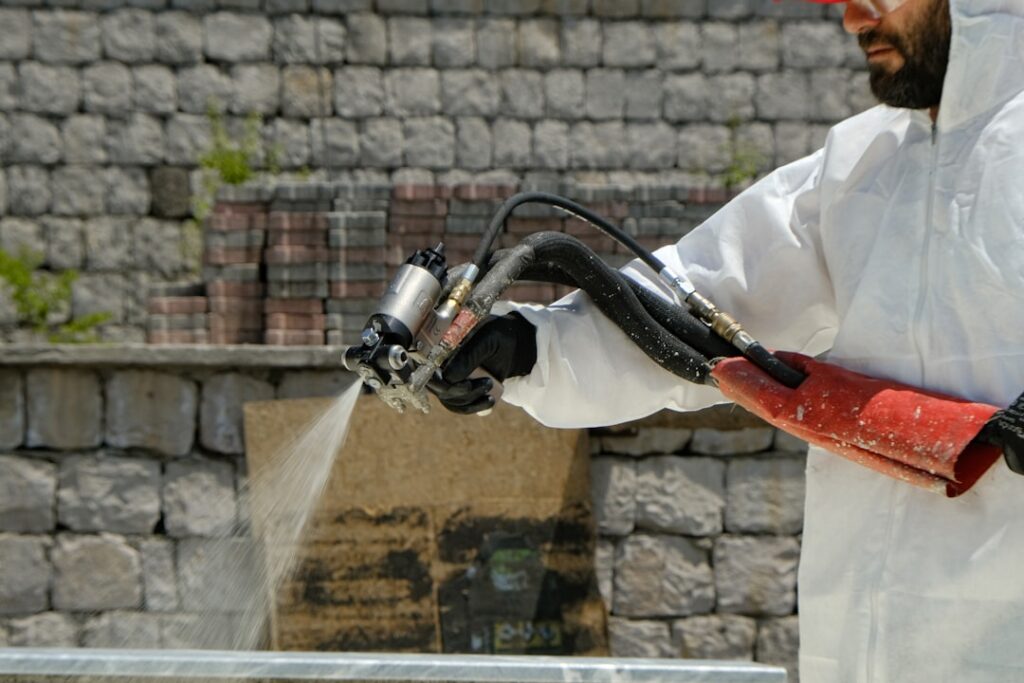
Asbestos remediation is the umbrella term for any work that reduces the fiber-release hazard of asbestos-containing materials (ACMs) in a property. It includes removal but is not limited to removal — encapsulation, enclosure, repair, and operations-and-maintenance (O&M) management all qualify as remediation. The term overlaps in everyday use with abatement, which technically refers to physical removal. This guide unpacks the distinction, walks the four remediation strategies with cost benchmarks and decision criteria, and explains when each approach is appropriate. Methodology reflects EPA, OSHA, and AHERA guidance current as of 2026; consult a state-licensed asbestos professional before committing to any remediation strategy.
Is this mold, asbestos, or water damage? Get a free instant screen
Upload a clear photo of the suspect area. You'll get an instant AI screening opinion and what to do next. This is screening guidance, not a professional determination.
Screening guidance only. AI can be wrong. Confirm asbestos, mold type, or lead with lab testing or a licensed professional before acting.
Asbestos remediation versus abatement
The cleanest distinction: remediation is the broad category — make the situation safe — and abatement is the narrower category — physically remove the material. In practice, most contractors and many regulators use the terms interchangeably, but the technical distinction matters when comparing bids and reading reports. A “remediation” proposal that includes only encapsulation is not the same as an “abatement” proposal that includes removal, even though both reduce hazard.
EPA, OSHA, and AHERA (Asbestos Hazard Emergency Response Act, 1986) treat remediation as a family of response actions. AHERA applies directly to schools but its language has shaped commercial and residential standards across the industry.
The four remediation strategies
Strategy 1 — removal (abatement)
Removal physically extracts ACMs and disposes of them at a permitted facility. It is the most thorough strategy and the most expensive. Removal eliminates the hazard at the source, but the removal process itself temporarily increases airborne fiber risk, which is why containment, negative air pressure, and wet methods are mandatory. The residential asbestos abatement guide walks the full removal workflow.
Strategy 2 — encapsulation
Encapsulation coats ACMs with a sealant that binds fibers in place and prevents release. Two product categories: bridging encapsulants (form a tough film over the surface, used on intact materials) and penetrating encapsulants (soak into the material binding fibers internally, used on slightly damaged or weakened materials). Encapsulation is appropriate for intact, accessible materials that are not subject to abrasion or future disturbance — popcorn ceilings in occupied living rooms, transite siding, and intact pipe insulation in unfinished basements are common candidates.
The trade-off: encapsulation does not eliminate the ACMs; it manages them. Future renovations still trigger abatement requirements. Encapsulants degrade over time (10 to 25 years depending on product and exposure), requiring re-inspection and reapplication.
Strategy 3 — enclosure
Enclosure builds a permanent airtight barrier around ACMs. The classic application is drywalling over a ceiling with popcorn texture, or building a soffit around exposed pipe insulation. Enclosure transfers the management burden to the new barrier — if drywall cracks, gets penetrated, or fails, the underlying hazard returns. Done well, enclosure is durable, cheaper than removal, and acceptable to regulators for many applications.
Enclosure does not solve every problem. Materials that are already friable or damaged should not be enclosed without prior stabilization, and any future drilling, cutting, or demolition of the enclosure exposes the underlying ACM.
Strategy 4 — operations and maintenance (O&M)
O&M is the “manage in place” strategy. The homeowner or building manager documents every ACM location, performs periodic inspections (typically every six months), and ensures that any disturbance is performed by licensed contractors using regulated procedures. O&M is the standard approach for commercial buildings with extensive ACMs and is increasingly applied to residential properties where removal would be financially or operationally impractical.
O&M requires discipline: a written plan, occupant notification, surveillance schedules, and contractor protocols. Done correctly, O&M is the lowest-cost long-term strategy. Done poorly, it generates regulatory liability and post-sale disclosure friction.
How to choose among the four strategies
Several factors drive the choice:
Material condition
Intact, undamaged ACMs lean toward encapsulation, enclosure, or O&M. Damaged or friable materials lean toward removal because the fiber-release risk is already elevated.
Location and accessibility
ACMs in occupied living areas with regular contact (popcorn ceilings in living rooms, floor tile in kitchens) favor removal. ACMs in inaccessible locations (crawlspace pipe insulation, attic vermiculite, soffit areas) often work better as O&M or enclosure projects.
Planned renovation
If renovation will disturb ACMs anyway, removal at the time of renovation is usually cheaper than two separate mobilizations. If no renovation is planned, in-place management strategies become more attractive.
Future sale plans
Buyers often discount homes with known asbestos even when O&M is in place. Sellers planning to list within five years sometimes opt for removal to clear the disclosure record, while long-term owners more often choose in-place management.
Budget
Encapsulation and enclosure typically cost 30% to 60% of full removal for the same scope. O&M has minimal upfront cost but ongoing inspection and contractor-coordination overhead. Removal is the most expensive but also the most “done” — no ongoing management.
Typical residential remediation costs
Industry estimates for Front Range and similar markets in 2026:
Encapsulation
Popcorn ceiling encapsulation: $1.50 to $3.00 per square foot. Pipe insulation encapsulation: $4 to $8 per linear foot. Transite siding encapsulation: $3 to $6 per square foot.
Enclosure
Drywall over popcorn ceiling: $4 to $8 per square foot including framing, drywall, taping, texture, and paint. Boxed soffits around pipe insulation: $30 to $60 per linear foot.
O&M setup
Initial inspection and management plan: $500 to $1,500. Annual surveillance inspections: $200 to $500. Periodic re-inspection of encapsulated or enclosed materials is included in well-structured O&M programs.
Removal (for reference)
$5 to $15 per square foot depending on material type, with mobilization and clearance fees typically adding $1,500 to $3,000 to small projects.
Regulatory paperwork for each strategy
Encapsulation and enclosure projects below regulatory thresholds typically do not require notification, but the work must still be performed by licensed contractors and documented for future disclosure. Removal above threshold quantities triggers full EPA NESHAP notification and clearance testing. O&M programs do not require notification but must comply with disclosure rules at sale. State-level rules vary — Colorado’s CDPHE-Air Pollution Control Division regulates commercial asbestos work tightly and provides homeowner guidance for residential decisions. See our Colorado disclosure guide for state-specific detail.
Long-term considerations
Two factors deserve weighing on any remediation decision. First, encapsulation and enclosure transfer the future-disturbance risk to whoever owns the property next. Sellers must disclose this transfer in most states. Second, the asbestos-disposal cost curve has steadily risen as permitted facilities consolidate. Remediation costs in 2030 will likely be higher than 2026 costs, which factors into “do it now versus wait” calculations.
Working with the right professionals
Asbestos remediation requires three independent roles: the assessor (identifies and characterizes ACMs), the abatement or remediation contractor (performs the work), and the clearance inspector (verifies completion). State regulations typically require the clearance inspector to be independent of the abatement contractor to prevent conflicts of interest. The buyer’s perspective on asbestos and lead in pre-1978 housing describes how these roles fit into a transaction.
When to call a professional
Any pre-1980 home with suspect materials, any planned renovation that will disturb potential ACMs, and any visible damage to known asbestos-containing materials warrant a licensed asbestos building inspector consultation. The inspector helps homeowners weigh removal versus management without a financial stake in the answer. Front Range homeowners can verify contractor licenses through the CDPHE database before engaging.
Encapsulation vs removal decision framework
The encapsulation-versus-removal decision is one of the highest-stakes choices in any asbestos remediation project. Removal is more thorough but more expensive, more disruptive, and itself temporarily increases fiber-release risk during the work. Encapsulation is cheaper, faster, and less disruptive but transfers the management burden into the future. Three condition-based rules separate the scenarios where each approach fits.
Intact non-friable materials lean toward encapsulation
Materials in good condition that cannot be crumbled by hand pressure are strong encapsulation candidates. Intact 9-inch vinyl floor tile with intact black mastic in a finished basement that sees light foot traffic — encapsulation appropriate. Intact transite cement-board siding on a garage exterior with no visible damage — encapsulation appropriate. Intact pipe insulation in a sealed mechanical room with no occupant access — encapsulation appropriate. The common thread is low future-disturbance probability and material integrity that prevents current fiber release.
Damaged or friable materials require removal
Materials that are already releasing fibers or that have lost integrity cannot be safely managed in place. Encapsulants cannot reliably bond to surfaces that are actively shedding. The decision flips to removal in these cases regardless of cost preference because in-place management is no longer providing the protection it is designed to provide.
Worked examples illustrating the framework
Several real-world comparisons clarify the boundary.
Popcorn ceiling damaged from water leak versus intact popcorn ceiling. A popcorn ceiling with water-staining, sagging, or flaking texture must be removed — water damage compromises the cementitious binder that holds the asbestos fibers in place, and the material is now actively friable. An intact, well-bonded popcorn ceiling in a dry room with no leak history and stable temperature can be encapsulated using a bridging encapsulant or enclosed with new drywall ceiling beneath. The same material in two different conditions points to two different remediation strategies.
Asbestos floor tile with mastic intact versus tile breaking up. Intact 9-inch vinyl asbestos tile in a basement with intact black mastic underneath — encapsulation with a tile sealer is appropriate, or enclosure with a click-lock floating floor over the existing tile. Tile that is cracking, lifting at edges, or breaking up under foot traffic must be removed because the broken edges release fibers continuously and encapsulants cannot bond to a substrate that is actively spalling.
Pipe wrap in mechanical room versus pipe wrap in finished basement. Intact pipe wrap behind a locked mechanical room door with restricted access — O&M plan with periodic inspection is appropriate. The same intact wrap exposed in a finished basement bedroom where a child sleeps below it — removal is the better call because future disturbance risk is high regardless of current condition.
Future-renovation overlay
Any encapsulation or enclosure decision should consider planned renovation work. If the homeowner expects to remodel the kitchen, finish the basement, or replace siding within five years, removing the asbestos during that future project may be cheaper than mobilizing a separate abatement crew. Bundling abatement with planned renovation work spreads mobilization, containment, and disposal fees across more scope.
Insurance coverage for asbestos remediation
Homeowners commonly assume that homeowners insurance will cover asbestos discovery and remediation. That assumption is usually wrong, and the gap between expectation and reality is large enough to materially affect remediation budgets.
Standard policies typically exclude asbestos as a planned expense
Most standard homeowners policies treat asbestos as a pre-existing condition rather than a covered loss. Discovery of asbestos during renovation, scheduled abatement projects, and management of known in-place ACMs all fall outside coverage on standard policies. The reasoning is straightforward — asbestos is not a sudden accident, it is a building characteristic that existed before the policy was written.
Sudden-accidental incident exceptions
Coverage sometimes attaches when a covered loss (fire, sudden water damage, hail strike on transite siding, tornado damage) damages ACMs and triggers a remediation requirement as part of the loss response. Under those circumstances, the asbestos work becomes part of the covered repair scope rather than a standalone abatement project. Homeowners pursuing claims under this theory should document the triggering loss carefully and engage the carrier early — the cleaner the causation chain, the better the coverage outcome.
Pollution exclusions
Many policies carry pollution exclusions that explicitly name asbestos along with mold, lead, and other environmental hazards. The exclusion language defeats coverage even for incidents that would otherwise qualify under sudden-accidental rules. Reading the policy’s pollution exclusion carefully — and asking the carrier in writing for a coverage opinion before incurring abatement cost — is the difference between recovering remediation expense and paying out of pocket.
What to document for claims
For homeowners pursuing coverage under a sudden-accidental theory, documentation is the case. Date-stamped photos of the triggering loss, contractor invoices showing causation, professional asbestos survey reports identifying the affected materials, and clearance documentation after remediation all support the claim file. The residential abatement guide describes the standard documentation package a licensed contractor produces.
Endorsements and standalone environmental coverage
Some carriers offer environmental hazard endorsements that explicitly cover asbestos, lead, and mold remediation up to a sublimit (typically $5,000-25,000). These endorsements add premium but provide explicit coverage for planned remediation. Homeowners in pre-1980 housing should ask their agent about endorsement availability — the marginal premium is often modest relative to the catastrophic cost of a full whole-house abatement project paid out of pocket. Buyers can review the pre-1978 housing hazard pillar for context on when coverage becomes meaningful.
References
- EPA Protect Your Family From Asbestos — U.S. Environmental Protection Agency
- EPA Asbestos Laws and Regulations — U.S. Environmental Protection Agency
- OSHA Asbestos Standards — Occupational Safety and Health Administration
- CDPHE Asbestos Program — Colorado Department of Public Health and Environment
Front Range homeowners weighing removal versus in-place management for a pre-1980 property can reach out through our contact page for a connection to a vetted local inspector or licensed asbestos professional.