Asbestos Home Removal: Licensed-Pro Process Guide
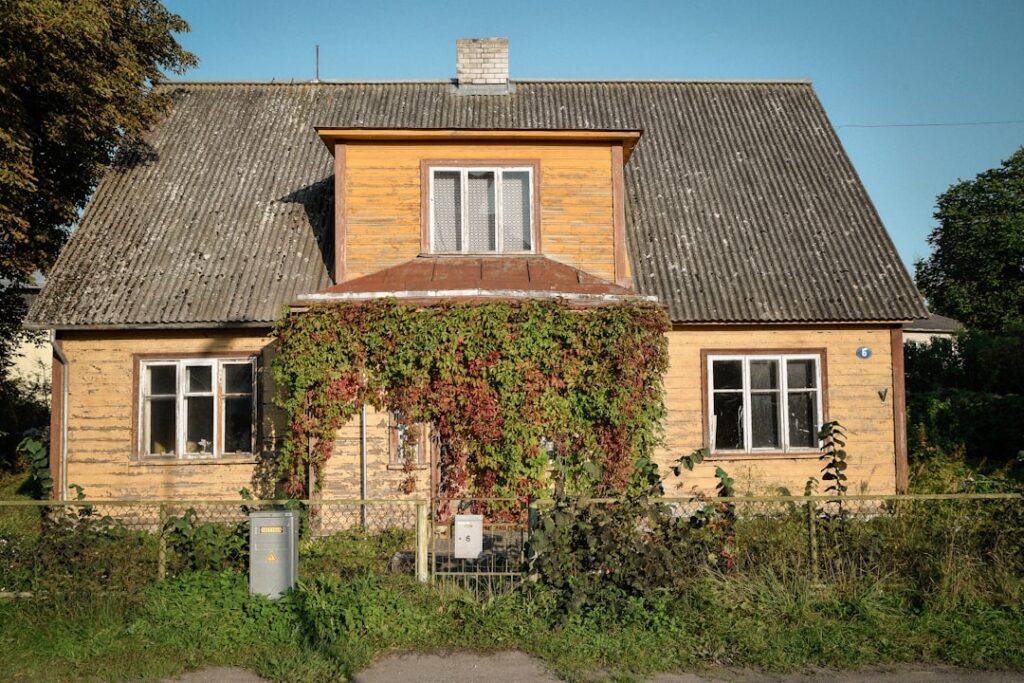
Asbestos home removal is a regulated activity that follows a specific sequence: inspection and sampling, regulatory notification, containment construction, removal under negative pressure, decontamination, waste packaging, and clearance air sampling. From a homeowner perspective the process can feel opaque because the contractor controls almost every step. This guide walks through what happens during asbestos home removal from the moment the abatement crew arrives until the final clearance certificate is issued. The content summarizes EPA and CDPHE guidance current as of 2026 and is informational only — consult a CDPHE-licensed contractor and certified inspector for project-specific decisions.
Part of our Asbestos in the Home guide — start there for the full picture →
Is this mold, asbestos, or water damage? Get a free instant screen
Upload a clear photo of the suspect area. You'll get an instant AI screening opinion and what to do next. This is screening guidance, not a professional determination.
Screening guidance only. AI can be wrong. Confirm asbestos, mold type, or lead with lab testing or a licensed professional before acting.
What licensed asbestos home removal includes
Licensed abatement contractors offer a turnkey scope that covers everything between sampling confirmation and post-removal clearance. Items in scope: regulatory notification to the Colorado Department of Public Health and Environment (CDPHE) under Air Pollution Control Division Regulation 8 Part B; setup of physical containment with 6-mil polyethylene sheeting; installation of HEPA-filtered negative-air machines maintaining 0.02 inches water column negative pressure relative to surrounding spaces; controlled removal of asbestos-containing material using glove bags, wet methods, or full containment depending on friability; HEPA-vacuum cleanup; double-bagging and labeling of all waste; transport to a CDPHE-certified asbestos landfill; and third-party clearance air sampling.
The work proceeds under OSHA Class I asbestos work standards for friable removal and Class II for non-friable. Workers wear full Tyvek suits, foot covers, and half-face or full-face P100 respirators. Each worker passes through a three-stage decontamination unit at every exit: dirty room, shower stage, and clean room. The whole apparatus exists to keep airborne fiber concentrations below the OSHA permissible exposure limit of 0.1 fibers per cubic centimeter during the work.
Inspection and sampling come first
Before any home removal can begin, a Colorado-certified Asbestos Building Inspector takes bulk samples from suspect materials and submits them to an NVLAP-accredited lab. The sampling process itself is intrusive: the inspector cuts or scrapes small pieces of suspect material into ziploc bags with a numbered chain-of-custody label. Lab analysis by polarized light microscopy (PLM) returns in 5 to 10 business days, with 24-hour rush available for an upcharge. For background on the inspector’s role, the asbestos inspector vetting guide outlines what credentials to look for.
Only after a positive lab result is the abatement contractor brought in. Homeowners should not pre-emptively engage an abatement contractor for inspection and sampling, because contractors selling both services have an inherent conflict of interest. The industry-standard practice is to separate the inspection firm from the abatement firm. CDPHE explicitly recommends this separation.
Containment construction and the homeowner timeline
Containment construction takes most of day one. The crew empties the work area (or, for unmovable furniture, seals it under additional poly sheeting), then double-layers walls and floors with 6-mil polyethylene. Critical openings are sealed: HVAC supply and return registers, doorways (using zipper-equipped airlock entries), light fixtures, and any other air pathway between the work area and the rest of the home. The negative-air machines exhaust through HEPA filters to either an exterior window/door bypass or a flex-duct routed outside.
Homeowners typically must vacate the property for the entire removal phase if the abatement zone is the only path between living spaces, or if the home is small enough that the negative-air machines disturb HVAC operation. For an isolated basement abatement, the family may be able to remain in upper floors if the HVAC system is fully off and confirmed sealed.
The actual removal phase
Day two is the removal itself. The crew works under the negative-pressure containment, wetting all materials with amended water (water plus surfactant) before any disturbance to reduce airborne fiber generation. Vinyl tiles are scraped from below with the substrate also bagged. Pipe lagging is removed under glove bag for short runs and full enclosure for long ones. Popcorn ceilings are sprayed-wet, scraped into a sheet-poly floor cover, and the substrate ceiling is HEPA-vacuumed before any new texture goes back up.
All waste is double-bagged in printed asbestos-warning poly bags (6 mil per layer, minimum), with each bag sealed by twist and tape. The bags are stored inside the containment until end of shift, then loaded into a sealed transport container. The transport container leaves with the crew at end of project and a CDPHE waste manifest accompanies the load to the certified landfill.
Decontamination and final cleanup
After all visible material is removed, the crew HEPA-vacuums every surface inside the containment, wipes hard surfaces with damp cloths, and disposes of all cloths and vacuum filters as asbestos waste. The crew then waits for the containment to “settle” — typically 12 to 24 hours of continuous negative-pressure operation while remaining airborne fibers settle and are captured by the HEPA filters.
Once the settling phase is complete, a third-party industrial hygienist (independent of the abatement contractor) enters the still-sealed containment to draw clearance air samples. Phase Contrast Microscopy (PCM) for total fiber count, or for friable removals, Transmission Electron Microscopy (TEM) analysis follows. Clearance limits require fiber concentrations below 0.01 fibers per cubic centimeter (PCM) or below 70 structures per square millimeter (TEM, asbestos-specific). The independent hygienist issues the clearance certificate.
What homeowners receive at project closeout
At closeout the homeowner should receive a project file containing: the original NESHAP notification filed with CDPHE; bulk sample lab results from the original inspection; the abatement contractor’s waste manifest with disposal-site signature; the clearance air sample results; and a project completion letter naming all certified personnel and dates. This file matters for any future home sale, since buyers’ inspectors will request documentation of the abatement work. For perspective on how this fits into the broader hazard framework, see the asbestos and lead pillar guide.
Homeowner role during home removal
The homeowner role during active asbestos home removal is mostly observational and logistical. Front Range homeowners typically schedule the work for a period when the family can vacate, arrange temporary accommodation (a few days in a hotel or with relatives), and coordinate access for the abatement crew. Personal items in adjacent rooms should be covered or relocated to protect against any incidental dust settlement, though properly contained abatement should not produce significant outside-containment dust.
Homeowners with pets need to plan separately. Cats and dogs cannot remain in the home during active abatement; the negative-air machines and crew foot traffic create a disruptive environment, and any incidental fiber release would expose the pets without their consent. Boarding the pets for the duration of the project is standard. Birds and reptiles in cages should also be relocated, since their respiratory systems can be more sensitive to particulates than mammalian systems.
Communication with the abatement crew
The primary contact during the project is typically the abatement supervisor (sometimes called the competent person under OSHA terminology). This individual coordinates the crew, communicates with the homeowner, signs the daily logs, and serves as point of contact for the third-party industrial hygienist. The homeowner should have the supervisor’s direct phone number and should not hesitate to call with questions during the project window. Reasonable supervisors welcome homeowner engagement and explain unexpected findings (such as additional asbestos discovered behind the originally identified material) in real time rather than burying changes in the final invoice.
If scope changes mid-project, the homeowner and contractor should sign a written change order before the additional work proceeds. Verbal scope expansion is a recurring source of post-project disputes. Common mid-project change scenarios in Front Range homes include: pipe insulation extending farther than originally measured, additional layers of vinyl floor tile beneath the first layer that also test positive, popcorn ceiling material extending into adjacent rooms behind closed doors, and roof or siding asbestos exposed when adjacent components are removed.
How insurance interacts with home removal
Most homeowners insurance policies exclude voluntary asbestos abatement from coverage. The exception is when the abatement is part of a covered loss — for example, fire or water damage in a pre-1978 home that disturbed previously stable asbestos-containing material. In a covered-loss scenario, the insurance adjuster authorizes abatement as part of the restoration scope and the abatement contractor works through the carrier’s pricing schedule. The homeowner’s deductible applies but the abatement cost is otherwise covered.
For voluntary or pre-purchase abatement, the homeowner pays out of pocket. Some Front Range counties offer modest grant programs for low-income homeowners facing immediate asbestos hazards, typically $500 to $2,500 administered through the county housing authority with income qualification requirements. These programs do not cover whole-home abatement but can help with critical single-component removals. The cost asbestos removal guide in this batch covers pricing and grant context in more detail.
Cost structure for typical home removal
Front Range pricing for full asbestos home removal in 2026 generally lands as follows. A single-room popcorn ceiling abatement is $2,500 to $4,500 turnkey. Basement pipe-insulation removal is $3,000 to $7,000 depending on linear feet. Whole-home vinyl floor tile removal is $4,000 to $10,000. Exterior siding (transite/cement asbestos board) removal is $15,000 to $25,000 for a typical 1,500 square-foot one-story house. These ranges include all subcontracted lab, inspector, and waste-disposal fees, but do not include rebuilding or refinishing after clearance.
Re-occupancy timeline after asbestos home removal
The re-occupancy timeline after asbestos home removal depends on the scope and on clearance certification. For an isolated single-room abatement (such as one bathroom or one basement utility area), the contained area can be re-entered as soon as the clearance air sampling result returns from the lab (typically 24 to 72 hours after sample collection). For whole-home abatement projects, re-occupancy is staged: the homeowner returns to areas as each containment passes clearance, with the project potentially running for one to three weeks before full home access is restored.
Some families prefer to wait 7 to 14 days after the official re-occupancy date before returning, even though clearance certification means the air is safe. This extended waiting period is not required by any regulation but reflects personal preference. There is no health benefit to waiting beyond the clearance certificate date; the cleared air meets fiber-concentration standards comparable to typical urban outdoor air. Returning families typically notice the smell of fresh paint and new materials more than any residual indicator of the abatement work itself.
HVAC system handling during and after abatement
The HVAC system requires specific handling during asbestos home removal. Before the abatement begins, the system is shut down completely and supply and return registers in the affected areas are sealed with poly sheeting and tape. The thermostat is turned off and the breaker for the HVAC unit is locked out to prevent accidental activation during the negative-pressure containment phase. After clearance certification, the registers are unsealed but the homeowner should run the HVAC system for several hours in “fan only” mode while changing the air filter to capture any residual particulate that may have entered the duct system despite sealing.
For homes with HVAC systems that have older asbestos-containing duct insulation or duct mastic, the duct system itself may need to be addressed as part of the abatement scope. This significantly extends the project. Some contractors propose duct cleaning post-abatement as an additional service, though duct cleaning is not the same as duct asbestos abatement; the former is hygiene-focused while the latter is hazard-removal-focused. Homeowners should clarify scope before signing any duct-related work into the contract.
References
- EPA asbestos awareness and abatement overview — U.S. Environmental Protection Agency
- CDPHE asbestos abatement program — Colorado Department of Public Health and Environment
- OSHA asbestos work standards (Class I, II, III) — Occupational Safety and Health Administration
- NIOSH asbestos worker protection guidance — Centers for Disease Control and Prevention
Frequently asked questions
How long does asbestos home removal take?
A typical single-room popcorn ceiling removal takes two work days plus a one-day clearance air-sampling turnaround. Pipe insulation jobs are similar. Whole-home siding or roofing removals run one to two weeks of active work plus clearance.
Do homeowners have to leave during asbestos removal?
For most interior removals homeowners must vacate during the active abatement phase. If the work area is fully isolated from living spaces and the HVAC system can be shut down and sealed, families with isolated basement work may remain on upper floors.
What is clearance air sampling?
After removal, an independent industrial hygienist draws air samples inside the still-sealed containment and submits them for PCM or TEM analysis. Fiber concentrations must fall below regulatory limits before the containment can be removed and the area returned to use.
What happens to asbestos waste after home removal?
All waste is double-bagged in labeled 6-mil polyethylene, transported by a licensed hauler with a CDPHE manifest, and disposed of at a certified asbestos landfill. The homeowner and contractor each retain manifest records as long-term documentation.
Front Range homeowners ready to scope an asbestos home removal project with a CDPHE-licensed contractor can reach out through our contact page.
Asbestos test kits
Asbestos can only be confirmed by a lab. A mail-in kit gets you a sealed sample container and accredited analysis — never sand or disturb suspect material first.
| Product | Why | Buy |
|---|---|---|
| Asbestos Test Kit (mail-in lab) | Includes PPE + sealed mailer. | Amazon |
| Pro-Lab Asbestos Test Kit | Widely available; lab fee separate. | Amazon |