Test for Asbestos at Home: Safe DIY Methodology Guide
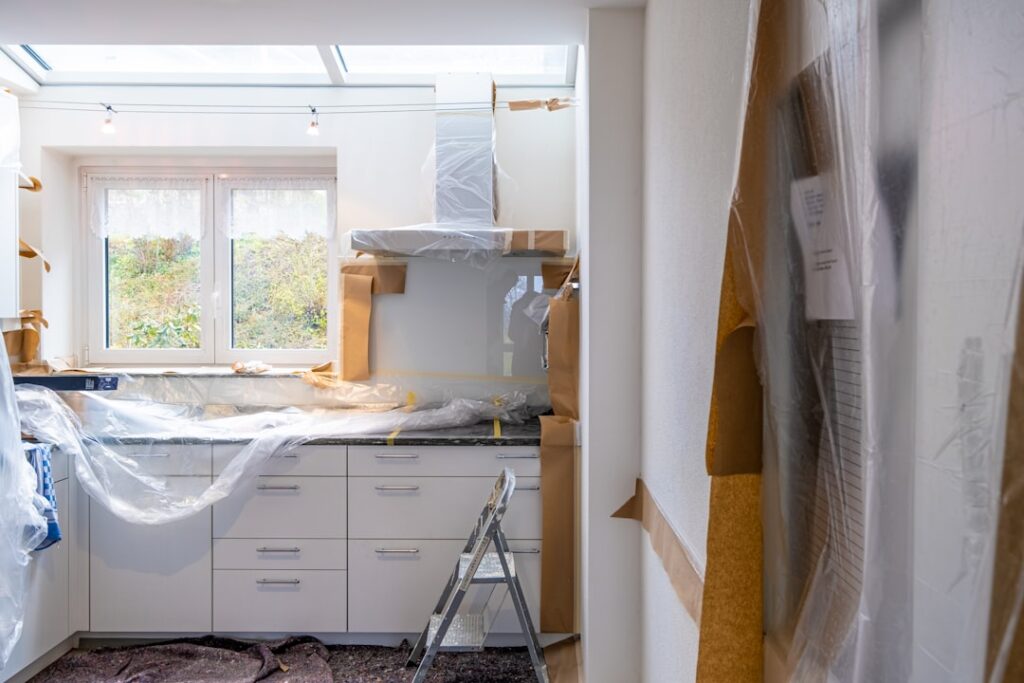
Homeowners considering whether to test for asbestos at home have two essentially different jobs in front of them: identifying which materials are candidates for sampling, then collecting a sample safely and shipping it to an accredited laboratory. This guide summarizes EPA and CDC guidance current as of 2026 and is not a substitute for a licensed inspector when materials are friable, damaged, or deteriorating. DIY testing is appropriate only for intact, non-friable materials in good condition; everything else requires a professional. Below is the full safe-DIY methodology, what tools and PPE to use, and when to escalate from homeowner sampling to professional inspection.
Is this mold, asbestos, or water damage? Get a free instant screen
Upload a clear photo of the suspect area. You'll get an instant AI screening opinion and what to do next. This is screening guidance, not a professional determination.
Screening guidance only. AI can be wrong. Confirm asbestos, mold type, or lead with lab testing or a licensed professional before acting.
How to Test for Asbestos at Home Safely
The DIY methodology to test for asbestos at home is built on four principles: minimize fiber release, isolate the work area, use proper personal protective equipment, and send the sample to an NVLAP-accredited laboratory. The wet method is the single most important fiber-suppression technique. Misting the sample area with water and a few drops of detergent before cutting prevents the friction of sampling from putting fibers into the air. The work area is isolated by closing doors, shutting off HVAC, and covering nearby surfaces with plastic that can be discarded afterward.
Personal protective equipment includes a P-100 half-face respirator (not a dust mask or surgical mask), disposable coveralls (Tyvek or equivalent), disposable nitrile gloves, and disposable shoe covers. The respirator must be properly fitted; facial hair under the seal voids the protection. The pillar guide on asbestos and lead in pre-1978 housing covers the regulatory context that defines what homeowners are permitted to do versus what requires licensed contractors.
Materials Safe for Homeowner Sampling
Only intact, non-friable materials are appropriate for DIY sampling. Vinyl floor tile in good condition (no cracking, no missing pieces) is the most common safe-sample candidate. Intact popcorn ceiling that is not water-damaged or peeling can be sampled with care from an inconspicuous corner. Joint compound on drywall in good condition can be sampled by collecting a small piece from a closet or behind a switch plate. Cement-board siding, intact roofing shingles, and intact pipe insulation jacketing in undamaged condition can be sampled by experienced DIYers.
Materials that should never be DIY-sampled include vermiculite attic insulation (sampling itself releases fibers, and EPA recommends leaving it undisturbed), friable boiler or pipe insulation, damaged or deteriorating any material, transite siding showing fiber release, and any material in an active renovation area where dust is already in the air. The companion guide on whether you can test for asbestos at home covers the decision framework in detail.
Step-by-Step DIY Sampling Methodology
The full sampling sequence begins with preparation. Buy a consumer asbestos test kit (Pro-Lab, EMSL, Aerobiology, and others sell kits for $30 to $50 that include sample bags, instructions, and chain-of-custody paperwork) or assemble equivalent supplies separately. Set up the sample location: a well-ventilated area, doors closed, HVAC off, surfaces covered with plastic sheeting, and ready access to water and trash bags.
Put on PPE in order: coveralls first, then shoe covers, then gloves, then respirator. Mist the sample area with water from a spray bottle containing a few drops of dish detergent; the detergent breaks surface tension and lets water penetrate the material. Wait two to three minutes for the water to saturate the surface. Use a sharp utility knife or putty knife to cut a small sample, roughly one square centimeter for solid materials or one teaspoon for granular materials. Place the sample directly into the supplied sample bag and seal it. Bag the disposable PPE and cleanup materials in a second contractor-grade plastic bag, seal it, and dispose per local rules.
Choosing an NVLAP-Accredited Laboratory
The National Voluntary Laboratory Accreditation Program (NVLAP) operates under the National Institute of Standards and Technology and accredits laboratories that perform asbestos bulk analysis under EPA-defined methods. NVLAP accreditation is the standard credential to look for; results from non-accredited labs may not be accepted by abatement contractors or regulators. The NIST website lists accredited laboratories searchable by state.
Most NVLAP labs run polarized light microscopy (PLM) at $25 to $50 per sample with a five-to-seven business day turnaround. Rush service (24 to 72 hours) typically doubles the cost. Transmission electron microscopy (TEM) analysis, used when PLM cannot resolve the fiber morphology (common with floor tile and joint compound), costs $100 to $200 per sample. Most kits include one PLM analysis in the kit price; additional samples are billed separately. The neighboring resource on asbestos at home test kits covers what comes in each common product.
Reading the Lab Result
A PLM result reports the percentage of asbestos by volume in the sample and identifies the fiber type. Common report categories are chrysotile (white asbestos, the most common), amosite (brown asbestos, common in pipe insulation), crocidolite (blue asbestos, less common but more hazardous), and the non-commercial amphibole types (tremolite, anthophyllite, actinolite) that contaminate vermiculite and some natural mineral products. Any result greater than one percent classifies the material as asbestos-containing under federal definitions.
A “trace” result (below one percent) is technically not regulated as ACM but warrants treating the material with caution because PLM can underestimate content for some materials. A negative result from one sample does not mean the entire material in the home is negative; ASHI and EPA guidance generally recommend sampling at least three locations of any large material installation (such as a single popcorn ceiling) to capture variability.
When DIY Testing Is the Wrong Choice
Some homes and some materials make DIY testing the wrong call regardless of the homeowner’s skill or care. Vermiculite attic insulation should be assessed by a licensed inspector who can take air samples and surface samples without disturbing the bulk material. Friable boiler wrap or deteriorating pipe insulation should be assessed by a licensed inspector and abated by a licensed contractor. Homes scheduled for major renovation should have a complete pre-renovation asbestos survey performed by a certified inspector; the survey identifies all suspect materials in the work area, samples them systematically, and produces a document acceptable to abatement contractors and (where applicable) local regulators.
Cost Comparison: DIY vs Professional Sampling
DIY sampling costs $30 to $50 for the kit (one PLM analysis included) plus $25 to $50 per additional sample. Total cost for testing three suspect materials runs $80 to $150. Professional sampling by a licensed inspector runs $150 to $400 per sample including the inspector’s time, equipment, and lab analysis. A pre-renovation survey that samples 10 to 20 materials typically costs $800 to $2,000 depending on the scope and the inspector’s hourly rate. DIY is appropriate when the homeowner is testing one to three intact materials and is comfortable with the methodology; professional inspection is appropriate when the scope is larger, when materials are damaged, or when an authoritative document is needed for a transaction.
What to Do With Results
A positive result triggers a decision among three options. Manage in place (leave the material undisturbed and document its location) is appropriate for intact, non-friable, accessible materials not in any renovation path. Encapsulation (apply a sealing coating that locks the fibers in place) is appropriate for intact materials that are at risk of damage from foot traffic or activity. Abatement (licensed removal by a contractor with proper PPE, containment, and disposal protocols) is appropriate when the material is friable, damaged, or in the path of planned renovation. A negative result allows planned work to proceed without abatement, though the homeowner should retain the lab report in case future buyers ask.
PPE Specifications in Detail
The respirator is the single most important piece of PPE. A P-100 half-face respirator filters at least 99.97 percent of particles 0.3 microns in diameter, which is well below the size of typical asbestos fibers. Dust masks, surgical masks, and N95 respirators are not adequate; the filtration efficiency and fit are insufficient for asbestos work. The respirator must be properly fit-tested for the user; facial hair under the seal voids the protection, and improperly tightened straps allow bypass leakage.
Disposable coveralls should be Tyvek or equivalent material rated for asbestos work. Cloth coveralls or street clothes are not adequate because fibers embed in fabric and become a contamination source. Disposable gloves should be nitrile; latex degrades during contact with some sampling materials. Disposable shoe covers prevent fibers from being tracked into other parts of the home. All PPE is single-use and disposed with the bagged sample debris after the sampling session ends.
Sampling Multiple Locations in the Same Home
A single sample from a single location is rarely sufficient for whole-home assessment. EPA’s AHERA methodology, adapted for residential use, recommends at least three samples per “homogeneous material area” (a continuous installation of the same material). For a popcorn ceiling that covers most of the second floor, three samples taken from different rooms or different sections of the same room produce a more reliable result than a single sample.
For floor tile, three samples should be taken from different parts of the installation (one near the entry, one in a high-traffic area, one in a less-trafficked corner). For joint compound, three samples should be taken from different walls or different rooms. The reasoning is that asbestos content can vary within a single batch of material and between batches used in the same installation. Three samples capture this variability; one sample may miss it. Total sampling cost for three samples ($75 to $150 in DIY analysis fees) is small compared to the cost of a wrong decision.
Sample Packaging and Shipping
Samples must be packaged to prevent fiber release in transit. The primary container is a sealed plastic bag (most kits provide a heavy-duty zip-top bag). Some kits provide a second outer bag for double-bagging; if not, the user should add one. The chain-of-custody form is placed in a separate plastic sleeve or pocket so it does not contact the sample. The whole assembly goes into the return mailer provided by the kit.
Shipping by ground service is acceptable for bulk samples. Some labs offer pre-paid USPS Priority Mail or FedEx Ground postage; others require the user to pay shipping separately. Sample integrity is maintained at room temperature; refrigeration is not required and may damage some materials. Most labs acknowledge receipt within one or two business days and complete analysis within five to seven business days.
References
- EPA Asbestos Laws and Regulations Including NESHAP — U.S. Environmental Protection Agency
- OSHA Asbestos Standards for Construction and General Industry — Occupational Safety and Health Administration
- CDC NIOSH Asbestos Page — Centers for Disease Control and Prevention
- Asbestos.com Guide to Testing Methods — Mesothelioma Center
Front Range homeowners weighing DIY sampling versus a professional asbestos survey can get in touch here for a connection to a qualified local inspector.
Asbestos test kits
Asbestos can only be confirmed by a lab. A mail-in kit gets you a sealed sample container and accredited analysis — never sand or disturb suspect material first.
| Product | Why | Buy |
|---|---|---|
 Asbestos Test Kit (mail-in lab) Asbestos Test Kit (mail-in lab) | Includes PPE + sealed mailer. | Amazon — $29.99 |
 Pro-Lab Asbestos Test Kit Pro-Lab Asbestos Test Kit | Widely available; lab fee separate. | Amazon — $45.99 |