Asbestos At-Home Test Kit: 2026 Product and Lab Guide
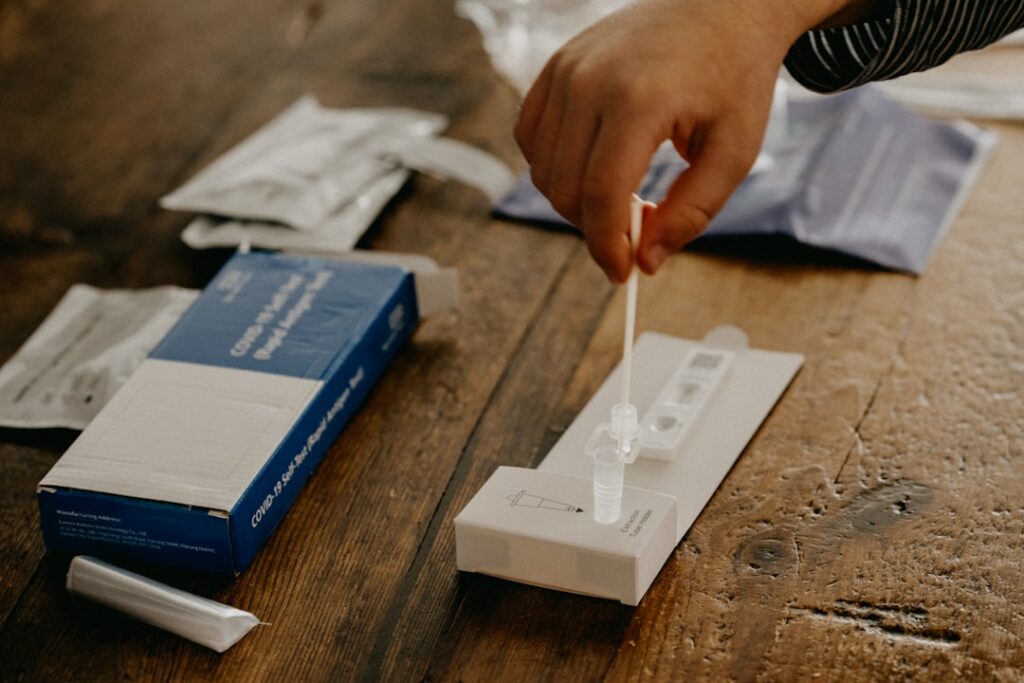
An asbestos at-home test kit packages everything a homeowner needs to collect a bulk sample of suspect material and ship it to an NVLAP-accredited laboratory. This guide summarizes EPA and CDC guidance current as of 2026 and is not a substitute for a licensed inspector when materials are friable, damaged, or deteriorating. The kit market is dominated by three vendors (Pro-Lab, EMSL Analytical, and Aerobiology Laboratory Associates), each with similar contents and pricing but slightly different lab partnerships and result-delivery formats. This article walks through what each kit contains, how the lab analysis works, and which kit fits which sampling job.
Part of our Asbestos in the Home guide — start there for the full picture →
Is this mold, asbestos, or water damage? Get a free instant screen
Upload a clear photo of the suspect area. You'll get an instant AI screening opinion and what to do next. This is screening guidance, not a professional determination.
Screening guidance only. AI can be wrong. Confirm asbestos, mold type, or lead with lab testing or a licensed professional before acting.
What an Asbestos At-Home Test Kit Includes
A standard asbestos at-home test kit includes a sample collection bag (one or sometimes two), a chain-of-custody form, a return mailer (envelope or small box), brief sampling instructions, and prepaid laboratory analysis for one sample. Most kits do not include personal protective equipment; homeowners must source the P-100 respirator, disposable coveralls, gloves, and shoe covers separately. The lab analysis included in the kit price is typically polarized light microscopy (PLM), which is sufficient for most building materials but may not resolve fiber morphology in floor tile or joint compound (where TEM is recommended).
Kit prices run $30 to $50 for the basic single-sample format. Multi-sample kits (three or five samples per kit) are available from EMSL and others at $80 to $150, with per-sample cost lower than buying individual kits. Rush turnaround upgrades cost an additional $25 to $75 depending on speed (24-hour, 48-hour, or 72-hour). The pillar resource on asbestos and lead in pre-1978 housing covers the regulatory context that defines what homeowners may sample versus what requires licensed contractors.
The Three Main Asbestos Test Kit Vendors
Pro-Lab is the most widely retailed asbestos test kit in the United States. Home Depot, Amazon, Lowe’s, and most independent hardware stores carry Pro-Lab kits. The kit includes one sample bag, chain-of-custody form, return mailer, and prepaid PLM analysis at a partnered NVLAP lab. Turnaround is five to seven business days standard; rush options run 24 and 48 hours. Results are emailed and accessible through Pro-Lab’s online portal.
EMSL Analytical operates as both a kit vendor and a direct-to-consumer lab. EMSL kits include similar contents to Pro-Lab but partner with EMSL’s own NVLAP-accredited facilities, which gives slightly faster turnaround in many regions. Aerobiology Laboratory Associates targets a similar market with kit and direct-mail-in service. All three vendors meet NVLAP accreditation requirements, and the underlying PLM analysis is methodologically identical. The companion guide on testing for asbestos at home covers sampling methodology in depth.
What Materials Each Kit Type Tests
Standard consumer kits accept bulk samples of building materials: vinyl floor tile, popcorn ceiling, joint compound, plaster, cement-board siding, roofing shingles, and similar solid materials. The PLM analysis works well for these materials when asbestos content is above one percent. Some kits include or offer an optional “thin-film” or stratification analysis for materials with multiple layers (like sheet vinyl with felt backing), which is essentially still PLM applied to each layer.
Air sampling kits are a separate product category from bulk sampling kits. Air kits use a small pump to draw air through a cassette filter over a defined period; the cassette is sent to the lab for phase contrast microscopy (PCM) or transmission electron microscopy (TEM) analysis. Air sampling is used for post-abatement clearance and exposure assessment, not for material identification. Most homeowners use bulk-sample kits exclusively; air sampling is more commonly a professional service.
Step-by-Step Use of an Asbestos Test Kit
Using a consumer kit follows the standard wet-method DIY sampling protocol. Set up the work area (HVAC off, doors closed, plastic sheeting laid down). Don PPE in order: coveralls, shoe covers, gloves, respirator. Mist the sample area with water and a few drops of detergent; wait two to three minutes for saturation. Cut a small sample (one square centimeter or one teaspoon of granular material) directly into the kit’s sample bag. Seal the bag inside the second bag if double-bagging supplies are included.
Complete the chain-of-custody form with the date, sample location, material description, and contact information. Place the sealed sample bag and form into the return mailer. Ship per kit instructions; some kits include prepaid USPS or FedEx postage. Doff PPE in reverse order (respirator last) and bag all disposables for disposal. Results typically arrive by email within five to seven business days. The neighboring guide on whether you can test for asbestos at home covers the decision framework for choosing DIY versus professional sampling.
How the Lab Analysis Works
Polarized light microscopy is the EPA-approved method for asbestos identification in bulk materials. A trained analyst examines the sample under a polarizing microscope and identifies fibers by morphology (shape), birefringence (color shift under polarized light), refractive index, extinction angle, and sign of elongation. The analyst counts fibers using a point-counting method to estimate percentage by volume. The full procedure is defined in EPA Method 600/R-93/116 and ASTM D6620.
For materials where PLM has known limitations (notably floor tile and joint compound with very fine fibers), the lab may recommend transmission electron microscopy (TEM) analysis. TEM resolves features at much higher magnification and can identify fibers PLM misses, particularly in the sub-percent range. TEM analysis costs $100 to $200 per sample and is rarely included in consumer kit pricing; it is added as an upgrade when PLM is inconclusive.
Choosing the Right Kit for Your Job
For testing one suspect material in good condition (an intact popcorn ceiling, a single vinyl tile, a joint compound sample), a single-sample $30 to $50 kit is the right product. For testing multiple materials in the same home (popcorn ceiling, floor tile, and joint compound separately, for example), a multi-sample kit at $80 to $150 lowers per-sample cost compared to buying three individual kits. For materials where PLM is known to have limitations, look for kits that offer TEM upgrade pricing in advance, or plan to pay the TEM upgrade fee if PLM is inconclusive.
For damaged, friable, or vermiculite materials, consumer kits are the wrong product entirely. A licensed asbestos inspector with appropriate PPE, containment supplies, and air-sampling capabilities should handle those cases. Hiring an inspector costs $150 to $400 per sample including the inspector’s time, equipment, and analysis, but avoids the substantial risk of fiber release during DIY sampling of inappropriate materials.
What to Do With the Result
A positive result (greater than one percent asbestos) triggers a decision among three options. Manage in place is appropriate for intact, non-friable materials not in any renovation path. Encapsulation (applying a sealing coating) is appropriate for intact materials at risk of incidental damage. Abatement (licensed removal) is required when the material is friable, damaged, or in the path of planned renovation. A negative result allows planned work to proceed; the homeowner should retain the lab report in case future buyers or contractors ask about prior testing.
Lab Accreditation and Result Reliability
NVLAP accreditation is the standard credential for asbestos bulk analysis. All three major kit vendors partner with NVLAP-accredited laboratories, and results from these labs are accepted by abatement contractors, state regulators, and (where applicable) insurance companies. Results from non-accredited labs may not be accepted for regulatory purposes. The NIST website maintains a public list of NVLAP-accredited labs searchable by state for homeowners who want to verify the lab before purchasing a kit.
How Kit Results Fit Into Larger Project Planning
A kit result is the homeowner’s personal record. For small projects (managing in place, single-room cosmetic update), the kit result alone is sufficient documentation. For medium and large projects (kitchen renovation, basement finish, full-home renovation), the kit result is typically a screening step before hiring a licensed inspector for a full pre-renovation survey. The survey produces the authoritative document abatement contractors and regulators will work from. Kit results are useful for confirming that a renovation needs professional involvement before the homeowner commits to that expense.
Detailed Look at Each Major Kit Vendor
Pro-Lab kits are distributed through nearly every major hardware retailer and through Amazon. The Pro-Lab single-sample kit includes one bag, a chain-of-custody form, a postage-paid return envelope, and prepaid PLM analysis. Results are delivered through Pro-Lab’s online portal within 5 to 7 business days, with rush options of 24 and 48 hours available for an additional fee. Pro-Lab’s lab partnership has been stable for over a decade and the kits are widely used by both DIY homeowners and small contractors.
EMSL Analytical operates as a vertically integrated kit-and-lab vendor. The kit’s lab partner is EMSL itself rather than an outside facility, which gives EMSL more control over turnaround and quality assurance. EMSL kits are available through Amazon and through EMSL’s direct website. The kit contents are similar to Pro-Lab’s. Aerobiology Laboratory Associates positions its kits toward indoor air quality consultants and small environmental firms but also sells direct to homeowners. The kit format is similar; turnaround and pricing are competitive with the other two.
Alternative Sampling Supply Sources
Beyond the three main kit vendors, homeowners can purchase supplies separately and ship directly to any NVLAP-accredited lab. The advantage is flexibility in sample count and lab selection. Sample bags, chain-of-custody forms, and shipping containers can be sourced from industrial hygiene supply companies (Lab Safety Supply, Grainger, etc.) for less than $20 total. The lab analysis is then billed per sample, typically $25 to $50 for PLM at most NVLAP-accredited facilities.
This direct approach makes sense for homeowners testing many samples (more than five or six) because the per-sample cost is lower than buying multiple consumer kits. It also makes sense for homeowners who want a specific lab (perhaps one recommended by a local environmental consultant) rather than the kit vendor’s partner lab. For one to three samples, the consumer kit is typically cheaper after factoring in shipping costs.
Result Delivery Formats and Retention
Consumer kit results are delivered through online portals (email notification with a link to a PDF report) or by direct email attachment. The report identifies the sample, the customer’s submission information, the analysis method, the analyst, the lab name and accreditation number, and the result. Most labs retain electronic copies of results for at least seven years; homeowners should download and save their own copies for permanent retention.
The result report has long-term value beyond the immediate testing decision. Sellers in pre-1980 homes increasingly include past testing results in their disclosure packages. Insurance companies may request testing results in claims involving suspected asbestos exposure. Contractors quoting renovation or abatement work appreciate having past results to reference. Treating the lab report as a permanent record (saved with home maintenance documentation) preserves its value for future use.
References
- EPA Asbestos Regulations Including AHERA and NESHAP — U.S. Environmental Protection Agency
- OSHA Asbestos Standards — Occupational Safety and Health Administration
- CDC NIOSH Asbestos Page — Centers for Disease Control and Prevention
- Asbestos.com Testing Methods Reference — Mesothelioma Center
- American Lung Association Asbestos Resource — American Lung Association
Frequently asked questions
What's in an asbestos at home test kit?
A sample bag, chain-of-custody form, return mailer, brief instructions, and prepaid PLM analysis for one sample at an NVLAP-accredited lab. PPE is not included and must be sourced separately.
Which brand of test kit is best?
Pro-Lab, EMSL, and Aerobiology all use NVLAP-accredited labs with methodologically identical PLM analysis. Pro-Lab has the widest retail distribution; EMSL often returns results fastest in many regions.
What does the kit not cover?
PPE (respirator, coveralls, gloves), TEM upgrade fees if PLM is inconclusive, additional samples beyond the one included, and any abatement or remediation work after a positive result.
How fast do results come back?
Standard turnaround is five to seven business days. Rush options of 24 to 72 hours typically cost an additional $25 to $75.
For Front Range homeowners deciding between a consumer kit and a professional inspector, reach out through our contact page for a connection to a vetted local environmental inspector.
Asbestos test kits
Asbestos can only be confirmed by a lab. A mail-in kit gets you a sealed sample container and accredited analysis — never sand or disturb suspect material first.
| Product | Why | Buy |
|---|---|---|
 Asbestos Test Kit (mail-in lab) Asbestos Test Kit (mail-in lab) | Includes PPE + sealed mailer. | Amazon — $34.99 |
| Pro-Lab Asbestos Test Kit | Widely available; lab fee separate. | Amazon — $34.99 |