Black Mold Remediation Near Me: How to Choose a Pro
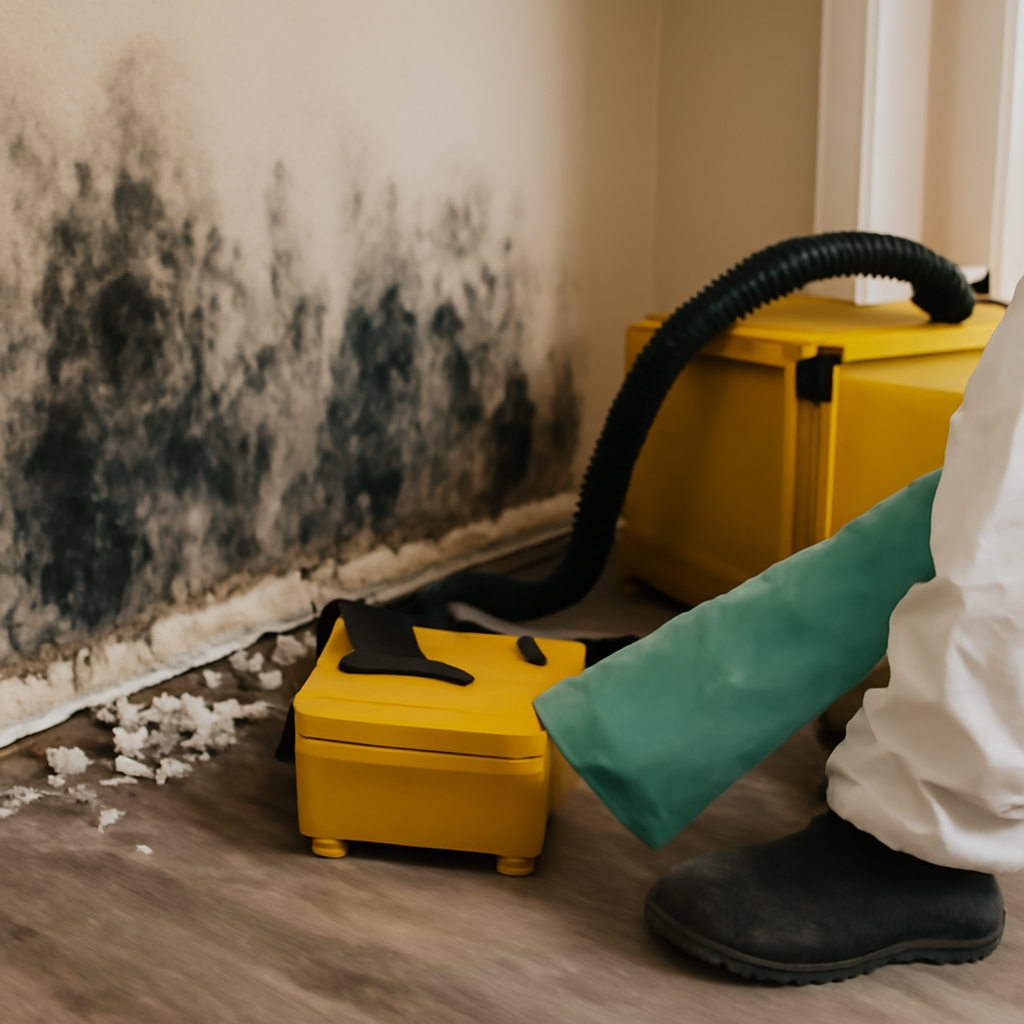
Searching for black mold remediation near me usually happens at a stressful moment, often right after a homeowner spots dark growth spreading across a basement wall, smells something musty after a flood, or receives a worrying line in an inspection report. Choosing the wrong contractor can mean overpaying, getting an incomplete job, or watching the mold return within months. Choosing the right one means the moisture source is fixed, the contamination is contained, and the work is documented. This guide summarizes EPA, CDC, and HUD guidance current as of 2026 to help you vet local remediation companies; consult your physician about symptoms and a certified professional for testing decisions.
Is this mold, asbestos, or water damage? Get a free instant screen
Upload a clear photo of the suspect area. You'll get an instant AI screening opinion and what to do next. This is screening guidance, not a professional determination.
Screening guidance only. AI can be wrong. Confirm asbestos, mold type, or lead with lab testing or a licensed professional before acting.
How to find and choose black mold remediation near you
Start by separating two distinct jobs. A mold assessor or inspector evaluates the problem, identifies the moisture source, and may collect samples. A remediation contractor performs the removal. Some regions and best-practice guidelines discourage hiring the same company for both, because a firm that profits from removal has a financial incentive to find more mold. The EPA recommends that for any mold-affected area larger than about 10 square feet, you consider hiring a contractor experienced in mold cleanup who follows established remediation guidelines.
Build a short list of three local companies. Check that each carries liability insurance and, where your state requires it, the appropriate mold license. Read recent reviews, but weight them toward detail rather than star count: a review that describes containment, a written scope, and a follow-up clearance test tells you more than a generic five-star rating. Ask each company for references from jobs similar to yours in size and location. Front Range homeowners can compare candidates the same way they would vet any contractor, and our roundup of how to choose mold remediation companies covers the screening questions in more depth.
What certifications and credentials to look for
Mold remediation is not licensed uniformly across the country. Some states, including Florida and Texas, require state licensing for mold assessors and remediators; Colorado does not currently license mold professionals at the state level, which makes third-party certification and verifiable experience more important. Look for technicians certified through the Institute of Inspection, Cleaning and Restoration Certification (IICRC) under standards such as the S520 mold remediation standard, or through industry bodies that train to recognized protocols.
Ask whether the company carries its own liability and pollution insurance, and request a certificate. Confirm that workers will use containment, negative air pressure where appropriate, and HEPA filtration, because these are the methods the EPA describes for preventing cross-contamination during cleanup. A reputable firm will explain its protocol without hesitation. If a salesperson dismisses the moisture investigation or promises a chemical “spray and walk away” solution, treat that as a warning sign that the underlying cause will not be addressed.
What black mold remediation actually involves
Understanding the process helps you judge whether a bid is complete. Professional remediation generally follows a sequence rather than a single visit.
Assessment and moisture source repair
The job begins by finding where water is coming from. Remediation that ignores the source is wasted money, because the mold returns. A leaking foundation, a roof penetration, a plumbing failure, or chronic humidity each demands a different fix. Many homeowners discover the moisture trail starts somewhere they did not expect, which is why hidden-space problems like black mold in a crawl space often drive whole-home humidity and need attention before any wall is cleaned.
Containment and air control
Technicians isolate the work area with plastic sheeting and, for larger jobs, run negative-pressure air scrubbers fitted with HEPA filters. This keeps spores from drifting into clean parts of the home during demolition. Occupants and pets are usually kept clear of the containment zone.
Removal and cleaning
Porous materials that are heavily contaminated, such as drywall, carpet, and insulation, are typically removed and bagged rather than cleaned, because mold roots into porous structures. Non-porous surfaces like framing, concrete, and metal are HEPA-vacuumed and wiped. The EPA stresses that the goal is removal of mold, not merely killing it; dead spores can still trigger reactions, so the material must physically come out.
Drying, clearance, and rebuild
After cleaning, the area is dried completely, often with commercial dehumidifiers and air movers, and humidity is verified with moisture meters. A clearance step, ideally a post-remediation verification by an independent assessor, confirms the work succeeded before any rebuild. Skipping clearance means you are taking the contractor’s word that the job is done.
What does black mold remediation cost?
Costs vary widely by the size of the affected area, the type of material involved, accessibility, and your local labor market. Industry estimates for 2026 commonly place small, contained jobs, such as a single bathroom or a modest wall section, in the range of roughly five hundred to fifteen hundred dollars. Mid-size projects involving a basement, attic, or several rooms often run two thousand to six thousand dollars. Severe contamination across multiple areas, or jobs requiring structural drying after flooding, can reach ten thousand dollars or more.
These figures are ranges, not quotes; the only reliable number comes from an on-site evaluation. Charges typically reflect square footage, containment setup, equipment days, disposal fees, and any required repairs to the moisture source. National brands often price higher than independent local firms but offer standardized documentation. For a closer look at how one large provider structures pricing, our breakdown of Servpro mold remediation cost shows how line items add up on a typical job.
Get at least three written estimates so you can compare scope, not just price. A bid that is dramatically lower than the others usually leaves something out, often the moisture repair, the containment, or the clearance test. Ask each company to itemize what is and is not included, and whether the rebuild of removed drywall and flooring is part of the quote or a separate trade.
Questions to ask before you sign
A short list of pointed questions separates qualified firms from opportunists. Ask how they will identify and document the moisture source, and whether the repair is included. Ask what containment and filtration they will use, and how they protect the rest of the home. Ask whether they recommend independent post-remediation verification, and if not, why. Ask for proof of insurance and any applicable certification, and request a written scope of work with a clear start and finish definition.
Confirm the warranty. A reputable remediator will stand behind the work for a defined period, provided the underlying moisture issue stays fixed. Clarify who is responsible if mold reappears, and under what conditions the warranty applies. Finally, ask about disposal: contaminated materials should be bagged and removed properly, and the contract should say so.
When you can handle it yourself versus hiring a pro
The EPA’s general guideline is that homeowners can often clean mold covering less than about 10 square feet on hard surfaces using standard precautions and a respirator. Above that threshold, after sewage or floodwater contamination, when the mold is inside HVAC systems, or when occupants have asthma or compromised immune systems, professional remediation is the safer route. Hidden growth behind walls or under flooring also calls for a pro, because disturbing it without containment spreads spores throughout the home.
If you are weighing a small DIY job, match your protective equipment to the task. The right mask matters: our guide to choosing a respirator for mold explains why an N95 is a minimum and when a half-face respirator with P100 cartridges is the wiser choice. For anything beyond a small, well-contained patch on a non-porous surface, the cost of professional remediation usually buys peace of mind and documentation that protects you at resale.
Red flags that signal an unqualified remediator
The mold remediation field attracts opportunists precisely because homeowners search at a moment of stress and often do not know what a complete job looks like. Several warning signs separate the firms to avoid from the ones worth a second call. A company that quotes a price over the phone without seeing the property cannot have scoped the moisture source, the material involved, or the extent of growth, so that number is a marketing figure rather than a real estimate. A salesperson who dismisses the moisture investigation, or who insists that a chemical spray or fogging treatment alone will solve the problem, is describing a job that will fail because dead spores and the underlying water remain.
High-pressure tactics are another flag. Mold is rarely such an emergency that you cannot take a day to gather competing bids, and a contractor who insists you sign immediately to “lock in” a price or who manufactures urgency about your family’s health is selling fear. Be wary of firms that refuse to provide written scopes, that will not show proof of insurance, or that resist independent clearance testing. A reputable remediator welcomes a third-party verification because passing it is how they prove the work succeeded. Finally, a bid that is dramatically lower than the others almost always omits something essential, usually the containment, the moisture repair, or the rebuild, so compare what is included rather than the headline number.
Does insurance cover black mold remediation?
Whether your homeowner’s policy pays for remediation depends heavily on the cause of the moisture, and this is a frequent source of frustration and surprise. Many standard policies cover mold that results from a sudden, accidental, and covered event, such as a burst pipe or a failed appliance hose, because the mold is a consequence of a peril the policy already insures. Coverage in those cases is often capped at a specific dollar limit for mold, which can be lower than the full cost of a large job.
Policies typically exclude mold that develops from long-term neglect, deferred maintenance, or a leak the homeowner knew about and did not fix, on the reasoning that the damage was preventable. Flooding from surface water is usually excluded from standard policies entirely and falls under separate flood insurance. Because the distinction between a covered sudden event and an excluded gradual one is where claims succeed or fail, documentation matters: photograph the source, note when you discovered it, and keep records of any repairs. Before filing, read your policy’s mold provisions and consider whether the likely payout exceeds your deductible, since a small claim can raise premiums more than it returns.
What to expect on timeline and disruption
Knowing roughly how long the work takes and how much it disrupts the household helps you plan. A small, contained job, such as a single bathroom wall or a modest closet, often finishes in one to two days including drying. Mid-size projects involving a basement, attic, or several rooms commonly run three to five days, and large jobs or those requiring structural drying after flooding can extend beyond a week. The drying phase is not optional padding; rushing it leaves moisture that regrows mold, so a contractor who builds in adequate drying days is doing the job correctly.
Disruption depends on the location and size of the work. Containment isolates the work zone, so the rest of the home often remains usable, though you and any pets should stay clear of the contained area. For extensive contamination, or when the HVAC system is involved and must be shut down, temporary relocation is sometimes recommended, especially for occupants with asthma or weakened immunity. The rebuild of removed drywall, flooring, and trim is usually a separate phase handled after clearance, and it can add days or weeks depending on materials and scheduling. Clarifying upfront whether the remediator handles the rebuild or hands it to a separate trade prevents the common surprise of a clean but unfinished space.
Local considerations for Front Range homeowners
Colorado’s dry climate keeps ambient humidity low for much of the year, but that does not make homes mold-proof. Finished basements, crawl spaces, ice-dam roof leaks in winter, and swamp-cooler condensation all create localized moisture that supports growth. Denver, Boulder, Jefferson, and Arapahoe county homes with older foundations are common sites for basement and crawl-space colonies. Because the state does not license mold professionals, Front Range buyers and owners benefit from extra diligence: verify insurance, ask for IICRC-trained technicians, and insist on independent clearance.
When growth is tied to a recurring source such as snowmelt intrusion or grading that channels water toward the foundation, the remediation contractor and a general contractor may need to coordinate. Addressing both the symptom and the cause in one coordinated plan prevents the frustrating cycle of cleaning the same wall every spring.
Comparing national franchises and independent local firms
One choice nearly every homeowner faces is whether to call a national restoration franchise or an independent local remediator, and each has genuine trade-offs. National franchises offer brand recognition, standardized procedures, large equipment fleets that can handle big jobs quickly, and established relationships with insurance companies that can smooth a claim. Their documentation tends to be thorough and consistent, which matters when you need a paper trail for insurance or resale. The downsides are that franchise pricing often runs higher to cover overhead and marketing, the crew on your job may be a subcontractor whose quality varies, and the sheer scale can make the experience feel impersonal.
Independent local firms frequently price more competitively, offer direct access to the owner or lead technician, and bring detailed knowledge of regional conditions, which on the Front Range means understanding ice-dam leaks, swamp-cooler moisture, and below-grade foundation issues. The trade-off is that quality among independents varies more widely, documentation may be less polished, and a small firm may not have the equipment or staff to handle a very large job on a tight timeline. Neither model is automatically better. The deciding factors are the same regardless of size: verifiable insurance and certification, a written scope that includes the moisture repair, willingness to support independent clearance testing, and references from similar jobs. A well-run independent and a reputable franchise can both do excellent work; an unqualified version of either can leave you worse off. Judge the specific company against the standards in this guide rather than the size of its name.
References
- Mold Cleanup in Your Home — U.S. Environmental Protection Agency
- About Mold and Health — Centers for Disease Control and Prevention
- Healthy Homes Program — U.S. Department of Housing and Urban Development
- Mold Remediation Guidance — U.S. Environmental Protection Agency
If you are comparing local remediation bids or want an independent read on whether the work is necessary, our mold inspection resources walk through the process, and Front Range homeowners can connect with a vetted inspector through our contact page before committing to a contractor.