Amazon Moisture Meter: What Homeowners Need to Know
Buying an Amazon moisture meter is a reasonable first step for homeowners who want to confirm whether a damp-looking patch is actually damp or whether a basement corner that smells musty has moisture levels worth investigating. The Amazon catalog covers everything from $15 budget pin meters to $300 calibrated professional units, and the platform offers the return windows and Prime delivery that make this category easy to experiment with. This guide walks through what the buying experience looks like, what to expect at each price tier, and how to read the listings critically. None of the recommendations below cite specific manufacturers as authoritative; for tool standards we route to energy.gov, ASHRAE, InterNACHI, and ICC publications.
Part of our Moisture Meters & Water Damage Detection guide — start there for the full picture →
Why Amazon Is a Reasonable Starting Place for This Category
Three platform features make Amazon useful for moisture meter shopping. First, the 30-day return window applies to the vast majority of moisture meter listings, meaning a homeowner can buy, test on known-dry and known-wet materials, and return if the meter does not perform. Second, Prime delivery typically lands the meter on the doorstep within two days, which matters when the impetus for buying was a leak discovered yesterday. Third, the review volume on popular models supports informed comparison even when manufacturer marketing materials are unhelpful.
The platform also has known weaknesses for this category. Counterfeit listings of name-brand meters do appear. Generic budget meters from interchangeable house brands cluster under similar product photos with cosmetic differences. Manufacturer specifications listed on Amazon do not always match the spec sheets on the actual manufacturer’s website. The buyer needs to do some independent verification before committing.
Price Tier Breakdown
Moisture meters on Amazon cluster into recognizable tiers.
Budget Tier: $15 to $40
Pin meters with simple LCD readouts, often from house brands. Suitable for surface-level checks on wood and drywall. Accuracy is typically claimed as plus or minus 5 percent or worse on the manufacturer-published spec, which is usable for relative comparisons but not for documentation-grade readings. Battery life is generally adequate. Calibration verification on the unit itself is rarely possible at this price.
Mid-Tier: $40 to $120
Dual-mode meters with both pin and pinless modes. Pin mode reads the moisture content of materials directly through inserted probes. Pinless mode reads moisture through electromagnetic scanning of a substrate without leaving marks, useful for finished surfaces. Mid-tier meters generally claim accuracy within plus or minus 2 to 3 percent. Calibration check blocks are sometimes included. Build quality improves noticeably over budget tier.
Professional Tier: $120 to $300+
Name-brand meters from established trade-tool manufacturers. Calibration certificates available. Multiple wood-species calibration curves. Temperature compensation. Replaceable probe assemblies. These are the meters working inspectors carry and the ones a homeowner buys when they intend to use moisture data in any documentation context.
For the residential homeowner doing occasional checks, mid-tier provides the best value. For the homeowner managing a recurring moisture issue or documenting conditions for insurance or remediation, professional tier is worth the upgrade. Our companion article on cheap moisture meter options covers the budget end in more depth.
Pin Versus Pinless: What the Choice Means
Pin meters drive two small probes into the material being measured. Resistance between the probes correlates with moisture content. The advantages are direct material reading and well-established accuracy on wood. The disadvantages are the small holes left in finished surfaces and the slower workflow of probing each measurement point.
Pinless meters use electromagnetic scanning to read substrate moisture through a contact pad pressed against the surface. The advantages are no surface damage and fast workflow across large areas. The disadvantages are sensitivity to substrate density, depth, and adjacent materials. Most mid-tier and professional dual-mode meters include both. For drywall checks where leaving pinholes is undesirable, pinless is the right mode. For framing-lumber moisture content where accuracy is paramount, pin mode is the right choice. NACHI inspector guidance generally recommends having both available.
Reading Amazon Listings Critically
A few habits separate informed buyers from those who chase the cheapest top-of-search result.
Check Manufacturer Specifications Independently
The product page on Amazon often summarizes specs that do not match what the manufacturer publishes on their own site. For name-brand meters, cross-check on the manufacturer page before purchase.
Filter Reviews by Verified Purchase
Reviews from buyers who actually received the product through Amazon are more reliable than the rest. The verified purchase filter is on the left sidebar of the review section.
Look at Critical Reviews
Three- and four-star reviews often contain more useful information than five-star praise. Specific complaints about accuracy, durability, or shipped condition help calibrate expectations.
Watch for Listing Photo Reuse
Identical product photos across multiple house brands typically indicate the same factory-direct meter sold under different labels. Pricing differences between identical listings are sometimes opportunity, sometimes warning sign.
Calibration and Verification
Out-of-the-box accuracy claims should be verified before relying on readings. A simple verification uses a calibration check block, sometimes included with mid-tier and professional meters and inexpensive to purchase separately. The block has a known moisture-equivalent reading and is pressed against the meter pad or probed by the pins. Readings within plus or minus 1 percent of the block value confirm the meter is working as specified. Energy.gov building-science publications and ASHRAE moisture-management references emphasize that meter verification before use is standard practice on any project where readings inform decisions.
Return Windows and Buying Confidence
Amazon’s standard 30-day return window applies to most moisture meter listings. Some sellers extend this. The practical buyer strategy: order the meter, verify against a calibration block within the first week, test on materials with known moisture (a piece of recently kiln-dried framing scrap from a hardware store is roughly 12 to 15 percent; the same scrap soaked overnight reads well above 25 percent), and return if the meter fails either test. Documenting the verification with photos protects against any return dispute.
Use Cases That Drive Homeowner Purchases
The most common reasons homeowners buy moisture meters fall into a few patterns. Suspected hidden leaks behind walls. Confirmation that flood-affected materials have dried adequately. Tracking the dryness of firewood before burning. Verifying the moisture content of subfloor before installing finished flooring. Documenting basement humidity issues for a remediation discussion. Each of these has its own ideal meter feature set, but a mid-tier dual-mode meter covers all of them adequately. Homeowners researching the broader tool category can read our home inspection tools buyer guide.
What Working Inspectors Use
InterNACHI- and ASHI-credentialed inspectors typically carry a professional-tier meter, often with replaceable pins and multiple-species calibration. The reason is documentation quality, not just accuracy. Inspection reports with moisture readings need a meter that can be tied to a calibration certificate and that produces repeatable results across thousands of measurement points. For the homeowner doing occasional checks, this level of investment is overkill. The mid-tier meter is the right balance.
Front Range Considerations
Colorado homes show moisture issues that benefit from meter verification rather than visual guesswork. Snowmelt at basement foundations, ice-dam leaks at eaves, sprinkler overspray against siding, and humidifier-driven condensation in plenums all produce measurable elevations on building materials. Denver, Boulder, Douglas, Jefferson, and Arapahoe County homes encounter these patterns seasonally. A homeowner with a moisture meter and a basic understanding of what readings mean can identify problems early enough to avoid larger remediation costs.
When to Move Up From DIY Readings
A homeowner moisture meter is a useful diagnostic tool. It is not a substitute for a professional inspection when readings suggest a significant problem. Elevated readings across multiple wall sections, readings that do not respond to source-correction attempts, or any reading associated with HVAC components warrant a licensed inspector. The meter helps identify what should be looked at. The professional determines what should be done about it.
Storing and Maintaining the Meter
Moisture meter accuracy depends on basic maintenance. Batteries should be removed if the meter will sit unused for months to prevent leakage damage to the contacts. Pins on pin-style meters should be inspected for corrosion and bending before each use, and replaced when they no longer make clean contact. The pinless contact pad should be wiped clean of dust and debris that can interfere with readings. Storage in a padded case or original packaging protects the LCD and contact surfaces during transport. Meters stored properly between uses retain accuracy for years; meters tossed loose in a tool bag often need replacement within a season.
Understanding the Amazon Customer Service Path
When a moisture meter arrives defective or non-functional, the Amazon support path varies depending on whether the seller is Amazon itself, a third-party fulfilled by Amazon, or a third-party self-fulfilled. Amazon-sold and FBA listings handle returns and replacements through standard Amazon channels with consistent processing times. Self-fulfilled third-party listings route returns through the seller, with variable response times and policies. For homeowners new to the platform, sticking with Amazon-sold or FBA listings reduces friction on the rare occasions when a return is necessary. The seller information appears under the Buy Box; verifying who is actually fulfilling the order takes seconds.
Comparing Amazon Listings Across Generations
Manufacturers periodically release updated versions of established meters, and Amazon listings often carry multiple generations of the same product line simultaneously. The previous generation is typically discounted while the current generation sits at full price. Whether the discount justifies the older meter depends on what changed between generations. Cosmetic updates and minor display changes do not affect accuracy. Sensor upgrades, calibration improvements, or measurement-mode additions sometimes do. Reading the manufacturer’s change notes before clicking buy avoids the surprise of discovering after purchase that the current generation includes a feature the previous one lacks.
Bundles and Accessories Worth the Extra Spend
Some Amazon listings bundle the meter with accessories that add real value, while others bundle filler that inflates the appearance of value without adding much. Worthwhile bundle inclusions: calibration check block matched to the meter’s measurement modes, replacement pin sets for pin-style meters, hard carrying case sized for the meter and accessories, and species reference chart for wood readings. Filler inclusions: generic plastic carrying pouches, single-page laminated quick reference cards, and battery-only bundles when the meter comes with batteries anyway. Reading the bundle contents carefully separates the useful from the marketing fluff.
How Inspector Reports Reference Moisture Readings
For homeowners curious about what working inspectors actually do with moisture readings, the typical inspection report includes specific readings tied to specific locations on a floor plan. Numerical values, the meter make and model, the mode used, and the ambient conditions at the time of reading all appear in defensible reports. This level of documentation justifies the professional-tier meter investment for working inspectors. Homeowners doing personal investigations rarely need this level of documentation but benefit from a simplified version: a notebook with location, date, reading, and meter mode produces a homeowner-grade record useful for tracking changes over time.
References
- A Brief Guide to Mold, Moisture and Your Home — U.S. Environmental Protection Agency
- ASHRAE: Standards and Guidelines — American Society of Heating, Refrigerating and Air-Conditioning Engineers
- InterNACHI: Moisture Mapping in Buildings — International Association of Certified Home Inspectors
- ICC: Building Safety Journal — International Code Council
Frequently asked questions
Are budget moisture meters on Amazon accurate enough?
For relative comparisons between dry and wet materials, budget meters work. For documentation-grade readings or insurance claims, mid-tier or professional meters with calibration verification are the right choice.
Pin or pinless meter?
Mid-tier dual-mode meters include both. Pin mode for accurate readings on wood and framing. Pinless for non-destructive scanning of finished surfaces. Most homeowner use cases benefit from having both available.
What is the return window on Amazon moisture meters?
Standard 30-day return on most listings. Some sellers extend this. Verification testing in the first week against a calibration block protects the buyer if the meter fails to perform.
Do I need to calibrate before each use?
A periodic check against a calibration block confirms the meter still reads correctly. Working inspectors check before each job. Homeowners doing occasional readings can check monthly or before any documentation-grade measurement.
Moisture meters for home inspection
Pin meters read deep but leave marks; pinless meters scan surfaces non-destructively. Many inspectors carry both.
| Product | Why | Buy |
|---|---|---|
 Klein Tools ET140 Pinless | Non-destructive scanning; affordable. | Amazon — $54.88 |
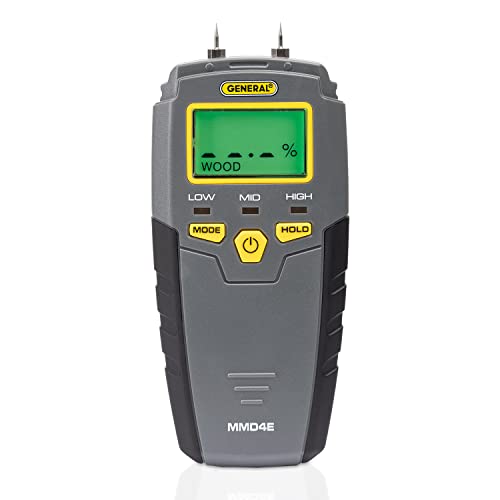 General Tools MMD4E | Best-selling pin meter for drywall/wood. | Amazon — $39.98 |
 Lignomat Mini-Ligno | Trusted by woodworkers; species-calibrated. | Amazon — $99.00 |