Air Duct Mold Removal Near Me: HVAC Cleaning Guide
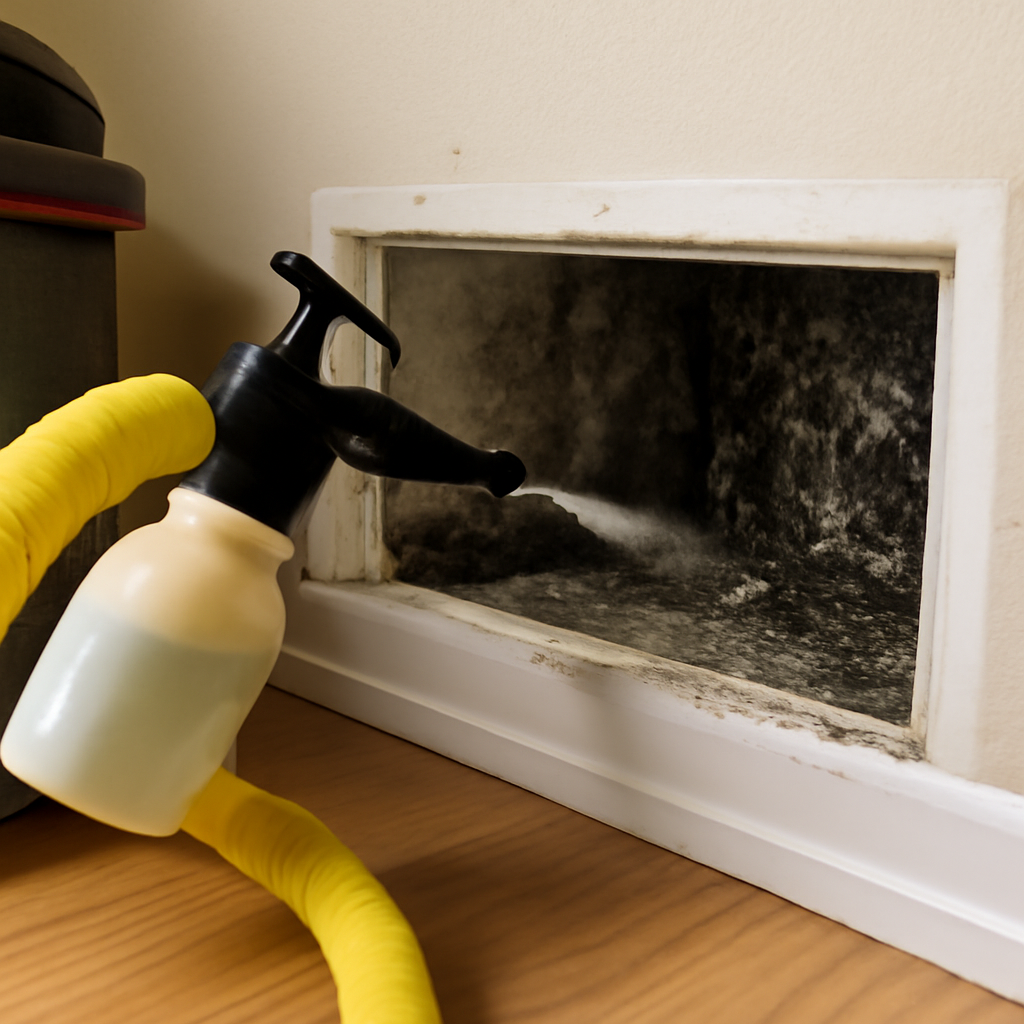
“Air duct mold removal near me” sits at the intersection of two industries: HVAC duct cleaning and mold remediation. Most homeowners do not realize they are crossing a boundary when they search that phrase. Cleaning a duct system to reduce dust and debris is a routine service. Removing mold colonization from inside a duct system is a more involved task with different certifications, different methods, and a meaningfully different cost. This guide explains the distinction, the standards that apply, and how to hire the right kind of contractor. This article summarizes EPA, CDC, and NADCA guidance for homeowners and is not medical advice. If you believe a family member has symptoms related to mold exposure, please consult a physician.
Part of our Mold Removal & Remediation guide — start there for the full picture →
Is this mold, asbestos, or water damage? Get a free instant screen
Upload a clear photo of the suspect area. You'll get an instant AI screening opinion and what to do next. This is screening guidance, not a professional determination.
Screening guidance only. AI can be wrong. Confirm asbestos, mold type, or lead with lab testing or a licensed professional before acting.
What “mold in the ducts” actually means
HVAC systems can host fungal contamination at several locations, and the location matters more than the word “mold” alone. The evaporator coil and drain pan inside the air handler is the most common site, because they stay wet during cooling season. The blower wheel and motor housing can host biofilms downstream of the coil. Supply and return ducts, especially flex duct or duct board with insulated interiors, can host growth where condensation, leaks, or chronically humid air contact dust-coated surfaces. Registers and grilles can show surface staining at the edge of the airflow boundary.
Distinguishing visible dust streaking around a register (sometimes called “ghosting”) from actual fungal colonization is hard from the outside. Many homeowners assume any dark mark around a register is mold. It is often static-charged dust trapped at the air-leak boundary. A trained HVAC technician with a borescope and a flashlight can usually tell.
Source control vs duct cleaning
The single biggest mistake in this category is paying for duct cleaning when the actual problem is upstream of the ducts. EPA explicitly cautions that duct cleaning has never been shown by controlled studies to reduce indoor air contaminant levels except when there is a clear, identifiable source of contamination. If the air handler’s evaporator coil is mold-colonized, cleaning the downstream ducts does not solve the problem. Spores keep reseeding into the system every time the blower runs. The coil, drain pan, and blower wheel are the controllable source. The ducts are the symptom.
A defensible scope therefore starts at the air handler. Open the access panel. Inspect the coil, drain pan, and blower wheel. Confirm the condensate drain is clear and properly trapped. Confirm the system is sized correctly (oversized systems short-cycle and never dehumidify properly, leaving the coil dripping). Confirm the filter slot is sealed (an unsealed filter rack lets unfiltered return air past the filter directly onto the coil). Only after the air handler is clean and dry does duct cleaning produce a durable result.
NADCA: the certification that matters
The National Air Duct Cleaners Association (NADCA) publishes the ACR Standard, which governs HVAC cleaning workflows, equipment, and personnel certification. The ASCS (Air Systems Cleaning Specialist) credential is the entry-level technician certification. The VSMR (Ventilation System Mold Remediator) credential adds mold-specific competency.
Ask any contractor bidding on HVAC mold work whether the technician actually performing the work holds the VSMR credential, not just the firm. Many firms list “NADCA member” on their website without disclosing how many of their technicians hold individual certification. Membership is a fee; certification is an exam plus continuing education.
Typical cost ranges
Routine duct cleaning on a single-system residential home in Front Range Colorado typically runs $400 to $800. That price covers cleaning the supply and return ducts with negative-air containment and source removal, plus the coil and blower wheel in most reputable scopes. Beware of $99 to $199 “duct cleaning” specials advertised on coupon platforms; the bait price often covers only register-face cleaning and a sales pitch for upsells.
True HVAC mold remediation (coil cleaning, drain pan decontamination, blower wheel cleaning, and antimicrobial application within ducts that show colonization) typically runs $800 to $1,500 for a single-system residential home. Larger or older systems, multiple air handlers, or extensive duct-board contamination push the range higher. Replacement of severely colonized flex duct or duct board, rather than cleaning it, can add $1,500 to $5,000 or more depending on system size.
An indoor environmental professional inspection before the remediation, with air or surface sampling at registers and inside the air handler, typically adds $400 to $800 and produces a written protocol the contractor implements. This separation of inspection from remediation is the same conflict-of-interest control used in mold remediation more broadly.
When duct mold removal is justified
NADCA’s ACR Standard provides decision criteria for when HVAC cleaning is appropriate. Indicators include visible mold growth on hard surfaces inside ducts or on other HVAC components, visible contamination present in the equipment, vermin infestation, debris release into occupied spaces, and odors consistent with biological growth. Routine “preventive” duct cleaning without one of these triggers is not generally cost-justified. EPA’s guidance similarly notes that periodic cleaning of HVAC components is appropriate when warranted by visible contamination, not as a calendar-driven service.
Homeowners who report respiratory symptoms that improve outside the home, who have recently completed a remediation in a different part of the house and want to ensure HVAC components are not reseeding the space, or who have purchased a home with documented HVAC moisture history are candidates for a targeted inspection. Asymptomatic owners of well-maintained newer systems usually are not.
Methods used during HVAC mold cleanup
A defensible HVAC mold cleanup uses three primary techniques. Mechanical agitation (rotary brushes, air whips, manual brushing) dislodges biological growth from interior duct surfaces. Negative-air containment with HEPA-filtered final discharge captures the dislodged material so it does not blow into occupied rooms. Source removal of severely colonized porous materials (flex duct, internal duct liner) where cleaning is not feasible. Surface antimicrobial treatment is sometimes applied after cleaning; EPA has been clear that biocide application should never substitute for source removal, and many indoor environmental professionals view antimicrobials as a finishing step rather than the primary intervention.
Whole-house “fogging” of antimicrobial chemicals into duct systems is controversial. EPA does not recommend the use of biocides as a substitute for mechanical cleaning. Some products applied to duct interiors have not been EPA-registered for that specific use. Ask any contractor proposing chemical fogging exactly which product they will apply, whether the product’s EPA registration covers this use, and whether the application is necessary or merely upsold.
What to expect during the visit
A complete HVAC mold cleaning visit typically takes four to eight hours for a single-system residential home. The technicians arrive, lay floor protection, open access ports in supply and return trunks, and seal each register temporarily. A vacuum truck or large portable negative-air machine is connected to the trunk line, creating negative pressure on the duct interior. The technician then enters each branch through the register opening with rotary tools, brushes, or air-whip wands. The blower compartment, coil compartment, and drain pan are cleaned by hand with the access panels open. A borescope camera may be used to inspect inaccessible cavities.
Internal context
For broader homeowner orientation on what mold remediation looks like generally, our hub on mold inspection and testing walks through scope decisions and contractor vetting. Readers also dealing with water damage that may have wetted ductwork should pair this article with water and mold remediation near me, which covers the combined S500-plus-S520 workflow.
How to vet an air-duct mold contractor
Five quick questions filter most poor candidates:
First: which technician on the crew holds NADCA ASCS and VSMR certifications? Ask for individual certification numbers, not firm membership. Second: what equipment will be used onsite, and will it run during demolition or only at the start? A reputable firm uses HEPA-filtered negative-air machines or a vacuum truck running continuously during cleaning. Third: will the air handler be opened and the coil cleaned? Skip any firm that quotes ducts only without addressing the coil. Fourth: are biocides included, and which product (with EPA registration number)? Fifth: will a third-party post-remediation inspection be provided, or will the firm self-clear?
Front Range Colorado context
Front Range HVAC mold work has a few recurring drivers. Swamp coolers (evaporative coolers) deposit large volumes of moisture into homes during summer cooling, sometimes overwhelming dehumidification capacity if windows are closed. Spring-to-summer condensate flow on conventional AC coils can overwhelm marginal drain pans. Furnace humidifiers (steam or wick-style) installed for winter dry conditions can leak or oversaturate if controls fail. Multi-system homes in foothill communities sometimes have one air handler hidden in a poorly ventilated mechanical closet where moisture accumulates without obvious signs.
Avoiding scams
HVAC duct cleaning is one of the most scam-prone home services in the United States, partly because the work is hard for the homeowner to verify. Federal Trade Commission and EPA materials both warn against companies advertising “whole-home duct cleaning” for sub-$100 prices, against companies claiming health benefits not supported by evidence, and against companies that arrive with photos of unrelated “before” pictures meant to alarm the homeowner. Ask for borescope footage before and after the work in your specific system. Reputable firms expect and welcome the request.
How to inspect your own system before calling
Before hiring anyone, a homeowner can do a basic walk-around that screens out unnecessary calls. Turn off the system at the thermostat. Remove the filter and inspect it visually; a filter that has been in place six months and looks clean indicates the system has been running with adequate filtration. Open the air-handler access panel (with the breaker off as a safety step) and look at the evaporator coil from the access opening. A coil with visible biological growth, heavy dust accumulation, or standing water in the drain pan indicates a problem that warrants professional service. A coil that looks clean and dry usually indicates the system is operating normally.
Walk the supply registers and look at the ductwork visible from each. Static-charged dust streaking around register faces is common and rarely indicates mold; it can usually be wiped clean with a damp cloth. Visible mold growth on the duct interior at the register opening is a more serious finding. If the system has flex duct in an attic or crawl space, look at the exterior of the flex duct for kinks, compressions, or visible damage that could cause condensation inside.
Maintaining the system after cleaning
Post-cleaning maintenance is what prevents the next problem. Replace the air filter on the manufacturer’s recommended schedule (typically every one to three months for 1-inch filters, every six to twelve months for media filters). Use a filter with a MERV rating appropriate to your system (usually MERV 8 to 13 for residential). Keep the condensate drain line clear; a clog backs water into the drain pan, creating the wet conditions that grow mold. Annual professional service on the system inspects the coil, drain pan, and blower wheel before they accumulate problems.
Humidity management upstream of the HVAC system also matters. Indoor humidity below 50 percent during cooling season reduces the dew-point temperature at which moisture condenses on cold surfaces. Whole-house dehumidifiers integrated with the HVAC, dedicated bathroom and kitchen exhaust ventilation, and sealing duct leaks all reduce the moisture load the HVAC system processes. Less moisture passing through the coil means less risk of biological growth downstream.
What changes when the home has had recent water damage
HVAC contamination is a particular concern in homes recently affected by flooding, plumbing leaks, or sustained roof leaks. Floodwater can fill basement-located air handlers and ductwork. Even smaller leaks above ceiling-mounted equipment can drip into the air handler. Any HVAC system exposed to a water event should be inspected by a qualified technician before being returned to operation. EPA-recommended cleanup of flooded HVAC equipment often involves replacement of porous insulation inside the air handler, cleaning and decontamination of metal components, and a coil-and-blower service to remove deposited debris.
References
- EPA Should You Have Air Ducts Cleaned — U.S. Environmental Protection Agency
- EPA Mold Cleanup in Your Home — U.S. Environmental Protection Agency
- CDC Basic Facts About Mold — Centers for Disease Control and Prevention
- FTC Duct Cleaning Consumer Guidance — Federal Trade Commission
Frequently asked questions
Is duct cleaning the same as duct mold removal?
No. Routine duct cleaning addresses dust and debris and runs $400 to $800 for a typical system. HVAC mold removal addresses fungal colonization on coils, drain pans, blower wheels, and duct interiors and runs $800 to $1,500 or more. Different methods, different certifications, different scope of work.
Should I clean my ducts if I smell something musty?
Investigate the source first. Musty smells often come from a wet evaporator coil, a clogged condensate drain, or chronic high humidity in a basement air return. Cleaning the ducts without addressing those upstream conditions is a temporary fix. EPA cautions against routine cleaning absent identified contamination.
Are duct-cleaning chemical foggers safe?
EPA does not recommend biocides as a substitute for mechanical cleaning, and some products applied to duct interiors are not EPA-registered for that specific use. Ask any contractor proposing chemical fogging for the product name and EPA registration number before agreeing.
How long does HVAC mold cleaning take?
A complete single-system residential HVAC mold cleaning typically takes four to eight hours. Larger systems, multiple air handlers, or significant flex-duct replacement push the duration into a second day. Ask for a written time-and-scope estimate before work begins.
Front Range homeowners suspicious of HVAC-related odors or symptoms can get in touch through our contact page for help finding a vetted local inspector who can scope the system before you sign a duct-cleaning contract.
Mold removal & cleanup picks
For a small, contained patch (under ~10 sq ft) these EPA-friendly removers handle surface mold. Larger or recurring growth warrants a professional assessment first.
| Product | Why | Buy |
|---|---|---|
 RMR-86 Instant Mold Stain Remover RMR-86 Instant Mold Stain Remover | Fast-acting on stains; ventilate and wear PPE. | Amazon — $29.99 |
 Concrobium Mold Control Concrobium Mold Control | No-bleach formula that also helps prevent regrowth. | Amazon — $34.27 |
 Mold Armor Mold & Mildew Remover Mold Armor Mold & Mildew Remover | Widely stocked bathroom/surface remover. | Amazon — $22.98 |