Wire Nuts: Sizes, Colors and Making Safe Connections
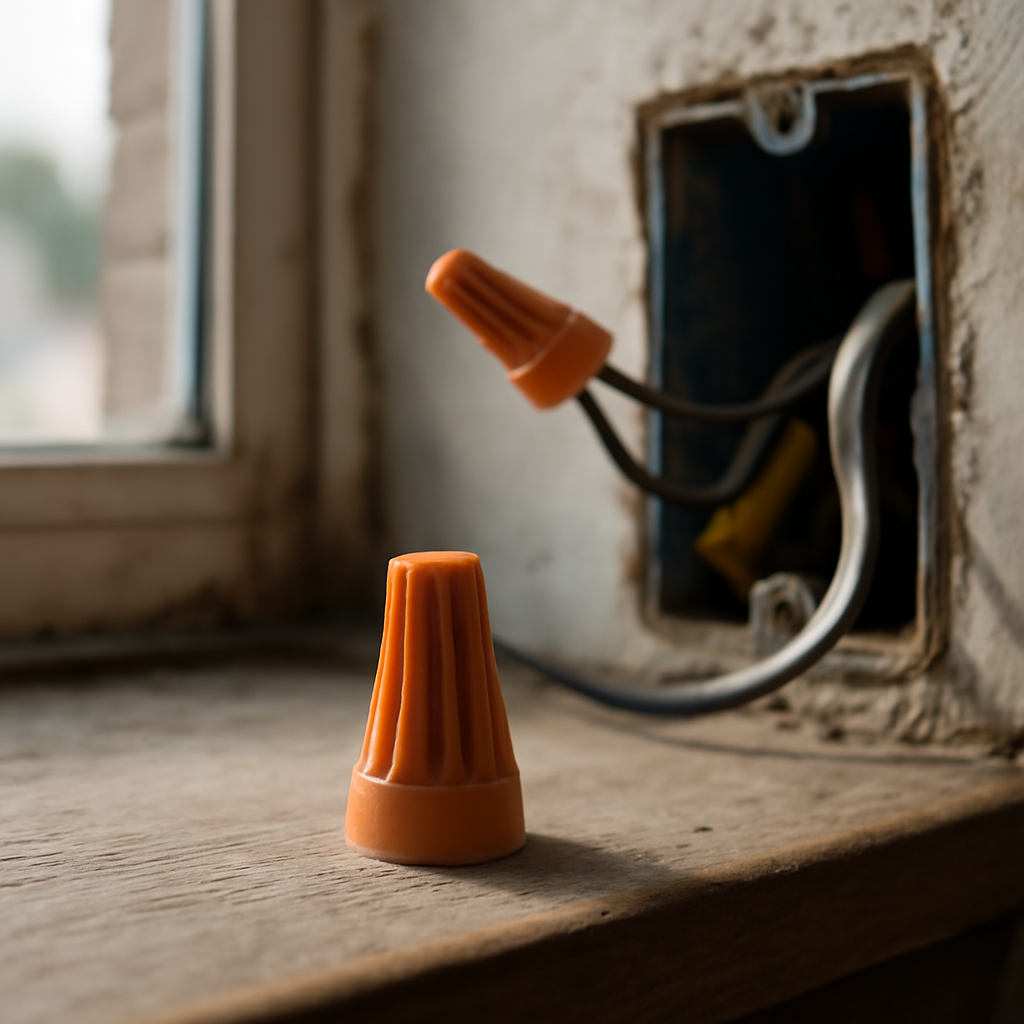
Open almost any electrical box in an American home and you will find a few small, cone-shaped plastic caps twisted onto bundles of wire. These twist-on connectors, almost universally called wire nuts, join two or more conductors so that current can pass from one to the other. They are cheap, simple and everywhere, which is exactly why they deserve a closer look. A wire nut that is the wrong size, used on the wrong type of wire, or left loose can overheat over time, and loose connections are a recognized source of electrical problems. This guide explains how wire nuts work, how sizes and colors are organized, the long-running debate about pre-twisting, why aluminum wiring needs special connectors, how lever and push-in connectors compare, and what home inspectors look for. It is written to help homeowners and buyers understand what they are looking at, not as instructions for working on live circuits. Electrical work should be done with the power off, verified with a tester, and in most cases by a licensed electrician.
Part of our Home Electrical guide — start there for the full picture →
How a Wire Nut Works
A wire nut is a plastic shell with a tapered, spring-like metal coil inside (some designs use molded threads instead). When the stripped ends of the conductors are inserted and the connector is turned clockwise, the coil grips the wires, draws them together and holds them in firm contact. The plastic shell insulates the bare copper and gives you something to grip. Many modern versions add ribbed or winged sides for better torque, and some include a silicone sealant for damp or underground locations.
The quality of the connection depends on several things happening at once:
- The wires are stripped to the length the manufacturer specifies, usually printed on the package, so no bare conductor shows below the shell and enough metal is inside to be gripped.
- The combination of wire gauges and the number of wires falls within the connector’s listed range.
- The connector is turned until it is snug and the insulation of the wires begins to twist together below the shell.
- Each wire is held firmly. A gentle tug on each conductor after installation is the standard check that nothing is about to slip out.
When those conditions are met, a twist-on connector can be a dependable, long-lasting splice. When they are not, the result can be a connection with high resistance that heats up under load.
Wire Nut Sizes and Color Conventions
Wire nuts are sold in a range of sizes, and the size you need depends on the gauge of the wires and how many you are joining. A connector that is too large will not grip small wires tightly; one that is too small may not fit all the conductors or may leave copper exposed.
Many people learn wire nut sizes by color, and there are common patterns in the market. Orange and yellow are frequently associated with smaller combinations, red with larger groups of 12- and 14-gauge wire, and gray or blue with larger bundles or heavier gauges. Green connectors are widely used for equipment grounding conductors, and some have a hole in the tip so one ground wire can pass through as a pigtail.
The important caveat is that colors are a manufacturer convention, not a universal standard. A yellow connector from one brand may not cover the same wire combinations as a yellow connector from another, and some brands use different colors altogether. The reliable reference is the combination chart printed on the package or the manufacturer’s data sheet, which lists the approved gauges and wire counts, and sometimes stranded-to-solid combinations. Stranded wire, such as the leads on many light fixtures, behaves differently from solid wire, so check that the connector is listed for that mix.
For the same reason, avoid mixing connectors from a jar of loose, unlabeled leftovers. If you cannot tell what brand or rating a connector is, it is difficult to know whether it fits the job.
The Pre-Twisting Debate
Few topics generate more friendly argument among electricians than whether to twist the conductors together with pliers before putting the wire nut on. Some electricians always pre-twist, arguing that it creates a stronger mechanical joint and makes it less likely that one wire will slip out. Others never pre-twist, pointing out that many manufacturers say pre-twisting is not required and that a properly sized connector, turned until snug, does the twisting on its own.
The reasonable middle ground is that the manufacturer’s instructions govern. Some connector makers say pre-twisting is optional; others recommend it for certain combinations. Either way, the critical points are the same: the right size, the right strip length, a firm final twist and the tug test on each wire. A splice that passes those checks is generally sound; a splice that fails them is a problem whether or not it was pre-twisted.
Aluminum Wiring Needs Special Connectors
This is the single most important exception for older homes. Some houses built roughly between the mid-1960s and the mid-1970s have aluminum branch-circuit wiring rather than copper. The U.S. Consumer Product Safety Commission (CPSC) has investigated fires involving aluminum branch-circuit wiring and reports that failures typically occur at connections, including outlets, switches and junction boxes. According to CPSC Publication 516, a survey conducted for the agency found that pre-1972 homes wired with aluminum were 55 times more likely to have one or more outlet connections reach “fire hazard conditions” than homes wired with copper.
Standard twist-on connectors are not the answer. The CPSC publication states that in agency-sponsored laboratory and life tests, substantial numbers of twist-on connectors overheated severely when used to pigtail aluminum wire, and it concludes that pigtailing with twist-on connectors is not a recommended repair. The repair methods the CPSC recognizes as permanent are complete replacement with copper wiring, the COPALUM crimp connector method installed by trained and authorized electricians, and, as an acceptable alternative, the AlumiConn connector, a setscrew-type connector used to pigtail copper to aluminum.
Some twist-on connectors are marketed as rated for aluminum-to-copper connections. Ratings, testing standards and expert opinion on these products have changed over the years, and the CPSC guidance predates some current products. The practical takeaway for homeowners is simple: if your home has aluminum branch wiring, connections should be evaluated and repaired by a licensed electrician familiar with aluminum wiring, using methods your electrician and local authority accept. Do not add ordinary wire nuts to aluminum conductors. Our guide to aluminum wiring explains how to identify it and what an inspection typically reports.
The CPSC also notes that failing aluminum connections seldom give clear warning signs, but that warm faceplates, flickering lights, dead circuits and a burning plastic smell at outlets or switches are signs to have a qualified electrician investigate. Its advice is direct: do not try to do it yourself.
Push-In and Lever Connectors
Wire nuts are no longer the only option. Two other connector types are now common in residential work.
Push-in connectors
Push-in connectors have a clear or colored housing with several ports. A stripped solid wire is pushed straight in, and an internal spring clip holds it. They are fast and make it easy to see that each wire is fully inserted, especially in clear-bodied versions. Most are rated for solid copper only, not stranded wire, and the wire must be stripped to the exact length marked on the connector. Removing a wire usually requires twisting and pulling, and some designs are intended for one-time use.
Lever-nut connectors
Lever connectors have a small hinged lever for each port. Lift the lever, insert the stripped conductor, and press the lever down to clamp it. They accept both solid and stranded wire in many models and can be reopened, which makes them popular for light fixtures with stranded leads and for situations where a connection may need to be changed later. They are bulkier than wire nuts, so box fill can become a concern in a crowded box.
Which is better?
Each connector type can perform well when it is listed for the application and installed according to its instructions, and each can fail when it is not. Electricians have their own preferences. For homeowners evaluating work, the useful questions are whether the connector is listed for the wire type and count, whether every conductor is fully seated, and whether the connection is enclosed properly. Note that the “backstab” push-in holes on the back of some outlets and switches are a different thing from push-in splice connectors; backstabbed devices are a frequent subject of debate, and many electricians prefer the side screw terminals. If you are replacing devices, the guides to outlet replacement and light switch replacement cover what to look for.
Special Situations: Fixture Leads, Grounds and Damp Locations
A few common situations trip up otherwise careful work.
- Stranded fixture leads. Light fixtures, ceiling fans and some appliances use fine stranded leads that are joined to solid house wiring. Stranded wire can bunch up or slide back as the connector turns, leaving the solid wire gripped and the stranded wire barely held. Many installers let the stranded lead extend slightly beyond the solid wire before turning the connector, but the connector instructions and the tug test are the real check.
- Equipment grounds. Bare or green grounding conductors are spliced just like current-carrying wires and need the same solid connection. A loose ground may never show symptoms until the moment it is needed, which is why it deserves the same care.
- Damp and outdoor locations. Ordinary wire nuts are not designed to keep water out. Outdoor boxes, landscape lighting and underground splices call for connectors listed for damp, wet or direct-burial use, often filled with silicone or gel sealant.
- Old, brittle insulation. In older homes, cloth or rubber insulation near fixtures can crack when wires are bent to make a new splice. That is a cue to stop and have an electrician evaluate the circuit.
Every Splice Belongs in a Covered Box
A wire nut is an insulator, not an enclosure. Splices are generally required to be inside an approved electrical box with a cover, so that if a connection heats up or arcs, the heat and sparks are contained and the splice is protected from damage. Common problems found in homes include:
- Wire nuts taped together and stuffed into an attic, wall cavity or ceiling without any box.
- Junction boxes with missing covers, especially in basements, attics and garages.
- Boxes buried behind drywall or paneling so they are no longer accessible.
- Overfilled boxes with more conductors and connectors than the box volume allows.
- Electrical tape used in place of a connector, or wrapped around a wire nut to “hold it on”.
Junction boxes generally need to remain accessible, without removing part of the building finish, so that splices can be inspected and serviced. Our guide to the junction box covers box types, fill and accessibility in more detail. Local code, based on the edition of the National Electrical Code your jurisdiction has adopted, governs the specifics.
Loose Connections, Heat and Fire Risk
A loose or undersized connection creates resistance. Resistance turns current into heat, and heat can degrade the connector, the wire insulation and nearby materials over time. That is why a splice that looked fine for years can eventually show discolored plastic, melted insulation or scorch marks.
Electrical fires are a meaningful share of home fires. The U.S. Fire Administration (USFA) estimates that in 2021 about 24,200 residential building electrical fires were reported to U.S. fire departments, causing an estimated 295 deaths, 900 injuries and more than $1.2 billion in property loss. Those figures cover all electrical causes, not wire nuts specifically, but they show why sound connections matter.
The National Fire Protection Association (NFPA) recommends having all electrical work done by a qualified electrician and calling one if you notice warning signs such as:
- Frequent problems with blowing fuses or tripping breakers.
- Discolored or warm wall outlets.
- A burning or rubbery smell.
- Flickering or dimming lights.
- Sparks from an outlet.
A circuit that trips repeatedly can point to a range of issues, from an overloaded circuit to a failing connection. The guide to a breaker that keeps tripping explains common causes and when to stop resetting it.
Safety First: Power Off, Test and Know Your Limits
This article deliberately does not walk through splicing live or energized wiring, because there is no safe way to do that as a homeowner. The general safety principles are well established:
- Turn off the circuit at the panel. Label the breaker so nobody turns it back on while you are working.
- Verify it is dead. Use a non-contact voltage tester or a meter on every wire in the box, and confirm the tester works on a known live circuit first. Boxes can contain more than one circuit.
- Stop if anything is unexpected. Aluminum wire, cloth-insulated wire, scorched connectors, brittle insulation, missing grounds or a box with more wires than you expected are signs to call a licensed electrician.
- Check local rules. Many jurisdictions require permits for new circuits and some repairs, and some limit what homeowners may do themselves.
Replacing a light fixture on an existing, well-labeled copper circuit is a common homeowner project in many areas. Anything involving the panel, new circuits, aluminum wiring or signs of overheating is electrician territory.
What Home Inspectors Look For
The ASHI Standard of Practice directs home inspectors to inspect conductors, overcurrent protection devices and a representative number of installed lighting fixtures, switches and receptacles, and to describe the predominant branch circuit wiring method. Inspectors do not open every junction box, but when splices are visible in attics, basements, crawl spaces and garages, common findings include open splices without boxes, missing box covers, aluminum branch wiring, ordinary wire nuts on aluminum conductors, melted or discolored connectors, and taped splices. Any of these typically leads to a recommendation for evaluation by a licensed electrician.
For more on how inspectors approach panels, wiring and devices, see the electrical inspection section, and for choosing an inspector and understanding the report, our guide to hiring a home inspector.
More Questions About Wire Nuts
Can you reuse wire nuts?
Wire nuts can sometimes be reused if they are clean, undamaged and still grip tightly, but many electricians replace them because new connectors are inexpensive and the internal spring can loosen after use. A connector that spins easily or looks heat-discolored should be discarded.
When reusing, the wires should be trimmed back to fresh, straight copper and re-stripped so the connector bites into undamaged conductors. Any wire nut showing melting, browning or cracks points to a past overheating problem, and the circuit and device connections nearby deserve a closer look.
How do you know if a wire nut is too loose?
A wire nut is too loose if any individual wire pulls out with a firm tug or if the connector turns freely without tightening further. The standard test is to hold the connector and pull on each wire separately after twisting it on.
Bare copper showing below the skirt of the connector is another sign of poor installation, since conductors should be fully covered. Loose splices can cause flickering lights, warm switch plates, buzzing or outlets that work only intermittently. With power off and verified, a loose splice should be remade with a correctly sized connector.
Should wire nuts be wrapped with electrical tape?
Wrapping wire nuts with electrical tape is not required by code when the connector is the correct size and properly installed. Some electricians tape them in boxes that are crowded or subject to vibration so the connectors stay on.
Tape cannot fix a bad splice, and relying on it to hold a loose wire nut together hides a fire risk. In damp or outdoor locations, the better solution is a connector listed for wet locations, often filled with sealant, rather than taping a standard indoor wire nut.
How many wires can go in one wire nut?
The number of wires allowed in one wire nut depends on the connector’s listing, which is printed on the package and shows the permitted combinations of wire gauges. A small connector might handle two 14-gauge wires, while a larger one might accept four or five.
Exceeding the listed combination can leave some conductors loose. When too many wires meet in one place, electricians often use a pigtail, which connects several wires to a short single lead, or switch to a lever-style connector with enough ports. Box fill limits also apply to how many conductors fit safely in one box.
Do wire nuts work with stranded and solid wire together?
Yes, many wire nuts are listed for joining stranded wire to solid wire, which is common when connecting light fixture leads to house wiring. The technique matters more than with two solid wires.
The stranded wire is usually stripped slightly longer and positioned so it extends a little past the solid wire, letting the connector’s spring wrap the strands around the solid conductor. After twisting, a pull test on the stranded lead confirms it is captured. Stranded wire that slips out is one of the most common causes of loose fixture connections.
References
- Repairing Aluminum Wiring (Publication 516) — U.S. Consumer Product Safety Commission
- Appliance and Electrical Fire Safety — U.S. Fire Administration
- Electrical Safety in the Home — National Fire Protection Association
- ASHI Standard of Practice for Home Inspections — American Society of Home Inspectors
Frequently asked questions
What do the colors of wire nuts mean?
Colors generally indicate size, but they are a manufacturer convention rather than a universal standard. Always check the package or data sheet for the approved wire gauges and number of wires, because the same color can cover different combinations from brand to brand.
Do you have to twist wires before putting on a wire nut?
Not always. Many manufacturers say pre-twisting is optional, while some electricians prefer it. What matters most is using the correct size, stripping to the specified length, turning the connector until snug and tugging each wire to confirm it is held.
Can you use regular wire nuts on aluminum wiring?
No. The CPSC found that ordinary twist-on connectors used to pigtail aluminum wire often overheated in testing and does not recommend that repair. Aluminum wiring should be repaired by a licensed electrician using an accepted method such as COPALUM crimps or AlumiConn connectors, or replaced with copper.
Are lever connectors better than wire nuts?
Both can work well when listed for the wire type and installed correctly. Lever connectors are easy to reopen and handle stranded wire well, but they are bulkier. Wire nuts are compact and inexpensive. The right choice depends on the application and the installer.
Do wire nut connections need to be in a box?
Generally yes. Splices are expected to be inside an approved, covered electrical box that remains accessible. Taped splices hidden in walls or attics without a box are a common inspection finding and should be corrected by an electrician.
Why are wire nuts different colors?
Wire nuts come in different colors so electricians can quickly identify the size range each connector handles. Colors are not standardized across all brands, so the package listing is the authority. Green wire nuts, however, are commonly reserved for joining equipment grounding conductors.
Are wire nuts safe for permanent connections?
Yes, wire nuts are a long-established, listed method for permanent connections in residential wiring when correctly sized, properly installed and housed in an accessible covered box. Problems usually trace back to the wrong size, too few twists, damaged wire, or splices buried in walls without a junction box.
Can wire nuts be used on low-voltage wiring?
Wire nuts can be used on low-voltage wiring such as landscape lighting or doorbell circuits if the connector is rated for the wire size, but outdoor and buried low-voltage splices should use waterproof gel-filled connectors. Corrosion in standard wire nuts is a frequent cause of failing landscape lights.
Found taped splices, open boxes or silver-colored wiring in a home you are buying? Contact our team to line up a Front Range inspector who will flag electrical concerns for an electrician to follow up on.