What Are the Effects of Radon Gas: Long-Term Risk Explained

Radon does NOT cause acute symptoms. It is an odorless, colorless, tasteless radioactive gas. Per the U.S. Surgeon General and EPA, radon is the second-leading cause of lung cancer after smoking — responsible for roughly 21,000 deaths per year in the United States — but only after long-term exposure (5–25+ year latency). There are no immediate health effects. If you have acute respiratory concerns, see a physician — those are NOT caused by radon. This guide summarizes EPA, CDC, NIH/NIEHS, and American Lung Association guidance current as of 2026 and is not medical advice.
Part of our Radon Levels guide — start there for the full picture →
What are the effects of radon gas: the honest framework
Radon gas produces one documented health effect at residential exposure levels: increased lifetime lung-cancer risk. That is the entire effects list. There is no acute toxicity, no immediate respiratory irritation, no documented effect on any organ other than the lung, no acute neurological or cardiovascular impact, and no symptom that develops within the timeframe of typical household exposure variability. EPA, CDC, the National Toxicology Program, NIEHS, the International Commission on Radiological Protection, and the World Health Organization all agree on this framing.
The lung-cancer effect itself is statistical, cumulative, and long-latency. Radon raises lifetime risk; it does not produce certain disease. A homeowner exposed at 4.0 pCi/L over decades faces meaningfully higher lung-cancer risk than the same person exposed at background outdoor levels, but most exposed individuals do not develop lung cancer. The risk increase is real at the population level and worth addressing through environmental mitigation, even though it operates probabilistically rather than deterministically at the individual level.
The cellular mechanism: alpha-radiation damage to lung tissue
Inhaled radon-222 itself is mostly exhaled — as a noble gas, it does not chemically interact with body tissues. The biological damage comes from radon’s decay daughters: polonium-218, lead-214, bismuth-214, and polonium-214. These solid-particle radionuclides attach to aerosols and dust in indoor air, deposit in the bronchial epithelium when inhaled, and decay there.
Polonium-218 and polonium-214 emit alpha particles during their decay. Alpha particles are heavy, doubly-charged, highly ionizing, and have a range of only a few cell-widths in tissue. Their energy deposits in a dense ionization track exactly where the daughter particle settled — in the basal cells of the bronchial lining. The ionization breaks DNA bonds, produces double-strand breaks, scrambles chromatin organization, and damages cellular machinery.
Most damaged cells die or repair. A small fraction accumulate mutations that, over many years and many cell divisions, lead to the genetic instability characteristic of lung cancer. This is the same biology that produces radiation-induced cancers from any source of alpha-emitting radionuclide.
Dose-response: how risk scales with concentration and duration
The lung-cancer risk from radon scales with cumulative dose — concentration multiplied by time. The standard dose metric is working-level-months (WLM). For continuous residential exposure at typical indoor equilibrium fractions, 4.0 pCi/L contributes approximately 0.5 WLM per year of residence. A 30-year residence at 4.0 pCi/L accumulates roughly 15 WLM.
The dose-response model that EPA, BEIR VI, and the ICRP use is approximately linear and non-thresholded at residential exposure levels. This means:
- Risk increases roughly in proportion to cumulative dose
- There is no exposure level below which risk is zero
- Doubling the concentration approximately doubles the per-year contribution to lifetime risk
- Halving the duration approximately halves the per-year contribution
EPA’s per-1,000-person lifetime lung-cancer mortality estimates (from BEIR VI applied to U.S. residential exposure data): roughly 7 deaths per 1,000 never-smokers at lifetime 4.0 pCi/L exposure; roughly 62 deaths per 1,000 smokers at the same exposure. The smoker-versus-never-smoker comparison shows the multiplicative interaction — about a 9-fold higher per-WLM risk for smokers.
Risk vs certainty: what the numbers actually mean
A common misreading of EPA’s risk estimates conflates risk with certainty. Risk is a population-level probability statement. Certainty is an individual prediction. EPA’s numbers say:
- Of 1,000 never-smokers lifetime-exposed to 4.0 pCi/L, approximately 7 are expected to die of radon-attributable lung cancer
- Of 1,000 smokers at the same exposure, approximately 62 are expected to die of radon-attributable lung cancer
- The vast majority of exposed individuals at any common residential level will not develop radon-attributable lung cancer
This is the framework public-health agencies use to justify environmental mitigation: even though most exposed individuals will not develop lung cancer, reducing exposure across the population produces measurable lung-cancer reduction. EPA’s estimate of approximately 21,000 lung-cancer deaths per year in the U.S. attributable to radon represents the population-level toll. Mitigating individual homes contributes to reducing that toll over time.
Why no acute effects exist
Several features of radon exposure preclude acute symptoms:
Low chemical reactivity
Radon is a noble gas — chemically inert. It does not bind to hemoglobin (as carbon monoxide does), does not inhibit cellular enzymes (as cyanide does), does not bind acetylcholine receptors (as organophosphates do), and does not produce immediate physiological symptoms through any chemical pathway.
Low dose rate at residential levels
Residential radon concentrations, even at the upper end of typical findings (8–20 pCi/L), deliver radiation dose rates that are biologically tolerable on a moment-to-moment basis. The damage accumulates slowly over years; no acute radiation-burn-like effect occurs at residential exposures.
Localized deposition
Alpha-emitting radon daughters deposit in the bronchial lining and irradiate a small volume of tissue. Other organs receive negligible alpha-radiation dose. There is no whole-body effect to produce acute symptoms.
Cellular repair capacity
The bronchial epithelium has robust DNA repair machinery. Most low-level radiation damage is repaired without lasting consequence. The cancers that develop come from the rare unrepaired or misrepaired events accumulated over many cell divisions.
Latency: the 5–25+ year window
Radiation-induced lung cancer has a long latency. Underground-miner cohort data shows median latency of approximately 15–20 years between substantial cumulative exposure and clinical diagnosis. Residential exposures, typically lower in concentration but longer in duration, produce similar or longer latency profiles. The implication for homeowners: exposure today does not produce disease today. Mitigation today reduces future cumulative dose; it does not undo dose already received but it stops the accumulation.
The smoking interaction
Smoking and radon interact multiplicatively. EPA’s estimates show smokers face roughly 9 times the per-WLM lung-cancer risk of never-smokers, not just additively higher risk. The biological explanation involves several factors:
- Smoking damages bronchial cilia, reducing clearance of inhaled radon daughters
- Smoking-induced inflammation increases cell proliferation in the bronchial lining, increasing opportunity for radiation-damaged cells to expand
- Smoking introduces additional mutagens that work in combination with radiation damage
- Smoking and radon share the bronchial lining as their target tissue
Smoking cessation is the single largest individual action that reduces radon-related lung-cancer risk for current smokers. The benefit accrues even for former smokers as cumulative smoking exposure stops growing.
Effects that radon does NOT cause
The medical and public-health literature does not support attributing the following to residential radon exposure:
- Acute respiratory symptoms (cough, shortness of breath, chest pain) — these have other causes and warrant physician evaluation
- Headaches, fatigue, or general malaise
- Cancers other than lung cancer (the alpha-particle range and deposition location limit damage to bronchial tissue)
- Birth defects or reproductive effects (no documented association at residential levels)
- Acute neurological effects
- Cardiovascular effects
- Effects on pets in the home (some research suggests pets may share elevated lung-cancer risk in heavily exposed homes, but the focus of public-health concern remains human residents)
This is not “radon is safe” — radon at elevated indoor concentrations is a meaningful contributor to lung-cancer risk and warrants mitigation. It is “radon’s harm is specific and long-term, not broad and acute.”
What homeowners should actually do
The actionable response to radon’s effects is environmental and behavioral, not symptom-watching:
- Test the home. Every home in EPA Zone 1 areas should be tested at least once. Methodology and kit options are covered in the radon test kit guide.
- Mitigate if elevated. Active sub-slab depressurization (ASD) typically reduces indoor radon by 50–99%. System design is covered in the radon reduction system guide.
- Stop smoking. The dominant amplifier of radon-related risk.
- Talk to a physician about lung-cancer screening if you meet age and smoking-history criteria.
- Re-test periodically — mitigated homes every 2 years, unmitigated low-result homes every 2–5 years.
Colorado Front Range context
Approximately half of Colorado homes test above 4.0 pCi/L per CDPHE measurement data. Front Range counties — Denver, Boulder, Larimer, Weld, El Paso, Jefferson, Adams, Arapahoe, Douglas, Broomfield — all sit in EPA Zone 1. The combination of uranium-bearing geology and winter heating-driven stack effect concentrates indoor radon during the heating season. Front Range residents who have not tested in the last several years should treat radon as a default-test, not an optional-test, environmental risk. The broader Colorado context is on the Colorado radon testing pillar.
The relative risk in context of other lung-cancer drivers
Comparing radon’s contribution against other lung-cancer drivers helps homeowners calibrate the appropriate response. Smoking remains by far the largest U.S. lung-cancer driver — roughly 80–90% of lung-cancer cases in the U.S. trace primarily to cigarette smoking. Radon contributes to a smaller but still substantial fraction, particularly among never-smokers where it is the leading cause. Occupational exposures (asbestos for shipyard workers, silica for stone workers, arsenic and chromium for certain industrial workers) contribute to additional cases. Family history and genetic susceptibility modulate individual risk.
For an individual homeowner, the practical implication is that addressing radon is one important risk-reduction lever among several. Smoking cessation is the dominant lever for current smokers. Avoiding occupational exposures (when feasible) matters in certain trades. Radon mitigation matters universally — every home regardless of occupant smoking status benefits from being below the EPA action level.
Effects of mitigation: what reducing exposure actually does
Mitigation reduces the rate at which cumulative dose accumulates. A home that drops from 8.0 pCi/L to 1.5 pCi/L after mitigation reduces ongoing dose contribution by roughly 80%. Over the years remaining for an occupant in that home, that reduction translates into proportionally lower lifetime risk attributable to that residence. The effect is not “elimination of risk” — outdoor air still carries about 0.4 pCi/L average background radon, and some residual indoor concentration always remains. But the reduction is meaningful and sustained as long as the mitigation system continues to operate.
For homes with young children, the long remaining-life window over which exposure reduction produces benefit makes the mitigation case especially strong. A 5-year-old who lives in a mitigated home until age 18 receives 13 years of dose at the lower mitigated concentration rather than at the pre-mitigation concentration. That accumulated difference compounds across the remaining adult life and meaningfully reduces lifetime lung-cancer risk in the population sense.
What the absence of acute effects implies for testing motivation
Because radon produces no acute effects, the motivation to test and mitigate has to come from understanding the long-term risk rather than from symptom-driven concern. This is a meaningful behavioral barrier — most people respond more strongly to immediate threats than to statistical long-term risks. The public-health response includes EPA Zone classification, state-level testing programs, real-estate transaction testing norms, and educational outreach precisely because individual-level urgency is muted by the absence of immediate consequences.
For Front Range homeowners, the most useful reframe is to treat radon testing the way one treats smoke-detector battery replacement or carbon-monoxide-detector verification: a periodic, non-urgent maintenance action that protects against a real but low-immediate-feedback hazard. The cumulative benefit of testing every 2–5 years and mitigating when elevated is substantial across a household’s lifetime.
When to call a physician
For any persistent cough, hemoptysis, chest pain, unexplained weight loss, or recurring respiratory infection, see a physician. These are lung-cancer warning signs (among other possibilities) that warrant evaluation regardless of radon concerns. For lung-cancer screening discussion, the conversation belongs in primary care, with age, smoking history, and exposure history all factoring into eligibility.
References
- Health risk of radon — U.S. Environmental Protection Agency
- Radon health effects — Centers for Disease Control and Prevention
- Radon health overview — National Institute of Environmental Health Sciences
- Radon and lung health — American Lung Association
- BEIR VI radon dose-response report — National Center for Biotechnology Information
Frequently asked questions
What are the immediate effects of radon gas?
There are no immediate effects. Radon does not produce acute symptoms. The documented health effect is increased lifetime lung-cancer risk after long-term exposure with 5–25+ year latency. Acute respiratory symptoms have other causes and warrant physician evaluation.
Does radon affect any organ other than the lungs?
No, at residential exposure levels. The alpha-emitting radon daughters deposit in the bronchial epithelium, where their short-range alpha particles damage local tissue. Other organs receive negligible alpha-radiation dose.
Is radon exposure always going to cause cancer?
No. Radon raises lifetime lung-cancer risk; it does not produce certain disease. Most exposed individuals at common residential levels do not develop radon-attributable lung cancer. The risk is statistical and population-level rather than individually deterministic.
What about effects on pets in high-radon homes?
Some research suggests pets may share elevated lung-cancer risk in heavily exposed homes, but public-health concern centers on human residents. Mitigation that protects humans also reduces exposure for pets sharing the home.
Front Range residents with untested homes or elevated test results can connect with a vetted local CDPHE-recognized mitigation contractor through the contact page.
Test your home for radon
Radon is invisible and odorless, so a test is the only way to know your level. A short-term kit gives a first reading in days; a digital monitor tracks it over time.
| Product | Why | Buy |
|---|---|---|
 AirChek Charcoal Radon Test Kit | Lab fee usually included; EPA short-term protocol. | Amazon — $21.95 |
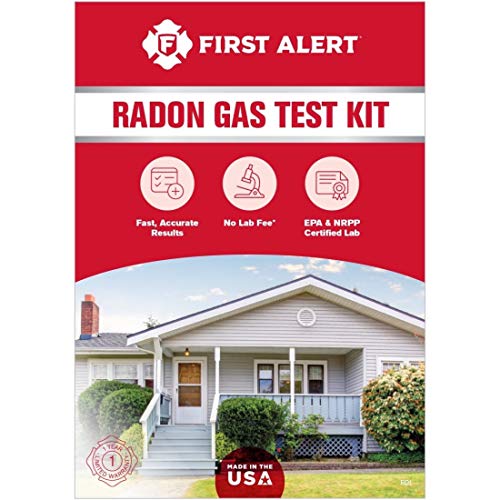 First Alert RD1 Radon Test Kit | Widely stocked; 48-hour charcoal test. | Amazon — $16.98 |
 Airthings Corentium Home | Digital monitor with a long-term average. | Amazon — $142.99 |