Side Effects of Radon in Home: Why the Term Misleads

Radon does not produce immediate symptoms in most people. Persistent cough, shortness of breath, chest pain, or unexplained weight loss can be late-stage indicators of radon-caused lung cancer — but these appear only after years of exposure, not as a warning sign. The phrase “side effects of radon in home” borrows medication and pharmacology terminology that does not actually fit how radon affects the body. Pharmacological side effects are immediate, dose-related, often reversible, and predictable from a drug’s mechanism of action. Radon exposure does none of those things — it produces no acute effects at any concentration found in homes, no reversible markers that mitigation undoes, and no predictable individual response that occupants experience as “side effects.” The only health consequence of long-term radon exposure is an increased lifetime risk of lung cancer, and that risk is not a side effect in the usual sense of the term. This guide explains why the framing misleads and restructures the right way to think about radon in the home. This guide summarizes EPA and CDC radon-safety guidance current as of 2026 — consult your physician for any specific medical concerns and a certified radon professional for testing decisions.
Part of our Radon Levels guide — start there for the full picture →
Why “Side Effects” Is the Wrong Model
The phrase “side effects” comes from pharmacology, where it describes effects of a drug other than the intended therapeutic effect. A blood-pressure medication’s intended effect is lower blood pressure; its side effects might include fatigue, dry mouth, or dizziness. The framework assumes a substance with intended use, dose-dependent acute effects, and predictable individual variation in response.
None of these assumptions apply to radon. Radon is not administered with an intended effect. It is not a substance the body responds to acutely. It does not produce dose-dependent immediate effects that vary by individual. The biological mechanism of radon harm — alpha-radiation damage to lung-cell DNA from inhaled radon progeny — proceeds at the cellular level over years to decades without producing any signal the body or its host can perceive in the meantime. The pharmacological side-effect model simply does not map onto how radon affects health.
Adults using the “side effects” framing typically mean one of two things in practice. First, they are asking what symptoms to watch for as a way to know whether radon is affecting them — and the answer is that there are none. Second, they are asking what health outcomes radon exposure leads to long-term — and the answer is lung cancer, manifesting years or decades after exposure as symptoms typical of any lung cancer. Neither answer fits the medication-side-effect format the question is structured around.
What Radon Does to Lung Tissue
The mechanism is straightforward to describe at a high level. Radon-222 in indoor air decays through a sequence of short-lived progeny — polonium-218, lead-214, bismuth-214, polonium-214 — that are radioactive solids. These progeny attach to airborne particulates and, when inhaled, deposit on the surfaces of bronchial and alveolar lung tissue. As each progeny continues to decay, it emits alpha-radiation particles that damage the DNA of adjacent cells. The damage is concentrated in a small volume of tissue surrounding each decay event, and the energy of alpha radiation is sufficient to break DNA strands and create mutations.
Most of this damage is repaired by normal cellular repair machinery. Some of it is misrepaired or unrepaired, and over many years of exposure, the cumulative damage in a small number of cells can initiate the multi-step process that produces a malignant cell line. Eventually — typically decades after exposure begins — a tumor of sufficient size develops to produce clinical symptoms. The progression from molecular damage to clinically detectable cancer takes years to decades, and the damage proceeds silently for the entire interval.
This is the entire health story for radon in the home. There are no other documented effects on lung tissue at residential concentrations, no other organ systems affected, no acute responses, and no reversible markers. The companion radon testing hub covers the testing protocols that quantify the underlying exposure.
What Adults Actually Experience in High-Radon Homes
Adults living in homes with elevated indoor radon — including very high levels above 20 pCi/L — typically experience nothing they can attribute to the radon. They go about daily life as in any other home. They do not feel fatigue from radon, do not develop headaches from radon, do not experience allergy-like responses from radon, do not notice respiratory irritation from radon. Any of these symptoms occurring in a high-radon home is statistically far more likely to have other causes — mold, dust, HVAC contamination, sleep disruption, dehydration, unrelated medical conditions.
The mismatch between expected “side effects” and the actual experiential silence of radon exposure is one of the reasons radon remains underaddressed in U.S. residential housing despite being well-documented as a meaningful cancer risk. Homeowners who would test promptly for a substance they could feel or smell go years without testing for radon because nothing prompts them — there is nothing to feel, nothing to smell, no daily reminder that exposure is occurring. EPA Zone 1 designation across Colorado is intended in part to provide that prompt at the public-information level, but adoption of routine testing in Front Range homes remains incomplete.
The Long-Term Cancer Risk: Quantified
EPA’s estimates of radon-attributable lung cancer in the United States are derived from epidemiological studies and dose-response modeling. The agency estimates approximately 21,000 lung-cancer deaths per year in the U.S. are attributable to residential radon — making radon the second-leading cause of lung cancer after smoking, and the leading cause among never-smokers. The risk is dose-dependent. EPA’s risk tables show estimated lifetime lung-cancer risk per 1,000 exposed adults at various indoor radon levels:
- At 4 pCi/L (action level): approximately 7 per 1,000 never-smokers, approximately 62 per 1,000 smokers.
- At 10 pCi/L: approximately 18 per 1,000 never-smokers, approximately 150 per 1,000 smokers.
- At 20 pCi/L: approximately 36 per 1,000 never-smokers, approximately 260 per 1,000 smokers.
These are lifetime cumulative risks. They reflect the long-term consequence of continued exposure at the listed concentration, not immediate symptoms. The smoker-radon multiplicative effect is visible in these numbers — smoking dramatically amplifies the radon-attributable cancer risk, which is one of the strongest arguments for combining smoking cessation with radon mitigation for adults in high-radon homes.
Restructuring the Question: Test and Mitigate
Rather than asking what side effects to watch for, homeowners should ask three different questions that produce actionable answers:
- What is my home’s actual radon level? Answered by a short-term test (charcoal canister or alpha-track device, 2-7 days) or a long-term test (90+ days for a more representative average).
- Is the level above the EPA action level? 4 pCi/L is the threshold for recommended mitigation. Levels between 2 and 4 pCi/L are recommended for consideration of mitigation.
- If yes, what mitigation method is appropriate for my foundation type? Sub-slab depressurization is the standard method for slabs and basements. Crawlspace-specific systems address crawlspaces. A certified radon professional designs the system based on the home’s specific conditions.
Each of these questions produces a specific actionable answer that homeowners can pursue. The “side effects” question produces no actionable answer because the premise — that radon produces observable side effects — does not match the underlying biology. Replacing the symptom-focused question with these technical questions is the practical path forward for any homeowner concerned about radon. The companion where to get a radon test kit guide covers the practical first step of obtaining a test.
What Mitigation Achieves
Sub-slab depressurization mitigation typically reduces indoor radon by 80 to 99 percent from pre-mitigation levels. A home initially testing at 30 pCi/L can routinely be reduced to below 2 pCi/L. The cumulative exposure of occupants drops in proportion as the indoor concentration drops. Mitigation does not undo any damage already caused by prior exposure — DNA damage in lung cells from previous radon-progeny inhalation is what it is — but it prevents continued accumulation of new damage from this point forward.
This is the reason mitigation matters even after years of unmitigated occupancy. The cumulative exposure model is forward-additive: today’s exposure adds to yesterday’s accumulated dose. Stopping today’s exposure stops the accumulation. The lung cells that have already been damaged remain at whatever risk they carry, but no additional damage is added going forward. For a 45-year-old homeowner with another 30+ years of expected occupancy ahead, the avoided future exposure represents the majority of the lifetime exposure that mitigation prevents — even if the home has been occupied for a decade prior to mitigation.
This is why mitigation is recommended at any age, not just early in life. The risk reduction comes from the years going forward, not from undoing the past. Front Range homeowners who have lived in their home for decades without testing have not “missed the window” — they still benefit substantially from testing now and mitigating if the level is elevated.
How Mitigation Verification Works
The verification of mitigation success uses the same testing methodology as the initial detection — short-term and long-term radon tests measured against the EPA action level. A short-term test conducted 24-48 hours after system commissioning confirms the system is operating and reducing indoor concentration. A follow-up test several weeks later confirms continued performance. EPA recommends re-testing every two years thereafter to detect any system failure or drift in performance over time.
The verification is concentration-based, not symptom-based. A homeowner who had no symptoms before mitigation will continue to have no symptoms after mitigation — both because nothing about the homeowner’s experience changes and because there was nothing radon-related to change. The test result is the only meaningful before/after comparison. This is fundamentally different from medication-side-effect frameworks where patients can report whether symptoms have resolved after a dose adjustment. Radon mitigation success is documented in the test result, not in the homeowner’s experience.
Why the Framing Matters for Public Health Communication
The “side effects” framing matters beyond an individual homeowner’s question because it shapes how public health information about radon is presented and received. Communications that promise symptom-watching as a way to identify radon exposure mislead the public by implying a detection method that does not exist. Communications that focus on testing and mitigation — without trying to fit radon into a side-effect model — are more aligned with the underlying biology and produce better adoption of effective protective behaviors.
EPA, CDC, and state health departments have generally moved toward the testing-and-mitigation framing in public-facing materials over the past two decades. The American Lung Association and CDPHE in Colorado both emphasize the same message: radon has no symptoms to watch for, and the only meaningful response is to test the home and mitigate if the level is elevated. Front Range homeowners reading this guide are encountering the same message in alignment with the broader public-health consensus on how radon should be communicated to households.
The shift away from symptom-based framing is part of a broader recognition in public health communication that cumulative-exposure hazards require different messaging than acute hazards. Carbon monoxide is the classic acute inhalation hazard — symptoms appear quickly, the message can use those symptoms, and detection technology (CO alarms) is consumer-friendly. Radon is the classic cumulative-exposure hazard — no symptoms appear, no body-based detection works, and the public health message must center on the underlying test result rather than on anything the homeowner can perceive directly.
References
- EPA radon health risk overview — U.S. Environmental Protection Agency
- American Lung Association radon and lung cancer information — American Lung Association
- Colorado Department of Public Health and Environment radon program — CDPHE
Frequently asked questions
What are the side effects of radon in the home?
There are no side effects of radon exposure in the pharmacological sense. Radon does not produce acute symptoms, dose-related immediate effects, or reversible markers. The only documented health outcome of long-term residential radon exposure is increased lifetime lung-cancer risk, which manifests years or decades later.
Can radon cause any non-cancer health effects?
No non-cancer health effects have been documented as attributable to residential radon at any concentration found in homes. Symptoms occasionally attributed to indoor radon — headaches, fatigue, allergies, sleep disturbances — are not associated with radon and likely have other causes that warrant separate investigation.
Does radon affect children differently than adults?
Children accumulate radon exposure over more remaining years of life than adults moving into the same home, which means childhood exposure contributes a larger fraction of total lifetime dose. The biological mechanism is the same as in adults, but the cumulative-dose model means early-life exposure carries proportionally greater lifetime risk.
Is radon mitigation worth it if I'm already older?
Yes. Mitigation prevents continued accumulation of exposure-related damage from the date of installation forward. Older homeowners still typically have many remaining years of occupancy, and the avoided exposure during those years represents real long-term risk reduction regardless of prior exposure history.
Front Range homeowners can reach out through our contact page for a referral to a CDPHE-certified radon professional for testing or mitigation system design.
Test your home for radon
Radon is invisible and odorless, so a test is the only way to know your level. A short-term kit gives a first reading in days; a digital monitor tracks it over time.
| Product | Why | Buy |
|---|---|---|
 AirChek Charcoal Radon Test Kit | Lab fee usually included; EPA short-term protocol. | Amazon — $21.95 |
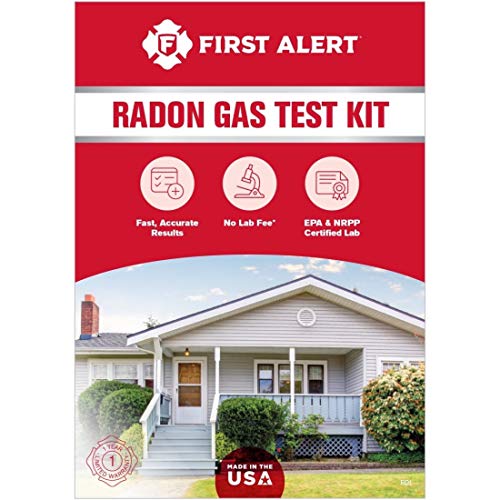 First Alert RD1 Radon Test Kit | Widely stocked; 48-hour charcoal test. | Amazon — $16.98 |
 Airthings Corentium Home | Digital monitor with a long-term average. | Amazon — $142.99 |