Thermal Imaging Inspection in Douglas County, CO
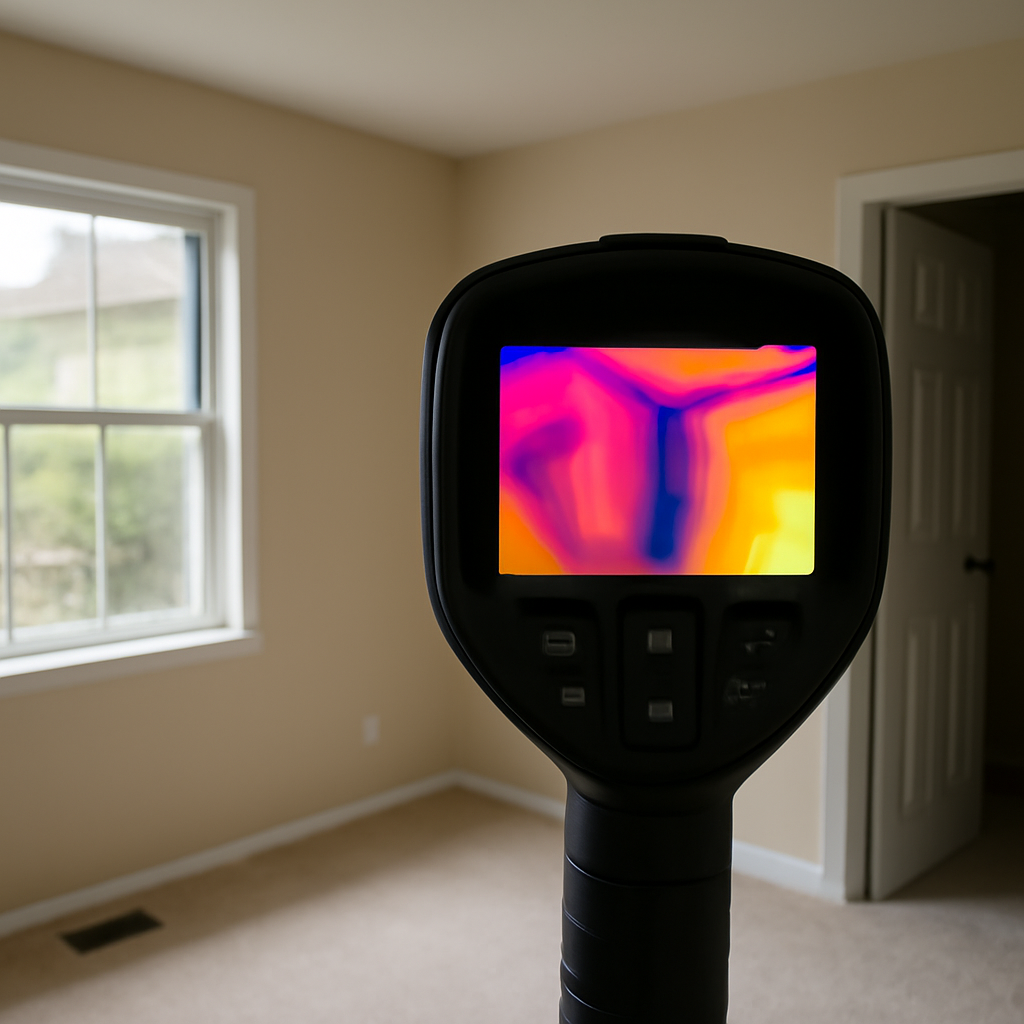
Thermal imaging inspection douglas county homeowners and buyers use to see what a visual inspection cannot: hidden moisture, missing insulation, and electrical hot spots revealed by surface-temperature differences. Douglas County’s cold, sealed winters at 6,000-plus feet and its post-1980 tract housing make infrared especially useful here, where energy loss and concealed leaks behind finished basements are common. This county hub explains what thermal imaging detects, how it applies to homes from Castle Rock to Parker, local costs, and links to city pages. Infrared shows temperature, not moisture directly, so findings are confirmed with a moisture meter.
Thermal imaging inspection in Douglas County: what to know
A thermal imaging inspection uses an infrared camera to map surface temperatures across walls, ceilings, and floors. Differences in temperature reveal what lies behind the surface: a cool patch where insulation is missing, a damp spot evaporating and reading cooler, or a warm zone at an overloaded electrical connection. The camera does not see through walls; it detects the heat signature that hidden conditions leave on the surface.
Douglas County’s climate makes the technique productive. With long cold winters and a large indoor-to-outdoor temperature gap, the contrast that infrared depends on is strong, so missing insulation in a Highlands Ranch attic kneewall or a draft at a Parker rim joist shows up clearly. The county’s tract homes, built for energy efficiency but sometimes inconsistently insulated, are good candidates for an infrared scan.
Thermal imaging is a tool within an inspection, not a standalone test. For how it fits a full evaluation, our guide to hiring a home inspector covers the broader process. This page focuses on the county application.
Why Douglas County homes benefit from thermal imaging
Hidden moisture is the headline use. The county’s finished basements, the same lower-level living spaces prone to foundation seeps and snowmelt intrusion, can hold dampness behind drywall with no visible stain. An infrared scan flags the cooler evaporative signature of a wet wall in a Castle Rock or Lone Tree basement, letting a moisture meter confirm it before mold takes hold.
Insulation gaps drive comfort and energy complaints. In post-1980 tract homes across Stroh Ranch in Parker or the villages of Highlands Ranch, insulation was sometimes installed unevenly, leaving cold spots and high heating bills. Infrared maps exactly where attic insulation thinned out or a wall cavity was missed, turning a vague “this room is always cold” into a precise, fixable location.
Cold-climate building stresses show up too. Douglas County’s freeze-thaw cycles and ice-dam-prone roofs in Castle Pines can let meltwater track into ceilings, and air leakage at rim joists and window frames wastes energy through the long winter. An infrared scan during a cold spell, when the temperature contrast is greatest, surfaces these issues that a summer visual walk-through would miss entirely.
What a Douglas County thermal imaging inspection covers
An infrared scan sweeps the interior surfaces systematically, with the inspector interpreting the patterns and confirming findings with secondary tools.
Moisture, insulation, and air leakage
The camera scans ceilings under roof valleys, basement walls, around windows and doors, and at exterior wall-to-floor junctions. Cool anomalies suggest moisture or missing insulation; the inspector then uses a moisture meter to distinguish a wet wall from a simple insulation gap. In a Douglas County finished basement, this is the difference between a real leak and a cold but dry corner.
Electrical hot spots and confirmation
Infrared also catches abnormally warm electrical components, an overloaded breaker or a loose connection in a panel, which read hotter than their neighbors before they fail. Because thermal imaging shows temperature rather than the underlying cause, every notable finding is verified with a moisture meter, a visual check, or further investigation, so the report reflects confirmed conditions rather than raw thermal guesses.
Thermal imaging inspection cost in Douglas County
Thermal imaging is most often an add-on to a home inspection in the Douglas County market, typically running about $100 to $250 on top of the base inspection. A standalone infrared scan, to investigate a specific cold room or a suspected basement leak, usually runs about $200 to $400 depending on home size and scope.
The value is in what it prevents. Catching a concealed basement leak in a Highlands Ranch home before it feeds mold, or pinpointing the missing insulation behind a chronically cold Parker bedroom, costs far less than the damage or the wasted heating bills that go unaddressed. For the county’s cold-winter tract homes, infrared is an efficient add-on to a standard inspection.
Colorado regulations and disclosure
Colorado does not license home inspectors or thermal imaging specifically, so training and method matter. Look for an inspector with infrared certification or documented experience interpreting thermal images, since a camera in untrained hands produces colorful pictures without reliable conclusions. Any moisture or defect found feeds the same Colorado disclosure obligations as a visual finding.
Because no license governs the tool, ask whether the inspector confirms thermal anomalies with a moisture meter and explains findings in plain language. On a Douglas County home, a scan that distinguishes a genuine wet wall from a harmless cold spot is only as good as the interpretation behind it.
Communities and areas served across Douglas County
Infrared demand spans the county’s tract-home communities. Castle Rock, the county seat, sees scans on Meadows and Founders Village homes; our thermal imaging inspection in Castle Rock page covers the city detail. Parker’s neighborhoods follow the same energy-efficiency profile, on our thermal imaging inspection in Parker page. Highlands Ranch, the largest community, generates the most volume given its housing count.
Coverage continues through Lone Tree, Castle Pines, Sedalia, and Larkspur, where larger custom homes and rural properties offer more wall area and more places for insulation gaps and concealed leaks to hide. Across the county, the cold-winter climate that makes infrared effective applies everywhere, so the technique adds value regardless of which community a home sits in.
Energy loss and winter performance in Douglas County homes
Beyond moisture and electrical findings, thermal imaging earns its keep in Douglas County through energy diagnostics, and the county’s long heating season makes the savings tangible. A post-1980 tract home in Highlands Ranch or Parker was built to be energy-efficient, but inconsistent insulation installation during boom-era construction left many homes with gaps, missed wall cavities, and compressed attic insulation that undermine the design. Those gaps are invisible to the eye but glow on an infrared scan as cold patches during a winter scan.
Attics are the highest-yield area. Heat rises, so an attic with thin or uneven insulation bleeds warmth all winter, and infrared maps exactly where the insulation thinned out or a section was never properly filled. Knee walls in bonus rooms over garages, common in larger Castle Pines and Lone Tree homes, are notorious cold spots that a scan pinpoints. Correcting these gaps targets insulation dollars at the specific locations losing heat rather than blanketing the whole attic blindly.
Air leakage is the companion finding. Beyond missing insulation, infrared reveals where cold outdoor air infiltrates, around rim joists, recessed lights, attic hatches, and poorly sealed window frames. In a sealed Douglas County home during a January cold snap, these leaks waste heating energy and create the drafts homeowners feel but cannot locate. A scan done when the indoor-to-outdoor temperature gap is largest shows the leakage paths clearly, turning a vague complaint about a cold, drafty room into a specific, sealable list of locations.
When a standalone infrared scan makes sense
While thermal imaging is most often an add-on to a full inspection, certain Douglas County situations justify a standalone scan. The clearest is a specific, localized problem: a single chronically cold bedroom in a Parker home, a basement wall that feels damp in one corner, or a ceiling stain that appears after snow without an obvious source. A targeted scan investigates the suspect area directly and either locates the cause or rules out the worst possibilities.
Post-leak verification is another standalone use. After a plumbing repair or a roof fix in a Castle Rock home, an infrared scan confirms whether the affected area has actually dried or whether moisture is still lingering behind the finishes. Because mold can take hold in a wall that looks dry on the surface but remains wet inside, this verification matters in the days after any water event, and infrared paired with a moisture meter gives a clearer answer than a visual check alone.
Energy-focused scans round out the standalone category. A homeowner facing high winter heating bills in a Highlands Ranch home, without any specific leak or moisture concern, can commission an infrared survey purely to map insulation gaps and air leakage before investing in upgrades. The scan turns an energy-efficiency project from guesswork into a targeted plan, which is especially worthwhile given how long and cold the Douglas County heating season runs.
What affects thermal imaging cost in Douglas County
The first cost factor is whether the scan is an add-on or standalone. Bundled into a home or pre-purchase inspection, infrared is the more economical option because the inspector is already on site and the camera sweep adds time rather than a separate trip. A standalone scan, dispatched specifically to investigate a chronically cold Parker bedroom or a suspect Castle Rock basement wall, carries its own visit cost and so sits higher even though the area scanned may be smaller.
Home size and scope scale the price within either path. A compact Highlands Ranch home with a modest finished basement takes less time to sweep than a large Castle Pines or Lone Tree custom home with extensive wall area, bonus-room knee walls, and multiple levels to scan. The more surfaces the inspector must image and interpret, the longer the scan, since every anomaly that turns up has to be confirmed with a moisture meter or a closer look rather than reported as a raw thermal image.
Season and purpose round out the picture. A scan timed for a January cold snap, when the indoor-to-outdoor temperature gap is largest, produces the clearest results and is the most diagnostically valuable use of the tool in this climate. An energy-focused survey that maps every insulation gap and air-leakage path across a whole Douglas County home is more involved than a targeted check of one suspect room, and the scope of what the homeowner wants documented is what sets the standalone scan within its range.
How to choose a Douglas County thermal imaging provider
Look for infrared certification or clear evidence of training, and confirm the inspector verifies thermal findings with a moisture meter rather than reporting raw images. A provider who explains that the camera detects temperature, not moisture directly, and who scans during a cold spell for maximum contrast, understands how to get reliable results from the tool in a Douglas County winter.
For the most value, add thermal imaging to a full inspection so the infrared findings sit alongside the structural and systems review in one report. Pairing it with a home inspection in Douglas County lets a buyer or homeowner act on hidden moisture and insulation gaps with the full context of the home’s condition.
References
- Infrared thermography in home inspection — International Association of Certified Home Inspectors
- Home energy assessments and infrared scans — U.S. Department of Energy
- Moisture control and mold prevention — U.S. Environmental Protection Agency
If a Douglas County room is always cold or a basement wall feels suspect, an infrared scan shows exactly where the problem is. To connect with a vetted local inspector, get in touch through our contact page.
Thermal imaging cameras
Infrared cameras reveal hidden moisture, missing insulation, and air leaks. Phone-attachment models are the budget entry point; standalone units have higher resolution.
| Product | Why | Buy |
|---|---|---|
 FLIR ONE Pro (phone) FLIR ONE Pro (phone) | Plugs into iPhone/Android; inspector favorite. | Amazon — $349.00 |
 Topdon TC001 Topdon TC001 | High-res phone module at a low price. | Amazon — $199.99 |
 FLIR C5 Compact FLIR C5 Compact | Standalone pocket camera with Wi-Fi. | Amazon — $449.00 |