Thermal Imaging Camera Android: The Android Advantage Narrative
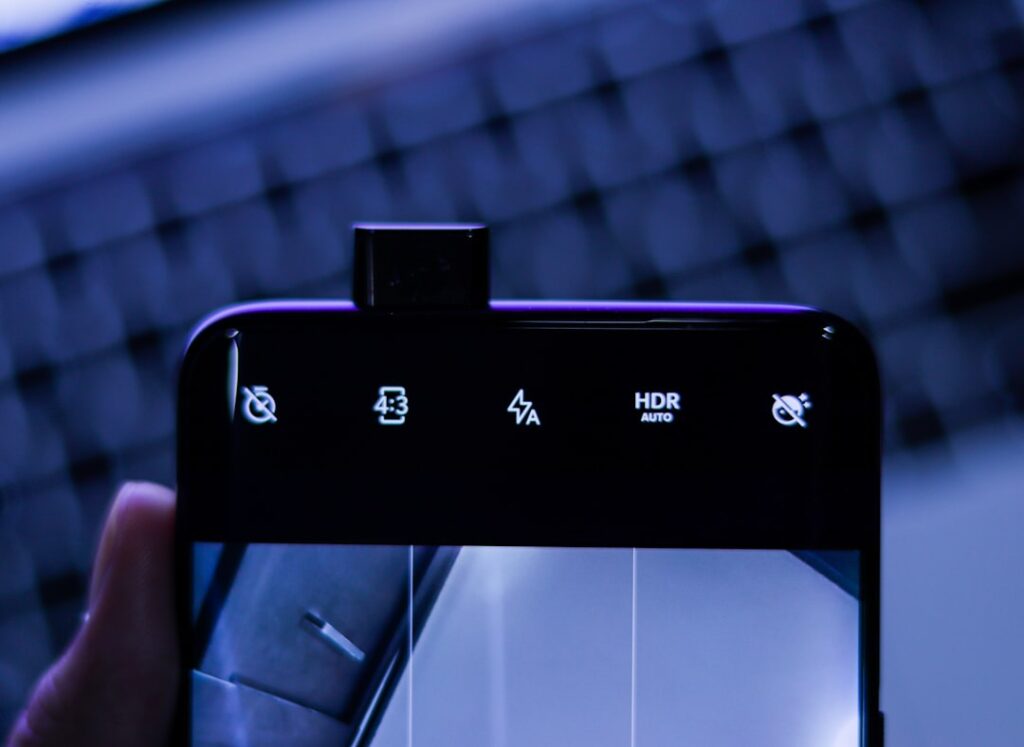
Android users shopping for a thermal imaging camera enter a broader and often more affordable ecosystem than iOS users. The standardized USB-C connector across nearly all Android phones since 2018 has produced a competitive market with multiple manufacturers, varied price tiers, and feature parity at lower price points than equivalent iOS gear. This guide walks Android users through what the platform offers, why the connector standardization matters, and how to evaluate the broader vendor pool. Information here is current as of 2026 and reflects manufacturer specifications and trade-association resources.
Part of our Thermal Imaging for Homes guide — start there for the full picture →
What “Android advantage” actually means
The Android advantage in thermal imaging accessories is the consequence of three structural factors. First, the USB-C connector standardized across Android phones earlier than iPhones, so accessory manufacturers could design one USB-C product and sell it to a broad installed base. Second, Android’s more open accessory and driver model lets smaller vendors ship compatible thermal cameras without the formal MFi certification iOS requires. Third, the larger Android market share globally creates economies of scale that lower the per-unit cost for the same sensor technology.
The net result is that Android users have more product options at lower prices than iOS users at any given thermal resolution tier. FLIR, Seek, InfiRay, HikMicro, Topdon, Hti, and several other vendors all ship Android USB-C thermal cameras. iOS users until recently had a much narrower vendor pool, dominated by FLIR and Seek with a few smaller players.
USB-C standardization across Android
Android phones from 2018 forward use USB-C with rare exceptions at the budget end. The USB-C standard is electrically uniform across vendors, so a thermal camera designed for USB-C draws power and data through the same protocol regardless of whether the phone is a Pixel, Samsung, OnePlus, Motorola, or other brand. Vendor-specific features (Samsung DeX desktop mode, for example) do not affect the basic accessory connection.
The standardization simplifies the buying decision. Once you confirm your phone uses USB-C and runs the Android version required by the companion app, the thermal camera will almost certainly work. The exceptions are some budget Android phones that ship USB-C with reduced power output or limited USB Host (USB OTG) support; these phones may not provide enough power for the thermal camera to operate. Most current flagship and mid-tier Android phones provide adequate power.
USB Host (OTG) support check
Thermal cameras connecting via USB-C require the phone to act as a USB Host (providing power to the connected device) rather than as a USB Device (drawing power from the connected device). This is called USB On-The-Go (OTG) support. Nearly all current Android phones support USB OTG, but verifying for your specific phone before buying is worth 30 seconds. A free Android app called “USB OTG Checker” tests the capability. If your phone fails OTG, the thermal camera will not work regardless of physical connector match.
The Android thermal vendor landscape
FLIR ships the FLIR One Gen 3 and FLIR One Pro for Android with USB-C. The vendor history and app maturity is similar to the iOS side. Price tier: $250 to $650.
Seek Thermal ships the Compact, CompactPro, and ShotPro for Android USB-C. Seek’s app is mature and stable. Price tier: $250 to $700.
InfiRay (also marketed as Xinfrared, T2, T2S, T3) is a Chinese sensor manufacturer that supplies thermal sensors to many OEMs and also sells direct-to-consumer products. Resolutions range from 256×192 to 384×288 at price points competitive with FLIR but with companion apps that sometimes lag behind FLIR’s polish. Price tier: $400 to $1,000.
HikMicro is the consumer brand of Hikvision, a major sensor manufacturer. Mini and Pocket-series thermal cameras for Android USB-C are popular in the European market and increasingly visible in the US. Price tier: $300 to $900.
Topdon TC001 series has gained share at the budget end with USB-C Android cameras at 256×192 resolution priced around $200 to $300. Companion app quality is workable but less polished than FLIR or Seek.
Hti, Perfectprime, and several other smaller brands fill in the budget tier with similar specifications. Vendor track records vary; check current reviews on the specific model before buying. A complete landscape view of Android thermal cameras covers vendor-specific details.
Price comparison to iOS equivalents
At the 80×60 entry tier, iOS and Android pricing is roughly equivalent because FLIR and Seek dominate both ecosystems. At the 160×120 mid-tier, Android starts to show price advantage as InfiRay and HikMicro undercut FLIR and Seek by 30 to 40 percent for comparable sensor specifications. At the 256×192 and higher tiers, the Android price advantage grows: a 256×192 Android camera from a competitive vendor runs $400 to $700, while iOS users at the same resolution typically pay $600 to $1,200.
The trade-off is brand maturity and support. FLIR and Seek have 10+ year track records in consumer thermal accessories. InfiRay, HikMicro, Topdon, and similar brands are younger in the western consumer market. Their hardware is often competitive, but app updates and long-term support are less proven. For homeowners who plan to use the camera occasionally over many years, the established brands are safer despite the price premium.
App ecosystem considerations
The Android app ecosystem is open to multiple thermal companion apps from different vendors, while iOS limits which apps can use which sensors via MFi authentication. Practically, this means Android users sometimes have third-party companion apps available beyond the manufacturer’s default, allowing alternative interfaces or features. The downside is fragmentation: an Android user with two thermal cameras from different vendors may need two different apps.
For inspectors who want a single app to manage all their thermal work, the FLIR One app or the Seek app (depending on which brand they choose) keeps the workflow consistent. Mixing vendors complicates the workflow because each ships its own app. Most professional users settle on one vendor for this reason.
Where Android falls short of iOS
The Android advantage is not absolute. iOS thermal apps tend to have tighter share-sheet integration for client handoff workflows. Photos and Files apps on iOS integrate more smoothly with iCloud backup. The iOS color-management pipeline produces slightly more consistent palette rendering across different iPhone models. Android’s broader hardware diversity introduces small inconsistencies across phone models.
Battery management is also slightly more variable on Android. Different manufacturers tune their power management differently, and some aggressive battery savers kill the companion app process if the screen turns off briefly. Check your phone’s battery settings and whitelist the thermal companion app from aggressive sleep policies before relying on it for fieldwork.
Long-term support considerations
Android phones have shorter typical update lifespans than iPhones. A 2020 iPhone runs current iOS in 2026; a 2020 mid-tier Android may have stopped receiving OS updates in 2023 or 2024. The thermal camera’s companion app may eventually drop support for the older Android version, bricking the camera on that phone even though the hardware still physically works.
The mitigation is to plan for the Android phone refresh cycle when investing in a thermal camera. If you upgrade Android phones every 3 to 4 years, the camera should outlast 2 or 3 phone refreshes, requiring app compatibility with each new phone. Established brands (FLIR, Seek) have better track records of supporting their cameras across Android versions for longer than newer entrants. A complete review of home inspection tool categories places Android thermal cameras in the larger tool ecosystem.
Working distance and resolution matching
Resolution choice for Android thermal cameras follows the same logic as iOS. For close-range residential work (1 to 3 meters), 80×60 or 160×120 is usually adequate. For longer-range or smaller-feature inspection, 256×192 or higher resolution justifies its price. Android’s wider vendor pool gives more granular resolution options (220×160 from some vendors, 256×192 from others, 384×288 at the top consumer tier) than iOS, where resolution tiers are more rigid.
Field of view also matters and varies more across Android offerings than iOS. A wider FOV covers more area per image but reduces per-target resolution. A narrower FOV provides higher per-target detail at the cost of needing more images to cover an area. Check the manufacturer’s specification for horizontal FOV (typically 25 to 56 degrees on consumer thermal cameras) and match it to your typical working distance.
Power delivery and charging during use
Android phones with USB-C support charging while a USB accessory is connected, in theory. In practice, most Android phones do not support simultaneous USB-C accessory operation and charging unless they use specific dual-purpose adapters or the accessory itself has its own internal battery. Most thermal cameras for Android draw power directly from the phone, so charging the phone while imaging is generally not possible.
For long field sessions, the practical workaround is to use a thermal camera with its own internal battery (some Seek and FLIR models qualify; many newer competitor models do not). Alternatively, work in shorter sessions with charging breaks between, or carry a portable USB-C power bank to recharge the phone immediately when the thermal session ends.
The power draw from a thermal camera typically reduces phone battery life by 30 to 50 percent during continuous use. A phone that normally lasts 12 hours of mixed use may last only 6 to 8 hours during continuous thermal imaging. Plan field schedules accordingly.
USB-C cable considerations on Android
Not all USB-C cables are equivalent. Thermal cameras typically require USB 2.0 or USB 3.0 data and power negotiation through the USB-C connector. Some USB-C cables are power-only or have limited data capability. A cheap USB-C cable from a budget supplier may not pass the required negotiation, leading to intermittent connection or failure to recognize the camera.
Most thermal cameras for Android attach directly to the phone via a short pigtail or rigid connector rather than a separate cable, avoiding this issue. The exceptions are larger thermal cameras with separate USB-C cables, where cable quality matters. Use the manufacturer-provided cable rather than a generic replacement when possible.
Android phone manufacturer specifics
Phone manufacturer’s customization layers (Samsung One UI, OnePlus OxygenOS, Xiaomi MIUI, others) sometimes change USB accessory handling in ways that affect thermal companion apps. Samsung’s One UI is generally well-tested with major thermal vendors. OnePlus and Xiaomi have occasional reports of incompatibility with specific thermal camera models. Pixel phones with stock Android tend to have the most predictable behavior.
For homeowners shopping for a thermal camera, the relevant question is whether your specific phone model is mentioned in the camera manufacturer’s compatibility list or in user reviews. The phone manufacturer’s reputation for accessory handling is a useful secondary filter. Samsung and Google flagships have the broadest accessory compatibility; budget-tier and Chinese-brand phones have more variable experience.
Cross-platform vendor support comparison
Vendors that ship for both iOS and Android typically support the Android variant for slightly shorter timeframes than the iOS variant. The reason is that Android version fragmentation makes long-term support more expensive: an iOS thermal app supports approximately three iOS major versions; an Android thermal app needs to support five to seven Android versions across multiple OEM skins.
For long-term Android thermal investment, this matters. A camera bought today on Android 13 may have companion app support drop when Android reaches version 17 or 18, even if the camera hardware is still working. Mitigations include sticking with vendors who have strong long-term support track records (FLIR, Seek) or planning to replace the camera at roughly the same cadence as the phone.
When standalone thermal makes sense over Android
The Android smartphone thermal advantage is large in price-per-pixel terms, but standalone professional thermal cameras still win on a few dimensions. Built-in rugged form factor (no risk of phone damage or theft on a jobsite). Dedicated screen with no incoming-call interruption. Longer battery life specifically tuned for thermal imaging. Higher-end sensor options (cooled detectors, multispectral options) that smartphone form factors cannot accommodate.
For a homeowner doing one-time energy audits or a contractor adding occasional thermal to a primary trade, the Android smartphone setup wins on cost and convenience. For full-time thermal inspectors, the standalone professional camera usually justifies its higher price. The Android attachment can complement a standalone camera as a backup or for quick spot checks.
References
- ENERGY STAR: Seal and Insulate — U.S. Environmental Protection Agency (ENERGY STAR)
- InterNACHI Infrared Thermography — International Association of Certified Home Inspectors
- ASHRAE Technical Resources — American Society of Heating, Refrigerating and Air-Conditioning Engineers
- ICC Building Safety Journal — International Code Council
Frequently asked questions
Why is Android thermal imaging cheaper than iOS?
USB-C standardization since 2018, Android's more open accessory model that allows non-certified vendors, and the larger global Android market share create economies of scale. The result is a broader vendor pool with price competition that the iOS market historically did not have to the same degree.
Will my Android phone work with a thermal camera?
Most current Android phones with USB-C will work. Verify USB OTG (USB Host) support with a free OTG checker app, confirm your phone's Android version meets the companion app's minimum requirement, and check current owner reviews for your specific phone model before buying.
Which Android thermal camera brand is best?
FLIR and Seek have the longest track records and most mature apps but cost 30 to 40 percent more than newer competitors at the mid and higher resolution tiers. InfiRay, HikMicro, and Topdon offer competitive hardware at lower prices with less proven long-term support. Match brand maturity to your expected use horizon.
What resolution thermal camera do I need for home inspection on Android?
For close-range residential work at 1 to 3 meters, 160x120 is usually adequate. For longer ranges or smaller features (electrical panels, individual fittings), step up to 256x192 or higher. The Android market offers more granular resolution tiers than iOS, allowing finer matching to use case.
Thermal imaging cameras
Infrared cameras reveal hidden moisture, missing insulation, and air leaks. Phone-attachment models are the budget entry point; standalone units have higher resolution.
| Product | Why | Buy |
|---|---|---|
 FLIR ONE Pro (phone) FLIR ONE Pro (phone) | Plugs into iPhone/Android; inspector favorite. | Amazon — $349.00 |
 Topdon TC001 Topdon TC001 | High-res phone module at a low price. | Amazon — $199.99 |
 FLIR C5 Compact FLIR C5 Compact | Standalone pocket camera with Wi-Fi. | Amazon — $611.50 |