Thermal Camera Rent: A Homeowner Pricing and Process Guide
Thermal camera rent is the casual phrasing for a homeowner question with a precise answer: yes, residential-grade thermal imagers are available to rent in most US metros for 75 to 300 dollars per day, and rental is the right choice for one-off projects where the cost-benefit of owning does not pencil out. This guide covers what rental gets you, what it does not, which providers actually stock thermal cameras locally, and when hiring an InterNACHI-certified inspector with their own camera is the better path. The thermal imaging space evolves quickly; the figures below reflect 2026 conditions.
Part of our Thermal Imaging for Homes guide — start there for the full picture →
What Thermal Camera Rental Looks Like in 2026
The rental market has consolidated around three product tiers, each at a different daily rate.
Tier 1: Smartphone attachments (75 to 125 dollars per day)
Devices like the Seek Compact, Seek Reveal, and similar lightning/USB-C attachments that pair with a phone. Resolution typically 160 by 120 pixels or 320 by 240. Good enough for visualizing temperature contrasts on walls, finding obvious insulation gaps and electrical hot spots, and pointing the way to follow-up. Limited for energy auditing or any work where you need radiometric data export.
Tier 2: Mid-range handhelds (125 to 200 dollars per day)
Standalone handheld units with displays, typically 320 by 240 to 480 by 360 pixels. Most include radiometric image saving (every pixel records a temperature value), basic measurement tools, and PC software for report generation. This is the tier most home inspectors carry and most rental warehouses stock.
Tier 3: Pro-grade imagers (200 to 300 dollars per day or more)
High-resolution 640 by 480 cameras with interchangeable lenses, advanced measurement modes, and integrated reporting software. Most commonly rented by energy auditors, electrical pros, and roofing consultants. For pure residential moisture or insulation work, Tier 2 is usually sufficient.
Where Homeowners Actually Rent
Several rental channels serve the residential market:
- Big-box tool rental — Home Depot Tool Rental and similar in select stores; availability varies
- Specialty tool rental — United Rentals, Sunbelt Rentals, and regional chains; usually Tier 2 or 3 inventory
- Online shippers — companies that ship overnight, you keep for the rental period, and return with a prepaid label
- Direct from the manufacturer — some brands offer rental as a try-before-you-buy program
- Local building science consultancies — sometimes rent or loan equipment to clients
Check inventory the day before the rental — thermal cameras at any single big-box store are usually one or two units that get reserved out fast.
What a One-Day Rental Actually Accomplishes
A homeowner with a thermal imager for 24 hours can realistically:
- Survey every exterior wall from the inside during a temperature differential (15+ degrees F between indoor and outdoor) to find insulation gaps
- Scan ceilings near recessed lights for missing attic insulation
- Find moisture in drywall by looking for cool patches with no heat source
- Inspect electrical panels for hot breakers (very useful, very limited; requires the panel to be under load)
- Look for missing insulation in band joists and rim areas
- Visualize draft paths around windows, doors, and electrical outlets
What rental will not do reliably: locate hidden plumbing leaks behind walls (sometimes yes, often no — depends on temperature differential), identify pest infestations through walls, see through walls in any meaningful sense, or measure temperatures accurately without proper emissivity setup.
The Temperature Differential Requirement
Thermal imaging only works when there is a temperature difference between adjacent surfaces. Front Range homeowners should plan rental days for either cold winter mornings (indoor 70 F, outdoor 20 F is ideal) or hot summer afternoons (indoor 75 F, outdoor 95 F). Spring and fall shoulder seasons with similar indoor and outdoor temperatures produce uninteresting thermograms — surfaces all look the same temperature because they actually are.
When Rental Beats Hiring an Inspector
Rental makes sense when:
- The work is curiosity-driven and not tied to a real estate transaction
- You want hands-on time to scan a whole house at your own pace
- The home is yours, not under inspection contingency where lender or buyer documentation matters
- You have time to learn the camera basics — emissivity, span, level — on YouTube before the rental day
An InterNACHI-certified home inspector with thermal training beats rental when:
- You need a deliverable (PDF report with thermograms) for an insurance claim, transaction, or contractor scope
- You are looking for moisture in walls and need someone who can correlate thermal patterns with moisture-meter readings
- Energy auditing is the goal and you want pre- and post-improvement comparisons
- You suspect a specific problem (slab leak, hidden mold) and need someone who has investigated dozens of similar cases
For a deeper look at how the trades use thermal imaging, the home inspection tools hub covers the full equipment landscape. The companion guide on whether you can rent a thermal camera covers the direct answer in more detail, and the thermal imaging home guide covers residential applications across the most common use cases.
Cost Comparison: Rent, Buy, or Hire
For a single use, rental wins. A Tier 2 handheld bought new lists for 1,200 to 3,000 dollars; rental for the same model is 125 to 200 dollars for a day. Smartphone attachments are the exception — at 350 to 550 dollars to buy, the math favors purchase if you anticipate using it more than once or twice.
For real estate transactions, an inspector with thermal capability typically adds 100 to 200 dollars to a standard inspection fee. That includes their expertise interpreting the images, the deliverable report, and liability coverage. For most buyers, this is the better economics than renting and trying to interpret a thermal scan from scratch.
The Reservation Process Step by Step
Reserving a thermal camera locally has more friction than reserving a basic power tool. The inventory is thinner, the units are higher-value, and rental counter staff are often less familiar with the equipment than with mainstream rentals. Working the reservation process effectively saves time on rental day.
Search and identify candidates
Use the search term “thermal camera rental [your city]” or “infrared imager rental near me” rather than the brand-specific search. Make a short list of two or three candidates within 30 minutes driving time. Note their phone numbers; reserving by phone produces more reliable confirmations than online forms.
Call to verify inventory
Ask the specific model on hand. “Thermal camera” is too generic; “FLIR E5” or “Seek Reveal Pro” is what you need to know. Confirm resolution, battery condition, and whether radiometric image saving is supported.
Place the reservation
Specify the exact date and time. Most rental contracts run on 24-hour increments starting from pickup time, so a 3 PM pickup means a 3 PM next-day return. Confirm any deposit amount and the payment method accepted.
Confirm 24 hours before pickup
Call again the day before. Confirm the unit is still reserved and on the shelf. Inventory can shift between reservation and pickup; a phone call surfaces problems while there is still time to switch vendors.
Common Use Cases Driving Rental Demand
Several recurring use cases bring homeowners and tradespeople to thermal camera rental counters.
Pre-winter insulation survey
Homeowners renting in late fall and early winter to find insulation gaps before the cold season. Walk-through scan reveals missing attic insulation, thermal bridging at headers, and gaps at wall-to-ceiling transitions. The findings feed a winter improvement project list.
Post-purchase inspection followup
Buyers who completed a home purchase without thermal imaging in the standard inspection and want to scan now that they own the property. The findings inform repair and improvement prioritization.
HVAC troubleshooting
Diagnosing uneven heating or cooling by scanning supply registers, return air paths, and ducts in accessible areas. Identifies blocked ducts, disconnected fittings, and insulation gaps in duct runs.
Suspected moisture investigation
Homeowner who smells musty odor or sees subtle staining wants to confirm whether wall cavity moisture exists. Thermal scan in cold weather highlights cool areas; pairing with a moisture meter confirms whether the cool area is moisture or just thermal bridging.
Energy bill investigation
High utility bills without clear cause; thermal scan during strong differential identifies the worst heat-loss areas to target with improvements.
Limitations Worth Setting Up Front
Setting expectations before rental day prevents disappointment.
- Thermal cameras do not see through walls in any literal sense; they show surface temperatures influenced by what is behind the surface
- Moisture detection in walls requires favorable conditions (active wetting, temperature differential, suitable substrate); not every scan reveals every leak
- Electrical inspection requires the panel to be under load; a panel scanned with the breakers in normal off state shows little
- Image interpretation is an acquired skill; first-time renters often misread thermal patterns without expert review
- The rental window passes quickly; a 24-hour rental that includes drive time, learning time, and image review leaves perhaps 6 to 10 hours of actual scanning
Setup Checklist for Rental Day
To get value out of a single rental day:
- Schedule during a strong temperature differential (morning of a cold day, afternoon of a hot day)
- Walk the perimeter first; note exterior wall sections to scan from inside
- Charge the camera battery overnight; bring a spare if the rental includes one
- Have the user manual on a phone or tablet during use
- Plan a logical walking sequence — top floor exterior walls, then second floor, then ground floor, then basement
- Save radiometric images, not just JPEGs, if the camera supports it
- Take notes pairing each thermogram with the room and orientation
What to Document During the Scan
The output of a rental-day scan is more useful with consistent documentation. For each thermal image saved:
- Room name and orientation (north wall, east wall, etc.)
- Approximate time of capture
- Indoor and outdoor temperatures at the time
- What you were investigating and what the image is intended to show
- Any visible-light reference photo captured at the same spot
- Notes on anything notable in the image
A simple spreadsheet or notebook works. Pairing each image filename with these notes lets you reanalyze the scan later, share with contractors, or compare with future scans after improvements are made.
After the Rental: What to Do With Findings
Returning the camera ends the rental but begins the more useful work of acting on what you found. Some findings have clear next steps:
- Missing attic insulation: budget for blown-in cellulose or fiberglass upgrade to current code
- Draft paths at windows and outlets: weatherstripping, gasket installation, outlet sealing
- HVAC distribution issues: contractor evaluation for duct sealing or rebalancing
- Suspected moisture areas: confirm with a moisture meter or schedule a professional inspection
- Hot electrical breakers: licensed electrician evaluation before any further work
Save the thermal images and your notes in a folder labeled with the date. Future thermal scans, after improvements are made, can use the saved images as before-and-after comparison.
More Questions About Thermal Camera Rent
Can a rented thermal camera help with a homeowners insurance claim?
A rented thermal camera can help gather early evidence for a homeowners insurance claim, such as the extent of a wet ceiling after a leak, but the images rarely settle a claim alone. Adjusters typically rely on their own inspection, moisture readings, and contractor reports.
Save original image files with dates, take matching visible photos, and note the time and room for each one. Report the damage to the insurer promptly, since waiting to finish a scan should never delay a claim or emergency repairs.
Is renting a thermal camera worth it before an energy audit?
Renting a thermal camera before a professional energy audit is usually not worth it, because a standard audit with a blower door test already includes a thermal scan under controlled pressure. The auditor’s scan reveals air leaks far more clearly than a homeowner scan without depressurization.
Renting makes more sense after the audit, to check whether air sealing or insulation work was finished properly. A follow-up scan in similar weather to the audit allows a fair before-and-after comparison of the problem areas.
Does a thermal camera rental include training?
Most thermal camera rentals include only a quick walkthrough of the controls, not real training in reading images. Some specialty rental companies add a printed guide or a short video, and a few offer phone support during the rental.
Spending half an hour with the manual or maker’s tutorials before the scan makes a big difference. Learning to set a fixed temperature span, adjust emissivity, and spot reflections helps avoid the most common misreadings in a short rental window.
Can a rented thermal camera check a new roof or siding job?
Yes, a rented thermal camera can help check whether a new roof or siding job left insulation gaps or air leaks, most clearly from inside on a cold night. Missing insulation or open gaps behind new siding often show as cold patches or streaks along the walls and ceilings.
Thermal images will not judge shingle installation or flashing quality, which needs a visual roof inspection. Sharing clear findings with the contractor early, while the work is under warranty, gives the best chance of a free fix.
References
- ENERGY STAR: Seal and Insulate — U.S. Environmental Protection Agency (ENERGY STAR)
- InterNACHI Infrared Thermal Imaging — International Association of Certified Home Inspectors
- ASHRAE Building Performance Resources — American Society of Heating, Refrigerating and Air-Conditioning Engineers
Frequently asked questions
How much does it cost to rent a thermal camera for a day?
Smartphone attachments rent for 75 to 125 dollars per day. Mid-range handheld units run 125 to 200 dollars. Pro-grade 640 by 480 cameras start around 200 dollars and run to 300 or more per day depending on model and accessories included.
Where can I rent a thermal camera near me?
Big-box tool rental counters (Home Depot Tool Rental in select stores), specialty rental chains like United Rentals and Sunbelt, online shippers that overnight units anywhere in the US, and some local building science consultancies. Inventory at any single location is usually one or two units.
Is renting a thermal camera worth it for a homeowner?
For one-time use during a strong temperature differential, yes. Rental at 125 to 200 dollars is far cheaper than a 1,500 dollar purchase you may not use again. For transaction documentation or interpretation expertise, hiring an InterNACHI-certified inspector is usually better economics.
What is the best time of year to rent a thermal camera?
Cold winter mornings and hot summer afternoons produce the strongest temperature differentials and the most useful thermograms. Front Range homeowners get good results in January and February, or in late July and August. Shoulder-season scans often look uninteresting because indoor and outdoor temperatures are similar.
Is it cheaper to rent a thermal camera on a weekday?
Some rental shops charge less on weekdays or offer a weekend rate that covers Friday afternoon to Monday morning for close to a one-day price. Asking about weekend specials can stretch the rental across two cold evenings, which helps if the first night turns out too mild.
Can a rented thermal camera be used for a business job?
Yes, rented thermal cameras can usually be used for business jobs, and contractors rent them regularly. Check the rental agreement for any commercial-use terms and insurance requirements. For paid reports, ask for a calibration date and keep the original radiometric files.
What happens if a rented thermal camera is returned late?
A thermal camera returned late is usually charged for extra days at the daily rate, and some shops add a late fee. Calling ahead to extend is often cheaper than paying penalties. Late returns may also affect the next customer's booking, so shops value notice.
Thermal imaging cameras
Infrared cameras reveal hidden moisture, missing insulation, and air leaks. Phone-attachment models are the budget entry point; standalone units have higher resolution.
| Product | Why | Buy |
|---|---|---|
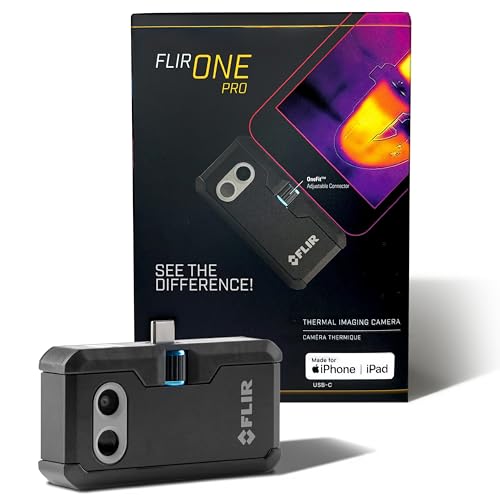 FLIR ONE Pro (phone) | Plugs into iPhone/Android; inspector favorite. | Amazon — $296.65 |
 Topdon TC001 | High-res phone module at a low price. | Amazon — $249.00 |
 FLIR C5 Compact | Standalone pocket camera with Wi-Fi. | Amazon — $593.99 |